Ornamental · Asteraceae
Calendula
Calendula officinalis
Set it in full sun on lean soil, and pot marigold lends a border warm color from spring to frost.
Full sun
Every 3–7 days
39–75°F · 4–24°C
45–65 days
Overview
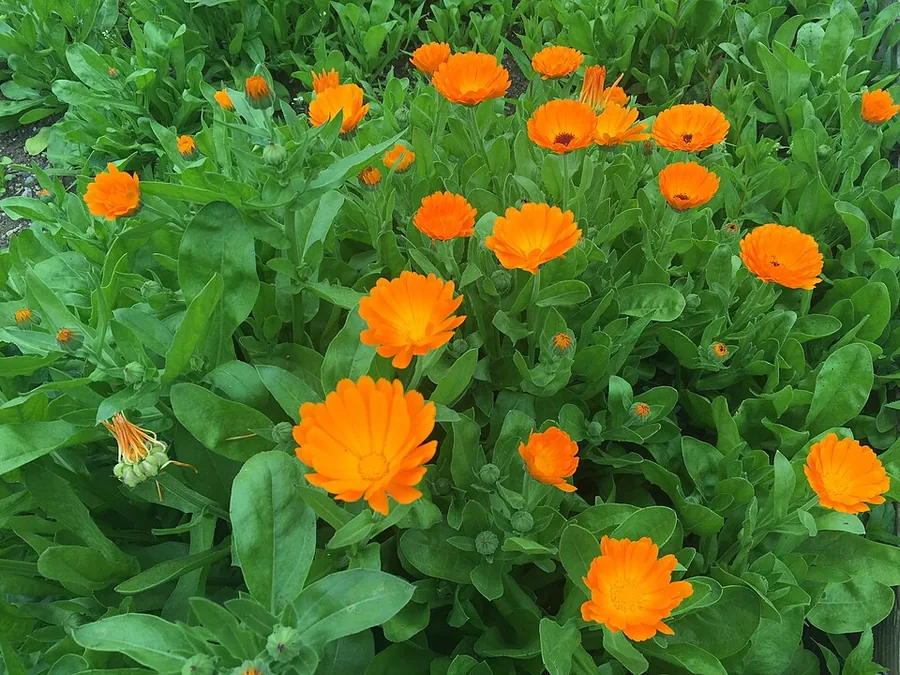
Calendula, the pot marigold, is a cool-season annual in the daisy family that brings an unhurried, cottage warmth wherever it lands. Sow it once and it flowers from spring into fall, then quietly returns the following year, the kind of dependable color that anchors a relaxed, lived-in garden. Its golden heads are edible as well, so the same flowers that soften a path edge also find their way to the kitchen table.
It suits a casual style of gardening that values ease over fuss. A spot in full sun and ordinary, well-drained ground are all it wants, and a light hand with feeding keeps the look generous. Even when summer heat dulls the display, a confident cutback usually restores the glow once the cooler days of fall settle in.
Picture it threaded along the front of a border, lining a kitchen path, or filling a sunny pot by the door. A little deadheading and dry foliage are enough to keep it presentable, which makes calendula an easy partner for a busy household and a low-effort, high-warmth corner of the garden.
Care
The short version: a sunny spot, plain well-drained soil, and a light hand with feeding suit it best. Water it evenly at the base, deadhead the spent flowers, and it carries warm cool-season color from spring through fall.
Light
Calendula gives its fullest show in full sun, though it accepts partial shade, a useful flexibility where summers run hot. The brighter the position, the more generous the flowering, so reserve a sunny corner for it.
Water
Keep the soil evenly moist with steady watering over ground that drains well, so the roots never sit sodden. Water at the base rather than over the top, since damp foliage invites powdery mildew into the display. Its needs are only medium, an easy fit for a casual routine.
Soil
Ordinary, well-drained soil is all it asks, and it settles happily into clay, loam, sand, or richer ground. A pH from 5.5 to 7.0 suits it. Good drainage carries the planting far more than rich soil does.
Temperature
This is a cool-season plant, most content between 39°F to 75°F (4°C to 24°C). It can falter and look tired through midsummer heat, then recover its warmth as fall cools the garden.
Humidity
Everyday outdoor humidity poses no trouble, so there is no figure to manage. Air movement matters more than the reading, since it is the crowded, damp plantings that pick up mildew.
Feeding
Feed lightly through the growing season, if at all. Calendula blooms best on lean soil, and a heavy feed simply grows leaves where you wanted flowers.
Pruning
Deadhead the spent blooms as they fade to keep fresh color coming and to temper self-seeding. Should the planting flag in summer heat, a hard cutback often brings a fall rebloom.
Size & spacing
Plants reach about 12 to 24 inches (30 to 61 cm) tall with a similar spread, an easy mid-front scale for a border. Allow each that much room so air moves freely and the display stays clean.
When to plant
Calendula is at its loveliest in the soft weather that frames summer at both ends. Start seed indoors in late winter or sow it into the ground around the last frost, and the bloom carries the garden from spring until a hard frost finally draws the season to a close.
Northern hemisphere
Southern hemisphere
Typical months for a temperate climate: start earlier in warm zones, later where spring frosts linger.
- Sow: About 6 to 8 weeks before the last spring frost
- Plant: Direct sow or transplant just before to around the last spring frost; a cool-season annual best in spring and fall
- Harvest: Blooms spring through summer, continuing almost nonstop until first heavy frost in cool climates
Hardiness
USDA hardiness zones: 2–11
Temperature: down to -46°C
Troubleshooting
Calendula is forgiving, and most of its troubles surface plainly on the leaves or new growth where a watchful eye catches them. A timely, simple response usually keeps a border looking its best. Match what you see below, then act before it spreads.
Washed-out, patchy foliage on a specimen slipping into decline
Blotchy yellow-green leaves that twist and fail to recover, no matter how you tend them, signal cucumber mosaic virus, which aphids ferry from one plant to the next. Nothing reverses it, so the graceful move is to lift and dispose of any affected plant before it touches the rest of the bed. Keeping aphids down and washing your hands between plants slows the virus and keeps the border whole.
Fix:
- Remove and destroy infected plants to limit spread
- Control aphid vectors
- Avoid handling healthy plants after touching infected ones
A chalky pale cast dulling the foliage
A chalky pale veil over the foliage is powdery mildew, a fungus that settles into beds where plants stand shoulder to shoulder in stagnant, humid air. Open the planting up so a breeze can drift through, water at the base to keep the foliage dry, and clear away any leaf that has turned. A sunny, well-spaced border rarely sees it return.
Fix:
- Improve air circulation by thinning and spacing plants
- Water at the base to keep foliage dry
- Remove and discard severely affected leaves
Fine sticky specks gathering along buds and young stems
Soft green or black specks gathering on the buds and freshest shoots are aphids, partial to the tender new growth that gives a border its lushness. A firm rinse from the hose sends most of them packing, and insecticidal soap settles a stubborn crowd. Hold back on rich nitrogen feeding, which forces the soft growth they favor, and welcome the lady beetles that keep them in check.
Fix:
- Spray plants with a strong stream of water to dislodge aphids
- Apply insecticidal soap if populations are high
- Encourage beneficial insects such as lady beetles
Blooms and leaves marred by rough-edged holes
Torn holes and a faint glistening trail are the signature of slugs and snails, which work the border after dark and seek out the youngest plants. A flashlight at dusk lets you lift them off by hand, and clearing the damp debris where they shelter takes away their daytime hideaway. When the damage keeps mounting, traps or iron-phosphate baits restore the calm.
Fix:
- Hand-pick slugs and snails in the evening
- Remove garden debris that provides shelter
- Use traps or iron-phosphate baits if damage is heavy
Toxicity
This is a relaxed plant to live with. The ASPCA lists pot marigold as non-toxic to cats, dogs, and horses, and the petals are edible for people too. A grazing pet or a wandering child is in no danger, so it can take its place anywhere in the garden.
Safe for
People · Cats · Dogs · Horses · Rabbits · Livestock · Birds
Cats None
The household cat is welcome among the pots. The ASPCA lists pot marigold as non-toxic to cats, so a passing nibble does no harm.
Dogs None
Dogs share the same all-clear. This is the garden pot marigold rather than the bedding type, and the ASPCA rates it safe.
Horses Safe
Calendula holds no known toxic compounds, so it sits easily in a planting where horses graze nearby.
Rabbits Safe
Rabbits can browse the leaves and petals without concern, and the flowers are often grown as a safe forage.
Livestock Safe
Cattle, goats, and sheep take it in stride, with no reports of poisoning to give a gardener pause.
Birds Safe
Backyard birds can visit the seed heads and petals safely, an easy charm in a relaxed garden.
People Safe
The petals are edible, lovely strewn through a salad or used as a saffron-style coloring, so the table is in the clear too.
Varieties
Calendula arrives in a handful of flower forms and colors worth choosing among as you plan the look. These are the ones most likely to turn up at the garden center.
Double-flowered types
These offer full, many-petaled heads in yellow through deep orange, a plusher look than the plain open daisy.
Single-flowered types
These keep an open, daisy-like bloom of one petal ring around a flat center, easy and unfussy in a border.
Yellow to orange color forms
These span bright yellow to deep orange, and the edible petals double as a garnish or a natural coloring at the table.
How to propagate
Calendula comes from seed and little else, yet it manages that with almost no help, sprouting quickly and reseeding itself to return the next season.
SeedEasy
Start indoors about 6 to 8 weeks before the last frost, or direct sow outdoors around the last spring frost · Germinates in about 5 to 15 days; first blooms in roughly 45 to 65 days from seed
Calendula is among the most obliging flowers to raise from seed, a gentle place to begin a season. Start it indoors 6 to 8 weeks before the last frost or sow it straight into the bed around frost at about 1/4 to 1/2 inch deep. Seedlings appear in 5 to 15 days and the first flowers open within 45 to 65 days. Left to its own devices, it drops seed and returns the next year, never in numbers that overrun the design.
Myths
The calendula in the border is nothing more than the familiar bedding marigold under another label, and mildly harmful to household pets.
It is a common mix-up, yet pot marigold is Calendula officinalis, a separate genus from the Tagetes bedding marigolds. The ASPCA lists it as non-toxic to dogs and cats, so the worry about toxicity falls away.
Only a well-fed bed with luxuriant soil coaxes calendula into full flower.
In truth it settles happily into average, well-drained ground and asks for very little. Heavy feeding actually works against the flowers, coaxing leaves where you wanted bloom, so a light touch with fertilizer serves the display best.