Ornamental · Asteraceae
Blanket Flower
Gaillardia × grandiflora
Hand it full sun and lean, dry soil, and the blanket flower brings warm color to a border from June to frost.
Full sun
USDA 3–10
1–3 ft · 0.3–0.9 m
Overview
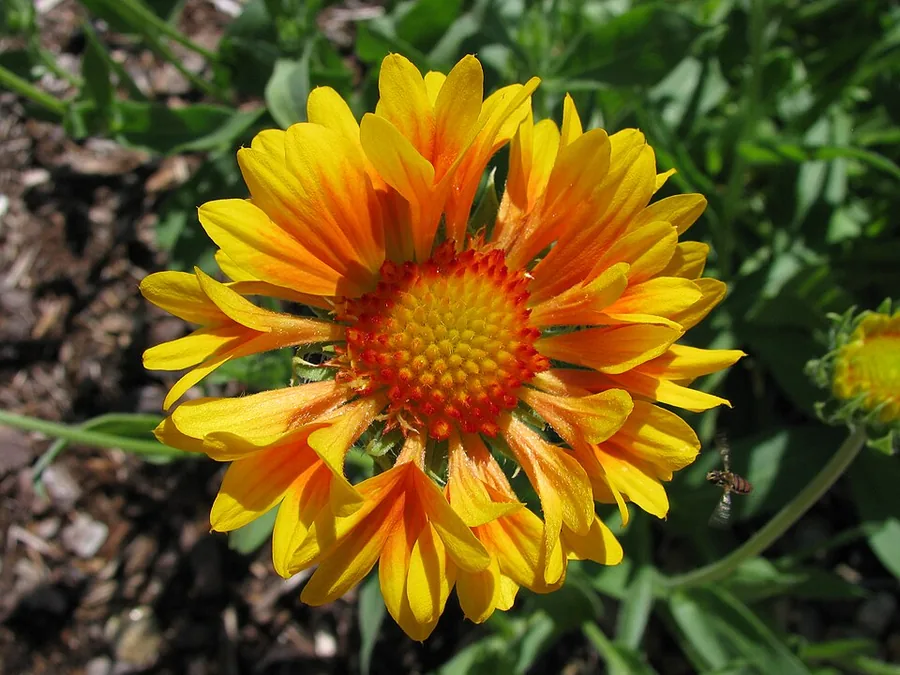
Blanket flower is the plant for a sunny, low-maintenance corner of the garden, a sun-loving member of the daisy family named for the warm reds, oranges, and yellows that ring each bloom like a woven throw. It earns its keep in a hot, dry spot the rest of the planting tends to avoid, holding warm color from early summer well into fall. Few plants give so much for a setting that asks so little.
Its appeal lies in how it carries a space without demanding a routine. It takes drought, heat, and poor soil in stride and keeps the border lively where more particular perennials lose their nerve. The one thing to design around is the reverse of that ease: rich soil and a heavy hand with the hose work against it.
It lives as a short-lived perennial, so a clump softens after a few years, which suits a relaxed, evolving bed rather than a fixed scheme. That is no reason to leave it out. A quick division every couple of seasons, or a little self-sown drift, keeps the warmth in the garden with almost nothing asked of you.
Care
The short version: a full-sun spot, lean and well-drained soil, and a light hand with the watering can. Deadhead through the season to keep the color flowing, and leave the fertilizer on the shelf.
Light
Blanket flower lives for full sun, and the brighter the position the better it performs. A hot, open spot is where it puts on its fullest show. Tucked into shade, it stretches, leans, and gives far less color.
Water
Keep a young planting watered while it settles, then ease right back. Once established it is drought tolerant and far happier on the dry side of a bed than the wet. Overwatering, or heavy clay that holds moisture, is the surest way to lose it, so a restrained hand suits it best.
Soil
Give it well-drained loam or sandy soil with a little organic matter folded in. It takes a wide pH range from 6.0 to 8.0, so most garden ground will do. The single setting it cannot abide is soggy clay sitting cold through winter.
Humidity
Ordinary outdoor air suits it, so there is no level to manage. What shapes a healthy display is air movement, since a damp, crowded planting invites powdery mildew onto the leaves.
Feeding
This is a plant that looks its best a little underfed. A light feeding through the growing season is plenty, since lean soil yields sturdier plants and a fuller show of flowers. A heavy hand with fertilizer leaves it floppy and shy of bloom.
Pruning
Deadhead the spent blooms through the season to keep fresh color coming and the planting looking groomed. When a stand turns ragged, cut it back as needed and it returns with a clean flush of flowers.
Size & spacing
Plants stand 1 to 3 feet (30 to 91 cm) tall and spread 12 to 24 inches (30 to 61 cm), an easy scale for the front or middle of a border. Set them 12 to 18 inches apart so air drifts through and mildew stays away.
When to plant
Blanket flower follows the warmth and shies from wet cold, which makes it a plant for the open, sunny stretch of a garden's year. Start seeds indoors in late winter or sow straight outside once frost has passed, and the planting carries color from early summer through fall, longer still with regular deadheading.
Northern hemisphere
Southern hemisphere
Typical months for a temperate climate: start earlier in warm zones, later where spring frosts linger.
- Sow: Start seeds indoors about 4 to 6 weeks before the last frost.
- Plant: Transplant or direct sow after the last spring frost; space plants 12 to 18 inches apart.
- Harvest: Blooms from early summer (June) through fall (September); deadheading extends the season.
Hardiness
USDA hardiness zones: 3–10
Temperature: down to -40°C
Troubleshooting
Nearly every setback a blanket flower meets traces to a damp, crowded setting rather than the plant itself. Give it an open, well-drained spot with room to breathe and most of this list never enters the picture. Match what the planting shows below, then step in before it spreads.
A collapsing plant, darkened stems at the base, and a crown gone soft
When a planting wilts and darkens at the base, the trouble is root and crown rot, the one failure most likely to end a blanket flower's run in the border, and it comes of ground that stays too wet. The tell is below the surface, where the roots turn brown and soft instead of firm and pale. Lift the planting to a higher, faster-draining spot, fold sand or organic matter through the bed, and pull back sharply on the water.
Fix:
- Improve drainage by amending soil with organic matter or planting in a raised or sandier site
- Reduce watering and remove severely affected plants
Growth turning yellow and twisted, with blooms losing their shape
A planting that yellows and warps is in the grip of aster yellows, a phytoplasma that leafhoppers move from stand to stand, and no remedy brings an affected plant back. The signs are unmistakable in a display: greened or twisted flowers and stunted, broom-like shoots that simply will not recover. Take out and destroy the affected plant without delay, then thin the leafhoppers and weedy hosts keeping it in circulation.
Fix:
- Remove and destroy infected plants promptly
- Control leafhoppers that spread the disease
A pale powdery cast dulling the foliage and stems
A pale, dusty film over the planting is powdery mildew, the look that settles in when a stand sits crowded in humid, still air. It clouds the display rather than ruining it, and it lingers until the setting changes. Give the planting more breathing room or divide a tight stand, clear away the worst of the foliage, and keep water off the leaves.
Fix:
- Improve air circulation by spacing and dividing plants
- Remove affected foliage
Brown flecks marring otherwise healthy leaves
A scatter of marks across the leaves is only fungal leaf spot, a blemish that reads worse in a display than it ever proves to be. The planting carries on unharmed. Clear the marked leaves, water at the base rather than over the top, and leave enough space for air to drift through the stand.
Fix:
- Remove affected leaves
- Avoid overhead watering and improve air flow
Toxicity
For a household with pets, this is an easy plant to live with: blanket flower is non-toxic and stays off the ASPCA's toxic plant list. Cats, dogs, and grazing animals share a garden with it without concern. The one note for the gardener is personal, since the fuzzy leaves and flowers can leave sensitive hands a little itchy.
Safe for
People · Cats · Dogs · Horses · Rabbits · Livestock · Birds
Cats None
It suits a household with cats. The ASPCA does not list it as toxic, so a cat that wanders the border and nibbles comes to no harm.
Dogs None
It belongs comfortably in a garden shared with dogs. Off the ASPCA toxic list, it lets a dog sniff or chew along the bed without worry.
Horses Safe
It earns a place near paddocks, since horses can graze beside it without any trouble at all.
Rabbits Safe
It poses no concern for rabbits, the foliage and flowers carrying no toxin, though it still sits best as an occasional treat.
Livestock Safe
It fits an open, grazed setting, where cattle, goats, and sheep can mingle with it safely.
Birds Safe
It welcomes garden birds without risk, whether they work the seed heads or the foliage.
People Safe
It keeps a household at ease, with one refinement worth noting: the fuzzy leaves and flowers can leave sensitive skin a touch itchy, so gloves make a graceful habit before a long spell of deadheading.
Generally regarded as non-toxic and not listed on the ASPCA toxic plant list. Contact with the fuzzy foliage and flowers can cause mild skin irritation (contact dermatitis) in sensitive people; wearing protective gloves when handling is recommended.
Varieties
Blanket flower comes in a handful of named cultivars that differ mostly in height and the cast of their color, which makes choosing one largely a matter of the look a planting calls for. A few are worth knowing.
Goblin
A compact dwarf that keeps a low, polished footprint, its red flowers finished with a clean yellow rim.
Burgundy
A taller selection prized for a refined, all-over wine-red bloom without the familiar two-tone trim.
Oranges and Lemons
A gentler choice whose peachy-orange flowers soften to pale yellow at the edges for a quieter palette.
How to propagate
Blanket flower is easy to keep going from year to year, a real convenience given its short life in the border. Divide a settled clump or start it fresh from seed, whichever suits the way a garden grows.
DivisionEasy
Spring; divide clumps every 2 to 3 years to maintain vigor. · One growing season
As a short-lived perennial, blanket flower keeps a planting fresh through spring division every 2 to 3 years, a tidy ritual that also hands you new plants to carry the look elsewhere in the garden. Lift a clump, ease it apart, and reset the pieces. A single growing season is all the divisions need to find their place.
SeedEasy
Start indoors 4 to 6 weeks before last frost or direct sow after frost. · Blooms in the first or second season
Seed offers an equally relaxed route. Sow indoors 4 to 6 weeks before the last frost, or scatter it outside once frost has passed, and the planting fills in with flowers across the first or second season. It self-sows generously, yet because these are hybrids the volunteers tend to wander from the parent's look, a charm in a loose, naturalistic bed.
Myths
A thriving blanket flower depends on fertile soil and a steady supply of moisture.
The reverse holds true. Blanket flower asks for lean, well-drained ground and takes drought in its stride once it has settled into a spot. Set it in heavy, fertile, soggy soil and the display fades early with fewer blooms, so restraint is the more elegant approach.
Blanket flower is poisonous to pets.
It is not. The plant counts as non-toxic and stays clear of the ASPCA's toxic list for cats and dogs, which makes it an easy fit for a household with animals. The only refinement to keep in mind is for people, since the hairy foliage can leave sensitive skin a little irritated.