Bulb · Ranunculaceae
Poppy Anemone
Anemone coronaria
Soak the corms, give them sun and sharp drainage, and let poppy anemones bring spring color into the home.
Full sun
Every 5–7 days
84–120 days
USDA 7–10
Overview
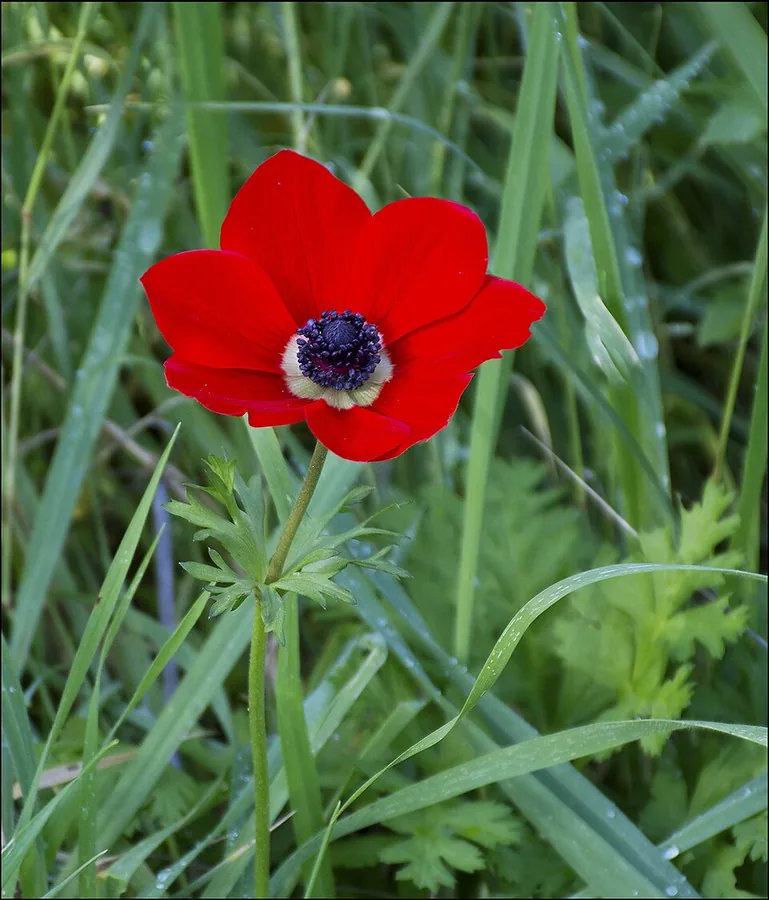
Few spring flowers set a mood the way poppy anemones do, arriving in cup-shaped blooms of red, blue, purple, pink, and white that read as either moody or cheerful depending on how you arrange them. They rise from small knobby corms rather than seed, and as members of the buttercup family they share that cool, painterly quality with ranunculus. A single stem in a bud vase suits a quiet bedside, while a loose armful belongs on a kitchen table where it can be admired all week.
There is a rhythm to living with them. Perennial in mild ground but short-lived, hardy only in zones 7 to 10, they suit a gardener who enjoys planting fresh rather than tending the same clump forever, and many simply grow them as annuals or lift the corms to begin again. Let where you live shape the routine: plant in fall in mild zones for an early show, or wait for early spring where the cold runs deep.
Treat the early steps as part of the pleasure rather than a chore. Soak the corms, choose a spot with full sun and quick-draining soil, and the planting hands you a long season of color from April into June to carry indoors and out. The only thing that spoils the effect is soggy ground, which rots the corms before they ever reach the vase.
Care
The short version: a full-sun spot with a little shade, rich fast-draining soil, and even moisture through the growing season set the stage. Soak the corms first, then ease off the water once the foliage fades so the corm can rest between seasons.
Light
A full sun position brings out the best flowering, though anemones take partial sun or light shade in stride if the spot demands it. Plan on at least 6 hours of direct light a day, because too much shade trades the flowers you want for foliage you do not.
Water
Through the active stretch from fall into spring, hold the bed at a steady, even moisture, topping it up every 5 to 7 days as the surface dries. When bloom passes and the leaves fall away, taper the watering and grant the corm a dry spell, because standing damp through dormancy will spoil the whole display.
Soil
Give them a rich, sandy loam that drains freely, generously blended with organic matter. Acidity barely troubles them, with anything from 6.0 to 8.0 welcome, so a bed that never holds water is the one condition that truly counts.
Temperature
These cool-season growers take a wide swing in temperature, from about 10°F to 75°F (-12°C to 24°C). They handle frost within their hardy range but step back in real summer heat, which is simply their cue to rest until the cooler season returns.
Humidity
Ordinary outdoor air suits them, so there is no number to manage. Good airflow around the planting matters more than any humidity reading and keeps the foliage looking clean.
Feeding
At planting, blend a balanced feed or some compost into the bed, and offer a second helping as spring growth picks up. A soil already rich in organic matter carries most of the load, so restraint suits these plants better than heavy feeding.
Pruning
Trim away the faded blooms to hold the planting at its best and coax out fresh flowers. Once flowering ends, let the leaves stand and yellow at their own pace, because that slow fade is what refills the corm for the season ahead.
Repotting
Ease up and separate a packed clump on a 2 to 3 year rhythm to keep the planting looking sharp, or treat the plants as annuals and set out new corms each fall or early spring. A drop in flowers alongside undersized, jostling corms tells you the clump has run out of room.
Size & spacing
9–18 in (23–46 cm) tall
When to plant
Anemones keep a cool-season rhythm that fits neatly into the gardening year, growing through fall and winter and saving their color for spring. Plant the corms in fall where winters stay mild, or in early spring where they turn cold, and plan your displays around blooms from April into June.
Northern hemisphere
Southern hemisphere
Typical months for a temperate climate: start earlier in warm zones, later where spring frosts linger.
- Sow: Start corms in pots in fall for overwintering in a cool, frost-free space (e.g., cold frame or sunporch); set out in early spring
- Plant: Plant soaked corms 2-3 inches deep and 4-6 inches apart in fall in mild zones, or in early spring in colder zones
- Harvest: Spring bloom, April to June (or roughly 3 months after spring planting)
Hardiness
USDA hardiness zones: 7–10
Temperature: down to -18°C
Troubleshooting
Anemones come with few pests or diseases, so the look of the planting rarely suffers from bugs, and most trouble traces back to water and light. A glance at the corms, the flowers, or the fading leaves usually tells you what to adjust before the display falls off. Match what you see below, then act.
Corms turn soft and rot before they sprout
A planting that never rises usually traces to standing damp, with corm rot taking hold where the ground stays wet or the corms are buried too deep in heavy soil, so a lifted one feels soft or looks moldy. Restoring the bed is straightforward: discard every soft corm, blend sand and compost through the ground, and reseat the firm ones at their proper 2 to 3 inch depth.
Fix:
- Improve drainage by amending soil with sand and organic matter
- Lift and discard rotted corms
- Replant healthy corms at the correct 2-3 inch depth in well-drained soil
Plenty of leaves but barely any flowers
Lush greenery with no color usually points to a spot that offers too little light or too little room below ground. These plants ask for a minimum of 6 hours of direct sun, and once the corms crowd together and shrink they quietly quit blooming. Shift them to a brighter position, break up the packed clumps, and set the divisions into enriched soil to bring the color back.
Fix:
- Move or plant in a site with full sun to part shade
- Divide congested clumps and replant in enriched soil
- Feed with balanced fertilizer or compost at planting
Leaves yellow and brown off once summer arrives
Yellow foliage once the spring flowers pass is normal dormancy rather than a fault, the plant drawing its energy back into the corm for next year. Let the leaves fade on their own and ease off the water rather than fussing over the fading look. The one real risk is too much moisture through the rest period, which turns a tidy die-back into rot.
Fix:
- Allow foliage to die back naturally and stop supplemental watering
- Reduce irrigation after flowering to give the corm a dry rest
Toxicity
Think of this as a flower to display and admire, never to taste. All of its tissue carries protoanemonin, an irritant from the buttercup clan that scorches the mouth and gut when swallowed and blisters bare skin wherever the fresh sap lands. Store the corms and cut stems out of the way of pets, livestock, and children, and slip on gloves before any cutting or dividing, so the look never costs anyone comfort.
Toxic to
Cats · Dogs · Horses · Rabbits · Livestock · Birds · People
Cats Mild
Let a cat bite into a leaf and the released sap stings on contact, showing up as vomiting, drooling, and pawing at the mouth. Such episodes seldom reach past the stomach and settle on their own, but they make a good case for setting arrangements above a curious cat's reach.
Dogs Mild
A dog that gnaws the foliage ends up with a sore, drooling mouth and a queasy stomach. The bitter taste tends to cut the sampling short, so a reaction stays brief and minor, though a vase on a low coffee table is still better moved.
Horses Toxic
That same protoanemonin behind the smaller pets' troubles will raise blisters across a horse's lips and mouth, along with colic and drooling. A grazing horse generally passes over the bitter leaves unless the pasture has little else on offer.
Rabbits Toxic
Anemone has no place near a rabbit. Its stinging sap inflames the lining of the mouth and the digestive tract, and so slight a frame copes badly with the insult.
Livestock Toxic
Grazing cattle, sheep, and goats risk blistered mouths, drooling, and harsh gut upset. The problem surfaces mainly on thin pasture, where animals fall back on plants they would ordinarily walk past.
Birds Toxic
Set the plant and any cut stems well clear of pet birds, whose mouth and crop the protoanemonin will irritate. Ruling it off limits beats gambling on a curious peck at a display.
People Caution
None of this plant belongs on a plate, and a single taste delivers burning and a swollen, blistered mouth. Bare skin fares little better against the fresh sap, which reddens and raises welts, so gloves belong on hand whenever stems get cut for the vase or clumps get divided.
Wear gloves when cutting or dividing, as fresh sap can irritate skin. Keep corms and cut stems away from pets and children.
Helpline numbers

United States
ASPCA Animal Poison Control: (888) 426-4435 (fee applies)
Poison Control: (800) 222-1222



Canada
Poison Centres: 1-844-764-7669
Varieties
Most garden anemones trace to a few well-known strains, with a couple of named selections worth seeking out when a particular color suits your scheme. These are the ones you are most likely to meet.
De Caen Group
A French-bred strain prized for cutting, offering large single poppy-like flowers across a wide palette of colors.
St. Brigid Group
A Dutch and Irish strain whose semi-double to double flowers make an exceptional cut bloom for arrangements.
Mr. Fokker
A De Caen-type selection that flowers in a single, deep violet-blue for a richer scheme.
The Bride
A De Caen-type selection with pure white single flowers that suit a calmer palette.
How to propagate
Poppy anemones can be increased by three methods, each suited to a different kind of gardener. Planting corms is fast and effortless, dividing carries a settled clump forward, and raising them from seed rewards only the truly patient.
Bulbs & cormsEasy
Plant corms in fall in mild zones, or early spring in colder zones · Roughly 3 months to bloom after spring planting
Starting with corms is the simplest, fastest path to flowers, delivering color in about 3 months from a spring planting. Give the dry corms a soak in lukewarm water for a few hours, 4 at the outside, to swell them back up, then tuck them into rich, free-draining soil 2 to 3 inches deep and 4 to 6 inches apart.
DivisionModerate
Lift and divide dormant tuberous rhizomes after foliage dies back · One growing season
As a planting fills in and tightens, hold off until the leaves have faded and the plant has gone dormant, then ease it up and separate the pieces. A split every 2 to 3 years keeps the corms strong and the flowering full, and each division roots in across one growing season.
SeedModerate
Sow fresh seed; germination can be slow and erratic · Often more than one season to reach flowering size
Growing from seed is the unhurried route, one for a patient hand. Sow while the seed is fresh, but brace for sprouting that is both sluggish and patchy, and figure on more than one season passing before the plants are big enough to flower, which is why corms remain the popular choice.
Myths
Anemone flowers are safe to plant around pets and children.
As graceful as they are on a mantel, that notion is wrong, since the whole plant is toxic. Its tissue carries protoanemonin, a compound that scorches and inflames the mouth and gut when swallowed and can leave skin red or blistered wherever the fresh sap lands, so keep the display well out of reach of pets and young children.
Poppy anemones live for years as reliable perennials everywhere.
In practice they are hardy only in zones 7 to 10, and even there they tend to be short-lived. Many gardeners lean into that and grow them as annuals, lifting or replanting the corms each season, and in colder zones they will not survive the winter at all.