Bulb · Ranunculaceae
Persian Buttercup
Ranunculus asiaticus
Set the little claws into cool spring soil and ranunculus arrives like a florist's dream in the garden bed.
Full sun
Every 3–7 days
90–120 days
USDA 8–10
Overview
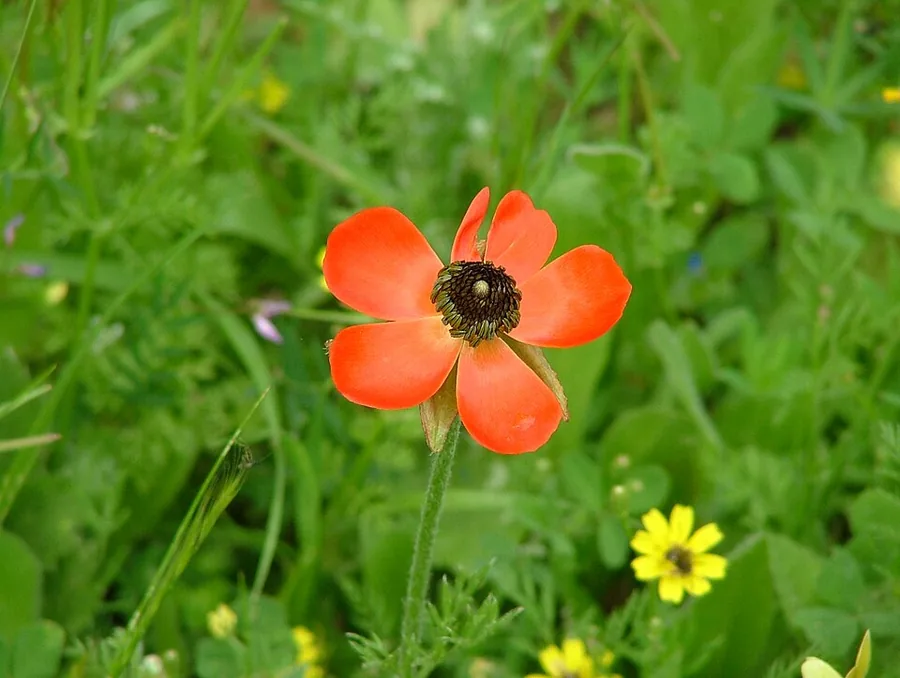
Few flowers dress a spring garden quite like Persian buttercup. Its blooms are so layered and papery they lend a bed or a border a quietly luxurious air, and cut for the house they carry that same polish to a mantel or a dining table. It rises from claw-shaped tuberous roots rather than a true bulb, sharing a family with the humble meadow buttercup, yet it reads as anything but humble. Long, straight stems are what make it a florist's staple.
This is a flower that suits a certain moment in the year. Planted into cool spring weather, it fills the garden from late spring into early summer, a fleeting season that gives its display real occasion, then it fades as the heat settles and slips into rest. In mild-winter regions it becomes a returning fixture; where cold bites, it plays the part of a spring annual or waits out winter as stored roots.
As a garden guest it asks for little beyond the right setting: full sun, freely draining soil, and even moisture kept short of soggy. The one indulgence it will not tolerate is standing water, which spoils the tuberous roots. Site it thoughtfully and it slots into the season with almost no fuss, ready for the cutting garden or a sunny bed by the door.
Care
The short version: give ranunculus a full-sun spot and cool spring weather, rich soil that drains freely, and steady moisture that never leaves the roots waterlogged, then let it bow into dormancy as summer heat settles in.
Light
Ranunculus wants full sun, meaning 6 or more hours of direct light a day, and it repays that bright spot with a fuller show. A little shade is tolerable, but the flowering thins without strong light, especially through the cool spring weather that suits it best.
Water
Keep the soil evenly moist yet never soggy, since the tuberous roots spoil in waterlogged ground. A drink every 3 to 7 days suits most spells of weather, easing off as the plant settles toward its summer rest.
Soil
Plant into rich, free-draining soil worked with organic matter, a loam or sandy loam being ideal. A pH between 6.0 and 7.0 is welcome, while heavy clay is the setting to avoid, holding the moisture that undoes the roots.
Temperature
This is a cool-season flower, most at ease between 28°F and 75°F (-2°C to 24°C). It carries a light frost with poise but wanes once summer heat arrives, which is what closes its season.
Humidity
Ordinary outdoor air is all it asks, so there is no figure to chase. Far more telling is good airflow, since still, damp foliage sets the stage for rot.
Feeding
Through the active spring growth, offer a balanced liquid or slow-release fertilizer about once a month. Once the plant slows toward its summer rest, the feeding can stop.
Pruning
Deadhead the spent flowers as they pass and the display carries on longer, an easy habit for the cutting garden. When the foliage yellows and dormancy arrives, cut it back and let the roots settle.
Repotting
Where winter runs too cold for it to stay put, lift and divide the tuberous roots each year and replant in fall or spring. Crowded clumps, fewer flowers, and smaller blooms signal the moment to give them room.
Size & spacing
Each plant reaches about 12 to 24 inches (30 to 61 cm) tall with a matching spread, an easy scale for a border or a raised bed. Allow 12 to 24 inches (30 to 61 cm) between them so air moves freely and the foliage stays dry.
When to plant
Ranunculus keeps to the cool, gracious end of the calendar and has no appetite for high summer. Presprout the tuberous roots indoors in late winter, set them out in spring a few weeks before your last frost, and the garden fills with flowers from late spring into early summer before the heat draws the season to a close.
Northern hemisphere
Southern hemisphere
Typical months for a temperate climate: start earlier in warm zones, later where spring frosts linger.
- Sow: Presprout tuberous roots indoors in late winter, several weeks before last frost
- Plant: Plant tuberous roots outdoors in spring several weeks before the last frost date (mild-winter areas may plant in fall)
- Harvest: Late spring to early summer (May to June)
Hardiness
USDA hardiness zones: 8–10
Temperature: down to -12°C
Troubleshooting
Most of what unsettles ranunculus begins at the roots or arrives with the warmth of the season. Notice the early signs and a graceful recovery is usually within reach. Find the match below, then act before the trouble spreads.
Collapsing plants and roots gone soft below
The culprit is root rot, and it almost always follows soil left too wet. Tuberous roots held in heavy clay or waterlogged beds turn brown, soft, and sour, and the plant above sinks with them. Lift and discard the spoiled roots, set the drainage right, and replant only the sound ones into improved soil.
Fix:
- Stop overwatering and improve drainage
- Remove and discard affected plants and rotted roots
- Replant healthy tuberous roots in amended, well-drained soil
Dark, sunken decay marking the roots
The culprit is black root rot, a fungal disease that darkens and rots stretches of root while growth falters up top. An infected plant is past saving, so lift it and dispose of it rather than setting more vulnerable flowers in that ground. Clean stock and free-draining soil are the surest way to keep it at bay.
Fix:
- Remove and destroy infected plants
- Avoid replanting susceptible plants in the same soil
- Improve soil drainage and sanitation
A display that fades as the warmth arrives
The culprit is heat stress, not illness. Ranunculus belongs to cool spring days, so the flowers ease off once the May and June warmth settles in. Give it full sun, deadhead the spent blooms to draw out the season, and let it retire into dormancy as summer takes the stage.
Fix:
- Plant in full sun in cool spring weather
- Deadhead spent flowers to prolong blooming
- Allow plants to go dormant naturally as summer heat arrives
Toxicity
For all its charm on the table, ranunculus is a flower to admire rather than taste. Every part holds ranunculin, which becomes the irritant protoanemonin once the plant is chewed or crushed, leaving the mouth and gut sore. Keep the blooms and cut stems clear of cats, dogs, horses, rabbits, livestock, birds, and children, and wear gloves when you handle the cut sap.
Toxic to
Cats · Dogs · Horses · Rabbits · Livestock · Birds · People
Cats Mild
A cat that samples the leaves tends to drool, and may vomit or develop diarrhea, along with a sore, ulcerated mouth, low spirits, and a fading appetite. The bitter, stinging sap usually calls a halt after a taste or two.
Dogs Mild
A dog that chews the plant is likely to drool heavily, vomit, and pass loose stool, often with mouth ulcers and a listless, off-food air. As with cats, the harsh flavor tends to keep the amount taken small.
Horses Moderate
Horses fare worse, met with blistering and soreness about the mouth, heavy salivation, colic, and diarrhea. A generous mouthful can leave a horse unsteady and wavering on its feet, so keep it beyond their reach.
Rabbits Toxic
The same protoanemonin that troubles other animals irritates a rabbit's mouth and gut, so keep every plant and cut stem well clear of them. None of it should be offered as forage.
Livestock Toxic
Cattle, sheep, and goats grazing the fresh plant may develop mouth blistering, drooling, and digestive upset. Most stock decline it for the acrid taste, leaving hungry animals on thin pasture as the ones truly at risk.
Birds Toxic
The irritant sap is no kinder to birds, so keep pet and garden birds away from foliage and flowers. Every part is best treated as off limits.
People Caution
The plant is not for eating, and a chewed piece burns the mouth and can bring blisters to the lips and tongue. Handling crushed stems or sap can irritate bare skin as well, so wear gloves and keep it away from children.
Wear gloves when handling crushed foliage or sap, which can cause skin and mucous-membrane irritation.
Helpline numbers

United States
ASPCA Animal Poison Control: (888) 426-4435 (fee applies)
Poison Control: (800) 222-1222



Canada
Poison Centres: 1-844-764-7669
Varieties
Breeders have shaped ranunculus into a wardrobe of forms, from grand doubles for the vase to compact dwarfs for a pot on the step. These are the ones worth knowing when you plan a display.
Tecolote (Giant Tecolote)
Prized in the florist trade for its large, fully double flowers in a broad sweep of colors, it stands as a first choice for cutting.
Bloomingdale
A compact dwarf selection kept small by design, at home in containers and trim bedding displays.
Picotee types
Its petals finish in a contrasting edge, a refined detail that makes them coveted for cut arrangements.
How to propagate
The simplest way to bring more ranunculus into the garden is from its tuberous roots, though an established clump can be divided, and seed rewards the patient with time to spare.
Bulbs & cormsEasy
Plant tuberous roots in spring several weeks before last frost (or fall in mild-winter areas) · 2 to 3 weeks to sprout; blooms in spring
The gentlest way to raise ranunculus is straight from its tuberous roots. Bed them 2 inches deep, set 6 to 8 inches apart, with the claws turned downward, and a soak beforehand rouses them sooner. Shoots emerge in 2 to 3 weeks, and the flowers follow that same spring.
DivisionModerate
When dormant, after foliage dies back · One growing season
When the foliage has faded and the plant rests dormant, lift the clustered tuberous roots and part them by hand. Leave each division with at least one growing point before replanting, and allow a full growing season for it to establish and bloom.
SeedModerate
Sow in late summer to fall for bloom the following spring · One to two seasons to flowering size
Seed is the unhurried route. Sow in late summer or fall for flowers the following spring, mindful that seedlings take one to two seasons to reach flowering size, well beyond the pace of tuberous roots.
Myths
Ranunculus is a hardy perennial bulb that endures winter in any garden.
In truth it grows from tuberous roots rather than a true bulb, and it returns with any certainty only in about USDA Zones 8 to 10. In colder gardens it earns its place as a spring annual, or the roots are lifted and kept until the season turns.
Buttercups grace gardens everywhere, so surely they are safe around pets.
Familiarity is no guarantee. The ASPCA records buttercup and ranunculus as toxic to cats, dogs, and horses, owing to protoanemonin, which irritates the mouth and gut.