Bulb · Ranunculaceae
Winter Aconite
Eranthis hyemalis
Long before the border stirs, winter aconite lays down a ribbon of gold across the bare ground, setting the tone for the year ahead.
Full sun
Every 5–10 days
USDA 3–7
3–6 in · 8–15 cm
Overview
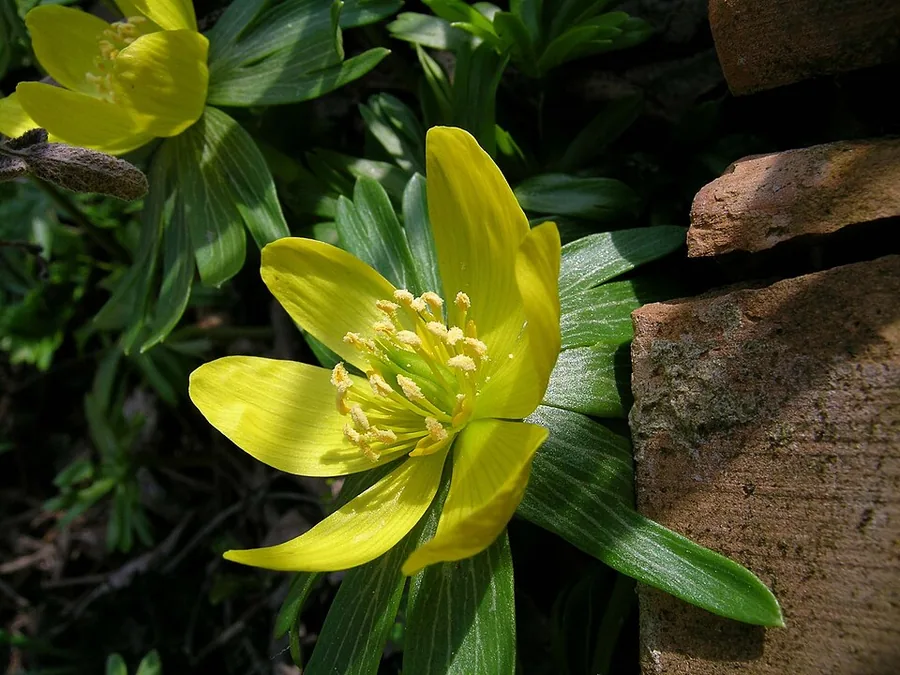
Few plants set a mood the way winter aconite does. This small tuberous perennial from the buttercup family arrives when the garden is at its quietest, lifting bright yellow, cup-shaped blooms from cold, bare soil in late winter, each one collared by a soft green ruff of bracts. At just 3 to 6 inches tall and blooming ahead of crocus and snowdrops, it becomes the season's opening note, the first cue that the year has turned.
It works from a small, knobby tuber that keeps to itself all summer and stirs only in the cold. Given a single spot in humus-rich, well-drained soil beneath deciduous trees, where it draws full late-winter sun before the canopy fills, it asks for almost nothing in return. Left to its own rhythm, it drifts and self-sows into wide golden carpets that read beautifully beneath bare branches and along a woodland path.
There is a line to draw, though, and it is worth honoring. Every part of winter aconite is poisonous, the tuber most of all, so it earns its place as a plant to admire rather than handle. Keep it clear of children and pets who might be tempted to taste it, and it settles gracefully into the garden's early scene.
Care
The short version: plant the tubers in fall in rich, well-drained soil beneath deciduous trees, keep the ground moist through the late-winter-to-spring growing season, and then let the plants slip into dormancy and spread on their own.
Light
Winter aconite wants full sun through its growing weeks, which it neatly earns by flowering in late winter before the deciduous trees overhead leaf out. That makes the dappled ground beneath those trees its natural home, a place where it gathers all the light it needs early and then rests, unbothered, through the shaded summer.
Water
Keep the soil evenly moist from late winter into spring while the plant is on show, watering roughly every 5 to 10 days when the weather turns dry. Once the foliage fades into summer dormancy, the tubers prefer drier ground and slip quietly out of the routine until the following year.
Soil
Set it in rich, humus-rich, well-drained soil enriched with leaf mold or compost. It leans toward the alkaline side and settles happily at a pH of 7.0 to 8.0, though sharp drainage matters far more than any reading, since standing wet is the one thing that undoes the tubers.
Temperature
This is a cold-loving plant with real backbone, hardy to about -29°F (-34°C) and at ease across zones 3 through 7. It depends on winter chill to perform and loses its poise where summers run hot, so it shows best where the season tops out around 75°F (24°C).
Humidity
Ordinary outdoor air is all it asks, so there is no humidity figure to attend to. The detail that shapes the display is even soil moisture through the short growing season, rather than anything in the air above.
Feeding
Winter aconite lives lightly. A seasonal top-dressing of leaf mold or compost from fall to early spring is all it wants, feeding the tubers slowly and keeping the soil in good heart without any call for heavier fertilizer.
Pruning
There is nothing to prune here, which suits its low-key place in the garden. Let the foliage yellow and fade on its own after the flowers pass, since those leaves are quietly restoring the tuber for next year, and cutting them early only costs the plant its strength.
Repotting
The tubers are content left in the ground and rarely need lifting. The cue to step in is a clump grown crowded, flowering less, with tubers pressing toward the surface, and the answer is to divide rather than repot.
Size & spacing
Winter aconite stays deliberately small, just 3 to 6 inches (8 to 15 cm) tall and wide, so it reads best swept into generous drifts. Setting the tubers about 3 inches apart lets a planting knit into an unbroken sheet of early gold beneath the bare trees.
When to plant
Winter aconite keeps its own elegant, contrary calendar. The dormant tubers are set out in fall, from late summer through November, and the reward comes in the hush of late winter, often February through April, when the display arrives well before the rest of the garden has woken.
Northern hemisphere
Southern hemisphere
Typical months for a temperate climate: start earlier in warm zones, later where spring frosts linger.
- Plant: Plant tubers in late summer to early fall (September to November), 2-3 inches deep and 3 inches apart.
- Harvest: Late winter to early spring (February to April), often before crocus and snowdrops.
Hardiness
USDA hardiness zones: 3–7
Temperature: down to -40°C
Troubleshooting
Winter aconite is a forgiving companion in the garden, and the rare trouble it brings comes down to planting and timing rather than pests or disease. The signs below sort a real concern from the plant's natural seasonal turn.
Tubers that never rise after fall planting
The likeliest reason a planting stays bare is a dried-out tuber set into the ground already shriveled, since these tubers harden to a dry knot in storage and struggle to recover. Soggy or shallow soil only deepens the setback. The remedy is simple: soak shriveled tubers overnight in damp sand or peat, then plant them 2 to 3 inches deep in rich, well-drained ground.
Fix:
- Soak shriveled tubers overnight (or in moist sand or peat moss) before planting
- Replant 2-3 inches deep in organically rich, well-drained soil
A display that fades once summer arrives
Most often this is simply summer dormancy, the plant closing its season on schedule by late spring, its leaves yellowing and vanishing while the tubers rest below until the next thaw. A genuine loss, where clumps stop returning year after year, usually traces to soil that dried out hard during active growth. Keep the ground moist from late winter through spring and leave the dormant tubers undisturbed.
Fix:
- Allow foliage to die back naturally and do not disturb dormant tubers
- Keep soil moist during the late-winter-to-spring growing season
Toxicity
For all its charm, this is a genuinely poisonous plant, and that deserves plain acknowledgment. Every part carries cardiac glycosides along with the ranunculin common to the buttercup family, and the tuber holds the most. Eating it brings drooling, mouth irritation, and vomiting, and a real mouthful can disturb the heartbeat and breathing, so keep it well away from pets, livestock, and children, and wear gloves when handling the tubers.
Toxic to
Cats · Dogs · Horses · Rabbits · Livestock · Birds · People
Cats Severe
A cat that nibbles the leaves or scratches at a tuber may soon drool and vomit, with abdominal pain and loose stool close behind. The graver concern lies with the heart, where the cardiac glycosides can blur vision and pull the pulse into a slow, uneven beat.
Dogs Severe
Because the tuber holds the most poison, a dog that chews one tends to vomit hard and develop diarrhea and colicky cramps. A slowed, irregular heartbeat can follow a large dose, so any real mouthful calls for immediate care.
Horses Severe
A grazing horse takes on stomach pain, nausea, and diarrhea from the foliage. In quantity, the same heart toxins can drag the pulse down and unsettle its rhythm.
Rabbits Toxic
This is no safe forage. The ranunculin in the leaves blisters the mouth and gut, and the cardiac glycosides weigh heavily on so small an animal, so rabbits are best kept well clear of any planting.
Livestock Toxic
Cattle, sheep, and goats can suffer drooling, mouth irritation, and digestive upset from the foliage, with the heart effects adding to the danger in quantity. The bitter, acrid taste usually turns animals away before they eat much.
Birds Toxic
The whole plant carries enough cardiac glycoside to harm a bird, and a small body means a small dose can do real damage. Poultry and pet birds are best kept away from the tubers and foliage entirely.
People Caution
No part of winter aconite is edible, so it stays firmly a plant to admire rather than taste. Swallowing it brings mouth irritation, drooling, vomiting, and stomach pain, and a large amount can disturb the heartbeat and breathing, so wear gloves when handling the tubers and keep children away.
Wear gloves and protective clothing when handling; keep tubers and plants away from children and pets.
Helpline numbers

United States
ASPCA Animal Poison Control: (888) 426-4435 (fee applies)
Poison Control: (800) 222-1222



Canada
Poison Centres: 1-844-764-7669
Varieties
The choices here are refreshingly few, since most gardens simply grow the wild species. Two forms are worth knowing.
Cilicica Group
The Cilicica Group brings more finely cut, bronze-tinted bracts and slightly larger blooms than the plain species, a subtle step up in refinement.
Eranthis hyemalis (species)
The species opens bright yellow, cup-shaped buttercup flowers above a green ruff of bracts and holds to a modest 3 to 6 inches, the form most borders rely on.
How to propagate
Winter aconite widens its own footprint once it settles, but the display can be shaped along by dividing clumps, sowing fresh seed, or planting more tubers.
DivisionEasy
Right after flowering while plants are still in leaf ('in the green'), in early to mid-spring · 1 to 2 seasons
The surest route to a wider sweep is to lift and divide crowded clumps just after they flower, while they are still green and rooting well. Replant the pieces at once at the same depth, and they will settle into the scene over the next 1 to 2 seasons.
SeedModerate
Collect and sow fresh seed in fall · 2 to 4 years to flowering
Left to itself, winter aconite self-sows freely and drifts into broad colonies. To guide the spread, gather ripe seed and sow it fresh in fall, since fresh seed comes up best, then allow the 2 to 4 years it takes the young plants to reach bloom.
Bulbs & cormsModerate
Plant dormant tubers in late summer to early fall · 1 season
Dormant tubers are set out in late summer to early fall, 2 to 3 inches deep and 3 inches apart. Soak any that arrive shriveled and dry overnight first, and a planting usually wakes and flowers within a single season.
Myths
Winter aconite is monkshood by another name and dangerous even to touch.
The two are easily untangled. Winter aconite belongs to the genus Eranthis and shares only the buttercup family with monkshood, which is Aconitum. Old herbalists filed them together by the look of their leaves, but they are separate plants. Winter aconite does its harm through eating, not through touch, and its harsh, bitter taste tends to turn pets away before they swallow a dangerous amount.