Ornamental · Plantaginaceae
Angelonia
Angelonia angustifolia
Give it full sun and heat, and angelonia carries a garden in spires of bloom from summer well into fall.
Full sun
USDA 9–11
12–18 in · 30–46 cm
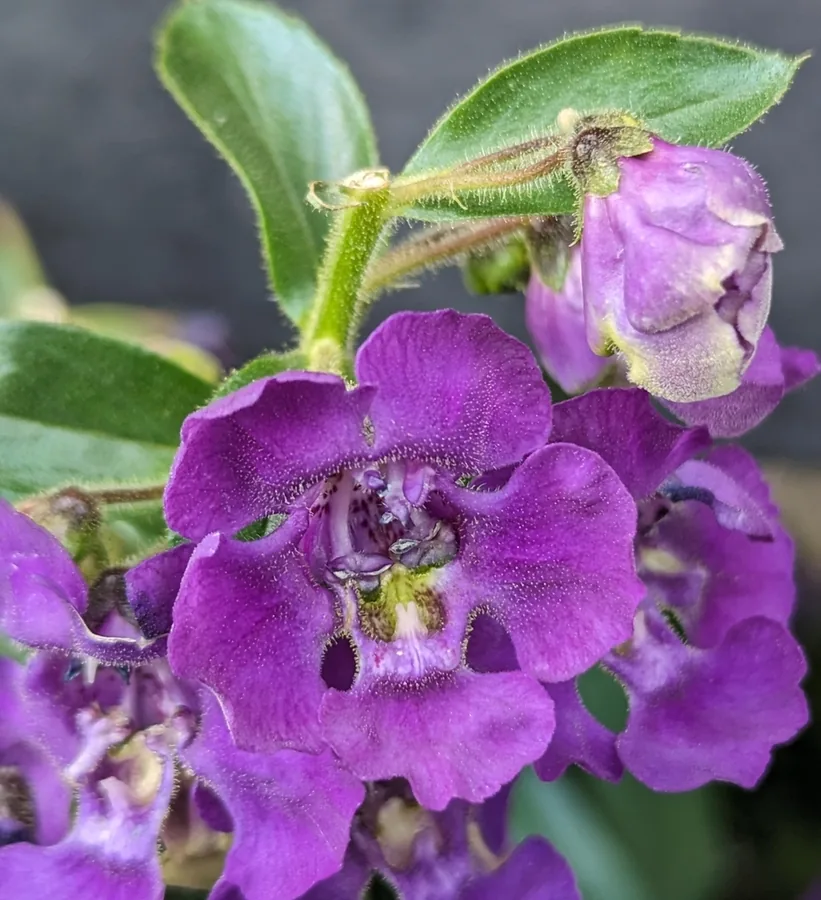
Overview
Angelonia, the summer snapdragon, is the plant that holds a garden together through the hottest stretch of the year. As other beds lose their composure in July, it lifts slim spires of purple, pink, white, or blue that read cleanly from across a terrace and last from early summer into fall. The name borrows from the snapdragon, yet it belongs to the family Plantaginaceae and brings an easy elegance that needs no coaxing.
Its tidy mound, 12 to 18 inches (30 to 46 cm) tall, sits comfortably wherever a planting calls for vertical interest, whether that is a long border, a sweep of bedding, or a pair of pots flanking a doorway. Hardy only in zones 9 to 11, it is most often grown as a warm season annual and refreshed each spring, which makes it easy to recolor a scheme from one year to the next. Sun and warmth are all it asks to earn its place.
Its real appeal is how gracefully it slips into a daily routine. Once settled, it carries on through dry spells and humid afternoons, never asks for deadheading, and rarely draws a pest into the picture. Set it in full sun on free-draining soil, and it quietly keeps a corner looking composed while the rest of the season runs its course.
Care
The short version: full sun, warmth, and soil that drains freely. Water it through its first weeks, then let it ride out dry spells on its own, and give it a single shear by half at midsummer should the planting begin to soften.
Light
Angelonia is built for full sun, and the brighter its spot, the better it holds its shape. Generous light gives a fuller plant and a heavier show of bloom, while shade leaves it thin and reluctant to flower, never quite earning its place in the scheme.
Water
Keep the soil evenly moist while the plant settles in, then ease back once the roots have taken hold. From there it carries dry spells with composure, and the soil can dry between waterings so long as drainage stays sharp. Standing water is the one thing it will not abide, so a free-draining bed is the kindest setting.
Soil
Give it moist, fertile soil that drains freely, the sort of ground that keeps a long display going without ever turning waterlogged. Rich earth sustains the bloom, while standing water invites root rot, so open up heavy soil with compost and make sure water always has a way out.
Humidity
Heat and humid air leave angelonia untroubled, so there is no figure to manage. Airflow is what matters to the look of a planting, since still, muggy air around crowded stems is what allows powdery mildew to dull the display.
Feeding
Work a slow-release landscape fertilizer into the soil at planting and renew it about every two months across the growing season to keep the color steady. On leaner ground, an occasional liquid feed keeps the flowers arriving without interruption.
Pruning
There is no deadheading to manage, since the plant keeps itself tidy. When the planting begins to stretch or soften by midsummer, a shear by about half restores it, and fresh bloom returns within 2 to 3 weeks.
Size & spacing
Each plant reaches 12 to 18 inches (30 to 46 cm) tall and spreads 8 to 12 inches (20 to 30 cm) wide. Allow that much room between them so the planting breathes, air moves freely, and mildew never settles in to spoil the effect.
When to plant
Angelonia is a creature of warmth with no patience for frost, so its season opens once the cold has truly gone. Sow indoors in late winter, move plants outside only after the soil has warmed, and the color holds from early summer through the first cool evenings of fall, carrying a garden across its longest, most leisurely stretch.
Northern hemisphere
Southern hemisphere
Typical months for a temperate climate: start earlier in warm zones, later where spring frosts linger.
- Sow: Start seed indoors about 6 to 8 weeks before the last spring frost; seed needs light to germinate and sprouts in 7 to 14 days.
- Plant: Transplant outdoors after the last frost when soil and air have warmed.
- Harvest: Blooms from late spring or early summer through early fall (about June to September); allow roughly 13 to 14 weeks from sowing to flower.
Hardiness
USDA hardiness zones: 9–11
Temperature: down to -7°C
Troubleshooting
Angelonia is among the most agreeable annuals a garden can hold, and the little that goes wrong almost always comes back to soggy soil or air that sits too still. Knowing the few signs below lets you step in before a planting loses its poise. Match what you see, then act while the gesture still counts.
A planting that fades while the soil stays wet
When a planting droops in ground that never seems to dry, the cause is usually Phytophthora root and stem rot, a water mold that settles into soil with nowhere for water to drain. The roots and the base of each stem turn brown and soft, and once a plant reaches that state there is no reviving it. Lift and discard the worst, dial the watering right back, and give the next planting a home where drainage is generous.
Fix:
- Remove and discard severely affected plants
- Improve drainage and reduce watering frequency
A pale powdery cast settling over the planting
That chalky veil is powdery mildew, a fungus that takes hold wherever the air hangs heavy and the leaves stay damp, the sort of stagnant pocket a crowded corner tends to create. Direct the watering can to the base rather than the foliage, give the planting more room so a breeze can pass between the stems, and clear away the most affected leaves. A spot in full sun with air on the move keeps the whole display looking its best.
Fix:
- Improve air circulation by spacing plants properly
- Avoid wetting foliage and water at the base
- Remove badly affected foliage
New growth gathering at the tips
The small soft-bodied insects clustering at the fresh tips are aphids, and the faint sticky sheen they leave is honeydew that can dull an otherwise crisp planting. A firm spray of water sends most of them packing, and insecticidal soap settles any that linger. Lady beetles and other quiet allies tend to handle the rest, so a lighter hand with nitrogen keeps the soft new growth that invites them to a minimum.
Fix:
- Dislodge aphids with a strong spray of water
- Apply insecticidal soap if populations are high
- Encourage natural predators such as lady beetles
Toxicity
For a home shared with pets and children, angelonia is a reassuring choice: it is not listed as toxic. The ASPCA leaves it off its cat and dog lists, and there are no known poisons in its leaves or flowers. A curious nibble might unsettle a sensitive stomach, as any unfamiliar plant can, but the plant itself is safe to live alongside.
Safe for
People · Cats · Dogs · Horses · Rabbits · Livestock · Birds
Cats None
Angelonia never appears on the ASPCA's toxic list, so it earns a comfortable place in a home where a curious cat shares the rooms.
Dogs None
It suits a dog-friendly household just as well. A large mouthful of leaves might unsettle a sensitive stomach, as any unfamiliar plant can, but nothing in it counts as a toxin.
Horses Safe
Nothing in angelonia is known to trouble horses, so it sits easily near a paddock or stable yard.
Rabbits Safe
Rabbits can browse the leaves and flowers without harm, though a hungry one may reduce a young plant to its stem before the season finds its footing.
Livestock Safe
Cattle, goats, and sheep face no known toxic risk from angelonia, whether it edges a pasture or a country border.
Birds Safe
Birds drawn to the foliage or the spent blooms come to no harm from it.
People Safe
Angelonia belongs in the garden rather than on the plate, yet it holds no toxin, so a child who samples a flower comes to no harm.
Varieties
Angelonia arrives in both seed-grown and vegetative series, the latter bred for larger flowers and held true by cuttings. A few names recur at the garden center, each offering a slightly different palette to build a scheme around.
Serena and Serenita series
Compact, seed-grown plants offered in a soft palette of purple, lavender pink, and white that slips easily into any color scheme.
Archangel series
Cutting-grown selections with larger flowers in shades like blue and pink for a bolder statement.
Night Sky
A deep purple variety freckled all over with white dots that reads beautifully against pale stone or pale walls.
How to propagate
Angelonia can be carried on from cuttings or from seed, and the choice comes down to how much time the season allows and whether a favorite is worth repeating exactly across a planting.
Stem cuttingsEasy
During active growth in the warm season. · A few weeks to root and establish.
When a particular plant has earned its place in the scheme, tip cuttings are the simplest way to repeat it across a border or a row of pots. Take them during active growth in the warm season, settle them into a moist medium, and they root and establish within a few weeks. It is the same method growers rely on to hold the named vegetative series true to color.
SeedEasy
Start indoors 6 to 8 weeks before the last frost. · Germinates in 7 to 14 days with light; about 13 to 14 weeks from sowing to flower.
Seed is the patient route, and the one that fills a generous planting without a generous budget. Sow indoors 6 to 8 weeks before the last frost and leave the seed uncovered, since it needs light to sprout, which it does in 7 to 14 days. Allow roughly 13 to 14 weeks from sowing before the first flowers arrive to open the season.
Myths
Angelonia needs constant deadheading to keep blooming.
Angelonia keeps itself looking polished and flowers on with no deadheading at all, which makes it a forgiving choice for a busy household. Should the planting soften by midsummer, a single shearing by half brings the bloom back within 2 to 3 weeks.
Angelonia is a true snapdragon.
The name summer snapdragon nods to the silhouette of the flower rather than any shared lineage. It is Angelonia angustifolia in the family Plantaginaceae, no relation to the true snapdragon, Antirrhinum.