Ornamental · Saxifragaceae
Astilbe
Astilbe × arendsii
Give it shade and soil that stays damp, and astilbe brings feathery plumes and quiet color to the corners nothing else will fill.
Partial shade
Every 2–4 days
USDA 3–9
1–4 ft · 0.3–1.2 m
Overview
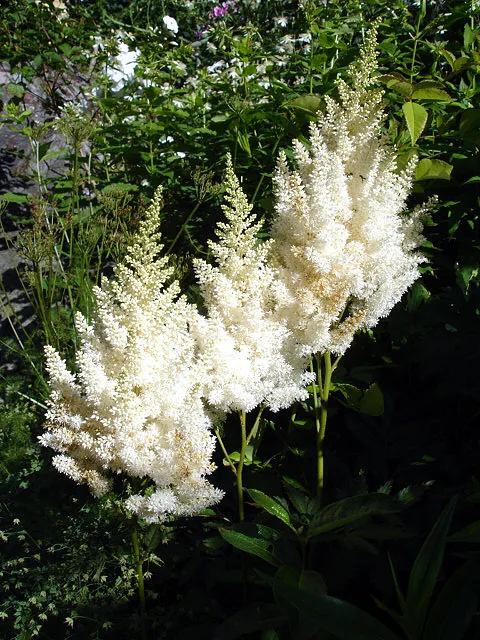
Astilbe is the plant for that cool, damp corner where the light never quite arrives and most things sulk. Feathery plumes lift over soft, ferny foliage from early to midsummer in white, pink, and deep crimson, turning a forgotten patch into something worth pausing over. The hybrid you will find in most gardens, Astilbe x arendsii, is a dependable perennial that returns season after season across zones 3 through 9.
What makes it a designer's favorite for shade is simple: it flowers, and flowers generously, well away from direct sun. The old names false spirea and false goat's beard nod to those airy, branching plumes. When the bloom fades, the cut-leaf foliage carries the look right through the season and knits into a fine groundcover under trees or along the shaded north wall of a house.
The one habit it will not tolerate is a dry root run. Keep the ground rich and reliably moist and astilbe is close to effortless, shrugging off deer and asking only for a divide every few years. Leave it to bake in sun with dry roots and the leaves brown at the edges and the whole planting loses its composure.
Care
The short version: site it in part to full shade, give it soil that stays evenly damp and full of organic matter, and top it with a compost mulch through summer to lock the moisture in.
Light
Astilbe is at its best in part to full shade, one of the few perennials that will flower dependably out of the sun and earn its keep in a dim corner. It takes a little more sun where summers run cool, but only if the soil never dries, and deep afternoon shade suits it best where the heat builds.
Water
This is the plant's single real demand and the heart of the daily routine. Keep the soil steadily moist, watering every 2 to 4 days and going deeper through summer heat. Let the ground dry and the foliage browns at the edges and slumps, sometimes dropping into early dormancy.
Soil
Give it rich, humusy loam that holds water yet still drains, with plenty of compost worked through the bed. Astilbe is relaxed about pH and grows well anywhere from 5.5 to 7.5, so texture and moisture count for far more than any reading.
Humidity
Everyday garden air is plenty and there is no target to chase. Crowded, damp foliage in still air does invite powdery mildew, so leave clumps room to breathe and the matter settles itself.
Feeding
A balanced all-purpose fertilizer through the growing season keeps the plumes arriving. A summer compost mulch works two jobs at once, feeding slowly while holding the moisture astilbe leans on.
Pruning
Deadhead the faded plumes for a crisp look, or leave them standing for winter interest, since the dried heads hold frost beautifully against a bare bed. Cut the foliage back in late fall or early spring before fresh growth pushes through.
Size & spacing
Plants run 1 to 4 feet (30 to 120 cm) tall depending on cultivar, from low front edgers to taller types for the back of the border. Each clump reaches 12 to 24 inches (30 to 60 cm) across, so set them at that spacing to fill in cleanly without jostling.
When to plant
Astilbe comes from divisions rather than seed, so its year is built around planting and bloom instead of sowing. Set divisions out in spring or early fall, and watch the plumes open from late spring through summer, with many cultivars at their best in June and July.
Northern hemisphere
Southern hemisphere
Typical months for a temperate climate: start earlier in warm zones, later where spring frosts linger.
- Sow: Seed is difficult and slow; most gardeners start from divisions rather than seed.
- Plant: Plant divisions in spring or early fall.
- Harvest: Late spring through summer (varies by cultivar; many bloom June-July).
Hardiness
USDA hardiness zones: 3–9
Temperature: down to -40°C
Troubleshooting
Most astilbe complaints turn up in the leaves, and dry soil sits behind more of them than any pest or fungus. Match what you are looking at to the cause below, then step in before scorched foliage or mildew spreads across the whole clump and spoils the corner.
Scorched leaf margins and a plant that quits early
What you are seeing is drought stress, and with astilbe it nearly always comes back to soil that went dry, often in a spot with too much sun or during a heat spell. To save face the plant drops its scorched leaves and slips into dormancy ahead of schedule. Bring the look back by watering deeply so the ground stays evenly moist, laying a compost mulch over the bed, and shifting the planting to a shadier corner if the site tends to bake.
Fix:
- Water deeply and consistently to keep soil evenly moist
- Apply a compost or organic mulch to retain soil moisture
- Move or site plants in part to full shade
A chalky white haze dulling the foliage
This is powdery mildew, a fungus that moves in when the air sits humid and still around plants packed too close together. It seldom kills astilbe, but it takes the polish off the foliage and the whole corner starts to look tired. Open the planting up so air can move through, split tight clumps, lift away the worst leaves, and keep water off the foliage.
Fix:
- Improve air circulation by spacing and dividing crowded clumps
- Remove affected foliage
- Avoid overhead watering
Foliage chewed to lace in high summer
Japanese beetles are almost always behind it, grazing the soft tissue between the veins and leaving a thin lacework where a full leaf used to be. The metallic adults are easy to find sitting right on the plant. Catch them in the morning while they are sluggish and tip them into a tub of soapy water, and only reach for an approved insecticide if the feeding turns heavy.
Fix:
- Hand-pick beetles into soapy water
- Treat with approved insecticide if infestation is heavy
Toxicity
Astilbe is a safe plant to live with, around both animals and children. The ASPCA does not list it as toxic, and approved sources record no poisoning in pets, so you can run it along paths and beside play areas with an easy mind.
Safe for
People · Cats · Dogs · Horses · Rabbits · Livestock · Birds
Cats None
Astilbe does not appear on the ASPCA toxic list, so a curious cat that samples a leaf is in no danger. A bit of drool after a mouthful of the fibrous foliage is about the worst of it.
Dogs None
A dog can rub past the clump or mouth a plume with nothing to worry about. A large helping of any plant might unsettle a stomach for the day, but astilbe itself holds no toxin.
Horses Safe
Nothing toxic is on record for horses, and the plant stays far too small to amount to much in their grazing in any case.
Rabbits Safe
Rabbits can browse the leaves without harm. The tough, ferny growth usually sees astilbe skipped in favor of softer greens nearby.
Livestock Safe
Cattle, goats, and sheep run no risk from astilbe, which carries none of the toxins that make certain garden plants a concern out in pasture.
Birds Safe
The plant is no danger to birds, whether they tuck into the foliage for cover or peck at it.
People Safe
Astilbe is safe to handle and to live alongside children, though it belongs in the border as an ornamental rather than on the table.
Varieties
Astilbe arrives in dozens of named cultivars that part ways mostly on plume color and height. These three show up most often and map out the range nicely.
Fanal
A neat, compact choice that brings the deepest crimson plumes of the group to the front of a shaded bed, with leaves that start bronze and settle into a red-tinged green.
Bridal Veil (Brautschleier)
Soft white plumes that arch and drift in a way that suits a romantic, pale corner, which is how it came by the name.
Amethyst
A taller pick in lilac-purple that opens early in the season, handy for getting color into a shady spot before the rest catch up.
How to propagate
Astilbe is multiplied by division, the same simple chore that keeps an aging clump fresh and full. It is easy work, and it never costs you a thing.
DivisionEasy
Early spring or fall, dividing clumps every 3 to 4 years when overcrowded. · One growing season to re-establish, often flowering the following year.
Astilbe is raised almost entirely by division rather than seed, which makes filling out a shady bed simple and free. In early spring or fall, lift a crowded clump, split the rootball into pieces, and set them back in rich, moist soil at the same depth they grew before. Repeat every 3 to 4 years; each piece takes a full season to find its feet and usually flowers again the year after.
Myths
Astilbe only works in deep shade and refuses to flower with any sun on it.
It does favor part shade, yet in cooler regions it grows and blooms in full sun perfectly happily. What it truly asks for is steady moisture, not gloom, so keep the soil damp and the question of sun loses most of its weight.
Astilbe is dangerous to keep around pets.
Nothing supports this. Astilbe is absent from the ASPCA toxic plant list, and approved sources note no toxicity to cats or dogs, which makes it an easy choice for a garden you share with animals.