Ornamental · Saxifragaceae
Rodgersia
Rodgersia aesculifolia
In a damp, shaded corner, rodgersia sets a cool, architectural mood that a garden can be built around.
Partial shade
USDA 5–7
3–5 ft · 0.9–1.5 m
Overview
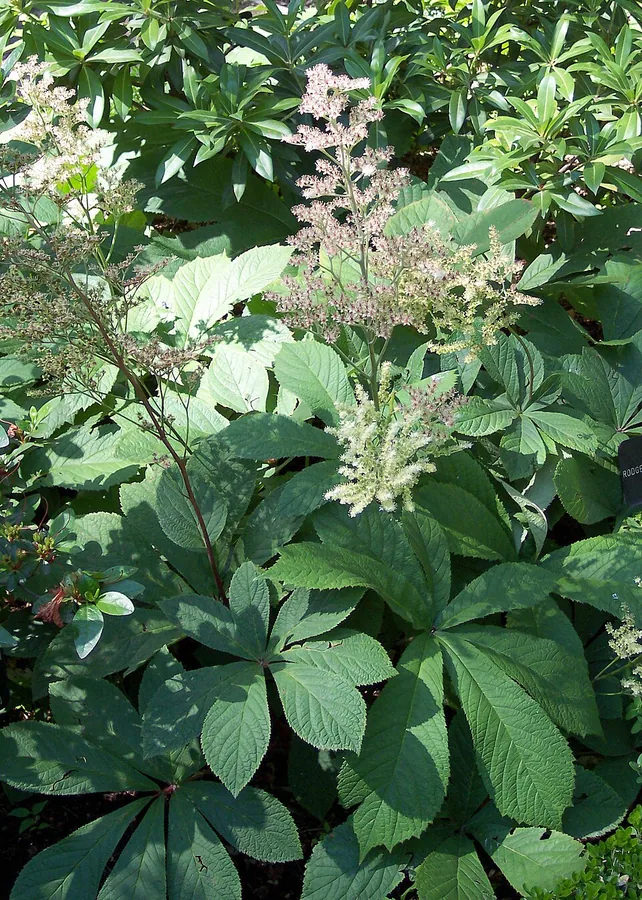
Rodgersia is a designer's foliage plant, valued for the presence of its leaves as much as for its flowers. Broad, deeply cut leaves in the shape of a horse chestnut give a shaded planting real architecture, filling a difficult corner with quiet stature. By summer, tall branched plumes rise above like an astilbe's, adding a soft vertical note to the scene.
This is a plant for the parts of a garden that usually feel like problems. A bog garden, the margin of a pond, a low damp hollow by a stream, or the shaded north face of the house all become settings it can anchor. Hardy and long-lived, it settles in for the long term, so a scheme built around it holds its look season after season.
The mood it creates is cool and composed, the kind of shaded green retreat you drift toward on a warm afternoon. It only asks that the ground never dries, since baked soil browns the leaf edges and breaks the calm. Keep the roots cool and moist, and rodgersia carries the whole picture with almost no fuss.
Care
The short version: set rodgersia in part to full shade in rich, humusy soil kept moist to wet, never letting it dry, and work in compost through the growing season.
Light
Rodgersia belongs in part to full shade, and the deeper shade of a hot garden suits it best. Strong afternoon sun works against the look, scorching the leaf edges brown.
Water
Moisture is what holds the whole planting together. The soil should stay consistently moist to wet and never dry, which is why rodgersia sits so naturally beside a pond, a stream, or a bog feature. Let it run dry and the leaf margins brown within days, undoing the effect.
Soil
Give it rich, humusy soil full of organic matter that keeps water at the roots. The ground should read as moist to wet but never a stagnant, standing mire, so a little drainage or gentle flow keeps it fresh.
Temperature
Rodgersia is fully hardy, weathering winter cold near -20°F (-29°C) and summer warmth up to about 75°F (24°C). It belongs to cool, temperate gardens far more than to hot, dry ones.
Humidity
There is no humidity figure to manage here, since ordinary outdoor air suits it. What shapes the plant is moisture at the roots, and the atmosphere can be left to itself.
Feeding
Work compost or a balanced fertilizer into that rich soil through the growing season. A yearly organic mulch is the elegant solution, feeding the plant while keeping the ground cool and damp.
Pruning
Upkeep is minimal. Remove the spent flower stalks once the plumes fade, and clear any tattered or browned leaves as the season goes on, and the clump stays crisp and well kept.
Size & spacing
In time rodgersia becomes a generous presence, around 3 to 5 feet (91 to 152 cm) tall and just as wide. Allow it the full 3 to 5 feet (91 to 152 cm) so the broad leaves can spread and hold their own in the composition.
When to plant
The rhythm is easy to live with. Plant out in spring once frost has passed, into a cool, moist, shaded setting, and the show runs from June to August. Beyond that, the clump simply grows fuller and more settled each year.
Northern hemisphere
Southern hemisphere
Typical months for a temperate climate: start earlier in warm zones, later where spring frosts linger.
- Sow: Sow seed in late winter to early spring; seed may need cool stratification.
- Plant: Plant outdoors in spring after frost in a moist, partly shaded site.
- Harvest: Blooms June to August with branched, astilbe-like panicles.
Hardiness
USDA hardiness zones: 5–7
Temperature: down to -29°C
Troubleshooting
Rodgersia keeps its composure and rarely troubles the gardener, and what does appear tends to show on the leaves. Dry soil, a few slugs, or a little mildew account for nearly all of it. Match the symptom below and step in early to keep the planting looking its best.
Browned, scorched edges along the leaves
Browned, scorched edges are the mark of leaf scorch, brought on by soil that dried out or sun that grew too strong. Rodgersia only looks its best with cool, damp roots, so keep the ground moist, ease the plant into deeper shade, and lay mulch across the crown to hold the moisture.
Fix:
- Keep soil consistently moist
- Provide partial to full shade
- Mulch to conserve moisture
Ragged holes eaten through the leaves
Ragged holes across those broad leaves are down to slugs and snails, which share the damp shade rodgersia enjoys and feed by night, betrayed by slime trails. Gather them after dark, set out bait or ring the plants with copper, and clear the debris that shelters them by day to keep the foliage clean.
Fix:
- Hand-pick at night
- Use slug baits or barriers
- Reduce excess debris around plants
A pale powdery film over the leaves
A pale, dusty film is powdery mildew, most likely where plants stand crowded or run dry. Take away the worst leaves, open the clump so air can move freely, and hold the soil evenly damp so nothing goes thirsty and the planting stays polished.
Fix:
- Improve air circulation
- Avoid drought stress
- Remove affected foliage
Toxicity
For a household with pets or children, rodgersia is an easy choice. It is not known to be toxic, sits off the ASPCA list of plants that harm cats and dogs, and has no reported trouble for other animals or people. That leaves the garden free to be a relaxed, shared space.
Safe for
People · Cats · Dogs · Horses · Rabbits · Livestock · Birds
Cats Safe
Rodgersia is not among the plants flagged toxic to cats, so a stray nibble will not do real harm. A curious cat may, at most, feel a mild and fleeting stomach upset after chewing the foliage.
Dogs Safe
Dogs share the garden with rodgersia safely, as it holds no toxin known to reach them. Should one eat a good deal of the coarse leaf, a brief, mild stomach ache is the worst likely outcome.
Horses Safe
Rodgersia has never been tied to poisoning in horses, so they may graze near it with nothing to fear.
Rabbits Safe
Rabbits are safe around rodgersia, and its large, coarse leaves rarely appeal to them, so most simply pass it by.
Livestock Safe
Cattle, sheep, and goats may graze a damp field or pond edge planted with rodgersia, since it holds no toxin that touches them.
Birds Safe
Garden birds and poultry come to no harm from rodgersia, whether they pick at the leaves or forage the moist soil around its base.
People Safe
Rodgersia earns its place for foliage and flower rather than for the table, and it carries no poisoning risk for people, so children are free to explore near it.
Varieties
Only a couple of rodgersia types are widely grown, each bringing its own leaf or flower to a scheme. These two are the ones worth designing around.
Rodgersia pinnata 'Superba'
The featherleaf choice, opening in bronze-purple before settling to green, then carrying rose-pink to red flowers through summer.
Rodgersia podophylla
A bolder statement in palmate leaves of 5 lobes, sometimes 7, reaching up to 16 inches across and turning bronze-red as the year closes.
How to propagate
Building up a drift of rodgersia is straightforward, most often by splitting an established clump, and from seed as well for those willing to wait.
DivisionModerate
Divide thick rhizomes in spring or early fall. · One to two growing seasons
Division is the graceful way to spread rodgersia through a border. In spring or early fall, lift a settled clump and part the thick rhizomes into pieces, each holding a bud and some roots. Replant them into rich, moist soil and allow one to two growing seasons for the drift to fill in. Seed is an option too, and a contented plant widens on its own as the rhizomes creep through the bed.
Myths
Rodgersia has to grow submerged in standing water like a pond plant.
It is devoted to moisture, at ease in the moist to wet soil that lines ponds and streams, yet it is no aquatic. Give it soil that stays reliably moist and it will never ask to sit in stagnant, waterlogged mud.