Ornamental · Saxifragaceae
Coral Bells
Heuchera sanguinea
Grown for its bold, year-round foliage as much as its airy spring flowers, coral bells brings quiet color to the shade.
Partial shade
USDA 3–8
8–20 in · 20–50 cm
Overview
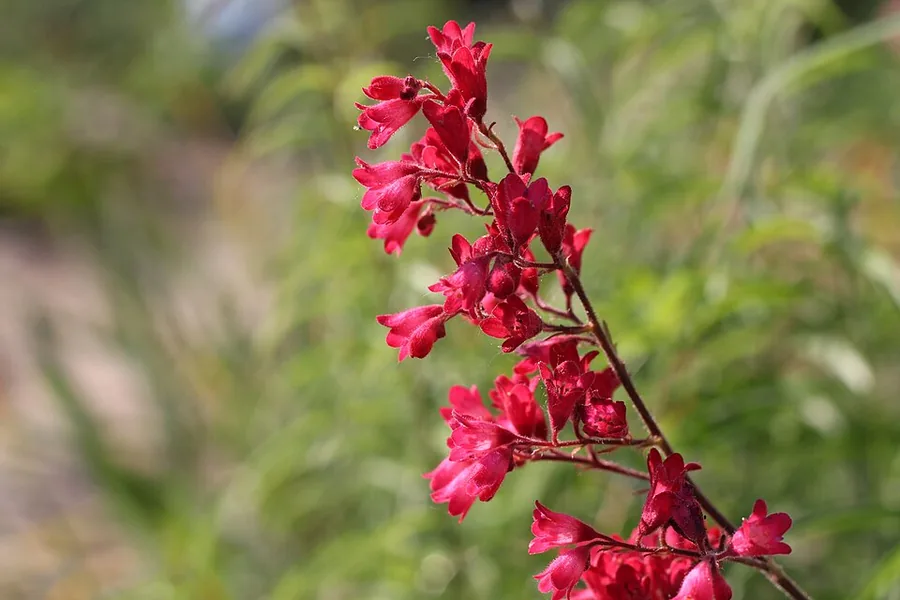
Coral bells earn their keep as a foliage plant, with the flowers a graceful bonus. The mounded clumps arrive in a wide sweep of colors, deep purple and bronze through lime green and peach, and they carry that color from spring well into fall, which makes them a dependable anchor in a shaded scheme. Come late spring, slim wiry stems lift above the mound with tiny bell-shaped flowers that draw hummingbirds to the garden.
This is an easy, well-mannered perennial that asks little once it settles into a spot. It belongs to the saxifrage family and grows wild across much of North America, which lends it the composure to take a wide swing of conditions in stride. In the garden it works beautifully as an edging along a path, as a filler that knits together a shady border, or as a tidy mound set near the front of a bed.
Placed where the light and soil suit it, coral bells rewards the setting for years. The essentials come down to even moisture, good drainage, and a spot out of harsh afternoon sun. Get those wrong and the rich foliage gives way to scorched edges and rotting crowns, and the whole planting loses its calm.
Care
The short version: set coral bells in part shade with rich, well-drained soil, keep the moisture even so the roots never sit wet, and deadhead the spent flower stalks to keep the blooms coming.
Light
Coral bells look their best in partial shade, though they take partial sun and even full shade in stride. Some sun deepens the leaf color and lifts the bloom, but in hot regions the afternoon sun scorches the foliage, so give the planting shelter from it.
Water
Keep the soil at medium, even moisture, which counts most in full sun where the leaves scorch as they dry. The plants grow drought tolerant once established, yet the roots should never sit wet, since soggy soil invites root rot.
Soil
Set them into humus-rich, well-drained soil worked over with plenty of organic matter. A pH between 6.0 and 7.0 suits them, and heavy clay that traps water around the crown does not.
Humidity
Average humidity is all they ask, so there is no figure to chase. Airflow matters more than moisture in the air, since still, damp conditions are what invite powdery mildew and other leaf troubles.
Feeding
Coral bells are light feeders. A single spring feeding of balanced fertilizer, or a compost topdressing through the growing season, keeps the foliage full and the planting handsome.
Pruning
Deadhead the spent flower stalks to keep the blooms coming through the season. In spring, clear away any old or winter-worn foliage so fresh growth can take the stage.
Size & spacing
The mounds reach 8 to 20 inches (20 to 50 cm) tall and spread 9 to 18 inches (23 to 46 cm) wide. Give each plant room for its full mound so air moves freely and the foliage stays dry.
When to plant
Coral bells settle into a garden most gracefully while the weather stays cool. Plant divisions or nursery stock in late fall or early spring, and the bell-shaped flowers arrive from May into June, often lingering through early fall wherever the spent stalks are kept trimmed.
Northern hemisphere
Southern hemisphere
Typical months for a temperate climate: start earlier in warm zones, later where spring frosts linger.
- Sow: Late winter to early spring; surface-sow seed as it needs light to germinate
- Plant: Late fall or early spring
- Harvest: May to June, often through early fall if deadheaded
Hardiness
USDA hardiness zones: 3–8
Temperature: down to -40°C
Troubleshooting
Most trouble with coral bells traces back to water, sun, or winter cold. Notice the early signs on the leaves and crown and a small setback need never dull the planting. Match what the garden shows you below, then act while it still counts.
A wilting clump with a blackened crown that gives way
When a clump slumps and the crown turns black and soft, the culprit is root rot, usually the water mold Phytophthora, and it moves in wherever the soil stays soggy or drains slowly. A look beneath the surface reveals dark, mushy roots and a spongy crown. A plant this far gone is past rescue, so lift it out, rework the bed with plenty of organic matter to open up the drainage, and let the soil dry between waterings.
Fix:
- Improve drainage and amend with organic matter
- Avoid overwatering
- Remove and discard severely affected plants
A pale dusting, rust pustules, or spotting on the leaves
A run of foliar diseases can settle on coral bells, powdery mildew, rust, and bacterial leaf spot among them, and each one quietly spoils the clean look of the foliage. They take hold where leaves stay damp and the air hangs still. Set the plants with room to breathe, water low at the base rather than over the top, and remove any leaf already marked so the planting keeps its polish.
Fix:
- Improve air circulation
- Avoid overhead watering
- Remove affected foliage
The plant lifted from the bed with roots on show
A crown that has risen clear of the bed over winter has fallen to frost heaving, the slow work of freeze-and-thaw cycles nudging the plant upward. With its roots left open to cold, dry air, the plant needs attention before spring gets underway. Ease the crown back to its original depth once the season turns, and lay a winter mulch after the ground has frozen to keep the soil temperature even.
Fix:
- Gently press or replant the crown back into the soil in spring
- Apply winter mulch after the ground freezes
Dry, crisped edges along the leaves
Those parched, crisped edges are leaf scorch, which sets in when a sun-drenched planting runs low on water through the hot, dry stretch of summer. The most exposed leaves show it first, dulling the display just when a border should look its best. Give the planting afternoon shade where summers turn fierce, and keep the soil evenly moist so the foliage holds its poise.
Fix:
- Provide afternoon shade in hot climates
- Maintain consistent soil moisture
Toxicity
A reassuring note for households with pets or children: coral bells are safe throughout. The ASPCA lists them as non-toxic to cats, dogs, and horses, with nothing to fear for rabbits, livestock, birds, or people. They belong wherever the garden calls for them.
Safe for
People · Cats · Dogs · Horses · Rabbits · Livestock · Birds
Cats None
Coral bells carry a non-toxic listing, so a household cat that samples a leaf comes to no harm.
Dogs None
A dog can mouth the foliage without consequence, as no part of the plant is poisonous to them.
Horses None
Horses are safe near the plant, with nothing toxic in the leaves, stems, or flowers.
Rabbits Safe
Rabbits may browse coral bells with no risk of poisoning.
Livestock Safe
Livestock grazing near the planting in garden or pasture face no danger from it.
Birds Safe
Birds that peck at a leaf or a seed remain entirely safe.
People Safe
The plant poses no poisoning risk to people, children who handle the foliage included.
Varieties
Breeders have widened the coral bells palette into a broad range of leaf colors, and a few selections rise above the rest. These are the ones worth knowing by name.
Palace Purple
Crowned the 1991 Perennial Plant of the Year, it is grown above all for its foliage color, deep purple to bronze-green lobed leaves lined with wine-red undersides.
Georgia Peach
Its peach-to-rose foliage was bred to weather heat and humidity more gracefully than the older selections.
Primo 'Pretty Pistachio'
This selection sets bright lime-green leaves beside soft pink flowers.
How to propagate
Coral bells are easy to gather more of, whether you part an established clump or raise the species from seed.
DivisionEasy
Spring, dividing clumps every 3-4 years · One growing season
The simplest way to gather more coral bells for the garden is to divide the clumps in spring, lifting and parting the crowns every 3 to 4 years. Reset each division at its original depth in amended soil, and it finds its footing across a single growing season.
SeedModerate
Late winter to early spring · Bloom typically the following year; named hybrids do not come true from seed
The straight species also grows from seed sown in late winter to early spring, though you will want to surface-sow it since the seed needs light to germinate. Bloom usually arrives the following year, and named hybrids will not come true this way.
Myths
Coral bells are poisonous to dogs and cats.
The ASPCA lists coral bells as non-toxic to dogs, cats, and horses. They can go anywhere your pets roam without concern.
Coral bells demand full shade and will not flower in sun.
They settle happily into anything from full sun to part shade, and many bring their richest color and bloom under some direct light. Afternoon shade is the graceful choice in hot climates, while a full-sun planting simply needs steady moisture to keep the leaves from scorching.