Ornamental · Campanulaceae
Balloon Flower
Platycodon grandiflorus
Settle it once into full sun and sharp drainage, and those puffed buds keep opening across the garden every summer for years.
Full sun
Every 5–10 days
USDA 3–8
12–30 in · 30–76 cm
Overview
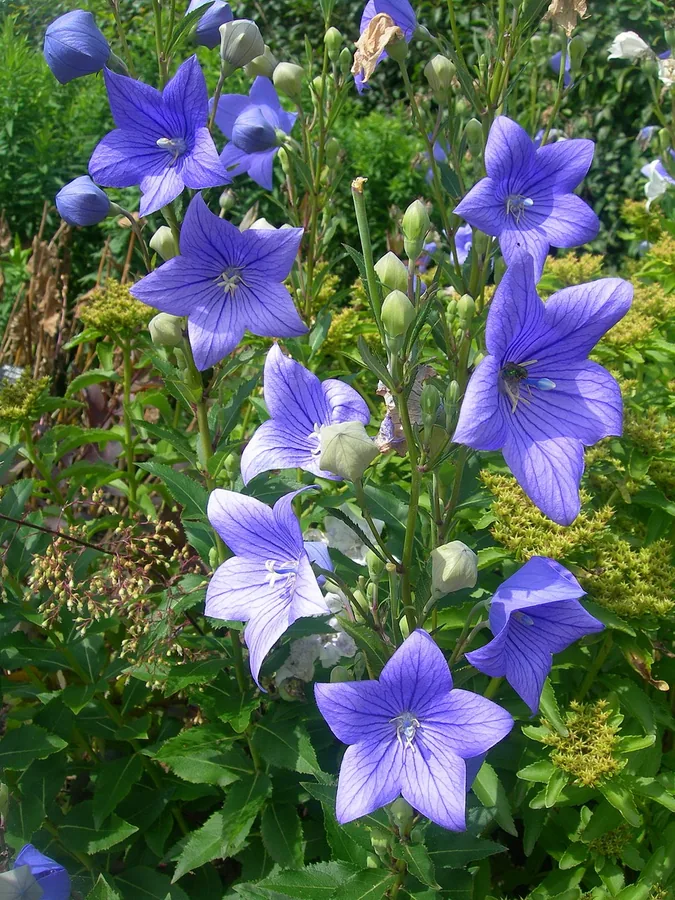
The name comes straight from the way the buds behave. Each one puffs up like a small inflated pod, then parts into a wide, five-pointed star in deep blue, with white and pink in the mix. A hardy perennial of the bellflower clan and East Asian by origin, it makes a dependable fixture that returns season after season across zones 3 through 8.
Anyone drawn to an unfussy perennial will find a kindred spirit here. It wants full sun, ground that drains well, and very little fuss otherwise, carrying its show from June into August once it has settled. The taller forms come with a single caveat: they incline to flop without support, which is why many gardeners cut them back in late spring to hold a tidier shape.
There is one trait that tends to unsettle newcomers. Balloon flower is a late riser in spring, sending up its stems weeks after the rest of the border has greened, and the wait convinces many that it has gone for good. Mark its place, hold off on the spade, and it reappears right on its own timeline.
Care
The short version: full sun and light, well-drained soil, kept evenly moist yet never soggy at the roots. A light spring feeding and a trim of the taller stems in May curb the flopping, and from there this easygoing perennial happily looks after itself.
Light
Set balloon flower in full sun for the firmest stems and the freest flowering. It will accept partial shade, yet plants given too little light grow lanky and weak and lean far more readily than those in an open spot.
Water
Hold the soil evenly moist but never waterlogged, watering about every 5 to 10 days once the top inch has dried. Drainage is the rule that outranks all others, because roots left in wet ground rot in short order.
Soil
Give it light, rich, well-drained loam that lets water pass through with ease. A slightly acidic pH of 5.5 to 6.0 suits it best, and ground that stays wet is the quickest way to lose the plant.
Temperature
This is a truly cold-hardy perennial, weathering winters down to -29°F (-34°C) and taking summer warmth up to about 90°F (32°C) in stride. That span carries it through zones 3 through 8 with no special cover.
Humidity
Everyday outdoor air is plenty, so there is no figure to chase. Moving air matters more than moisture overhead, since still, damp corners invite both rot and slugs.
Feeding
A light touch is all it asks. Work a little balanced fertilizer or compost into the ground in spring and leave it there, as overfeeding yields soft, floppy stems in place of flowers.
Pruning
Remove spent blooms to keep the flowers arriving, and shorten the taller stems by half in May to forestall flopping and avoid the stake. Let the old stems stand through winter so they flag where the late crowns will rise.
Repotting
Balloon flower rarely needs repotting, and it resents any meddling with its roots. Shift a container-grown plant only when flowering tails off or roots begin to circle the pot, and treat the brittle taproot gently.
Size & spacing
Plants stand 12 to 30 inches (30 to 76 cm) tall and reach 12 to 18 inches (30 to 46 cm) across, according to the cultivar. Allow each one that much breathing room so air circulates and the stems hold their line.
When to plant
Balloon flower keeps a leisurely calendar. Start seeds under cover in late winter, move young plants out after the last frost once the soil has warmed, and the inflated buds open from June into August.
Northern hemisphere
Southern hemisphere
Typical months for a temperate climate: start earlier in warm zones, later where spring frosts linger.
- Sow: Late winter to early spring, about 6-8 weeks before last frost
- Plant: After last spring frost once soil has warmed
- Harvest: June to August
Hardiness
USDA hardiness zones: 3–8
Temperature: down to -40°C
Troubleshooting
Balloon flower keeps its composure with minimal attention, and most setbacks come down to too much water or a passing slug rather than disease. Keep an eye on the roots and the lower leaves, then match what you notice to the entries below before stepping in.
A languishing plant in ground that stays too wet
When a once-handsome clump turns limp and yellow, the culprit is usually root rot sitting in soil that holds water. Lift a fading plant and the roots feel soft and dark while the bed underneath never seems to dry. The remedy is a drier, better-draining spot: let the ground breathe, water with restraint, and move any survivors into light, free-draining loam.
Fix:
- Improve drainage and reduce watering
- Remove severely affected plants
- Replant in light, well-drained loam
Chewed foliage marked by a faint silvery trail
Tattered foliage and a glinting trail across the bed are the calling card of slugs and snails working under cover of dark. A flashlight after sundown, or a walk through the garden once rain has passed, will show who is responsible. Lift them off by hand, tidy away the damp hiding places they favor, and reach for iron-phosphate bait only if the nibbling persists.
Fix:
- Hand-pick slugs and snails in the evening
- Remove debris and mulch that shelters them
- Use traps or iron-phosphate baits if needed
Lofty stems that lean and lose their poise
Reaching their full stature, the taller selections have a habit of leaning into a sprawl, and a heavy shower or a shady corner only encourages it. A bright, open position firms up the stems, while a trim that takes the plants back by half in May keeps the silhouette neat and low. For anything that still slouches, a discreet stake restores the line.
Fix:
- Stake taller plants
- Cut stems back by half in May to reduce height
- Grow in full sun for sturdier stems
Toxicity
Reassuring news here: balloon flower is welcome throughout the whole household. The ASPCA does not list it as toxic to pets, and it carries no warning as poisonous to people. The root is in fact a time-honored Korean vegetable known as doraji, though it does hold saponins that can unsettle a stomach when raw plant material is eaten in quantity.
Safe for
People · Cats · Dogs · Horses · Rabbits · Livestock · Birds
Cats None
A welcome plant in a home with cats, since the ASPCA flags nothing toxic in it. The saponins might leave a curious taster with a passing bit of stomach upset, and little beyond that.
Dogs None
This is a fine companion for households with dogs. It stays off the ASPCA toxic list, and a sampled mouthful tends to amount to no more than a short, mild upset stomach.
Horses Safe
Nothing here gives reason for worry around horses, as the plant holds none of the toxins that affect grazing animals.
Rabbits Safe
A rabbit can browse it without coming to harm, though the saponins make it better suited to the odd nibble than to a regular place in the diet.
Livestock Safe
Grazing cattle, goats, and sheep are in no danger nearby, because none of its parts are poisonous to them.
Birds Safe
Garden visitors and wild birds alike have nothing to fear from the plant or its seeds.
People Safe
Easy company for people, and the root is a real ingredient on the table. In Korean kitchens it becomes doraji, though raw root in quantity can unsettle the stomach thanks to its saponins.
Roots and other parts contain saponins (platycosides); eating raw plant material in quantity could cause mild stomach upset, and traditional use involves preparing the root before eating.
Varieties
Nearly every balloon flower on offer is a named cultivar picked for its height or its color. These are the selections you are most likely to meet.
Astra Blue
A neat dwarf for the front of a planting, its plump violet-blue buds unfurling into broad, star-shaped flowers.
Fuji White
A loftier choice that sets aside the familiar blue in favor of crisp white, bell-shaped blooms.
Komachi
A conversation piece whose blue buds hold their inflated balloon shape and decline to ever open fully.
Sentimental Blue
A small, generously flowering dwarf in blue, made for the edge of a border or the rim of a container.
How to propagate
Seed is the surest route to a thriving balloon flower, since the brittle taproot turns the alternatives into more trouble than they repay.
SeedEasy
Sow indoors in late winter/early spring or direct sow after frost · One to two seasons to reach flowering size
For balloon flower, seed is the simplest and most reliable place to begin. Start it under cover in late winter or early spring, or sow straight into the bed once frost has gone, and plants come into flower in one to two seasons. Since the roots dislike disturbance, seed is the kinder path than moving a settled clump.
DivisionDemanding
Spring · Variable; recovery can be slow
Dividing in spring is possible, yet the delicate, fleshy taproot makes it awkward and the plant takes it badly. Recovery comes slowly and unevenly, so leaving a settled clump in place is generally the wiser course.
Stem cuttingsModerate
Late spring to early summer · Several weeks to root
Basal stem cuttings, taken in late spring or early summer, let you increase a plant while leaving the taproot untouched. Allow them several weeks to root before potting on.
Myths
Balloon flowers are easy to lift and divide like most clumping perennials.
Fleshy, brittle roots mean that lifting and splitting a clump usually checks the plant or finishes it off. Raise fresh plants from seed and let the settled ones stay put once they have found their footing.
The plant has died because nothing comes up in early spring.
Slow to wake is simply its way, and fresh stems arrive well into spring after the rest of the bed is already up. Note where each one stands and keep the trowel away early so the crowns stay safe until they break ground.