Ornamental · Campanulaceae
Lobelia
Lobelia erinus
Give it cool weather, part shade, and steady moisture, and lobelia washes a path or basket in clouds of blue from spring into fall.
Partial sun
Every 2–4 days
36–81°F · 2–27°C
70–85 days
Overview
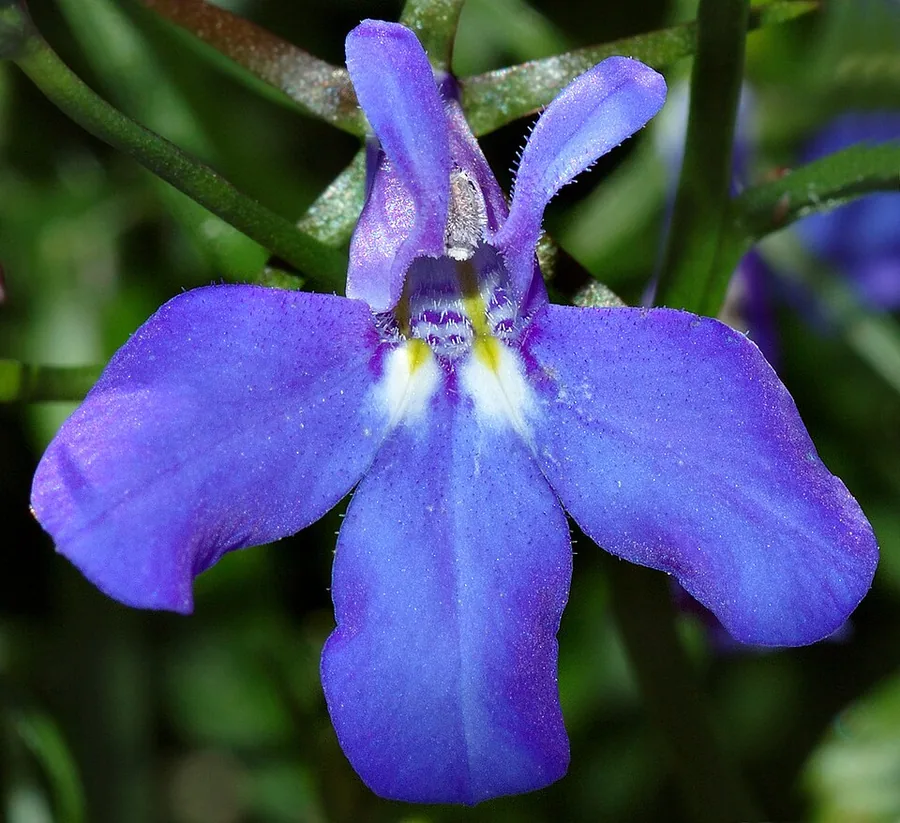
Lobelia is the quiet workhorse of the spring garden, the low, frothy edger that softens a path and spills from a basket in a wash of blue. A member of the bellflower family, it is grown in most gardens as a tender annual, staying low at 4 to 9 inches (10 to 23 cm) while it settles into a mat along a border or drapes as a trailing curtain by a doorway.
Where it earns its keep is in the mood it sets. As a cool-season plant it looks its best through the mild weeks of spring and fall, flowering from April into early summer while the weather stays gentle, the season when a courtyard or entrance most wants a cool, easy color. When high summer arrives and the display tires, a cutback and the patience to wait for cooler weather bring it back for a second act.
It fits the way a garden is actually lived in: rich, moist soil, a corner out of the harshest afternoon sun, and a drink before it dries, and it repays that small routine with weeks of color at the front of a bed or the edge of a pot. The one caveat to plan around is that the whole plant is toxic, so place it where pets and grazing animals are not tempted.
Care
The short version: part shade where summers are hot, rich soil kept evenly moist, a balanced feed every couple of weeks, and a midsummer cutback to bring the color back for fall.
Light
Lobelia looks its best in part sun and will take full sun in cool climates. Where summers run hot, tuck it into afternoon shade, since heat and glare, more than any lack of light, are what dull the display and cut the bloom short.
Water
Keep the soil evenly moist at all times, because lobelia has no tolerance for drought and quickly loses its looks if it dries out. Water at the base every 2 to 4 days, more in heat, but never leave it soggy, which spoils the planting with rot.
Soil
Set it into rich, well-drained ground full of organic matter, whether loam, sand, or clay. It is relaxed about pH, content anywhere from 6.0 to 7.5, as long as the soil holds moisture without turning waterlogged.
Temperature
This cool-weather plant is comfortable across roughly 36°F to 81°F (2°C to 27°C). It carries a garden through the mild ends of the season and struggles once summer heat and humidity settle in.
Humidity
Ordinary outdoor air suits it, so there is no level to chase. Muggy summer heat is the real problem, not dry air, since damp, stagnant air around the planting invites the rots that spoil its looks.
Feeding
Feed every two weeks through the growing season with a balanced water-soluble fertilizer. That steady, light diet keeps a fast grower in flower and the display full rather than thinning out by midseason.
Pruning
When midsummer heat dims the show, shear the whole planting back by about a third. It looks bare for a week, then fills with fresh growth that reblooms once cooler fall weather returns.
Size & spacing
Lobelia stays low, about 4 to 9 inches (10 to 23 cm) tall, and spreads 6 to 12 inches (15 to 30 cm) wide. That compact, mounding-to-trailing habit is what makes it a natural for edging a bed and finishing the front of a container.
When to plant
Lobelia keeps to cool weather, so the calendar shapes where it fits in the year. Start the slow seed indoors well before your last frost, set plants out once spring has settled, and let the flowers carry a path or border from April into summer, longer where the season stays mild.
Northern hemisphere
Southern hemisphere
Typical months for a temperate climate: start earlier in warm zones, later where spring frosts linger.
- Sow: Start seed indoors 8 to 10 weeks before the last spring frost; seed can be slow and difficult to germinate.
- Plant: Transplant after the last frost once cool spring weather is settled.
- Harvest: April to June, continuing into summer in cool climates
Hardiness
USDA hardiness zones: 10–11
Temperature: down to -1°C
Troubleshooting
Most lobelia trouble comes down to two things: too much water early on and too much heat later. Catch the signs below while they are still small and the planting usually recovers. Match what you see, then act before it spreads.
Seedlings buckle and rot at the soil line
Before the display ever reaches your steps, damping-off can undo a tray of seedlings kept cold and wet. The stems turn water-soaked and pinch in at the base, and the young plants go over together. Start over in a clean, free-draining mix, water with a lighter touch, let more air move through the space, and clear away anything already lost.
Fix:
- Use sterile, well-draining seed mix
- Improve air circulation and reduce watering
- Remove and discard affected seedlings
A planting that wilts as its roots soften
A pot or bed that never drains sets up stem and root rot, the quiet spoiler of an otherwise handsome planting. The giveaway is a plant that keeps wilting though the soil is soaked, with roots gone dark and soft below. Improve the drainage, water less often, and lift out anything past saving so the rest of the arrangement holds together.
Fix:
- Improve drainage and reduce watering frequency
- Remove severely affected plants
The show fades as summer turns hot
A container that carried the whole entry in spring can lose its shine by high summer, since heat and humidity stress run counter to this cool-loving plant. The planting looks tired and the flowers stop just as the season peaks. Cut it back by about a third, keep the soil evenly moist through the heat, and shift the pot into afternoon shade where summers run hot, and the display often returns with the cool of fall.
Fix:
- Cut plants back by about one-third to encourage fall rebloom
- Maintain consistent moisture during heat
- Provide afternoon shade in hot climates
Toxicity
Enjoy lobelia as a look-but-don't-eat plant. Every part holds lobeline and related alkaloids, so eating it makes pets, livestock, and people sick, with nausea, vomiting, and drooling, and heart and breathing effects from a large amount. Place it where animals and small children cannot reach the planting.
Toxic to
Cats · Dogs · Horses · Rabbits · Livestock · Birds · People
Cats Toxic
As pretty as it looks on a sunny sill or step, lobeline sits in every part of the plant, so a cat that samples it may drool, go off its food, and turn dull and listless. Vomiting and diarrhea tend to follow, and a large mouthful can unsettle the heartbeat and breathing.
Dogs Toxic
A dog that reaches the leaves or flowers of a low planting tends to drool heavily and vomit, with stomach pain and loose stools close behind. Eat enough and the alkaloids start to affect the heart and breathing.
Horses Toxic
Horses meet the same alkaloids with drooling, an unsettled stomach, and a flat, depressed mood. A large dose can disturb the heart rhythm, so keep lobelia and its containers well clear of paddocks and hay.
Rabbits Toxic
The alkaloids run through the whole plant, so no part is safe for a rabbit to graze. Drooling and gut upset are the usual result, and worse from a larger feed.
Livestock Toxic
Cattle, sheep, and goats can be poisoned by grazing the foliage, which brings on salivation, vomiting, and weakness. Heavy grazing risks heart and breathing trouble, so keep it fenced away from pasture.
Birds Toxic
The lobeline held in the leaves and flowers makes lobelia an unsafe nibble for pet or backyard birds. Even a small taste can upset the gut, and more can affect the heart.
People Caution
For all its charm in a planting, no part of lobelia is food, and eating it brings on nausea, vomiting, and drooling. A large amount can affect the heart and breathing, so keep curious children away from the display.
Keep away from grazing animals and pets.
Helpline numbers

United States
ASPCA Animal Poison Control: (888) 426-4435 (fee applies)
Poison Control: (800) 222-1222



Canada
Poison Centres: 1-844-764-7669
Varieties
Lobelia comes in upright edging types and trailing types for baskets, mostly in shades of blue, giving you a cool palette for borders and containers alike. These are the names you will see most often.
Crystal Palace
A compact, upright choice for a crisp bed edge, its deep blue flowers playing against bronze-tinged foliage.
Cambridge Blue
A tidy mounding edger whose soft sky-blue flowers lend a gentle, understated finish to a border.
Sapphire
A trailing type that pours blue, white-eyed flowers over the rim of a hanging basket for an easy overhead accent.
Laguna series
A group of trailing cultivars bred to hold their looks through the heat and keep a summer container going.
How to propagate
Lobelia is grown from seed, a slow project that rewards patience over speed.
SeedModerate
Start indoors 8 to 10 weeks before the last frost. · Roughly 10 to 12 weeks from sowing to transplant-ready size.
Lobelia is grown from seed, a slow, quiet project for anyone who enjoys the making as much as the finished planting. The seed is dust-fine and takes its time, so start it indoors 8 to 10 weeks before your last frost, scatter it across the surface, and hold it evenly moist and warm. Allow about 10 to 12 weeks from sowing to a plant ready for its pot or bed, and where the timing does not suit, nursery transplants slot in without fuss.
Myths
Edging lobelia is the same plant as the medicinal cardinal flower.
Annual edging lobelia (Lobelia erinus) is a distinct species from cardinal flower (Lobelia cardinalis), even though the two are sometimes treated as one. However you use it in a planting, hold onto the shared caution: every Lobelia carries toxic lobeline alkaloids and none is safe to eat.
Lobelia is a true sun-lover that thrives in summer heat.
It reads as a sun plant, but it is really a cool-season annual happiest in part shade where summers turn hot. Mid-summer heat and humidity usually send it into decline, which is why it earns its place in the spring and fall garden rather than at the height of the season.