Houseplant · Cactaceae
Barrel Cactus
Ferocactus wislizeni
Set it in full sun and gritty, fast-draining soil, water it rarely, and this sculptural desert barrel anchors a room for decades.
Full sun
Every 14–28 days
USDA 9–11
2–10 ft · 0.6–3 m
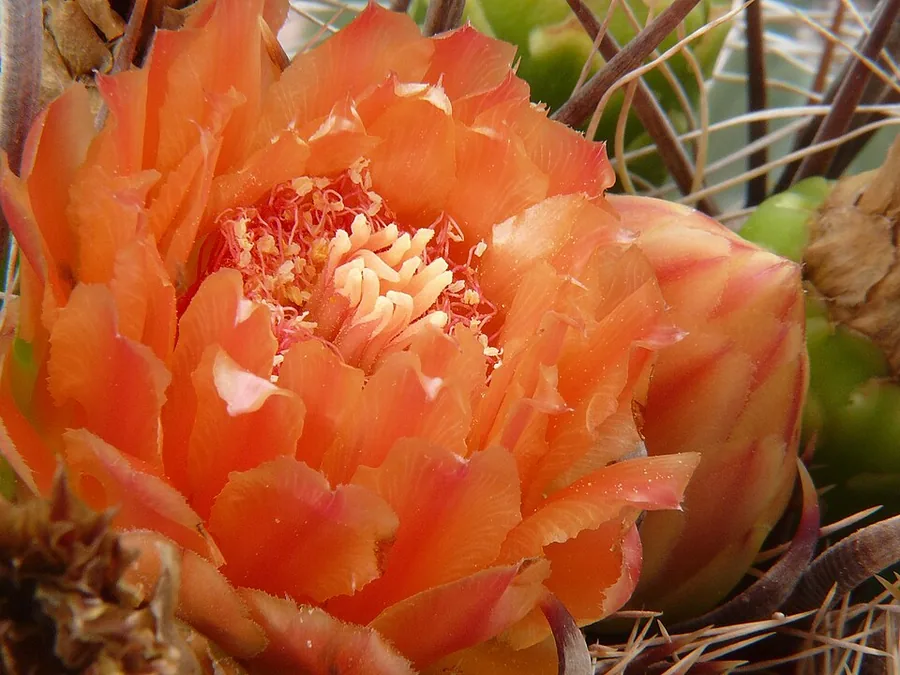
Overview
The barrel cactus reads like a piece of living sculpture, a stout, ribbed barrel that holds its rounded form for a lifetime and brings a still, grounded note to a room. It carries the spirit of the Arizona and Sonora deserts indoors, a place of strong light and long, quiet dry spells. Give it the same setting at home, a sunlit window, gritty soil, and an unhurried watering routine, and it becomes the calm centerpiece a sparse, modern space wants.
Two qualities shape how it lives with you. The fishhook spines, its stiff curved central spikes, lend it a desert edge and ask only that you place it thoughtfully, away from where hands and sleeves pass. Its slow growth is the other gift, because a plant that changes little over years suits a considered interior and keeps its proportions in step with the furniture around it.
It belongs to the school of plants that reward a light touch over constant attention, which makes it a natural fit for a pared-back, low-effort home. Get the window and the drainage right and it folds quietly into the rhythm of the room. The one thing to resist is the urge to fuss, since watering it like an ordinary houseplant is what undoes it.
Care
The short version: a sunlit spot with full, direct light, gritty, sharply drained soil, water only when the mix is bone dry and barely any through winter, and thick gloves within reach for the rare times you move it.
Light
Give it full, direct sun, and the brighter the spot the better it holds its form. It will tolerate partial sun or bright indirect light, but a dim corner makes the new growth stretch pale and thin and loses the clean, rounded silhouette that earns it a place in the room.
Water
Let the soil dry out completely between drinks, then water deeply but sparingly through the growing season, roughly every 14 to 28 days. Keep it nearly dry across winter. It rots easily, so never leave it standing in wet soil.
Soil
Set it in a gritty, sharply drained sandy or cactus mix that water runs straight through, which also pairs well with a simple unglazed or stone pot. A pH from 6.0 to 7.5 suits it. Drainage matters far more here than rich soil.
Temperature
It is comfortable across a wide range, from about 41°F to 95°F (5°C to 35°C). Ordinary room warmth suits it, but a hard freeze does not, so bring it in or shelter it before temperatures fall near the low end.
Humidity
Low humidity is exactly its element, an easy match for most dry, heated interiors. There is no number to chase and no need to mist, since damp, still air only invites rot.
Feeding
Feed it lightly through spring and summer while it is growing, about once a month with a dilute, low-nitrogen cactus fertilizer. Let it rest from feeding in winter. Too much nitrogen pushes soft growth that blurs the crisp form.
Pruning
It asks for no routine pruning at all, which keeps upkeep close to nothing. The only reason to cut is to remove damaged, rotted, or dead tissue, and even then you use sterile tools and thick gloves to clear away the bad parts.
Repotting
Plan to repot only every 3 to 4 years or once it is clearly rootbound, with roots showing at the drainage holes or the plant turning top-heavy, an ideal moment to refresh the pot to suit the room. Always work with thick gloves or a band of rolled material, since the hooked spines catch.
Size & spacing
Its slow pace keeps it tabletop-modest indoors for years, though in the ground over a long life it can rise to 2 to 10 feet (60 cm to 3 m) tall. Allow a footprint of 12 to 24 inches (30 to 60 cm), and place it well clear of walkways so no one brushes the spines.
Troubleshooting
Almost everything that unsettles a barrel cactus traces back to water and light, so it asks little of your attention day to day. The signal worth catching early is a soft or discolored body, since rot moves quickly and cannot be reversed. Find the match below and act before it spreads.
Soft, mushy brown or black patches on the body or base
Soft, darkened, sour-smelling areas are a sign of rot, which sets in when water lingers in soil too slow to drain. The moment fungus or bacteria reach the soft tissue, that section is past saving, so set the watering can aside and pare it back to clean green flesh with a sterile blade. Let the wounds dry and callus in still air, then resettle the plant in a gritty, fast-draining mix and it can return to its place in the room.
Fix:
- Stop watering immediately
- Cut away all rotted tissue back to clean, firm green flesh with a sterile blade
- Allow cuts to callus in dry air
- Repot into dry, gritty, fast-draining mix and resume watering only once established
Pale, stretched new growth losing the round shape
When the silhouette starts to soften and lean, that is etiolation, the plant straining toward light a shaded corner cannot supply. New growth tips toward the window and thins out, and the sculptural roundness that anchors a room begins to slip. Move it into full sun to restore the form, easing it over across a week or two so the tender tissue does not scorch.
Fix:
- Move to a full-sun location, acclimating gradually to avoid scorching
A wrinkled, shriveled body
A creased, deflated profile usually points to drought, the toll of too little water across too long a stretch. The look can mislead, though, since rot lends the same tired appearance by leaving roots unable to drink. A check of the roots settles it: firm roots call for a good soak and a few patient days as the form fills out again, while mushy roots mean the problem is rot.
Fix:
- Water thoroughly once and observe for firming over days
- If roots are rotted, treat as rot: cut to clean tissue and re-root in dry gritty mix
Corky brown scarring low on the body
Firm, dry, corky patches low on the body are usually nothing more than age, a quiet patina that needs no fixing. Now and then they are old sunscald, the mark of a move into strong light made too quickly. As long as the patches stay firm and odorless, let them be as part of the plant's character, and introduce bright light in gentler stages next time.
Fix:
- No action needed for natural corking; for sunscald, shade and acclimate gradually
Toxicity
The reassuring part for a shared home: this cactus is not poisonous to people, pets, or livestock, and the ASPCA does not list it as toxic. The real hazard is physical, not chemical. Its stiff, fish-hook spines can press deep into skin and paws, so give it a high, out-of-the-way perch and handle it only with thick gloves.
Safe for
People · Cats · Dogs · Horses · Rabbits · Livestock · Birds
Cats None
There is no poison here for a cat to worry about. The real consideration in a shared room is the hooked spines, which can reach a curious nose or paw.
Dogs None
A dog faces no poisoning from a nibble. Even so, the fish-hook spines puncture skin and catch in the mouth, which is reason enough to set it on a high, untrafficked surface.
Horses Safe
There is no chemical risk to horses at all. The only concern is a painful spine wound where one brushes against the plant.
Rabbits Safe
Rabbits face no poisoning from it. The sharp spines are the lone worry, since a small animal runs into them easily.
Livestock Safe
Cattle, goats, and sheep can stand near it with no toxic effect. The stiff hooked spines still account for the only injury risk.
Birds Safe
It is harmless for birds to taste. The spines are the single real hazard anywhere near the plant.
People Safe
There is nothing toxic in handling it or living alongside it. The spines are the whole concern, so reach for thick gloves and keep children at a comfortable distance.
Stout, rigid spines with sharp, fish-hook-shaped tips readily cause painful puncture wounds and can embed in skin or paws; keep out of reach of pets and children and handle only with thick leather gloves or rolled material.
Varieties
Botanists recognize a few named forms of Ferocactus wislizeni, drawn mostly along the lines of where each one grows. These are the forms the references document.
Ferocactus wislizeni subsp. tiburonensis
An island form from Isla Tiburon in Sonora, set apart in POWO as its own infraspecific taxon.
Ferocactus wislizeni subsp. herrerae
Taller and more slender of stem, this form is now and then ranked as a species of its own, Ferocactus herrerae.
Ferocactus wislizeni var. ajoensis
A form linked to the Ajo region of Arizona and on record in POWO.
How to propagate
Growing more barrel cacti is a slow, patient affair, since seed is realistically the only route and the seedlings inch along.
SeedModerate
Spring, with sustained warmth (about 21-27°C / 70-80°F) · Several years to reach a few centimeters; very slow
Growing more is a slow, considered pursuit, since seed is realistically the only route and this cactus rarely offers offsets or pups. Sow in spring and hold an even warmth around 70°F to 80°F (21°C to 27°C) to coax the seedlings up. From there it is a matter of years rather than weeks, as they need that long simply to reach a few centimeters.
Myths
A barrel cactus is a reliable emergency water source in the desert.
The romance of it does not hold up. The pulp inside a fishhook barrel runs sharply acidic rather than clean, and drinking it can bring on nausea, vomiting, and diarrhea that leave a person worse off than before. Most barrel cacti are protected by law as well. Keep it on the shelf as desert lore, not a workable plan.