Houseplant · Cactaceae
Moon Cactus
Gymnocalycium mihanovichii
Two cacti styled as one, the moon cactus brings a bold chlorophyll-free cap to the shelf while the green stem below carries it.
Bright indirect
Every 14–21 days
59–86°F · 15–30°C
USDA 10–11
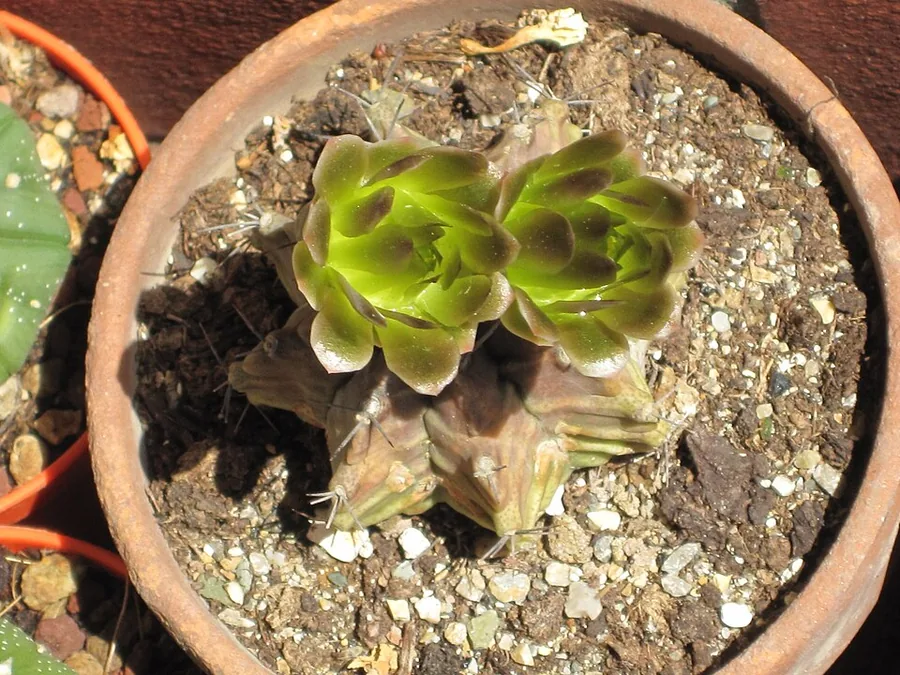
Overview
The moon cactus is a small piece of living color, a houseplant made from two cacti kept as one. The bright red, yellow, pink, or orange ball on top is a Gymnocalycium without chlorophyll, so it cannot feed itself. That cap is grafted onto a green columnar rootstock, usually a Hylocereus, which does the quiet work of turning light into food for both, and the result reads like a bright button set on a shelf or a windowsill.
Because the cap has no green tissue, it cannot live on its own roots, and that shapes how it fits a home. It stays compact, 4 to 12 inches (10 to 30 cm) tall, and grows slowly, so it holds its look on a desk, a bathroom ledge, or a cluster of small pots without ever crowding the space. The graft union does weaken over a few years, so treat it as a cheerful seasonal accent rather than an heirloom.
Styling it is easy once the two needs are met: bright filtered light and a dry root zone. Set it near a window that glows but never bakes, water it seldom, and it becomes a low-effort spot of color that pairs with almost any room and slips into the lightest of routines.
Care
The short version: give it bright indirect light, a gritty fast-draining mix, and water only once the soil is fully dry, since both the colored cap and the green rootstock rot the moment they sit wet.
Light
Give the moon cactus bright but indirect light, the kind of glow you get near a window that misses the harshest midday sun. The colored cap carries no chlorophyll to shield itself, so direct rays scorch and bleach it, which is reason enough to keep it a step back from the glass.
Water
Reach for water only once the mix has dried out completely, which usually means every 14 to 21 days and longer through winter. Never leave the pot standing wet, since both the cap and the rootstock rot quickly. When the timing is uncertain, wait.
Soil
Set it in a gritty, sharply drained cactus mix that lets water pass straight through. A pH between 6.0 and 7.0 suits it, and a pot with a drainage hole is a must for a plant this quick to rot.
Temperature
Comfortable room warmth is all it wants, anywhere from 59°F to 86°F (15°C to 30°C). Keep it clear of cold drafts and frost, which this tropical graft cannot survive.
Humidity
Low household humidity is exactly its element, so there is no number to chase. Dry indoor air actually works in its favor, keeping the cap and rootstock from lingering damp.
Feeding
Feed only through the spring and summer growing season, about once a month, with a diluted balanced or low-nitrogen cactus fertilizer. Set the feeding aside altogether through the cooler dormant months.
Pruning
There is little to prune. Remove any pups or offsets that form on the rootstock so its energy stays with the colored cap, and trim any shriveled or rotted tissue away with a clean blade.
Repotting
Repot every 2 to 3 years into a slightly larger pot with fresh gritty mix. It signals the need when roots poke from the drainage holes, the soil dries unusually fast, or the plant sits loose and top-heavy.
Size & spacing
This is a small, slow plant that reaches just 4 to 12 inches (10 to 30 cm) tall and only 2 to 4 inches (5 to 10 cm) across. A single small pot on a bright sill gives it all the room it needs, and a trio grouped together makes an easy tabletop display.
Troubleshooting
Most of what goes wrong with a moon cactus traces back to light, water, or the graft that holds it together. Glance at the colored cap and the green base now and then, then match what you notice below and step in early.
Soft, mushy base or rootstock
A soft, dark base with a sour note is root rot, and it almost always follows a pot that stayed damp longer than this plant likes. Set the watering can aside and pare back to firm, healthy tissue with a clean blade. Rehome it in dry, gritty mix and wait until the soil runs bone dry before the next drink, since both halves of the plant give in to rot with little warning.
Fix:
- Stop watering immediately
- Cut back to firm, healthy tissue with a clean blade
- Repot into dry, gritty, fast-draining mix
Colored top loosening or pulling away from the rootstock
A cap that begins to lean or loosen is showing graft failure, the quiet way most moon cacti take their final bow. Over a few years the join between the two plants dries, hollows, and parts. A firm cap can be re-grafted onto fresh rootstock if you want to carry it forward, though no routine on the windowsill keeps a graft sound forever.
Fix:
- Re-graft the colored top onto fresh rootstock if the scion is still healthy
- Accept that the plant may have reached the end of its grafted lifespan
The whole plant shriveling or refusing to grow
A wrinkled body over a thin, tired base usually reads as underwatering or a failing rootstock no longer able to keep the cap fed. Return to an unhurried habit of letting the mix dry, then watering fully. Give the graft union and the green base a look as well, since the cap's whole presence rests on the rootstock holding it up.
Fix:
- Resume a careful dry-then-water routine
- Check the graft union and rootstock health
Brown or bleached patches on the colored top
Those faded marks are sunscald, the result of a cap that carries no chlorophyll to defend its color. They tend to appear on the side that meets the fiercest light, often after the plant lands in a sunnier corner of the room. Move it back to a bright but filtered spot, and when a brighter window beckons, let it settle in over a week or two so its finish stays even.
Fix:
- Move to bright indirect light away from intense midday sun
- Acclimate gradually to any brighter spot
Toxicity
Reassuring for a home with pets or children: the moon cactus holds no known toxins, and cacti as a group stay off the ASPCA's poison lists. The only thing to mind is the small spines, which can prick a nose, paw, or finger, so give it a spot that sits out of easy reach.
Safe for
People · Cats · Dogs · Horses · Rabbits · Livestock · Birds
Cats None
A cat that investigates this plant meets no poison at all, so it earns a place in a cat-friendly home. The one caveat is the spines, which can prick a curious nose or paw.
Dogs None
It sits easily in a household with dogs, since a bite brings no toxin along. A mouthful of spines is the only real mishap, leaving a sore mouth rather than poisoning.
Horses Safe
For a horse there is nothing toxic to consider. The stiff spines are the lone hazard and can jab a soft muzzle.
Rabbits Safe
A rabbit faces no poison from this plant. It still belongs up out of reach, since the spines can hurt a small animal inclined to chew.
Livestock Safe
Cattle, goats, and sheep meet no chemical danger from this cactus. The prickly spines are the only concern, mostly a poke to the mouth.
Birds Safe
Nothing here would trouble a pet bird. A bird that lands on it could catch a spine, so where the plant sits matters more than any worry about poison.
People Safe
There is nothing toxic here for people, children included. The spines can scratch or splinter skin, so handle it with care and give it a home where small hands won't reach.
Spines can prick skin, so handle with care and keep out of easy reach of curious pets.
Varieties
Moon cacti are chosen by the color of the grafted cap rather than by formal cultivar names, which makes picking one a matter of the palette you want on the shelf. These are the forms you will find most often.
Red Hibotan
The classic bright red cap is the moon cactus most people picture, and it is by far the most widely sold.
Yellow/orange Hibotan
Its chlorophyll-free cap comes in a warm yellow to orange rather than red, an easy swap when a room calls for a sunnier accent, and it grows just the same.
Pink moon cactus
A soft pink cap makes this one a gentler choice for a pastel scheme, offered purely for the color rather than any change in habit.
How to propagate
A moon cactus cannot be raised from seed or rooted the usual way, since its colored top has no chlorophyll. Both routes to a new plant rely on grafting onto a green rootstock.
GraftingModerate
Warm active growing season in spring or summer · A few weeks for the graft union to fuse
Every moon cactus begins with grafting, the craft behind the plant. Through the warm growing season in spring or summer, the colored cap is joined to a green columnar rootstock such as Hylocereus, and the union takes a few weeks to fuse. Since the cap carries no chlorophyll, this is its only path to a life on a windowsill, because it can never grow on its own roots.
Offsets & pupsModerate
Spring to summer · Several weeks once grafted onto rootstock
Colored pups now and then appear on the scion, and you lift them in spring or summer to raise new plants. They cannot root alone because they cannot photosynthesize, so each pup is grafted onto fresh rootstock, where it settles over several weeks.
Myths
The moon cactus is a single naturally colorful cactus.
It is really two plants presented as one, a colorful chlorophyll-free Gymnocalycium cap grafted onto a separate green rootstock. The bright cap cannot live on its own, since it holds no green tissue to feed itself, so it depends completely on the plant supporting it below.