Shrub · Buxaceae
Common Boxwood
Buxus sempervirens
Quietly evergreen year-round, boxwood lends a garden the composed, clipped lines of a formal design.
Full sun
Every 5–10 days
USDA 5–8
5–15 ft · 1.5–4.6 m
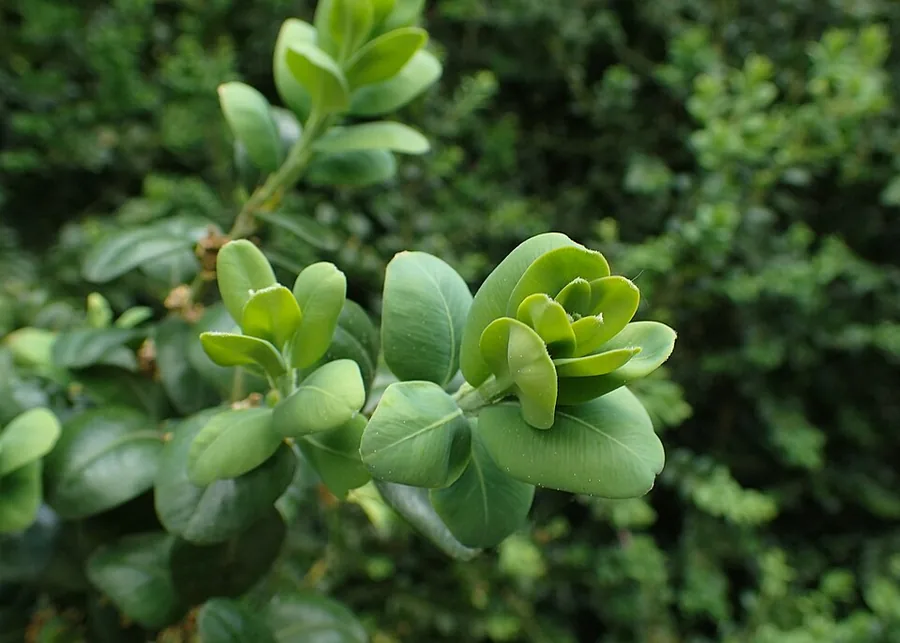
Overview
Boxwood is the shrub that gives a garden its sense of order. A slow-growing evergreen shrub from the box family, it shapes a space the way good architecture does, framing a path, edging a border, or rounding into a soft green form beside a doorway. Left to grow it can reach 15 feet and read as a wall of green, but most gardens ask it to play a tidier, more measured part.
Living with boxwood means embracing the long view. It puts on only a little each year, so a finished hedge is the result of seasons of patience rather than a single planting weekend, and it rewards a household that plans its garden in decades rather than summers. The payoff is a backdrop that holds its line in deep shade to full sun, endures cold to zone 5, and stays handsome year after year, anchoring everything planted around it.
A garden built on boxwood does come with a few cares worth folding into the routine. Boxwood blight can undo a planting in days, while leafminers, mites, and root rot wait on neglect and poor siting. Choose the spot thoughtfully, keep the bed clean, and leave space for air to circulate, and the green architecture stays as serene as the day it was set.
Care
The short version: boxwood adapts to almost any light from full sun to full shade, settles best in evenly moist but well-drained loam, and grows slowly enough that a single shaping after the last spring frost keeps its lines crisp all season.
Light
Boxwood suits almost any aspect, settling happily from full sun to full shade, which gives it a place in nearly every corner of a garden. It fills out densest in sun, and the one setting to avoid is full winter sun on an exposed site, where it loses its even green finish to scorch.
Water
Keep the soil evenly moist but never soggy, which in practice means a drink roughly every 5 to 10 days once a planting has settled. Because the roots run shallow, a tidy 1 to 2 inch layer of organic mulch holds moisture and dresses the bed at once, and the ground around the base is best left undisturbed. Overwatering and poor drainage are what undo a planting through root rot.
Soil
A bed of well-drained loam kept evenly moist gives boxwood its best footing. It is easy about pH, content anywhere from 6.0 to 8.0, so slightly acidic through slightly alkaline ground all serve a design well. Heavy, waterlogged clay is the one condition to amend before planting.
Temperature
Boxwood carries a garden through extremes, holding up from about -20°F to 100°F (-29°C to 38°C). The thing to plan around is not the thermometer but exposure, since drying winter wind and sun mark the foliage more than cold ever does.
Humidity
Ordinary outdoor air is all a boxwood planting asks, so there is no level to manage. Air movement is the real consideration in a design, because still, damp pockets in a crowded bed are precisely where blight and other fungal troubles settle in.
Feeding
A single balanced fertilizer in spring keeps boxwood looking its part through the year. Pair that yearly feeding with a clean layer of mulch and the planting holds its color and fullness with nothing more elaborate.
Pruning
Shape boxwood after the last spring frost and never before, or a late freeze catches the tender new growth a cut invites. Take out dead or diseased branches as soon as they appear to keep the form clean, and clear any leaves caught in the branch crotches, since trapped debris is where trouble quietly begins.
Repotting
Boxwood is rarely repotted and prefers to be left settled once it is growing well. In a container, watch for roots circling the pot, water slipping straight through, or growth that stalls, and move it up a size only when those signs appear.
Size & spacing
Plants reach 5 to 15 feet (1.5 to 4.5 m) tall and roughly as wide, though clipping holds most to a far more compact scale for a design. Spacing a hedge to its mature spread keeps the line even and lets air move between plants, which serves both the look and the health of the planting.
When to plant
The right moment to set boxwood into a design is spring or early fall, when the soil works easily and the weather stays gentle. Choose a position sheltered from harsh wind and full winter sun, and let the planting settle for a season so it reads as established before summer or hard cold tests it.
Northern hemisphere
Southern hemisphere
Typical months for a temperate climate: start earlier in warm zones, later where spring frosts linger.
- Plant: Spring or early fall, in a site sheltered from strong winds and full winter sun
- Harvest: April to May (greenish-cream, insignificant flowers)
Hardiness
USDA hardiness zones: 5–8
Temperature: down to -29°C
Troubleshooting
A boxwood planting can hold its composure for years, then reveal its few vulnerabilities all at once. Most of the story is told in the foliage, from sudden browning and bare patches to blistering and a tired, dull finish, while the gravest trouble begins quietly below ground. Match what the planting shows to the notes below and respond early, since the serious diseases leave no room for a second chance.
Brown spotting, sudden bare patches, and dark stem cankers
A planting marked this way is most likely facing boxwood blight, a fast-moving fungus that can undo years of form within days, though Volutella blight can follow winter injury with similar damage. Once it settles in, there is no cure. Cut out and bag the diseased stems, clear away every fallen leaf, dress the bed with fresh mulch, and protect what remains with a chlorothalonil fungicide.
Fix:
- Remove and bag diseased stems and rake up all fallen foliage
- Apply fresh mulch over the soil surface
- Apply chlorothalonil, or chlorothalonil mixed with thiophanate methyl, fungicide
Yellowing foliage over rotted roots and peeling crown bark
When a whole plant slips from green to yellow and the roots lift dark and mushy, the cause is Phytophthora root rot living in wet, poorly drained soil. The crown tells the rest, its bark peeling away once infection sets in. No spray rescues a planting from this, so the answer is in the bed itself: improve the drainage, amend heavy clay, or move the plant to a raised setting and ease off the water.
Fix:
- Improve soil drainage
- Amend heavy clay soils or plant in raised beds
- Avoid overwatering
Swollen, blistered leaves with yellow blotches
Those raised blisters that dull a hedge's finish are the work of the boxwood leafminer, whose larvae feed within the leaf. Open a blistered leaf and the orange maggots sit there in the mine. Watch for the adult flies from mid-April into early May, then treat with a foliar spray of acephate or spinosad, or a soil drench of imidacloprid.
Fix:
- Apply acephate or spinosad foliar spray to larvae in mines
- Use malathion contact spray against adults
- Apply soil-applied dinotefuran or imidacloprid
A dull, silvery cast across the foliage
Fine yellow scratches and a tired silvery sheen across a planting point to the boxwood mite. Tap a branch over a sheet of white paper and the tiny mites show as they move across it. Knock them back with horticultural oil at 1 to 2 percent or insecticidal soap, and keep stressed plants out of hot, baking sun, where mites multiply fastest.
Fix:
- Apply horticultural oil at 1-2 percent to kill eggs and adults
- Apply insecticidal soap
- Apply tau-fluvalinate miticide if needed
Cupped new leaves with a white waxy fluff
The boxwood psyllid draws sap from the season's new growth and leaves it curled and cupped, a small flaw in an otherwise neat line. Ease open the distorted shoots and small pale-green nymphs sit beneath a white waxy coating. The harm is mostly cosmetic, so light cases can simply be left, and acephate is worth reaching for only when an infestation runs heavy.
Fix:
- Treat only heavy infestations
- Apply acephate foliar spray
- Apply soil-applied dinotefuran or imidacloprid
A brownish-yellow cast in late winter
Boxwood set in open winter sun and drying wind often takes on a dull brownish-yellow tone known as winter bronzing. It unsettles the look but rarely harms the plant, and the fresh spring growth usually returns a healthy green. Site or move plantings where they are sheltered from wind and harsh winter sun, water well in fall, and mulch over the shallow roots.
Fix:
- Site or transplant plants where they are sheltered from winter wind and full winter sun
- Ensure adequate fall soil moisture before winter
- Apply organic mulch to protect shallow roots
Toxicity
For all its elegance, boxwood is toxic, and no part of it belongs on a plate. The leaves and stems hold steroidal alkaloids, chiefly buxine, that cause vomiting and diarrhea in pets and people, and in larger amounts can lead to seizures or respiratory failure in horses and livestock. A sharp, bitter taste turns most animals away before they take much, but a thoughtful household still keeps pets, grazing stock, and children clear of the foliage and any clippings.
Toxic to
Cats · Dogs · Horses · Rabbits · Livestock · Birds · People
Cats Moderate
A cat that chews the leaves usually drools and then vomits, with diarrhea following close behind. The bitter taste tends to stop most cats before they eat enough to do real harm.
Dogs Moderate
Vomiting and diarrhea tend to follow soon after a dog nibbles the foliage or chews on fallen prunings. Keep clippings raked up and out of reach whenever a trim is underway.
Horses Severe
Horses are hit hardest of all. The alkaloids can bring on colic, diarrhea, seizures, and in large amounts respiratory failure, so keep boxwood and its trimmings well away from any paddock.
Rabbits Toxic
The same buxine that sickens other animals makes boxwood unsafe for rabbits as well. Never offer the leaves or stems, and fence the shrubs off from any free-ranging bunny.
Livestock Severe
Cattle, goats, and sheep can suffer serious digestive and respiratory trouble from the foliage, and heavy grazing has proven fatal. Bitter leaves deter most stock, but hungry animals will still try them.
Birds Toxic
No part of boxwood is safe for birds to eat. Keep poultry and pet birds from pecking at the leaves or scattered clippings.
People Caution
No part of boxwood is edible, and eating the leaves or stems can cause vomiting and diarrhea. The sap also irritates sensitive skin, so wear gloves when you prune and keep curious children away.
Sap can cause contact dermatitis in sensitive people; wear gloves when pruning.
Helpline numbers

United States
ASPCA Animal Poison Control: (888) 426-4435 (fee applies)
Poison Control: (800) 222-1222



Canada
Poison Centres: 1-844-764-7669
Varieties
Boxwood offers a designer's palette of forms, from low rounded mounds to slim upright columns, and a handful of cultivars are worth knowing by name for the role they play or the pests they resist.
Vardar Valley
A low, spreading form that settles around 2 to 3 feet with cool bluish foliage, ideal for soft edging and free of the boxwood leafminer that troubles other types.
Suffruticosa
The classic English boxwood, a dense, fragrant dwarf that grows painfully slowly and, for all its charm, fends off leafminers the least of any cultivar.
Dee Runk
A narrow column rising to about 8 feet while holding to just 2.5 feet wide, a natural choice for a tight vertical accent in a formal scheme.
Elegantissima
A variegated cultivar prized for the creamy-white edges that lighten a planting and lift it against darker greens.
How to propagate
Boxwood is unhurried but dependable to increase, and taking cuttings is the surest way to repeat a form you already love across a planting.
Stem cuttingsModerate
Mid-July to early fall (semi-hardwood, current season's growth) · Several weeks to a few months to root
Boxwood increases readily from cuttings when given its time. Take semi-hardwood pieces of the current season's growth from mid-July into early fall, work only from healthy, disease-free plants, and keep the cuttings moist and shaded while you go. Rooting is unhurried, running anywhere from several weeks to a few months, and hardwood cuttings strike just as well, which makes repeating a form across a design simple enough.
Myths
Boxwood is harmless around pets because it is just a common landscape hedge.
Every part of the plant holds alkaloids that are toxic to dogs, cats, and horses. A pet that chews the foliage gets vomiting and diarrhea, and horses can react far worse. Being a familiar hedge doesn't make it safe to eat.
A spray will cure boxwood blight once a planting is infected.
Nothing cures the disease once it is in the plant. Boxwood blight can only be managed, never reversed, by cutting out infected material, keeping the bed clean, and using protective fungicides to slow it from reaching healthy plants.