Ornamental · Buxaceae
Japanese Pachysandra
Pachysandra terminalis
Give it deep shade and rich, moist soil, and pachysandra lays a glossy evergreen carpet that anchors a quiet corner for years.
Full shade
Every 7–14 days
USDA 4–9
6–12 in · 15–30 cm
Overview
Japanese pachysandra is the quiet answer for the shaded corners of a property that never suit a lawn, the strip along the north wall, the ground beneath a canopy of mature trees. An evergreen groundcover in the boxwood family, native to Japan and China, it settles those in-between spaces into one smooth, unbroken plane of green that reads as intentional rather than left over.
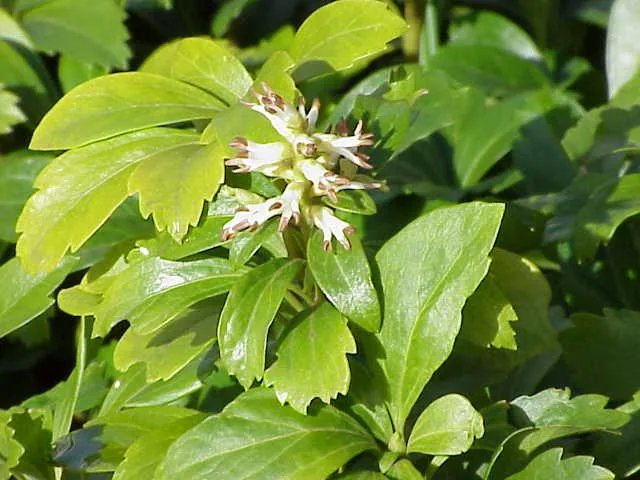
Its appeal is the ease it brings to a garden's rhythm. The planting holds its color through winter, keeps a low profile at 6 to 12 inches (15 to 30 cm), and closes over weeds so a shaded bed stays composed with almost no fuss. Slim white flower spikes appear in early spring, a light seasonal note, though the constant, glossy foliage is what earns it a place in the design.
The plant fits happiest where the mood is cool and sheltered: deep shade and easy airflow, out of the baking sun, in a spot the leaves can dry after rain. Treat those conditions as the setting and it more or less styles itself, filling a difficult corner year after year, while a crowded, stagnant planting risks the Volutella blight that undoes the look.
Care
The short version: place pachysandra in part to full shade in rich, moist, well-drained soil on the acidic side. See it through dry spells, keep the planting open rather than crowded and stuffy, and clear fallen debris, and it holds its composed evergreen sweep.
Light
Pachysandra is a true shade plant that settles best in part to full shade, the dappled light beneath trees or the sheltered north side of a building. Full sun works against it, bleaching and scorching the leaves and thinning the polished green a planting is chosen for.
Water
Keep the soil evenly moist, watering roughly every 7 to 14 days when rain is scarce, though an established bed carries dry shade with quiet confidence. Water low at the base with drip rather than overhead, since foliage left wet invites the Volutella blight that spoils the look.
Soil
It wants rich, moist, well-drained soil with a slightly acidic lean, ideally a pH of 5.5 to 6.5. Loam or clay both serve, provided the ground drains, because standing wet undermines the roots and, with them, the planting.
Temperature
This is a resilient, cold-hardy plant, at home across roughly -29°F to 95°F (-34°C to 35°C). It carries a bed through hard winters in the ground, though a drying winter wind can scorch leaves left exposed at the edges.
Humidity
Ordinary outdoor air suits it, so there is no number to chase. Airflow is what matters to the planting's health, since a crowded, stagnant bed is where leaf blight settles and the smooth green starts to fray.
Feeding
Pachysandra asks little at the table. A light balanced fertilizer in spring is ample, and a heavier hand only invites disease by forcing the soft, congested growth that undoes a tidy sweep.
Pruning
Upkeep stays light. Thin or mow a crowded bed to keep the air moving, lift out any diseased or scorched foliage, and clear fallen leaves so spores have nowhere to overwinter and mar next season's planting.
Repotting
As a groundcover rather than a container piece, it is seldom potted or repotted at all. Settled in the ground it holds its place and widens on its own by runners, filling the scheme without further handling.
Size & spacing
Plants keep a low profile at 6 to 12 inches (15 to 30 cm) tall, each spreading 12 to 18 inches (30 to 45 cm) across the bed. Set new divisions 6 to 12 inches apart, and over a few seasons they close the gaps into one continuous plane.
When to plant
Pachysandra is a hardy perennial that comes into its own slowly, so it rewards a little patience in the planning. Set it out in spring or early fall while the soil is cool and moist, look for the short white flower spikes in early spring, and allow the bed about three years to settle into a full, even groundcover.
Northern hemisphere
Southern hemisphere
Typical months for a temperate climate: start earlier in warm zones, later where spring frosts linger.
- Plant: spring or early fall
- Harvest: early to mid spring (April)
Hardiness
USDA hardiness zones: 4–9
Temperature: down to -34°C
Troubleshooting
Most of what goes wrong with pachysandra shows in the foliage, whether as bleaching in too much sun or the spotting and dieback of disease that break a clean planting. Catching the early signs lets you step in before a bare patch opens across the bed. Match the look below to what the planting is telling you, then act while it still restores the sweep.
Ringed blotches and bare patches breaking the sweep
Nothing spoils a groundcover's clean line faster than Volutella leaf and stem blight, the plant's most serious ailment, which opens dead patches in an otherwise seamless bed. It settles into crowded, damp corners, showing target-ringed tan spots, blackening stems, and salmon-pink spore masses in wet spells. Restore the look by cutting out the affected growth on a dry day, thinning for air, keeping scale down, and watering at the base.
Fix:
- Cut out and dispose of infected leaves and stems when dry
- Thin crowded plantings to improve air circulation
- Control scale insects
- Avoid overhead watering; use drip irrigation
- Apply fungicide during wet weather if severe
A wilting, collapsing patch in a low, wet corner
Where a bed sits in a damp hollow that never drains, root and stem rot can hollow out the planting, softening and darkening roots and stem bases until a patch simply gives way. The gaps tend to open in the lowest, soggiest part of the design. Correct the drainage, ease off the watering, and lift out the collapsed sections so the sweep can knit back together.
Fix:
- Improve drainage
- Reduce watering and avoid waterlogged sites
- Remove and discard affected plants
A dull, speckled planting with waxy stem bumps
When a bed loses its luster and turns speckled and flat, look for euonymus scale, the white or brown crusts on stems and leaf undersides, and for spider mites, betrayed by fine stippling and webbing. Both quietly drain the planting and dim the polished green it was meant to bring. Prune out the worst stems, treat scale with horticultural oil, and stay attentive, since scale can usher in Volutella blight and the patchy look that follows.
Fix:
- Prune out heavily infested stems
- Apply horticultural oil for scale
- Manage mites with appropriate miticide or oil
A bed fading pale or scorching at the edges
A pachysandra planting reads best as a calm sweep of even green, so too much sun is what breaks the effect, washing the color to yellow and crisping the margins. Drying wind and hard winters leave the same tired look. Shift the planting to a part or full shade corner over rich, moist soil, and the polished green returns.
Fix:
- Transplant to part or full shade
- Provide a moist, organically rich site
- Water during drought and avoid hot, exposed locations
Toxicity
Pachysandra makes an easy, low-worry choice for a garden shared by pets, livestock, and children. It is absent from the ASPCA toxic list, and though a mouthful of leaves might leave a curious cat or dog briefly unsettled, nothing serious follows. It can take its place freely in a family landscape.
Safe for
People · Cats · Dogs · Horses · Rabbits · Livestock · Birds
Cats None
A household cat can share the garden with ease. Should one sample a leaf, expect only a touch of drool or a mild stomach upset, and nothing more.
Dogs None
A dog is welcome to lounge among the planting. The foliage sits off the ASPCA toxic list, and a mouthful brings no more than passing queasiness.
Horses None
Horses come to no harm beside this groundcover. It holds no toxin that affects them, and the low, glossy sweep is one they usually ignore.
Rabbits None
Rabbits are safe around the bed. Wild and pet rabbits browse near it without consequence, even if it never becomes a favorite.
Livestock None
Cattle, goats, and sheep may graze at the edges without concern. In the small amounts they might taste, the plant offers nothing to trouble them.
Birds None
Birds come to no harm from the planting. Many find shelter and forage in the dense green mat, untouched by the leaves or stems.
People None
People have nothing to fear from this groundcover. It is neither eaten nor poisonous, which makes it an easy, elegant choice for a garden that children share.
Discourage pets from chewing the foliage; not listed among ASPCA toxic plants but the alkaloid-containing leaves can irritate.
Helpline numbers

United States
ASPCA Animal Poison Control: (888) 426-4435 (fee applies)

United Kingdom
Animal PoisonLine: 01202 509000 (fee applies)

Australia
Animal Poisons Helpline: 1300 869 738
Varieties
A few named selections sit alongside the common species, each with a slightly different look to suit a scheme. These are the ones worth knowing before you plant.
Green Carpet
A compact, low selection favored for the polished, dark green sweep its glossy leaves create.
Variegata (Silveredge)
Its white-edged leaves lend a lighter, more refined look, and it grows slower and less vigorously than the plain green form.
Pachysandra procumbens (Allegheny spurge)
A clumping native alternative with matte blue-green leaves mottled purple and white, offering a quieter, less aggressive spread than P. terminalis.
How to propagate
Pachysandra extends easily from plants already in the ground, and gardeners nearly always widen a planting that way rather than starting over from seed.
DivisionEasy
Spring or early fall · About three years to fill in as a groundcover
Division is the graceful, low-cost way to extend a planting across a shaded run. Lift an established clump or a rooted runner in spring or early fall, set the pieces 6 to 12 inches apart, and let the bed take about three years to close into an unbroken groundcover.
Stem cuttingsEasy
Late spring to summer · Several weeks to root
For a quicker path to a fuller look, take tip cuttings from late spring through summer and set them in a moist medium, where they root in a few weeks. It is a tidy way to widen a planting from the growth already on hand.
SeedModerate
Spring · Slow and seldom used
Spring sowing from seed is possible but slow, and it seldom suits a designed space on any reasonable timeline. Nearly every planting is built from divisions or cuttings, which come true and knit together far sooner.
Myths
Pachysandra grows well in full sun.
It belongs in the shade, where it does its best styling work. Set it in full sun and high wind and the foliage yellows, bleaches, and scorches, and that stress also opens the way to Volutella blight. Keep it in part to full shade for the calm, deep green that makes it worth planting.