Herb · Asteraceae
Roman Chamomile
Chamaemelum nobile
Give it full sun and dry feet, and it spreads into a soft, apple-scented carpet you can walk on.
Full sun
Every 7–10 days
60–90 days
USDA 4–9
Overview
Roman chamomile is a low, creeping perennial in the daisy family that settles into a space as a soft, mat-forming groundcover rather than an upright accent. Brush a hand or a foot across the feathery foliage and it gives back a warm, apple-like scent that lingers in the air. This is the plant behind the romance of a fragrant lawn, the kind you actually walk on so the perfume rises underfoot.
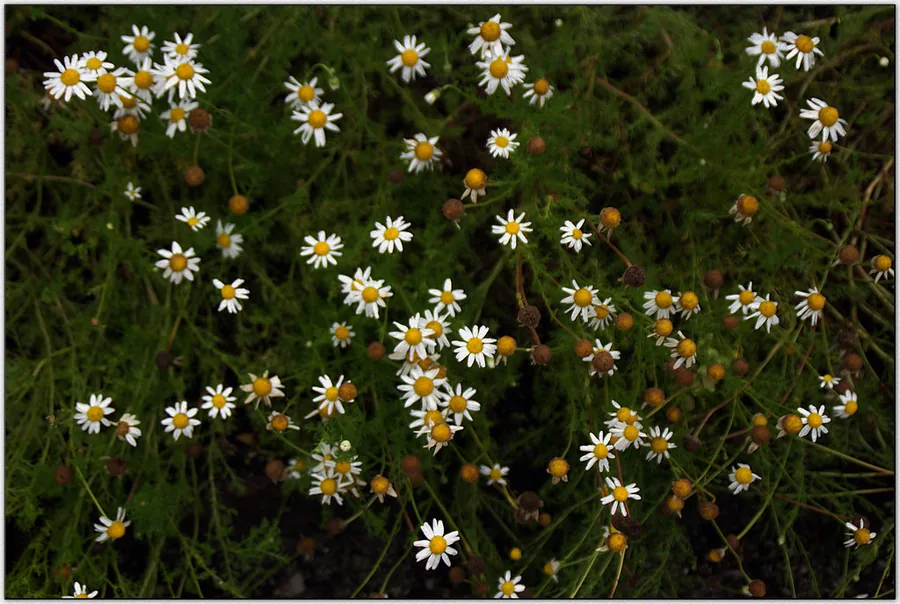
Through summer it lifts small white-and-yellow daisy flowers above the green, a quiet, cottage-garden look that suits informal borders and path edges. The flowers are the prize for tea drinkers: gather the heads once the petals lie flat or have just opened fully, then dry them for the cup. It earns its place by scent and by ritual, not by bold display.
Think of it as a finishing texture for the ground itself, threading between stepping stones, softening the line where a path meets a bed, or replacing a patch of conventional turf with something that smells like apples in the warmth. A scented carpet you can sit on turns an ordinary corner into a place you want to linger, and a daily harvest for tea ties the garden to the kitchen.
Care
The short version: Roman chamomile wants full sun and sharp drainage, a light watering only when the top half of the soil has dried, around every 7 to 10 days. Skip the heavy feeding and let it knit into a low mat. Shear it back after the flowers fade, keep the air moving, and it stays a tidy, scented feature underfoot. Keep grazing pets away from it, since the ASPCA lists it as mildly toxic to cats, dogs, and horses.
Light
Give chamomile full sun and it rewards you with a denser, more even mat and a heavier flush of flowers, the look most people are after for a lawn or path edge. It will tolerate partial shade, but the planting reads thinner and blooms more sparingly there. More sun means more scent and more fill, so place it in the brightest, most open spot you have.
Water
Water moderately and let the top half of the soil dry out between drinks, which usually works out to every 7 to 10 days. Once it has settled in, chamomile is drought-tolerant and shrugs off a dry spell with ease. The one thing it will not forgive is sitting wet: soggy soil brings on root rot, and that is the fastest way to lose the whole planting.
Soil
Plant into a light, well-drained sandy loam, ideally on the lean side. The sweet spot is pH 5.6 to 7.5, though sharp drainage matters far more than the exact number on the chart. If your ground runs to heavy clay, work in some grit to open it up and keep water moving away from the roots.
Temperature
Chamomile is comfortable across 39°F to 86°F (4°C to 30°C) and is hardy down through zone 4, which puts it at home in zones 4 to 9. The weak point is high summer: prolonged heat paired with humidity thins the center of the mat and leaves it brown. In hot regions, a little relief in the afternoon keeps the planting looking its best.
Humidity
This is a plant that likes things on the dry side, happiest in the range of 30% to 50%. Still, muggy air invites fungal dieback, so airflow matters more than the moisture reading. Set it where a breeze can pass through and leave space between plants, and the mat stays clean and healthy.
Feeding
Chamomile is a light feeder that wants little to no fertilizer. One balanced, low-nitrogen feed in spring is all it needs for the season. Resist the urge to do more, because overfeeding pushes soft, lush growth that aphids find irresistible, trading a tidy mat for a pest problem.
Pruning
After the flowers fade, shear or mow the planting back lightly to keep the mat dense and to coax fresh new growth. Through the bloom season, deadheading the spent flowers helps prolong the display. A quick trim now and then is what keeps a chamomile lawn looking deliberate rather than ragged.
Repotting
Chamomile rarely needs repotting. For a container-grown plant, divide and refresh it every 2 to 3 years, or sooner if the roots start circling the pot, the growth thins out, or the soil dries very fast after watering. A simple split and a change of mix brings it back to full vigor.
Size & spacing
Expect a height of 6 to 12 inches (15 to 30 cm) and a spread of 12 to 18 inches (30 to 45 cm) as the plant mats outward. For a continuous lawn, space the plants so they can knit together into one carpet. If you prefer a more contained look, leave a little extra room and let them sit as neat individual clumps.
When to plant
Chamomile keeps a gentle seasonal rhythm that slips easily into the gardening year. Start the seed indoors in late winter, then move the young plants outdoors in spring once the last frost has passed and the soil has warmed. From there the summer becomes a slow harvest, with flower heads gathered as they open for drying and tea.
Northern hemisphere
Southern hemisphere
Typical months for a temperate climate: start earlier in warm zones, later where spring frosts linger.
- Sow: Late winter to early spring, 6-8 weeks before the last frost
- Plant: Spring, after the last frost when soil has warmed
- Harvest: White-and-yellow daisy flowers in summer; harvest flower heads when the petals are flat or just fully opened
Hardiness
USDA hardiness zones: 4–9
Temperature: down to -34°C
Troubleshooting
A chamomile lawn asks for little, and most of its troubles trace back to the same handful of things: too much water, too much heat, or too rich a diet. Read the signs early and the planting stays soft and even. Catching a problem in its first week is the difference between a quick fix and a bare patch you have to replant.
Wilting and yellowing collapse in wet soil
Wilting, yellowing, and a general collapse in soil that stays wet point to root rot from poorly drained or overwatered ground. Lift a plant and you will find the roots black and mushy, and at that stage there is no saving it. Improve the drainage, cut back on watering, and remove and discard the severely affected plants so the trouble does not spread through the rest of the mat.
Fix:
- Improve soil drainage
- Reduce watering frequency
- Remove and discard severely affected plants
Center of the mat thins and browns in heat
If the middle of the mat thins, browns, and dies out during hot, humid weather, that is heat and humidity stress, sometimes joined by fungal dieback when the air sits still. Shear the planting back to bring on fresh basal growth, thin it to open up airflow, and in hot climates give it afternoon shade to take the edge off the worst of the day.
Fix:
- Shear back to encourage fresh basal growth
- Improve air circulation by thinning
- Provide afternoon shade in hot climates
Distorted sticky buds with clustered insects
When the flower buds look twisted and sticky, carry little clusters of insects, and the planting stops blooming well, you are looking at aphids on the buds, often encouraged by too much nitrogen feeding soft growth. Confirm it by checking for small soft-bodied insects alongside a shiny honeydew film. The fix is a strong jet of water to knock them loose, insecticidal soap, and inviting ladybugs to help. Going forward, avoid over-fertilizing and keep the air circulating.
Fix:
- Spray plants with a strong jet of water
- Apply insecticidal soap to affected buds
- Encourage beneficial predators such as ladybugs
Sticky curled foliage with insects underneath
Sticky, curled foliage with clusters of small insects gathered on the undersides of the leaves is aphids feeding on tender growth. Confirm by spotting the aphids and their honeydew on the leaf undersides. Hose the foliage off to dislodge them, follow up with insecticidal soap if needed, and support beneficial insects and ladybugs to keep the population in check.
Fix:
- Hose off foliage with water
- Apply insecticidal soap
Toxicity
The flowers brew into a gentle, soothing tea that is safe for most people, yet the ASPCA lists the plant itself as mildly toxic to cats, dogs, and horses. Volatile oils and anthemic acid in the foliage can bring on vomiting, an itchy rash, and, with steady long-term chewing, a tendency to bleed. The simple rule for a household with animals: enjoy the tea, keep grazing pets off the plant.
Toxic to
Cats · Dogs · Horses · Rabbits · Livestock · Birds
Safe for
People
Cats Mild
The ASPCA flags chamomile as mildly toxic to cats. A nibbling cat may drool, vomit, or go off its food, and the volatile oils can leave an itchy, irritated rash where the plant meets skin. The real concern is steady chewing over weeks, since anthemic acid can thin the blood and raise the risk of bleeding.
Dogs Mild
Dogs show much the same mild reaction: an upset stomach, loose stools, and a poor appetite after a curious chew. Brushing against crushed foliage can bring on contact dermatitis. Keep an eye on a dog that grazes day after day, because long-term exposure can lead to a bleeding tendency.
Horses Mild
Grazing horses tend to get off lightly, with mild digestive upset, a dull appetite, and the occasional skin reaction. A single mouthful poses no acute danger, but the same blood-thinning effect builds with chronic grazing, so keep horses away from chamomile borders and pasture stands.
Rabbits Caution
Rabbits are not on the ASPCA's list, but the same volatile oils make chamomile a poor choice for a grazer this small. A single nibbled flower head is unlikely to harm one, though steady browsing could bring soft stools or appetite loss, so keep it out of reach.
Livestock Caution
Cattle, goats, and sheep usually leave the bitter, aromatic foliage alone, and a few mouthfuls rarely cause trouble. Even so, treat it with caution, since the volatile oils and tannins that bother pets can irritate a grazing animal's gut if it eats a large amount.
Birds Caution
There is little solid data on birds either way. Chamomile is not known to be dangerous to them, but the irritant oils mean a pet bird should not graze it freely, and any deliberate herbal use is worth running past an avian vet first.
People Safe as tea
The flowers are the classic base for a calming cup of tea and are safe to drink for most people. The catch is the daisy family connection: anyone allergic to ragweed or related plants can react, and handling fresh foliage sometimes leaves a mild skin rash.
Handling or crushing the foliage can cause contact dermatitis in sensitive people and animals; wash hands after handling and keep grazing or chewing pets away.
Helpline numbers

United States
ASPCA Animal Poison Control: (888) 426-4435 (fee applies)

United Kingdom
Animal PoisonLine: 01202 509000 (fee applies)

Australia
Animal Poisons Helpline: 1300 869 738
Varieties
Two forms shape how chamomile reads in a space, and the choice depends on the look you are after. One is grown purely as a fragrant carpet, the other for fuller, more decorative blooms. Picking the right one early saves you reworking a planting later.
'Treneague'
'Treneague' is a non-flowering, low-growing form prized for fragrant chamomile lawns, and because it sets no seed it spreads only by dividing the mat.
'Flore Pleno'
'Flore Pleno' is a double-flowered form that trades the simple daisy for rounded, fuller blooms in a soft creamy white.
How to propagate
Making more chamomile is refreshingly low effort, with two easy routes that suit different goals. Seed gives you a sweep of new plants for filling a lawn, while division lifts and multiplies a mat you already love. The form you have decides the method, since one prized lawn type sets no seed at all.
SeedEasy
Sow indoors in late winter to early spring, or direct-sow after the last frost · Germinates in about 10-14 days; establishes over the first growing season
Sow seed indoors from late winter to early spring, or direct-sow it after the last frost. The seed is fine and needs light to sprout, so scatter it on the surface and press it down rather than burying it. It germinates in about 10 to 14 days and settles in over its first growing season.
DivisionEasy
Spring or early autumn · 2-4 weeks to root in
Lift an established mat in spring or early autumn and pull it apart into rooted clumps, which take hold within 2 to 4 weeks. Division is the only option for the non-flowering 'Treneague', since that form never sets seed.
Myths
Roman chamomile and German chamomile are the same plant.
They look alike and both brew into tea, but they are different plants from different genera. Roman chamomile is a low, mat-forming perennial that spreads as a fragrant groundcover, while German chamomile is a taller annual that reseeds itself. One settles in and carpets the ground, the other shoots up and is gone by winter.
Chamomile is completely safe around pets because it is a soothing herbal tea.
Safe in a cup is not the same as safe in the garden. The ASPCA lists chamomile as toxic to cats, dogs, and horses, and chewing the plant can bring vomiting, diarrhea, appetite loss, and an itchy rash. A herb that calms people can still make a pet sick, so the plant itself deserves caution.