Herb · Asteraceae
German Chamomile
Matricaria chamomilla
In a sunny, sharply drained corner, German chamomile turns a plain border into a soft haze of apple-scented daisies for the season.
Full sun
Every 3–7 days
41–86°F · 5–30°C
60–65 days
Overview
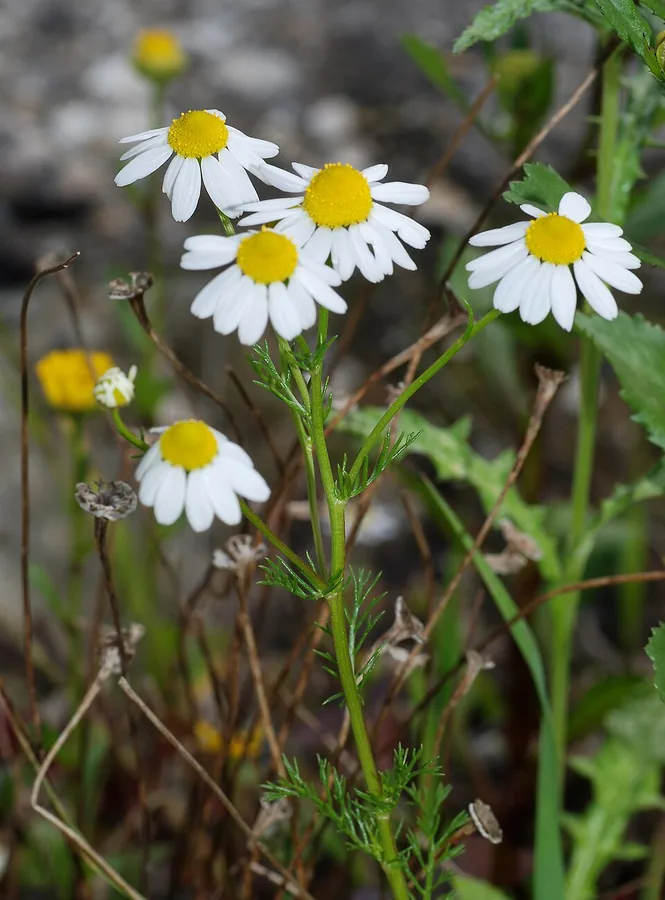
German chamomile is the upright, fast-growing annual behind most chamomile tea, and it brings a soft, cottage-garden ease to a sunny corner. A member of the daisy family, it holds small white-and-yellow flowers on feathery stems, and it carries a sweet, apple-like scent that drifts across a path or a seating area before the flowers come into view. Gardeners grow it for the flower heads, gathered at their peak and dried for a calming brew that closes out the day.
It fits a relaxed, low-effort kind of garden. A sunny spot and well-drained soil are the whole ask, and it holds its own even on poor, low-fertility ground where fussier herbs sulk. As a willing self-seeder, one summer's flowers tend to furnish the next, so a modest planting settles into a border and quietly returns, a fixture of the season rather than a chore.
One consideration shapes where it belongs. The dried flowers make a tea safe for most people, but the fresh plant is mildly toxic to cats, dogs, and horses, and handling the foliage can irritate skin in anyone sensitive to ragweed. It slips into the garden with ease, best placed along a border or a raised bed rather than in the run of a grazing pet.
Care
The short version: a bright, sun-washed position, sandy ground that drains freely, gentle moisture through the early weeks, almost no feeding, and the small ritual of removing spent heads so the display never pauses.
Light
Chamomile puts on its best show in full sun, six or more hours a day. It accepts a little afternoon shade, but a dim corner leaves it with stretched stems and only a scatter of bloom.
Water
Keep seedlings and young plants evenly moist while they settle into their spot. Once established it takes a short dry spell in stride, though steady moisture and good drainage bring on the fullest flowering.
Soil
Set it into well-drained sandy to loamy ground. It asks nothing of fertility, thriving even in poor soil, and it suits a broad pH span from 5.6 to 7.5.
Temperature
A cool-season herb, it sits easily anywhere from 41°F to 86°F (5°C to 30°C). The seedlings take a light frost, which is what lets the season open so early.
Humidity
Ordinary humidity around 40% to 60% is all it needs. In the open garden that looks after itself, so give your attention to airflow rather than the reading.
Feeding
A light hand serves it best. A little compost or a dilute balanced feed at planting is plenty, and too much nitrogen trades the flowers for leaves, the opposite of what you planted it for.
Pruning
Deadhead and gather the open heads often to draw out the bloom and hold self-seeding in check. Trim back any leggy growth as it appears to keep the planting looking composed.
Repotting
Chamomile is not one for repotting. It grows as a direct-sown or transplanted annual, refreshed each season, so it starts anew rather than moving up a pot.
Size & spacing
Plants reach 12 to 24 inches (30 to 60 cm) tall with a spread of 8 to 12 inches (20 to 30 cm). Leave each a hand's width so air drifts freely between them.
When to plant
German chamomile is a cool-season annual that opens the gardening year early. Sow indoors in late winter or scatter seed straight into the ground in early spring, since the seedlings take a light frost in stride. The daisy-like flowers arrive in early to midsummer, the moment to gather the heads for drying.
Northern hemisphere
Southern hemisphere
Typical months for a temperate climate: start earlier in warm zones, later where spring frosts linger.
- Sow: Late winter to early spring, about 4-6 weeks before the last frost
- Plant: Early spring; cool-season annual whose seedlings tolerate a light frost
- Harvest: White-and-yellow daisy flowers in early to mid summer; harvest flower heads when fully open with petals reflexed
Hardiness
USDA hardiness zones: 2–8
Temperature: down to -46°C
Troubleshooting
Chamomile is an easy herb to live with, though a few issues surface around seedlings, sunlight, and its readiness to seed across a bed. Most appear early and settle with a light touch. Find the match below, then act before it spreads.
Seedlings keel over at the soil line
When young seedlings slump at the base with thin, water-soaked stems, the culprit is damping-off, a soil fungus that settles in where the surface stays cold and wet. It moves quickly, taking the seedling before it ever fills out. Sow thinly into a clean, free-draining mix, water with restraint, and let air circulate to keep the trouble away.
Fix:
- Reduce watering
- Improve drainage and airflow
- Sow thinly in a sterile, well-drained seed mix
A sugary sheen on the buds and warped young growth alive with minute insects
Those small green or black clusters at the buds, and the tacky film beneath them, are aphids trailing honeydew. They gather on the soft growth that heavy feeding encourages, so lighten the feed and rinse them away with a firm spray of water. A bigger flare-up yields to insecticidal soap, and a resident population of ladybugs keeps the planting looking its best.
Fix:
- Dislodge aphids with a strong spray of water
- Apply insecticidal soap
- Encourage beneficial insects such as ladybugs
Leggy stems and barely any flowers
A chamomile that grows tall and thin with few flowers is quietly asking for more sun, since under six hours a day it stretches and holds back its bloom. Give it a full-sun position and the display returns. Ease off the fertilizer that favors leaf over flower, and lift away the spent heads to invite a fresh round.
Fix:
- Relocate to a full-sun site
- Reduce fertilizing
- Deadhead to encourage more flowers
A carpet of self-sown chamomile where next year's border was planned
A scattering of young plants across the bed next spring is simply chamomile being a generous self-seeder, since any head left to ripen sends its seed into the surrounding soil. Keep the look you want by harvesting or deadheading the flowers before they scatter. Whatever still arrives lifts out with an easy tug while the seedlings are small.
Fix:
- Deadhead before seed set
- Pull unwanted volunteer seedlings
Toxicity
Chamomile is gentle in the cup and asks only for a thoughtful spot in the garden. The dried flowers brew a tea that is safe for most people to drink, yet the living plant is mildly toxic to cats, dogs, and horses, and its oils can irritate skin on contact. Keep pets from grazing it, and wear gloves if you are prone to plant allergies.
Toxic to
Cats · Dogs · Horses · Rabbits · Livestock · Birds
Safe for
People
Cats Mild
A cat that browses the foliage tends to drool, bring it back up, and drift away from the food bowl, while the volatile oils can leave the skin irritated. Grazing that continues over time has been tied to a leaning toward easy bleeding, so a household cat is best kept clear of the planting.
Dogs Mild
A dog that samples the plant usually lands an upset stomach, loose stools, and a subdued appetite, none of it severe. Repeated contact can redden the skin, and prolonged nibbling brings the same quiet bleeding concern along with it.
Horses Mild
A grazing horse can come away with a sour stomach and mild diarrhea, and the oils now and then leave the muzzle and skin irritated where they touch.
Rabbits Mild
The volatile oils that unsettle cats and dogs unsettle a rabbit's gut just the same, so keep the leaves out of reach and set out safer greens to browse instead.
Livestock Mild
Goats, sheep, and cattle that graze chamomile may show digestive upset and skin irritation, though most walk past the bitter, aromatic foliage of their own accord.
Birds Caution
Solid evidence for birds is thin, so err toward care and keep pet birds from picking at the oily foliage and pollen.
People Edible as tea
Dried and steeped, the flowers make a soothing tea that suits most people at the end of a day. The caution is for the hands, since handling the foliage or pollen can bring on contact dermatitis, especially for anyone who reacts to ragweed and its Asteraceae relatives.
Wear gloves when handling; the foliage and pollen can cause contact dermatitis, especially in people sensitive to ragweed and other Asteraceae.
Helpline numbers

United States
ASPCA Animal Poison Control: (888) 426-4435 (fee applies)

United Kingdom
Animal PoisonLine: 01202 509000 (fee applies)

Australia
Animal Poisons Helpline: 1300 869 738
Varieties
A handful of named cultivars stand out, most of them bred for tea growers after bigger heads or richer oil. These are the ones worth seeking out.
Bodegold
A German tea cultivar favored for its generous flower heads and a high yield of essential oil.
Bona
A Czech cultivar that trials rank as the earliest to flower each year, a boon for anyone planning an early harvest.
Zloty Lan
A Polish cultivar chosen for its rich bisabolol and a heavy yield of essential oil.
How to propagate
SeedEasy
Early spring; sow indoors in late winter or direct-sow once soil is workable, as seedlings tolerate light frost · Germinates in about 7-14 days and flowers in roughly 60-65 days
Chamomile takes to seed with ease, started under cover in late winter or scattered onto worked spring soil, since the seedlings stand up to a light frost. Rest the seed on the surface and leave it uncovered, because it wants light to germinate. Green appears in about 7 to 14 days, flowers arrive in roughly 60 to 65 days, and a few heads left to ripen will quietly furnish next year's bed.
Myths
The names German chamomile and Roman chamomile refer to a single plant.
They share a family and a purpose, yet they remain two separate species. German chamomile is the upright, self-seeding annual Matricaria chamomilla, while Roman chamomile is the low, mat-forming perennial Chamaemelum nobile. Each makes a fine tea, but their growth habit and chemistry set them apart.
An herb famous for its calming tea could never do a household any harm.
The tea is gentle, though the living plant deserves a measure of respect. The ASPCA lists chamomile as toxic to cats, dogs, and horses, and its volatile oils and acids can bring on dermatitis, an upset stomach, and allergic reactions. A sensitivity to ragweed often carries over to chamomile.