Herb · Asteraceae
Stevia
Stevia rebaudiana
A no-calorie sweetener for the windowsill, ready to pick and chew whenever the mood strikes.
Full sun
Every 2–4 days
50–90°F · 10–32°C
90–110 days
Overview
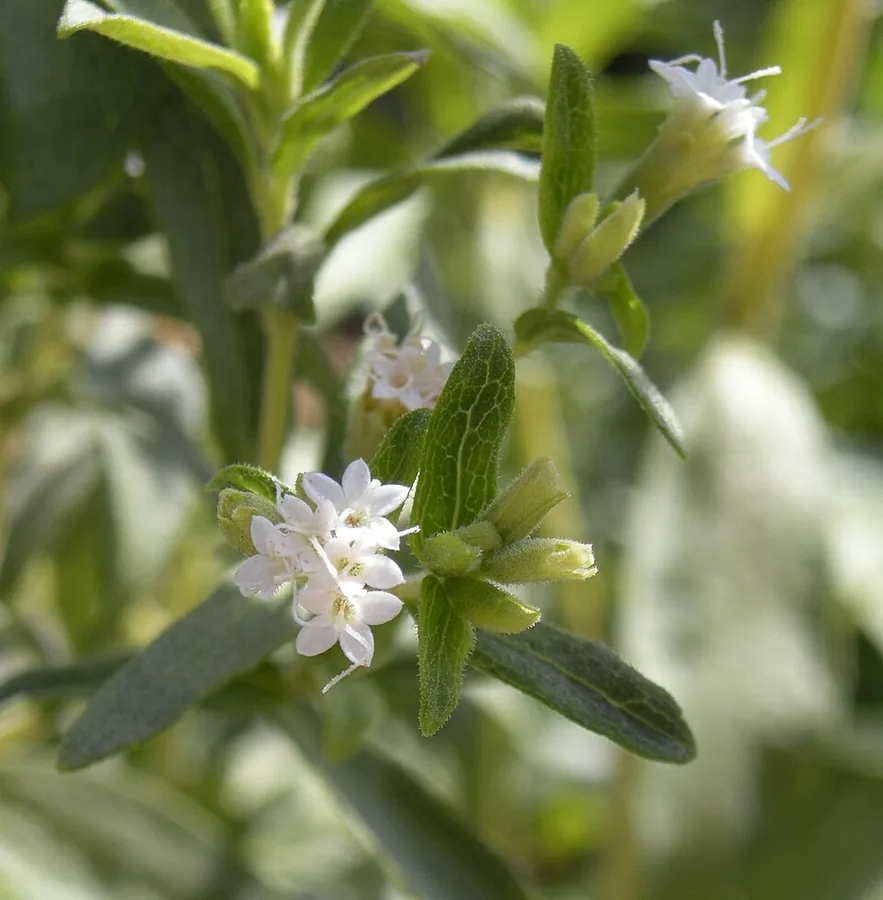
Stevia brings a quiet bit of usefulness to a sunny kitchen or a sill. A tender herb from the Paraguayan highlands, it has sweetened food and drink for generations, and it slips easily into a modern cook's daily routine. Its leaves hold steviol glycosides, far sweeter than sugar and free of calories, so a single leaf chewed straight from the pot becomes a small everyday pleasure.
As a houseplant it keeps a tidy, compact profile, standing just 18 to 30 inches (45 to 75 cm) tall, the right scale for a kitchen counter or a shelf by the window. It reads as a perennial in warm climates yet stays frost-tender, so in cooler homes it settles in as a warm-season pot plant that moves indoors when the weather turns. Set it in a sunny bed or style it in a container, and it looks at home either way.
A little tending keeps it at its best and folds it into the daily rhythm of a space. Pinch the tips to hold a full, rounded shape and take off the flower buds as they appear, since the sweetness fades from the leaves once bloom sets in. Kept to that easy routine, one plant supplies sweet leaves across the whole warm season.
Care
The short version: stevia asks for full sun and steady moisture in well-drained soil, plus a habitual pinch of the flower buds and tips that keeps it shapely and the leaves sweet.
Light
Give stevia the sunniest spot in the home, six or more hours of full sun a day, and the foliage stays dense and sweet. A little afternoon shade suits it where summers run hot, but a dim corner leaves the plant thin and drawn, and the look suffers with it.
Water
The roots run shallow and dry quickly, so keep the soil evenly moist yet never sodden. A drink every 2 to 4 days usually suits, with a little extra during hot spells or in a container, and a layer of mulch keeps both the moisture and the routine undemanding.
Soil
Plant stevia in a well-drained loam rich in organic matter, generous enough to feed it and open enough to shed excess water. It settles happily across a pH of 6.0 to 7.5, which most ordinary potting or garden soil already offers.
Temperature
Stevia keeps its poise in warmth, 50°F to 90°F (10°C to 32°C), the comfortable middle of a home. It turns tender as the cold comes on and a freeze ends it, so bring container plants indoors ahead of the season's first bite of frost.
Humidity
Ordinary indoor humidity, 40% to 70%, keeps stevia comfortable, which describes most rooms and most gardens. The exact figure matters less than steady airflow, since still, close air around dense foliage is what invites pests and rot into the picture.
Feeding
Feed once a month across spring and summer with a balanced, low-nitrogen organic fertilizer, and keep the hand light. Push too much nitrogen and the plant runs to leaf at the expense of the sweetness that makes it worth keeping.
Pruning
Regular pinching is what holds stevia's shapely, rounded form, so take the tips back often. Just as important, lift out the flower buds as soon as they form, because both the flavor and the fullest growth belong to the weeks before bloom.
Repotting
Refresh the pot once a year, and again each time the plant winters indoors, moving it into a slightly larger container with new mix. It signals the moment through roots circling the pot, growth that stalls, and soil that runs dry almost the instant it is watered.
Size & spacing
Grown on, stevia reaches 18 to 30 inches (45 to 75 cm) tall and 12 to 24 inches (30 to 60 cm) across, an easy scale to place on a counter or a shelf. Allow each plant about that footprint so air drifts freely around it and the foliage stays dry and presentable.
When to plant
Stevia is a creature of warmth with no tolerance for frost, and its calendar shapes the season. Begin seeds or cuttings under cover in late winter, move plants out only once the chill has passed and the soil has warmed, and gather leaves through summer until frost closes the show.
Northern hemisphere
Southern hemisphere
Typical months for a temperate climate: start earlier in warm zones, later where spring frosts linger.
- Sow: 8-10 weeks before the last spring frost
- Plant: after all danger of frost has passed and soil has warmed to at least 50°F (10°C)
- Harvest: Harvest leaves through summer; pinch flowers as leaves are sweetest before bloom. Main leaf harvest before flowering in late summer/early fall.
Hardiness
USDA hardiness zones: 9–11
Temperature: down to -7°C
Troubleshooting
Even an easygoing herb has its off days, and with stevia the story almost always plays out on the leaves, whether from pests, waterlogged roots, or the turn toward bloom. Spot the early cues and the fix stays simple, well before the crop takes a hit. Find the match below and act while it counts.
Wilting in wet soil from failing roots
A plant that wilts while its soil sits soaked is almost always in the grip of root rot from waterlogged ground. Once the roots turn brown and soft there is no saving them, so cut the water back at once, restore the drainage or move it to a quick-draining mix, and never leave a container standing in a filled saucer.
Fix:
- Reduce watering immediately
- Improve soil drainage or repot into well-drained mix
- Remove and discard severely affected plants
Foliage blackened after a cold night
Stevia is frost-tender, so a single cold night can leave the whole plant black and limp by morning. The graceful move is to bring containers inside before the cold settles in. Should frost arrive first, trim the spoiled growth and keep the plant indoors through winter until spring.
Fix:
- Move container plants indoors before frost
- Cut back damaged growth and overwinter the plant indoors
Curled, sticky leaves with insects tucked beneath
Curling, tacky leaves usually mean aphids or whiteflies have moved in, sap-feeders that settle beneath the foliage and leave a sticky honeydew sheen. A firm rinse of water sends most of them packing, and insecticidal soap deals with the stragglers. Strip away any leaf too far gone to save.
Fix:
- Spray plants with a strong jet of water to dislodge insects
- Apply insecticidal soap to affected foliage
- Remove and destroy heavily infested leaves
Ragged holes low on the leaves
Ragged holes near the base of the plant are the calling card of slugs and snails, night feeders that work in damp weather and trail a telltale shine over leaves and soil. An after-dark round with a torch, lifting them off one by one, keeps their numbers down. Clearing away the mulch and debris nearby denies them a place to shelter by day.
Fix:
- Hand-pick slugs in the evening
- Remove debris and mulch that harbor them
- Use slug traps or barriers around plants
Sweetness slipping as the buds arrive
When the leaves come slower and taste less sweet, the plant has quietly turned to flowering and is spending itself on blooms. Pinch the buds away as they show at each stem tip to hold that off. For the sweetest leaves, take the main harvest before it comes into flower, when the sugar is at its height.
Fix:
- Pinch out flower buds as they form
- Harvest leaves before full bloom
Toxicity
Part of stevia's charm as a household plant is how little worry it invites. The leaf is an edible, no-calorie sweetener at home in kitchens everywhere, and no cat, dog, or other animal in the house has anything to fear from it. A stray nibble from a curious pet is simply part of sharing a space with a green thing.
Safe for
People · Cats · Dogs · Horses · Rabbits · Livestock · Birds
Cats None
Cats share a home with stevia without concern, as it never appears on the ASPCA roster of toxic plants. A passing nibble does nothing, and only a real overindulgence in leaves might leave a cat briefly out of sorts.
Dogs None
Dogs are equally at ease here, since the leaves hold no toxin at all. At worst, a greedy mouthful brings a spell of short-lived gas or a soft stool, and nothing more.
Horses Safe
Horses come to no harm near stevia. An idle sprig grazed in passing troubles them not at all, since the leaf carries the very sweetener that flavors a kitchen.
Rabbits Safe
Rabbits enjoy stevia without trouble, the sweet leaf making a fine occasional treat. Keep the helping modest so hay and greens still anchor the bulk of the diet.
Livestock Safe
Goats, sheep, and cattle browse stevia with no ill effect. Raised as an edible crop, it offers nothing in its leaves to unsettle a grazing animal.
Birds Safe
Backyard hens and pet birds may peck the leaves freely. Nothing here counts as a toxin, only a surprisingly sweet taste of green.
People Safe
For people, stevia is grown to be eaten. Its leaves stand in as a no-calorie sweetener to enjoy fresh or dried, welcome and safe at any family table.
Leaves are edible and used as a natural sweetener; no special handling precautions are required.
Varieties
Stevia usually arrives unnamed, labeled plainly as stevia, but a couple of named selections reward the gardener who wants sweeter leaves or a plant that performs with poise in a pot.
Sweet Sugar Leaf
A well-loved selection grown for its rich steviol glycoside levels, the trait behind its notably sweet leaves.
Candy
A compact, productive cultivar suited to container life, holding a neat shape in a pot while still yielding a generous crop of sweet leaves.
How to propagate
Two routes lead to more plants, and they set a very different pace. Seed is a slow, uncertain affair, while cuttings take root quickly and yield a faithful match of a plant already earning its place in the room.
SeedDemanding
Start indoors 8-10 weeks before the last spring frost · Germination in 1-3 weeks, but often poor and erratic
Seed is the patient, uncertain path. Sow it under cover a full 8 to 10 weeks ahead of the last frost, and expect a struggle, since the seed keeps poorly and germinates raggedly across 1 to 3 weeks. With failures so common, most growers set it aside for cuttings.
Stem cuttingsModerate
Spring through summer from healthy non-flowering shoots · Roots in 2-4 weeks
Cuttings are the graceful shortcut. Any time from spring through summer, take a softwood tip from a healthy, non-flowering shoot, press it into moist media, and it roots within about 2 to 4 weeks into a plant that mirrors its parent.
Myths
Stevia leaves are supposed to taste bitter straight off the plant.
In truth, a fresh leaf gives clean, forthright sweetness and not a hint of bitterness. The flavor is richest in the weeks before it blooms, so bring in the main harvest before those buds swell.
Stevia is a hardy perennial that rides out winter outdoors.
It does live on as a perennial where winters stay mild, yet it is decidedly frost-tender and folds with the season's first freeze. Where the cold bites, the practical choice is an annual planting, or one potted plant sheltered indoors to see the season through.