Herb · Asteraceae
Curry Plant
Helichrysum italicum
Silver foliage, a warm curry scent, and an effortlessly elegant presence for the sunny corners of your home and garden.
Full sun
Every 7–14 days
USDA 8–11
16–24 in · 40–60 cm
Overview
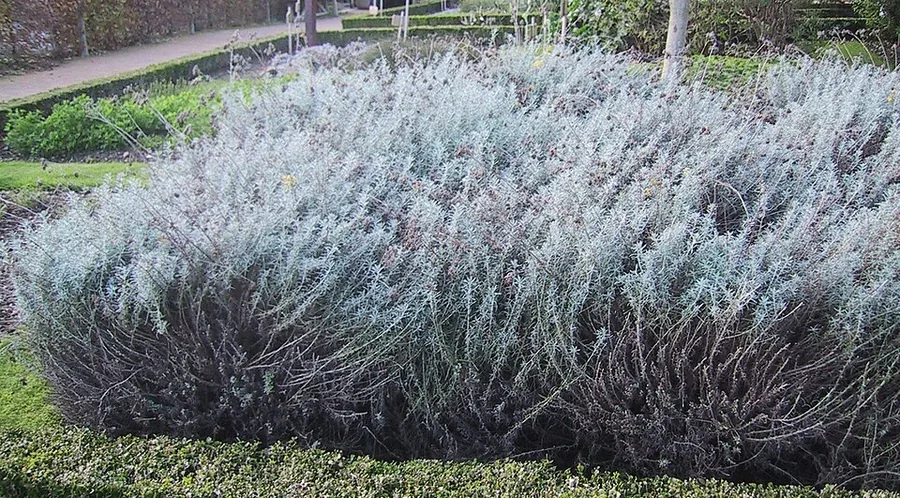
Few plants set a mood as quietly as the curry plant, a low Mediterranean subshrub whose silver foliage cools a sun-baked border and softens the line of a gravel path. It earns its name from a warm, curry-like scent that rises on a hot afternoon or when a sleeve brushes past, a small sensory pleasure to fold into the daily route between door and patio. As a member of the daisy family, Helichrysum italicum carries clusters of small yellow everlasting flowers through summer, a finishing note above the muted silver.
Picture it the way it grows wild, on dry, sunny Mediterranean hillsides, and the right setting at home becomes obvious. This is a plant for the brightest, best-drained spot you have, an open patio edge, a sunny terrace, the warm side of a wall, where its silvery mound can hold its color and its scent through the season. Give it that exposure and it stays composed and good-looking; tuck it into shade and the look unravels into something stretched, floppy, and faded.
What makes it such a satisfying choice is how little it asks once it has settled in. It shrugs off heat and dry spells, prefers lean soil to rich, and keeps its shape with a single light trim each spring. Marketed sometimes as Italian everlasting or simply Immortelle, it slips easily into a low-water, low-fuss planting scheme, the kind of refined, unbothered greenery that looks intentional in a courtyard, along a path, or grouped in pots you can move with the light.
Care
The short version: give the curry plant full sun and sharp, gritty drainage, then water only when the top half of the soil has dried, usually once every 7 to 14 days. Feed lightly in spring or not at all, shear it gently each spring to keep the mound compact, and grow it where the air moves freely. It is happiest in zones 8 to 11 and resents wet feet and hard frost above all else.
Light
Sun is the single thing this plant cannot do without. Full sun is what it was built for, the exposure that keeps the foliage truly silver and the scent at full strength, though it will accept partial sun and carry on. Push it into shade, however, and it stretches, flops, and loses both the color and the fragrance that made you want it in the first place.
Water
Restraint is the whole secret here. Let the top half of the soil dry before you reach for the can, which in practice tends to mean watering once every 7 to 14 days, and once the plant is established it sails through dry spells on its own. The one thing it will not forgive is soggy soil, which invites the rot that is its chief undoing.
Soil
Drainage is everything to a plant from dry hillsides. Set it in sharp, gritty, well-drained sandy loam at a pH of 6.0 to 7.5, and do not worry if the ground is lean, since poor soil suits it well. Heavy clay that holds water is the one bed to avoid, as wet roots quickly rot.
Temperature
Comfortable across a generous range, this subshrub handles 23°F to 86°F (-5°C to 30°C) and settles happily into hardiness zones 8 to 11. Hard frost marks its limit, so in colder gardens give it the shelter of a warm wall or grow it in a movable pot you can carry out of the worst weather.
Humidity
Dry air is part of its charm and part of its needs. Keep it in low humidity of 30% to 50% and, more to the point, where the air keeps moving, since muggy, stagnant corners invite gray mold. Good airflow does far more for it than any amount of misting.
Feeding
This is a plant that prefers to go hungry. Offer a light feed in spring, or nothing at all, because it genuinely thrives in poor soil. Overfeed it and you get soft, leggy growth and a noticeably duller scent, the opposite of the trim, fragrant mound you are after.
Pruning
A single yearly trim keeps it looking deliberate. Shear it lightly each spring to hold the neat, compact mound and to stop it turning woody, leggy, and bare in the middle. Resist cutting hard into the old bare wood, which is slow to break and regenerate from those tired stems.
Repotting
A potted specimen wants fresh soil and a roomier pot every 2 to 3 years. Watch for the familiar tells that it is time: roots circling the inside of the pot, roots pushing out of the drainage holes, and soil that dries out almost as fast as you can water it.
Size & spacing
Plan for a plant that spreads wider than it stands. Expect a low mound of 16 to 24 inches (40 to 60 cm) tall that opens out to 2 to 3 feet (60 to 100 cm) across, so give it that much room. The spacing is not only for looks; the air it needs to stay healthy depends on it.
When to plant
Plan the season around its dislike of cold while it is young. The curry plant is tender and sun-loving, so start seed indoors 6 to 8 weeks before last frost and move plants out only after the last spring frost when soil has warmed. From there, the summer brings its quiet reward: clusters of small yellow everlasting flowers above the silver.
Northern hemisphere
Southern hemisphere
Typical months for a temperate climate: start earlier in warm zones, later where spring frosts linger.
- Sow: 6-8 weeks before last frost
- Plant: after the last spring frost when soil has warmed
- Harvest: clusters of small yellow everlasting flowers in summer
Hardiness
USDA hardiness zones: 8–11
Temperature: down to -12°C
Troubleshooting
Most trouble with this plant traces back to a single mismatch between its Mediterranean instincts and a damper, shadier corner. The three issues below cover what tends to go wrong, from the serious to the merely unsightly, and each is easier to head off than to undo.
A collapse that begins out of sight
When a once-handsome mound suddenly slumps and the base darkens to something soft and mushy, the trouble is root rot working from below, almost always the result of standing moisture in soil that never drains.
Fix:
- Stop watering and allow soil to dry
- Improve drainage with grit or sand
- Move container plants to a sunnier, airier spot
- Take healthy stem cuttings to salvage the plant if the crown is failing
When the tidy mound loses its shape
A plant that goes leggy trades its neat silhouette for a bare, woody middle with all the fresh growth crowded at the tips, the predictable look of a subshrub that has gone unsheared or sat in too little light.
Fix:
- Shear lightly in spring to encourage compact growth
- Provide full sun
- Replace very old woody plants with fresh cuttings
A bloom that belongs only on the flowers
In damp, crowded, still corners, a fuzzy haze of gray mold or browning foliage settles over the silver, a cosmetic flaw that follows poor airflow and water left sitting on the leaves.
Fix:
- Improve spacing and airflow
- Water at the base rather than overhead
- Remove affected foliage
Toxicity
There is reassuring news for households of every kind: this is a non-toxic ornamental that earns its place purely for looks and scent, and it does not appear on the usual lists of plants that trouble pets. Its strong aroma keeps most curious mouths at a polite distance, and it is worth remembering this is the curry-scented subshrub, not a kitchen herb to be eaten by the handful.
Safe for
People · Cats · Dogs · Horses · Rabbits · Livestock · Birds
Cats None
A household cat may turn up its nose at the assertive scent of the silver foliage, yet the plant poses no danger to it whatsoever.
Dogs None
The aroma tends to discourage a second sample, and an inquisitive nibble from a dog leads to no real trouble at all.
Horses Safe
Set in a pasture border, the foliage carries no listed toxin, and a passing mouthful does a horse no harm.
Rabbits Safe
Rabbits seldom find the pungent leaves worth a taste, and the plant is entirely safe for them in any case.
Livestock Safe
Cattle, goats, and sheep can graze nearby without concern; the strong scent simply sends them browsing elsewhere, and it remains harmless to them.
Birds Safe
Backyard birds and poultry have nothing to fear here, since neither the leaves nor the flowers hold any toxin.
People Safe
It is perfectly safe to handle and to grow around children; the leaves lend their curry-like scent only in the smallest measure and never serve as an everyday cooking herb.
The aromatic foliage is used only very sparingly for scent; the plant is not a culinary herb in the way kitchen curry is.
Varieties
The choice here comes down to scale and where you mean to place the plant. Both forms keep the same silver character and curry scent, differing mainly in how neatly they sit in a small space.
Helichrysum italicum subsp. serotinum
A compact, strongly curry-scented form prized for its ornamental presence, it sometimes turns up in nurseries labelled as the dwarf curry plant.
'Nana'
A low, dense dwarf selection that slips gracefully into a rock garden or settles along the edge of a path.
How to propagate
Making more of this plant is straightforward, and the method you pick depends on how much patience and certainty you want. One route is quick and dependable, the other slower and less sure, so most gardeners lean firmly toward the first.
Stem cuttingsEasy
Late spring to summer · 4-8 weeks to root
The reliable route is semi-ripe cuttings taken from late spring through summer and settled into a gritty, well-drained mix, where they take root over the next 4 to 8 weeks and grow on as faithful copies of the parent plant.
SeedModerate
Spring · Several weeks to germinate and establish
Seed sown in spring is the slower, less predictable choice, since germination and early growth stretch across several weeks and the seedlings come up far less uniform than cuttings, which is why most gardeners pass it by.
Myths
The curry plant is where curry powder comes from and the same leaf Indian cooks reach for.
It is neither one. Curry powder is a blend of ground spices, and the true curry leaf grows on the unrelated tree Murraya koenigii, so the scent is the only connection this silver subshrub has to your dinner.
Its leaves can stand in for rosemary as a generous, everyday kitchen herb.
The foliage is far too potent for that. A single sprig goes in during cooking and comes back out, which is why this is an ornamental plant rather than a cooking herb used by the handful.