Herb · Asteraceae
Common Tansy
Tanacetum vulgare
A golden-flowered cottage herb that asks for almost nothing and gives a border its easy, sunlit character.
Full sun
Every 7–14 days
50–86°F · 10–30°C
USDA 3–8
Overview
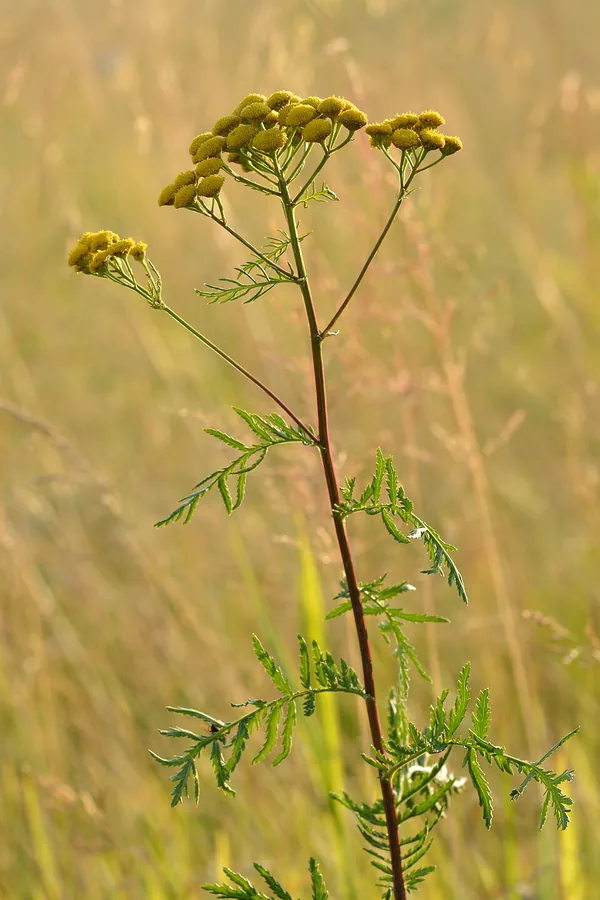
Common tansy brings an unfussy, old-world charm to a garden. A hardy perennial in the daisy family, it lifts flat, sunny clusters of button-shaped golden-yellow flowers above ferny, aromatic foliage that reads as informal and welcoming. It traveled from Europe as a garden and medicinal plant and settled easily across North America, and its bitter, camphor scent is part of the atmosphere it lends to a herb bed or a wild corner.
Its appeal is the ease that comes with it. Tansy takes poor soil, drought, and cold to zone 3 in stride, and its quick growth soon gives a border presence and height. That same energy asks for thoughtful placement, though, since creeping rhizomes and free self-seeding let it roam, and several states list it as a noxious weed. Give it a defined spot where its spread suits the scheme, and pass it by where local rules do not allow it.
There is a line to draw before it joins the planting. The whole plant holds thujone and sesquiterpene lactones that make it toxic to pets, livestock, and people, so tansy belongs in the garden as an ornamental and pest-repellent herb, never as something for the table.
Care
The short version: a sunny, well-drained spot, water only while it establishes or through a long dry spell, and a routine of deadheading and dividing that keeps the planting composed and in scale.
Light
Give tansy full sun and it rewards the position with upright stems and its fullest show of flower. It manages in partial shade, but the plants stretch taller and floppier there and offer fewer of the golden buttons that make it worth a place.
Water
Once settled, tansy is genuinely drought tolerant and needs watering only through a long dry spell, which suits a low-maintenance planting. Water young plants until they root, then step back, since soggy soil undoes it far faster than a dry stretch.
Soil
Tansy is content in dry and poor soils, an easy fit for a difficult corner, though it grows lushest in moist, humus-rich ground. It is relaxed about pH across 6.0 to 8.0, provided the drainage is good.
Temperature
A comfortable range of about 50°F to 86°F (10°C to 30°C) suits it, and its hardy roots carry it through winters down to zone 3. Neither heat nor cold disturbs the display once the plant has settled in.
Humidity
Open, airy sites are the natural home for tansy, which prefers the drier end at around 30% to 60% humidity. Damp, stagnant air is the one setting it dislikes, so give it a spot with good movement.
Feeding
Feeding is mostly unnecessary, and that restraint is part of tansy's low-key appeal in lean ground. A little compost or a balanced fertilizer in spring is enough, while richer feeding only pushes the spread that a composed planting is trying to keep in check.
Pruning
Deadheading the spent flower heads before they set seed keeps the planting tidy and holds back self-sowing. Cutting the stems near ground level in late fall or early spring clears the bed and sets the stage for next season's flush.
Repotting
In a container, dividing every 1 to 2 years keeps the plant fresh before the roots circle and the crown crowds. In the ground, lifting and splitting every few years renews the clump and keeps its footprint in proportion to the border.
Size & spacing
Tansy rises from 1 to 5 feet (30 to 150 cm) depending on the site, an easy source of height at the back of a bed. Each clump settles to about 9 to 18 inches (23 to 46 cm) across before the rhizomes begin to travel, which is worth allowing for when planning the planting.
When to plant
Tansy keeps to the rhythm of a cold-hardy perennial, which makes it simple to fold into the garden year. Start seed indoors in late winter, set the young plants out after the last frost once the soil has warmed, and its golden heads carry the border from July through September.
Northern hemisphere
Southern hemisphere
Typical months for a temperate climate: start earlier in warm zones, later where spring frosts linger.
- Sow: 6 to 8 weeks before the last spring frost
- Plant: After the last spring frost once soil has warmed
- Harvest: Blooms July through September
Hardiness
USDA hardiness zones: 3–8
Temperature: down to -40°C
Troubleshooting
Tansy asks little, so the occasional problem tends to come from too much water or from its habit of spreading rather than any real fragility. Note the early signs below and a small, timely adjustment keeps the planting looking its best.
Tansy outgrowing its place and appearing beyond the border you planned
This is aggressive spread, and tansy manages it in two ways at once. Creeping rhizomes carry new shoots well past the intended clump while dropped seed fills the spaces between. Deadhead before the flowers set seed, lift the rhizomes out to the last fragment, and mow or cut the patch through the season to bring the planting back into scale.
Fix:
- Deadhead before seed set
- Dig out rhizomes including root fragments
- Mow or cut repeatedly through the season
Lower leaves yellowing where the ground stays wet
The trouble here is poor drainage or overwatering. Soggy ground keeps the roots dark and soft, and the lowest leaves yellow and spoil the look. Improve the drainage and water less often, and a plant this drought-hardy soon regains its composure.
Fix:
- Improve drainage
- Reduce watering frequency
Soft insects gathering on the tender new tips
These are aphids, soft-bodied insects that settle on fresh growth and leave a sticky honeydew. A firm jet of water clears them, with insecticidal soap in reserve if they return. Because tansy draws in predatory insects, leaving a few often invites the beneficials to restore the balance on their own.
Fix:
- Spray with a strong jet of water
- Apply insecticidal soap
Toxicity
For all its easy charm, tansy calls for real caution. The whole plant carries thujone and sesquiterpene lactones that bring on vomiting, drooling, and tremors, and in larger amounts they harm the organs and, in people, end a pregnancy. Wear gloves to tend it, and keep it well away from pets, grazing animals, and children.
Toxic to
Cats · Dogs · Horses · Rabbits · Livestock · Birds · People
Cats Toxic
Tansy leaves a curious cat drooling and sick, with loose stools and a raw, tender mouth following soon after. Larger amounts belong well out of reach, since the plant's thujone can escalate to tremors and more serious harm.
Dogs Toxic
A dog that gnaws the leaves is likely to vomit, pass loose stools, and develop an itchy rash at the spot. Any large or repeated helping runs past a mere stomach upset into trembling, seizures, and injury to the liver and kidneys.
Horses Toxic
A horse will usually reject tansy the moment it catches the bitter scent, yet one that grazes it ends up with a griping gut and a flat, listless mood. Because the thujone mounts with every mouthful, regular grazing carries a risk of tremors and organ strain.
Rabbits Toxic
Rabbits are no exception to tansy's toxicity, since the volatile oils that harm other animals bring them drooling and an upset digestion. It is safest kept out of the hutch and off the menu altogether.
Livestock Toxic
Grazing cattle, sheep, and goats tend to pass the bitter plant by, though animals left hungry on bare, overgrazed pasture will eat it. Taken in quantity, its thujone and sesquiterpene lactones can bring vomiting, staggering, and convulsions.
Birds Toxic
Those insect-repelling oils are just as unwelcome to birds, which means neither leaf nor seed should ever be offered. The whole plant is best kept away from backyard poultry and companion birds.
People Caution
Even with its long record in old kitchens and folk cures, tansy is not safe to eat in any part. Its thujone can set off vomiting, drooling, and tremors, it works as an abortifacient, and a genuine dose harms the organs, so gloves are wise and children should be kept well clear.
Wear gloves when handling; the aromatic foliage can cause contact dermatitis in sensitive people.
Helpline numbers

United States
ASPCA Animal Poison Control: (888) 426-4435 (fee applies)
Poison Control: (800) 222-1222



Canada
Poison Centres: 1-844-764-7669
Varieties
Most tansy in a garden is the plain wild species, though a couple of more polished selections turn up where a tidier or brighter effect is wanted.
Tanacetum vulgare var. crispum (Fern-leaf or Curly Tansy)
A more finely cut, crisped, and curled leaf gives this a neater, more mannered look in a border, and it spreads less freely than the wild plant.
'Isla Gold'
Grown for its bright golden-yellow ferny foliage alone, this selection brings a warm note of color to a planting.
Companions
Tansy earns its keep next to roses and fruit trees, where its scent helps turn away some pests and draw in beneficial insects, but it's a poor neighbor for small vegetables it can quickly crowd out.
Plant near
Roses: Traditionally interplanted to help deter some insect pests and to attract beneficial predatory insects.
Fruit trees: Used as an aromatic companion thought to repel some pests while drawing in pollinators and predators.
Keep apart
Low-growing vegetable beds: Aggressive rhizomatous spread and heavy self-seeding can crowd out less competitive crops.
How to propagate
Increasing tansy is effortless whether by seed or division, so the gardener's real task is composition and restraint rather than getting more of it.
SeedEasy
Spring · Germinates in 1 to 2 weeks; typically blooms by the second year
Sown in spring, tansy germinates in 1 to 2 weeks, though it usually waits until its second year to flower and earn its place. It self-seeds freely, so deadheading the spent blooms keeps a planting from wandering beyond the design.
DivisionEasy
Spring or fall · Establishes within one growing season
Lifting an established clump in spring or fall and dividing it is simple, since each rhizome piece roots with ease and settles within one growing season. It is the quickest route to more plants and a natural moment to bring a clump back into scale with its setting.
Myths
Tansy is a safe culinary and medicinal herb because old recipes once favored it.
Tansy did once earn a place in kitchens and remedies, but that history is not a green light. The plant holds thujone, which makes it unsafe to eat even in small amounts. Enjoy it as a garden ornament and keep it away from the table.
A planting of tansy keeps every garden pest at bay.
Tansy does turn some insects away, so the idea has a grain of truth, but it is no all-purpose guard. It draws in certain pests along with the beneficial insects, so treat it as one element of a scheme rather than a single solution.