Herb · Amaryllidaceae
Garlic Chives
Allium tuberosum
Cut them again and again through the season, and garlic chives return to the table with flat, garlic-scented leaves.
Full sun
Every 5–10 days
80–90 days
USDA 4–9
Overview
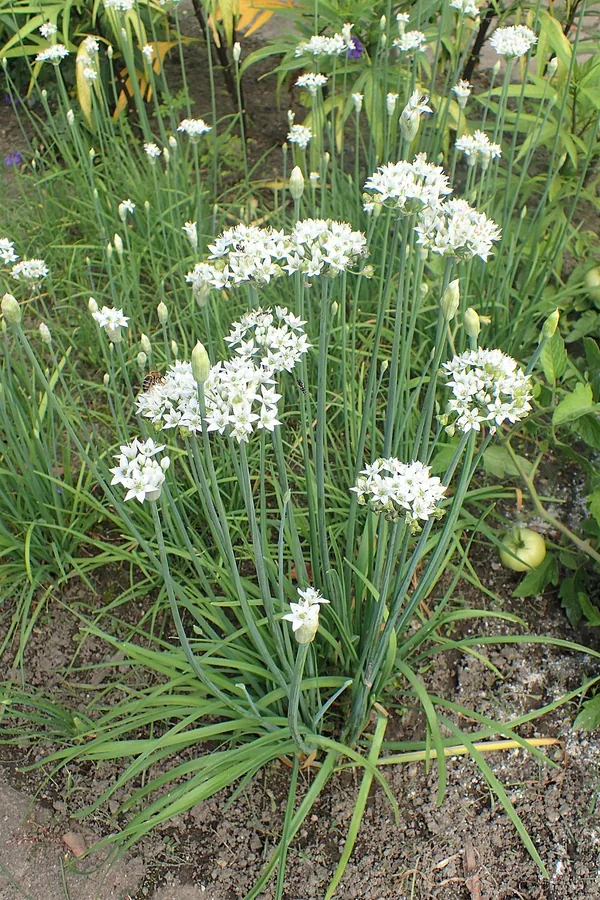
Garlic chives bring a quiet sense of the kitchen garden to any sunny corner, a clumping perennial in the onion family whose flat leaves carry a soft garlic note rather than the sharper onion tone of common chives. The plant has a long history across eastern Asia, where it has held a place at the table for centuries under names like Chinese chives, Chinese leek, and nira. Late summer lifts it into a moment of real charm, when white, star-shaped flowers open with a sweet scent and invite the pollinators in.
It suits a life that moves at a normal pace. The clump shrugs off cold to -22°F (-30°C), keeps its composure through summer heat, and asks almost nothing once it has settled into a bed or a generous pot by the door. Snip a few leaves on the way to the stove and the planting simply fills back in, so it stays part of the daily routine rather than another chore.
The one habit to shape is its readiness to roam. Left to flower and set seed, garlic chives spread freely and can drift well beyond the spot chosen for them, softening the edges of a tidy scheme. Trim the flower heads before the seed ripens and the planting keeps the poised, intended look you had in mind.
Care
The short version: a place in full sun with fertile, well-drained soil kept evenly moist gives you the most tender leaves. Shear the clump for fresh growth, divide it every few years, and deadhead the flowers so the planting stays where you designed it.
Light
A spot in full sun brings out the best in garlic chives, keeping the leaves stocky and full of flavor for the kitchen. They settle happily into partial shade as well, where the growth turns a touch thinner and softer, an easy trade for a shadier corner.
Water
Keep the soil evenly moist for the tenderest leaves, which usually means a drink every 5 to 10 days depending on the weather and your soil. An established clump carries on through a short dry spell without complaint, though a real drought dulls the flavor and coarsens the leaves.
Soil
Give them fertile, well-drained loam enriched with plenty of organic matter for a bed that stays in good heart. A pH between 6.0 and 7.0 suits them, sitting comfortably near neutral.
Temperature
Few herbs are so at ease with the seasons. Garlic chives come through winter cold to -22°F (-30°C) and hold up in heat to about 95°F (35°C), which is why the same clump greets you year after year.
Humidity
Ordinary household and garden air suits them, roughly 40% to 60%, so there is nothing to fuss over outdoors. Good airflow around the planting does far more to keep rust at bay than any moisture level.
Feeding
A feed through spring and summer with a balanced or nitrogen-leaning fertilizer keeps the leaves coming. A single seasonal feeding is plenty for a clump growing in decent ground, and it keeps the routine light.
Pruning
Snip leaves to about 2 to 3 cm above the crown whenever the kitchen calls, and a full shear of the clump brings on fresh, tender regrowth. Cut the spent flower heads away promptly, or the planting will seed itself across the bed.
Repotting
This is a plant to divide rather than repot. Every 2 to 3 years, lift and split a congested clump once the center crowds, the leaves thin, and the harvest begins to slip.
Size & spacing
Each clump reaches 12 to 20 inches (30 to 50 cm) tall and spreads 8 to 12 inches (20 to 30 cm) wide, an easy scale for a border edge or a pot. Give plants that much room so air moves freely and rust finds it harder to settle in.
When to plant
Garlic chives fit easily around the calendar. Start seed indoors 6 to 8 weeks before your last frost, or sow it straight outdoors in spring, and settle transplants in once hard frost has passed. The leaves come to the table right through the season, and the white flowers of late summer are best removed before they seed.
Northern hemisphere
Southern hemisphere
Typical months for a temperate climate: start earlier in warm zones, later where spring frosts linger.
- Sow: 6-8 weeks before the last spring frost
- Plant: Spring, after danger of hard frost has passed
- Harvest: Snip leaves through the growing season; fragrant white star-shaped flowers appear in late summer (deadhead before seed set to prevent aggressive self-seeding)
Hardiness
USDA hardiness zones: 4–9
Temperature: down to -34°C
Troubleshooting
Garlic chives keep their good looks through most of the year, and the few troubles that appear are easy to read at a glance. Nearly all of them show on the leaves or in an aging clump. Match what you see below and step in early, before a small blemish spreads across the planting.
A silvery, pale-speckled cast dulling the foliage
When the crisp look of the planting fades to a stippled, silvered blur, onion thrips are usually behind it, tiny insects that scrape at the leaves and multiply in hot, dry weather. A firm jet of water sends them packing. Treat the clump with insecticidal soap afterward, tidy away the most damaged leaves, and the planting soon looks its composed self again.
Fix:
- Spray foliage with a strong jet of water to dislodge thrips
- Apply insecticidal soap or horticultural oil to affected plants
- Remove heavily infested leaves
Orange, rust-toned spots marking the leaves
Orange marks that smudge off on a fingertip are allium rust, a fungus that settles in when a clump grows too dense and the leaves linger damp. It quietly spoils the neat green of a herb bed. Clear away the spotted leaves, open the clump by thinning or dividing so air can pass through, and direct water to the soil rather than over the top.
Fix:
- Remove and destroy infected leaves
- Improve air circulation by thinning and dividing clumps
- Avoid overhead watering
Self-sown seedlings drifting past their intended spot
As soon as the flower heads set seed, garlic chives spread with real freedom, and a once-tidy border starts filling with grassy newcomers well past the original planting. A little editing keeps the look intentional. Ease out the young volunteers while they are small, and remove the flowers before their seed ripens and drifts across the bed.
Fix:
- Pull or hoe unwanted seedlings while young
- Remove flower heads before seed matures and disperses
An established clump hollowing out at its heart
An aging clump that thins and empties in the center has simply grown too crowded, its bulblets competing for the same water and food until the middle fades. Lift the whole planting in spring or early fall, part it into sections, and reset the healthy outer divisions with space between them. The refreshed clumps read cleaner and hold their shape in the bed.
Fix:
- Lift and divide the clump in spring or early fall
- Replant healthy divisions with adequate spacing
Toxicity
This herb wears two faces at home. Garlic chives are a safe, delicious presence at the table for people, yet as an Allium they are toxic to cats, dogs, horses, and other animals. The organosulfur compounds in every part damage red blood cells and can bring on hemolytic anemia, with cats the most sensitive of all. Enjoy them in the kitchen, and keep the plants, trimmings, and cut leaves well out of reach of pets and livestock.
Toxic to
Cats · Dogs · Horses · Rabbits · Livestock · Birds
Safe for
People
Cats Severe
A curious cat is the most vulnerable resident of any home, and even a small taste can turn serious. The first signs of vomiting, weakness, and pale gums give way to red or brown urine, quick breathing, and collapse as the red blood cells break down.
Dogs Moderate
A dog that chews the foliage usually vomits and has an upset stomach at first. Over the day or two that follow, the same blood damage surfaces as low energy, pale gums, and rust-tinted urine.
Horses Toxic
Horses take alliums badly, and the same organosulfur compounds work against their red blood cells. Grazing on the plant again and again brings weakness, a dull coat, dark urine, and the pale gums that signal anemia.
Rabbits Toxic
Keep this one well away from a house rabbit. The thiosulfates that harm other animals damage a rabbit's blood cells all the same, so it belongs nowhere near the hutch as a green or a treat.
Livestock Toxic
Cattle, sheep, and goats can all be poisoned where alliums grow within reach of the pasture. Steady grazing leads to anemia, weakness, a reluctance to move, and discolored urine.
Birds Toxic
Birds are vulnerable to allium poisoning as well, their blood cells taking the same oxidative hit. Even a modest amount can bring weakness, labored breathing, and a fading appetite, so keep clippings clear of poultry and pet birds.
People Edible
For the household cook, garlic chives are a welcome staple, eaten raw or cooked by healthy people without concern. The flat leaves, the buds, and the flowers all find a place in stir-fries and dumplings.
Keep plants, trimmings, and harvested leaves out of reach of pets; do not feed any part to animals and dispose of clippings securely.
Helpline numbers

United States
ASPCA Animal Poison Control: (888) 426-4435 (fee applies)

United Kingdom
Animal PoisonLine: 01202 509000 (fee applies)

Australia
Animal Poisons Helpline: 1300 869 738
Varieties
Most garlic chives on offer are the plain species, but a couple of selections are worth knowing when you grow them mainly for the kitchen.
'Geisha'
This selection is prized for broader, tender leaves and a fuller garlic flavor that earns it a regular place at the table.
Broad-leaf types (mauershan / da ye)
These offer wider, flatter leaves treasured in Asian cooking, and they come into their own in a stir-fry.
Companions
Garlic chives sit awkwardly next to legumes, since alliums tend to hold back their growth.
Keep apart
Beans: Alliums can inhibit the growth of beans
Peas: Alliums can inhibit the growth of peas
How to propagate
Building a fuller planting of garlic chives is refreshingly simple, and two approaches suit almost any gardener. Division hands you a usable plant sooner, while seed is inexpensive and easy when the wait is no obstacle.
DivisionEasy
Spring or early fall · 4-6 weeks
Division is the fastest route to more plants, and spring or early fall is the moment for it. Lift the clump, part it into sections that each hold several bulblets, and set them back in at once with room to spread. The new divisions find their feet in about 4 to 6 weeks.
SeedEasy
Start indoors 6-8 weeks before last frost or sow outdoors in spring · 2-3 weeks to germinate; one to two seasons to a harvestable clump
Seed is just as easy and asks only for patience. Start it indoors 6 to 8 weeks before the last frost, or sow it into the spring garden, and expect sprouts in 2 to 3 weeks. A full clump worth cutting from arrives over one to two seasons, and since the plant self-sows freely, deadhead the flowers if you would rather it stayed in place.
Myths
An herb mild enough for the dinner table poses no danger to household pets.
A gentle presence on the table says nothing about its safety for animals. As an Allium, garlic chives are toxic to cats and dogs, and even small or repeated amounts damage red blood cells. The very herb that lifts your cooking can cause hemolytic anemia in a pet.
There's no real difference between garlic chives and everyday chives.
A close resemblance masks two separate species. Garlic chives (Allium tuberosum) carry flat, garlic-flavored leaves and white flowers, while common chives (Allium schoenoprasum) show hollow, onion-flavored leaves and purple blooms.