Ornamental · Dryopteridaceae
Christmas Fern
Polystichum acrostichoides
Settled into shade with good drainage, the Christmas fern lends a shaded garden green that lasts all winter.
Partial shade
Every 5–10 days
USDA 3–9
12–35 in · 30–90 cm
Overview
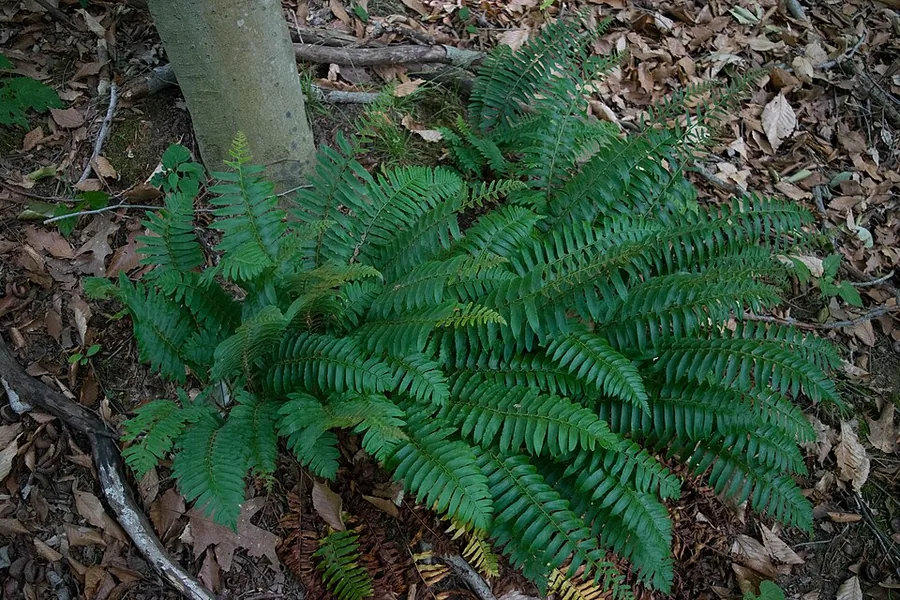
The Christmas fern is the kind of quiet anchor a shaded garden leans on, an easy native that keeps its color when nearly everything around it has gone to brown. It holds a composed, non-spreading clump of leathery, dark green fronds, the small leaflets cut like little Christmas stockings, which is where its name began. A member of the wood fern family, it grows wild across the eastern woodlands and brings that woodland ease home with it.
Its real gift to a garden is constancy. Untroubled by cold down to -40°F (-40°C), content in deep shade, and at home in the dry, rocky ground beneath trees where designers so often run out of options, it asks little of a difficult spot. New fiddleheads rise in spring while last season's fronds still stand, so the planting reads as green and furnished rather than freshly cut back.
Folded into a daily routine, it is the picture of low effort. Give it shade, soil that drains, and time for the clump to settle, and it carries a steady evergreen presence through the seasons. It earns its keep edging a shaded path, settling a slope, or laying a calm green floor beneath a woodland canopy.
Care
The short version: place it in part to full shade in rich, well-drained soil, keep it evenly moist while it settles, and from there let it look after the corner on its own.
Light
This is a plant for the shaded side of a garden. It looks its best in partial to full shade and accepts deep shade without complaint, which makes it a rare answer for the dim corners that defeat most plantings. A little morning sun suits it, but spare it the harsh afternoon glare, which scorches the fronds.
Water
Keep the soil evenly moist while the fern settles in, watering every 5 to 10 days when the rain falls short. Once it has rooted it takes brief dry spells in stride, so the routine relaxes into the background. What it will not abide is standing water.
Soil
Give it rich, well-drained loam with plenty of organic matter, though it makes its peace with sandy or shallow rocky ground too. A slightly acidic pH of 5.0 to 6.5 suits it. Drainage is the one detail to get right, since wet feet invite crown rot.
Temperature
Few plants weather a season the way this one does. It carries on from -40°F to 86°F (-40°C to 30°C), across USDA zones 3 through 9. Winter holds no menace for it, and the fronds keep their color straight through the cold.
Humidity
Ordinary outdoor air is all it asks, so there is no figure to chase. Steady soil moisture matters far more to the look of this fern than any dampness in the air.
Feeding
Feeding is almost an afterthought here. A light topdressing of compost or a balanced slow-release fertilizer in spring is ample, and many gardeners forgo even that. Too much feeding works against the plant rather than for it.
Pruning
Pruning amounts to a single seasonal tidy. In late winter or early spring, before the new fiddleheads emerge, clear away the old, tattered, or winter-worn fronds so the fresh growth opens to a clean slate.
Size & spacing
A clump rises 12 to 35 inches (30 to 90 cm) tall with a spread to match. Allow roughly that much room between plants so the fronds can arch into shape, and the non-spreading clumps hold their composed outline without crowding the bed.
When to plant
A fern keeps no calendar of blooms to anticipate and offers no harvest to gather. Set it out in spring as the soil warms and the fiddleheads begin to rise, then give the planting a season or two to find its place.
Northern hemisphere
Southern hemisphere
Typical months for a temperate climate: start earlier in warm zones, later where spring frosts linger.
- Plant: spring
Hardiness
USDA hardiness zones: 3–9
Temperature: down to -40°C
Troubleshooting
This fern keeps its composure with little attention, so problems are uncommon and usually come down to soggy ground or a single hungry pest. Learn the two signs below and a quick glance keeps the planting looking its best. Match what you see, then act before it spreads.
Slumping fronds and a soft, darkened base
When the fronds slump and the base softens to a dark, spongy patch, the trouble is crown rot, which moves in wherever the soil stays soggy, most often through a damp winter. The remedy starts with restraint at the watering can and a serious look at how the bed drains. Lift away the soft, blackened tissue, then settle the rhizome back at a gentle slant so water sheds off the crown rather than gathering there. A free-draining spot keeps the whole planting looking composed.
Fix:
- Improve drainage and reduce watering
- Plant the rhizome at an angle to shed water from the crown
- Remove and discard affected tissue
Tattered leaflets and stems left bare
Tattered margins and bare stems are the calling card of the Florida fern caterpillar, an after-dark feeder that can undo a tidy frond in a single night. An evening pass with a flashlight turns them up, and lifting them off by hand keeps the planting presentable. Only a real infestation justifies an appropriate insecticide, since a watchful eye and an early catch usually keep the foliage looking its best.
Fix:
- Hand-pick caterpillars
- Treat with an appropriate insecticide if infestation is heavy
Toxicity
For a home shared with pets and children, the verdict is reassuring: the Christmas fern is safe all around. The ASPCA lists it as non-toxic to cats, dogs, and horses, and there is no poison in the fronds to concern other animals or people.
Safe for
People · Cats · Dogs · Horses · Rabbits · Livestock · Birds
Cats None
A home with cats can welcome this fern without a second thought, since the ASPCA lists it as non-toxic to them. A cat that samples a few fronds might feel briefly unsettled, as any plant can manage, but nothing poisonous is at work.
Dogs None
The fern fits easily into a household with dogs, carrying no toxins to worry over. A dog that chews a frond or two stays perfectly fine, though a large helping of coarse greenery may move through messily.
Horses None
Confirmed non-toxic to horses, the fern sits safely within reach of a grazing animal. Its fronds simply hold nothing poisonous.
Rabbits Safe
Rabbits can browse the fronds without harm, as the fern holds no toxin to trouble them.
Livestock Safe
Cattle, goats, and sheep can graze beside this fern safely, since it carries nothing poisonous. It avoids the trouble that some pasture ferns are known to cause.
Birds Safe
Pet and backyard birds remain perfectly safe around this fern. Nothing in the fronds will harm them.
People Safe
The fern presents no poisoning risk to people, the children who handle its fronds included. It isn't grown for the table, so there is no call to eat it, yet a touch or a taste does no harm.
Varieties
Where many ornamentals arrive in a parade of named selections, this fern is grown almost entirely as the wild species, cultivars being rare. There is essentially one form to know, and it is a handsome one.
Polystichum acrostichoides (species)
It comes to the garden almost always as the unadorned wild species, its leathery, evergreen, dark green fronds and stocking-shaped leaflets holding their color through winter into the Christmas season, with named cultivars seldom on offer.
How to propagate
Extending a Christmas fern planting is simple, whether by dividing a clump you already have or by the slower craft of raising it from spores.
DivisionEasy
Spring · 1 to 2 growing seasons
The graceful way to expand a planting is to divide an established clump in spring, parting the crown and resettling the pieces, which take a season or two to find their footing and round out. For the patient gardener there is also the slower path of raising it from spores carried on the upper third of the fertile fronds.
Myths
The Christmas fern is named for blooming or fruiting at Christmas.
The name suggests a festive bloom, yet ferns neither flower nor set berries, so a winter display is off the table. The truth is quieter and prettier: it owes its name to the leathery fronds that stay green through winter into the Christmas season, and to leaflets cut like little Christmas stockings.