Ornamental · Dryopteridaceae
Wood Fern
Dryopteris marginalis
A composed native fern that turns the shadiest corner of a garden into something cool, green, and effortless.
Partial shade
Every 5–7 days
USDA 3–8
12–24 in · 30–60 cm
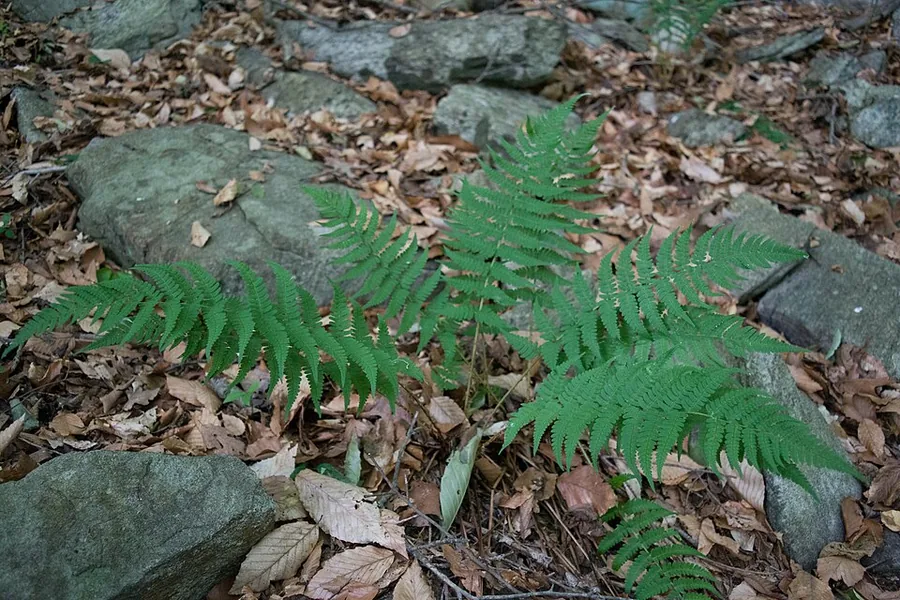
Overview
The marginal wood fern brings a settled, woodland calm to the parts of a garden that other plants avoid. Native to the eastern forests, it looks most at ease in the soft shade beneath trees, where its presence reads as quiet rather than showy. The foliage keeps its poise through the season and lingers as semi-evergreen greenery into winter in milder regions, so a border never looks bare.
Named for the spore cases set along the frond margins, this is a plant of restraint. A slow, well-mannered clump that settles at about 1 to 2 feet (30 to 60 cm) across, it holds a tidy shape without overrunning a planting. That makes it a natural anchor for a shaded border, the threshold into a woodland walk, or the cool north face of a house, where it lends structure and a sense of ease.
Living with it asks almost nothing. Shade, good soil, and ground that stays moist are the whole of its wishlist, and in return it slips into the background of daily life and stays there. Hardy down to zone 3, it returns each year as a dependable green fixture, the kind of planting that quietly makes a space feel finished.
Care
The short version: set it in partial to full shade, keep the soil evenly moist and rich in organic matter, and give it one tidy-up of old fronds each year before the new growth arrives.
Light
Give it partial to full shade, the gentle light of a spot tucked under a canopy. A little morning or filtered sun suits it as long as the soil stays moist, but keep it clear of harsh midday sun, which scorches the fronds and spoils the effect.
Water
Keep the soil evenly moist but never waterlogged, which usually means watering every 5 to 7 days as the weather shifts. An established clump will carry a short dry spell, but let a long drought set in and the fronds crisp and brown at the edges, breaking the calm look you planted it for.
Soil
It looks its best in humus-rich, well-drained loam full of organic matter, the soft, forest-floor ground that suits a shade planting. PH is no concern; it settles happily anywhere from 5.0 to 7.0.
Temperature
This is a genuinely hardy fern, comfortable from about -22°F to 86°F (-30°C to 30°C). Hard winters leave it untroubled, though hot, dry air takes the ease out of its look.
Humidity
It sits well at average to moderate humidity, around 40% to 60%. Outdoors that need rarely comes up, and a sheltered spot with steady soil moisture does more for its appearance than the figure in the air.
Feeding
Ferns are light feeders and ask for very little. A single spring topdressing of compost or a balanced slow-release fertilizer at the start of the season keeps it looking its best.
Pruning
Upkeep is close to nothing. In late winter to early spring, clear away the tattered, dead, or winter-worn fronds before the new fiddleheads unfurl, and the plant carries itself the rest of the year.
Repotting
A wood fern is a long-term fixture and prefers to be left in place. Divide the clump every 3 to 5 years only if the crown crowds, the center thins, or the fronds lose their fullness.
Size & spacing
A settled clump reaches about 1 to 2 feet (30 to 60 cm) tall and about as wide. Allow each plant that much room so the fronds arch cleanly and the planting keeps its relaxed, unhurried shape.
When to plant
There is no bloom or harvest to build a season around, only the right moment to bring it into a space. Plant in spring once the frost has passed, or in early fall while the soil still holds warmth for the roots. Those same windows are the time to lift and divide an established clump.
Northern hemisphere
Southern hemisphere
Typical months for a temperate climate: start earlier in warm zones, later where spring frosts linger.
- Plant: Spring after frost danger passes, or early fall
Hardiness
USDA hardiness zones: 3–8
Temperature: down to -40°C
Troubleshooting
Placed thoughtfully, a wood fern asks little and rarely falters. Most of its off days trace back to too much sun or soil that dried out, and the foliage signals it before things go far. Read the sign below and adjust the setting before a small lapse spreads through the planting.
Brown, crisp edges spoiling the fronds
The look of frond scorch almost always follows too much sun over dry soil. A fern set where the midday sun lands browns first along the edges, and the easy grace goes with it. Move it into deeper shade in spring or fall, keep the ground evenly moist, and lay a leaf-litter mulch to hold that moisture in place.
Fix:
- Increase watering to keep soil evenly moist
- Provide additional shade or relocate to a shadier site in spring or fall
- Mulch with leaf litter or compost to retain moisture
Fronds wilting and fading in a dry stretch
When the soil dries well below the surface, the fronds droop and may not recover by morning, the mark of drought stress. It shows most in a fern's first season, before the roots have spread into the bed. Water deeply and steadily, then mulch to keep that moisture from slipping away.
Fix:
- Water deeply and consistently
- Apply organic mulch to conserve moisture
Dark or rusty spots marking the fronds
First make sure the spots are not simply the fern's own sori, the neat rows of round spore cases along the frond edges that belong there. A true fungal leaf spot or rust looks ragged and uneven instead, and it settles in where the air is still and damp. If it is disease, remove the marked fronds, open the planting so air can move, and water at the base rather than over the leaves.
Fix:
- Remove and discard affected fronds
- Improve air circulation and avoid overhead watering
Toxicity
This is an easy plant to live with, safe in a home shared with pets or children. As a true fern, the marginal wood fern is not listed as toxic to pets, livestock, or people, so a brushed frond or a curious taste is nothing to fret over. As a matter of habit, keep pets and children from chewing the underground rhizomes of any garden plant.
Safe for
People · Cats · Dogs · Horses · Rabbits · Livestock · Birds
Cats None
A cat is safe to share a room and a garden with this fern, brushing past or nibbling a frond without harm, since true ferns like this one are not toxic to them.
Dogs None
Dogs are safe around it as well. A curious chew will not poison them, though a large mouthful of any plant can leave a dog with a passing upset.
Horses None
Nothing in this fern puts a horse at risk. The fronds are not part of a normal diet, but grazing on them does no real harm.
Rabbits None
Rabbits can live alongside this fern safely, and an occasional nibbled frond is nothing to worry about.
Livestock None
Cattle, goats, and sheep come to no harm grazing this fern, which carries none of the toxins found in some pasture weeds.
Birds None
Pet and backyard birds are in no danger near the foliage.
People None
The fern is safe to grow and handle around adults and children alike. Some ferns offer edible young fiddleheads, but there is no reason to bring this one to the table.
Foliage poses little risk, but avoid letting pets or children chew the rhizomes; the marginal wood fern itself is not listed as toxic.
Helpline numbers

United States
ASPCA Animal Poison Control: (888) 426-4435 (fee applies)

United Kingdom
Animal PoisonLine: 01202 509000 (fee applies)

Australia
Animal Poisons Helpline: 1300 869 738
Varieties
The marginal wood fern is the one most gardeners bring home, though a few of its Dryopteris relatives find their way into shade plantings. These are the ones worth recognizing.
Dryopteris erythrosora (autumn fern)
An Asian relative sought out for young fronds that arrive coppery bronze before turning green.
Dryopteris filix-mas (male fern)
A European and North American species whose rhizome once served as a worming remedy and can irritate in quantity.
Dryopteris affinis 'Cristata The King'
A golden-scaled male fern selection finished with crested, tasseled tips on every frond.
How to propagate
Adding more wood ferns to a scheme is simple: divide a clump already settled in the garden.
DivisionEasy
Early spring or fall · 1 to 2 growing seasons
Division is the graceful, low-effort way to bring on more wood ferns. In early spring or fall, lift a mature crown and part it into sections, keeping roots and a growing point on each, then set them back in place at once. Give the new clumps 1 to 2 growing seasons to settle into the scheme. Raising ferns from spores is possible but slow, calling for sterile, humid conditions.
Myths
Ferns grow from seed the way flowering plants do.
A fern neither flowers nor sets seed. It spreads by spores held in the sori beneath its fronds, which is why the gardener's route to more plants is dividing the clump, not sowing.
Wood ferns need deep, full shade and will not survive any sun.
A leaning toward partial to full shade is a preference, not a rule to plant by. Keep the soil consistently moist and it takes morning or filtered sun with no trouble.