Houseplant · Asparagaceae
Corn Plant
Dracaena fragrans
A quiet floor plant for a low-light corner, the corn plant brings calm height to a room and only asks for clean water and warmth.
Bright indirect
50–81°F · 10–27°C
USDA 10–12
3–14 ft · 0.9–4.4 m
Overview
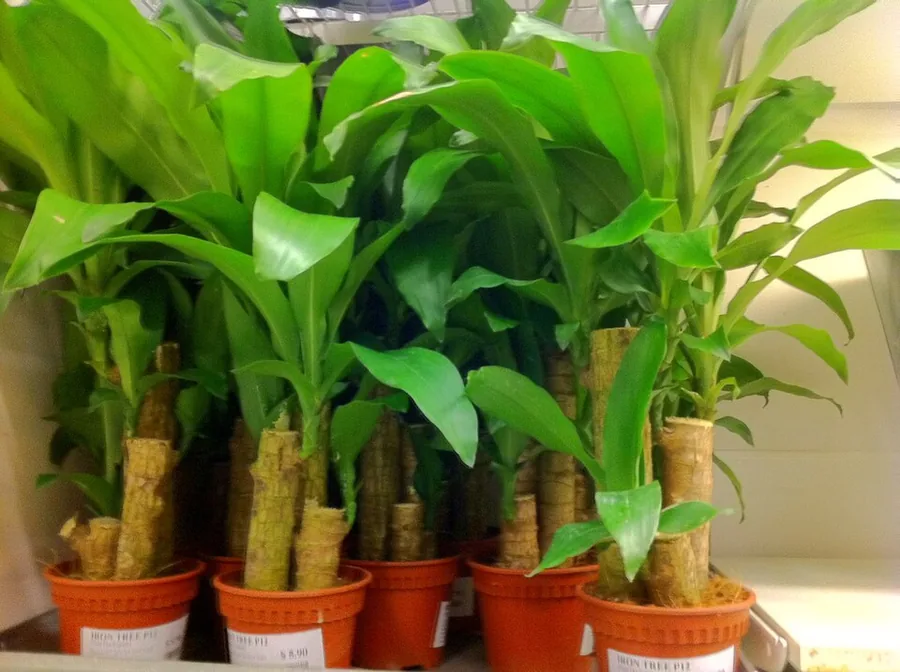
Few houseplants furnish a room as easily as the corn plant. Its single woody cane lifts a crown of long, arching leaves to eye level, giving a quiet vertical line that draws a bare corner together, and the wide yellow stripe of the common 'Massangeana' lends a warm note to neutral walls. Brought over from tropical Africa, it slips into everyday interiors and holds its composed, upright form season after season.
Part of its appeal as a furnishing is its slow growth. A young cane arrives around 3 feet tall, the right scale for flanking a sofa or softening a hallway, and over years of headroom it rises well past head height to anchor a stairwell or a double-height wall. Because it changes so little, the look you style it into is the look you keep.
The one demand it makes is on the water you give it. The corn plant is very sensitive to fluoride and salts, and tap water soon spoils the display with brown, scorched leaf tips. Pour filtered water or rainwater, keep its spot warm and clear of cold drafts, and it stays the easy, elegant anchor a room wants.
Care
The short version: place it in bright indirect light, though it settles for a low-light corner, and water with fluoride-free water once the top of the soil dries. Keep its spot warm above 50°F (10°C), feed monthly in spring and summer, and it carries the room with little effort.
Light
Set it in bright indirect light, back from a hot window, where it reads at its best. It will hold a medium spot and even a low-light corner, though dim placement slows it and narrows the leaves over time. Keep it clear of direct sun, which scorches the foliage and spoils the look.
Water
Water once the top of the soil dries, keeping it evenly moist through spring and summer and easing off from fall to late winter without ever letting it dry out completely. The water itself matters most, since this plant is very sensitive to fluoride and salts, so use distilled, filtered, or rainwater and flush the pot now and then. Leave cold tap water out of the routine.
Soil
Pot it in a loamy, peaty, well-drained mix in a container with drainage holes that suits the room. Hold the pH slightly acidic, between 6.0 and 6.5, and avoid perlite and superphosphate, which add the fluoride this plant cannot handle.
Temperature
Choose a warm spot, between 50°F and 81°F (10°C to 27°C), and never let it fall below 50°F. Cold drafts and chilly glass mark the leaves, so move it in well before fall nights turn cold.
Humidity
Average household humidity around 30% to 40% keeps it looking right. When the air runs drier, especially in winter, a little extra moisture keeps the leaf tips from browning and the display crisp.
Feeding
Feed it monthly through spring and summer with a liquid foliage houseplant fertilizer, and pause in the colder months as growth slows. Steer clear of any feed high in fluoride or superphosphate, which burns the leaf tips.
Pruning
Cut a leggy cane back to the height that fits the room and new growth pushes from the cut, which keeps a maturing plant in proportion. Strip off the yellowed lower leaves as they age, and keep the trimmed tips and cane sections to root into new plants for elsewhere.
Repotting
This slow grower needs repotting only every 1 to 2 years, or when it is clearly crowded. Watch for roots circling the pot or showing at the drainage holes, water running straight through, or growth stalling despite good care.
Size & spacing
Indoors it stands from about 3 to 14 feet (91 cm to 4.5 m) tall over many years, on a slim spread of just 1 to 3 feet (30 to 91 cm). That upright, narrow footprint is what lets it fill a corner without crowding the floor or the furniture.
Troubleshooting
When a corn plant looks off, the signs show at the leaf tips or out of sight in the roots, and water is nearly always behind it. Glance over the early signs below, match them to your plant, and settle the cause before it dulls the display.
A soft, foul-smelling stem base and dark roots
Here the trouble is root or soft rot, the result of overwatering or a mix that holds too much moisture. Roots go soft and brown, the lowest leaves sag, and the plant cannot take up water even from soaked soil. Set the watering can aside, ease the plant from its pot, and trim off all the mushy roots before you settle it into fresh, quick-draining mix in a container that drains. If the rot has gone too far the plant is past saving, so root a healthy tip and begin the display anew.
Fix:
- Stop watering and let the soil dry
- Unpot, cut away soft brown roots, and repot in fresh fast-draining mix
- Discard severely affected plants (soft rot has no effective treatment) and start fresh from a healthy tip cutting
- Always use pots with drainage holes
Limp, discolored leaves after a cold night
This is cold injury, and it begins the moment the plant slips below 50°F (10°C) or lands in a draft. You will notice it after an open window, a cold night, or a pot left outdoors as the season turns. Bring it to a warm corner clear of chilly glass, carry any outdoor containers inside by early fall, and hold off on removing the ruined leaves until fresh growth appears.
Fix:
- Move the plant to a warm spot away from drafts and cold windows
- Bring containers indoors in early fall before temperatures dip below 50°F
- Remove damaged foliage once new growth resumes
A sticky film with cottony tufts and small bumps
These are the ordinary houseplant pests, chiefly mealybugs and scale, with spider mites and thrips joining in. The signs are cottony white tufts, small raised bumps, faint webbing over speckled leaves, or a silvery flecking, usually atop a sticky glaze of honeydew. Brush the insects away, touch each mealybug or scale with a swab dipped in alcohol, and then follow with insecticidal soap or horticultural oil, repeating until they are gone. Set the plant off on its own until it is clean again.
Fix:
- Wipe off pests and honeydew; dab mealybugs/scale with alcohol on a cotton swab
- Treat with insecticidal soap or horticultural oil, repeating as needed
- Isolate the plant to prevent spread
- Increase humidity to discourage spider mites
Browned tips framing the leaf edges
Nearly every case traces to fluoride and salt damage, the corn plant's signature weakness and the thing most likely to dull a handsome specimen. Fluoride arrives through ordinary tap water, and through perlite and superphosphate as well; the plant has no way to move it out, so it settles in and dries the ends and rims of each leaf. Pour distilled, filtered, or rainwater instead, rinse the soil occasionally so salts do not accumulate, and let the pH rest at 6.0 and 6.5. A 'Massangeana' announces the problem with a tan dead patch bordered in bright yellow at the leaf's rim.
Fix:
- Switch to distilled, filtered, or rainwater (fluoride below 1 ppm)
- Flush the pot periodically to leach out accumulated salts
- Maintain soil pH between 6.0 and 6.5 and avoid superphosphate and perlite amendments
- Raise humidity if household humidity is below 30-40%
- Trim damaged tips for appearance
Yellowed lower leaves letting go
A share of this is nothing but natural aging: a caned dracaena lets its oldest, lowest leaves fade as the crown lifts, and that is simply how the plant matures. Should a whole flush yellow together, or the soil sit wet, the culprit is likelier too much water or a mix slow to drain. Tidy away the faded leaves so the line stays clean, allow the surface to dry between drinks, and shift it toward brighter light if fresh growth arrives thin and narrow.
Fix:
- Remove spent lower leaves
- Check drainage and let the soil surface dry before rewatering
- Move to brighter indirect light if leaves are narrowing
Toxicity
Cats and dogs can be poisoned by the corn plant, so factor that in when you choose its spot. Saponins in the leaves and sap unsettle an animal's stomach, which is why it belongs where neither pets nor grazing animals can get to it. People come to little harm, though the sap may irritate sensitive skin.
Toxic to
Cats · Dogs · Horses · Rabbits · Livestock · Birds
Safe for
People
Cats Moderate
Cats react to the saponins more sharply than any other pet. Expect dribbling, a refused meal, and vomiting that may show streaks of blood, usually alongside a dull, withdrawn manner. One clue belongs to cats alone: pupils that stay widened, which dogs do not show.
Dogs Moderate
A dog that nibbles the foliage usually drools, loses interest in dinner, and brings its food back up, now and then with a trace of blood. Plenty grow subdued and flat for a spell until the effects clear.
Horses Moderate
The same saponins make the plant toxic to horses, as the ASPCA notes. A horse that reaches the leaves is likely to drool, lose its appetite, and suffer a turned stomach.
Rabbits Caution
A rabbit's stomach fares badly with saponins, so the leaves should stay off its reach entirely. No amount is safe to graze, and any bite warrants a call to the vet.
Livestock Caution
Grazers such as goats and sheep can swallow the same saponins and wind up with an unsettled gut. As a houseplant, it should never be within their reach to begin with.
Birds Caution
A bird that pecks at the leaves out of curiosity can ingest the saponins, so its perch belongs nowhere near the plant. Any nibble is reason enough to phone an avian vet.
People Minimal
For people the plant poses almost no hazard. Its sap may redden sensitive skin slightly, and a child who tastes a leaf could feel briefly queasy, yet none of this amounts to real poisoning.
Sap may cause skin irritation in people; the plant is toxic to humans if ingested per NC State Extension
Helpline numbers

United States
ASPCA Animal Poison Control: (888) 426-4435 (fee applies)

United Kingdom
Animal PoisonLine: 01202 509000 (fee applies)

Australia
Animal Poisons Helpline: 1300 869 738
Varieties
Several cultivars answer to the corn plant name, and the differences that matter for a room are in how their leaves are striped. These are the ones that turn up most in shops and homes.
'Massangeana' (corn plant / mass cane)
The form you meet most in homes and shops, carrying broad evergreen leaves with a wide yellow stripe running up the center; it is also the variety on which fluoride injury turns up as tan dead zones rimmed in bright yellow at the leaf's edge.
'Lemon Lime'
Its sword-like leaves reach about 2 feet long and blend stripes of cream, greenish-yellow, and lime; it sits within the Deremensis Group of D. fragrans.
'Janet Craig'
A solid dark green cultivar of the Deremensis Group, its fluoride trouble surfacing as yellowed or dead leaf tips instead of scorched margins.
'Warneckii'
A white-striped form of the Deremensis Group, on which fluoride damage appears as long tan-to-dark-brown streaks tracking through the pale bands.
How to propagate
Corn plants are easy to multiply, so the leggy canes you trim to keep the shape are exactly what you root into a second plant for another corner.
Stem cuttingsEasy
Spring or late summer · Several weeks to root
Multiplying a corn plant is simplest from cuttings taken in spring or late summer. Either a tip cutting or a length of bare cane will serve, and the basal shoots can be rooted as well. Settle the cutting into fresh mix and allow it several weeks to form roots before it establishes.
Air layeringModerate
Spring or summer · Several weeks
Air layering asks for a little more patience and fits a tall, bare cane you would sooner not cut blindly. Nick the stem, wrap the spot, and over several weeks in spring or summer roots develop right on the cane, at which point you cut below them and pot up the rooted crown.
Myths
A corn plant freshens a room by clearing its air of VOCs.
In a 2020 review of chamber studies, Cummings and Waring concluded that houseplants do nothing meaningful for indoor air at any density a room could hold. One plant moves so little air that you would need between 10 and 1,000 plants per square meter to rival what a building's ordinary ventilation manages on its own. Choose it for the way it dresses a room, not to scrub the air.
Browning dracaena tips are the same oxalate scorch that aroids inflict.
Dracaena fragrans belongs to the Asparagaceae, and the compound that makes it toxic is saponins rather than the calcium oxalate aroids carry. Brown tips almost always come down to fluoride and salt sensitivity or dry air, not oxalate, so the answer is cleaner water instead of any oxalate remedy.