Houseplant · Asparagaceae
African Spear
Dracaena angolensis
With bright light and a dry pot between waterings, the African spear brings quiet architecture to a room and asks for almost nothing back.
Bright indirect
Every 14–30 days
USDA 10–11
2–7 ft · 0.6–2.1 m
Overview
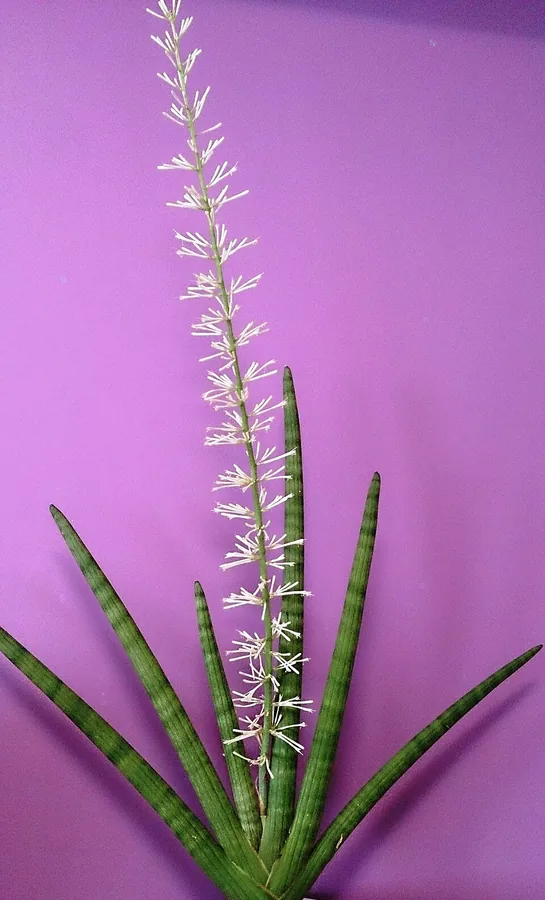
The African spear has become a designer's shorthand for effortless greenery, a snake plant that stands as a cluster of upright, rounded spears rather than the usual flat leaves. Its roots lie in the dry country of southern tropical Africa, and that easy self-sufficiency is exactly what suits a busy home. Botanists now list it as Dracaena angolensis, though it still travels under its old label, Sansevieria cylindrica, on most plant-shop shelves.
What earns it a place in styled interiors is its clean, vertical line. The spears rise from the base in a poised, sculptural clump that reads well against soft furnishings and pared-back rooms alike. You will find it braided into a single column or offered as the compact 'Boncel' form, giving you a version to suit a console table, a shelf, or a sunny corner.
Its real appeal is how little it interrupts your day. Placed in bright light and watered only when the soil runs dry, it holds its handsome shape season after season with next to no attention. The one thing it will not forgive is a heavy, waterlogged pot, which quietly rots the plant from the base, so restraint with the watering can is the whole art of keeping it looking sharp.
Care
The short version: give it a bright indirect spot and a gritty mix that drains freely, then reach for water only after the soil has gone fully dry, a rhythm that settles at roughly every two weeks in summer and monthly in winter.
Light
It looks its best in bright indirect light, the kind of spot near a window that flatters most rooms, though it will settle almost anywhere from full sun to a dim corner. Low light only slows its already unhurried pace. If you want it in a brighter position, move it toward strong afternoon sun over time rather than at once, so the spears do not scorch.
Water
The whole routine comes down to patience. Let the soil dry out completely, then water it well and let it drain. In practice that means a drink around every two weeks in summer and monthly in winter. When you are unsure, wait, since a dry spell suits it far better than a saturated pot.
Soil
Set it in a fast-draining cactus or succulent mix that never holds onto water. That quick drainage is what keeps the base dry and the plant looking its best, since standing moisture is the one thing it cannot weather.
Humidity
Ordinary room air is all it wants, and dry indoor conditions suit it perfectly. There is no misting or pebble tray to work into your routine, which is part of why it fits so easily into a home.
Feeding
It is a light feeder with modest needs. A monthly serving of all-purpose fertilizer at half strength through spring and summer keeps it in good form, and it wants nothing at all through winter.
Pruning
Upkeep here is minimal, in keeping with its low-fuss character. Simply remove any leaf that has been damaged or has begun to rot at the base, and leave the clump to keep its clean silhouette.
Repotting
A slow grower that prefers snug quarters, it needs repotting only every 3 to 5 years, or when roots and rhizomes begin to crowd the pot or press against its sides. Move it up a single pot size when the time comes, and it will carry on undisturbed.
Size & spacing
Over the years it can rise to 2 to 7 feet (60 to 210 cm) indoors, its clump broadening to 6 to 24 inches (15 to 60 cm) across. A weighty pot is worth choosing, since those tall upright spears can leave a well-grown plant top-heavy on a shelf or floor.
Troubleshooting
For all its poise, this plant tells you plainly when something is off, and the cause is nearly always water, light, or cold. The spears and the base are where the first signs surface, so glance at them from time to time. Match what you see to the notes below and adjust early, while the fix is still a simple one.
A soft, mushy base and a sour note rising from the pot
This is root rot, and it nearly always traces to too much water in a soil that holds it. Lift the plant out, cut every blackened or mushy root back to firm tissue, and resettle it in fresh, gritty mix. Then leave it dry until it steadies itself again.
Fix:
- Unpot and cut away rotted roots
- Repot in dry well-draining mix
- Withhold water until recovered
Spears turning yellow, soft, and downcast
When the spears go yellow and limp, the plant is taking on more water than it can use, the mark of overwatering or a soil that stays soggy. Set the watering aside and let the mix dry out fully before the next drink. Should it persist, a grittier blend or a better-draining pot will restore its poise.
Fix:
- Stop watering
- Let soil dry fully
- Improve drainage
Soft, discolored spears after a cold spell
This is cold damage, which sets in once the plant sits below 55°F (13°C) or meets a frost, since it is a tender tropical hardy only in zones 10 and 11. Move it to warmth and trim away the spoiled tissue. Keep it indoors whenever the temperature threatens to fall that low.
Fix:
- Move indoors
- Remove damaged tissue
Sticky film, white cottony tufts, or fine speckling
Sticky residue and cottony tufts point to mealybugs or scale, while fine speckling and webbing suggest thrips or spider mites. Wipe the spears with a damp cloth, follow with insecticidal soap, and keep the plant apart from the rest until it is clean. A glance over the leaves now and then heads them off before they spread.
Fix:
- Wipe leaves with damp cloth
- Treat with insecticidal soap
- Isolate affected plant
Pale or browned patches along the sunlit side
These bleached marks are sunburn, the result of harsh afternoon sun or an abrupt move from shade into full glare. Give it morning sun only, and lead it toward brighter light over a week or two rather than all at once. The scorched patches will not recover, but fresh growth comes in unblemished.
Fix:
- Move to morning sun only
- Acclimate gradually to brighter light
Toxicity
Handsome as it is, this is not a plant to leave within a pet's reach. Its leaves hold saponins, and a cat or dog that chews them tends to drool, be sick, and turn off its food for a while. People come to no real harm beside it, yet nothing on the plant is edible, so keep it clear of small children as well.
Toxic to
Cats · Dogs · Horses · Rabbits · Livestock · Birds · People
Cats Mild
The leaves hold saponins, so a cat that chews a spear tends to drool and be sick. A larger mouthful can dilate its pupils and leave it unsteady, reason enough to keep the plant off any surface a cat can reach.
Dogs Mild
A dog that gnaws a spear can be expected to drool, vomit, and develop diarrhea. The upset stays mild as a rule and passes once the plant is moved beyond reach.
Horses Caution
The same saponins can unsettle a horse's stomach, so the plant is best kept well away from any inclined to sample it.
Rabbits Caution
Rabbits fare no better with the saponins than other pets, so the spears should stay out of nibbling reach entirely.
Livestock Caution
Grazing animals can respond to the saponins with drooling and digestive upset, so the plant belongs behind a fence where stock roam.
Birds Caution
A curious bird that pecks the leaves takes in the same irritating saponins, making it wise to keep the plant out of reach.
People Caution
People are essentially safe in its company, though no part is meant to be eaten. A child who chews a leaf may drool or feel queasy, so it is best placed beyond small hands.
Helpline numbers

United States
ASPCA Animal Poison Control: (888) 426-4435 (fee applies)
Poison Control: (800) 222-1222



Canada
Poison Centres: 1-844-764-7669
Varieties
There is no sprawling catalog of cultivars to weigh up here, only a pair of forms worth recognizing when you are choosing one for a room.
'Boncel' (starfish sansevieria)
A dwarf cultivar whose short, plump spears open out from the base into a low rosette that recalls the arms of a starfish.
Braided form
A grower-made form in which several young leaf cuttings are woven together, then carry on growing as one plaited column.
How to propagate
Should you want more of this quiet sculptural look around the house, it multiplies easily, and division is far quicker than raising it from seed or cuttings.
DivisionEasy
Spring or summer, during repotting · Several weeks
The quickest route to more plants is to divide a clump while you are repotting in spring or summer. Ease the offsets apart at the rhizome, leaving roots on each piece, and pot them up on their own. They find their feet within a few weeks and come on true to the parent.
Leaf cuttingsModerate
Spring or summer · Several weeks to months
You can also root sections of leaf taken in spring or summer, though this way rewards patience. Stand the cuttings upright in gritty mix and allow anywhere from a few weeks to a few months for roots to form. It is the method behind those braided columns, where several cuttings are raised together.
SeedDemanding
Spring or summer · Months
Seed is the long way round and seldom worth it indoors, where the plant rarely comes into flower. Sow fresh seed in spring or summer and be prepared to wait months for signs of life. Most growers pass it over in favor of division or cuttings.
Myths
The starfish 'Boncel' stands as its own species.
It does not. 'Boncel' is only a cultivar of Dracaena angolensis, the same plant in a squatter guise. It is not a separate species, however distinct that low fan of short spears may appear on the shelf.
Braided plants take that shape on their own.
The braid is a grower's craft, not nature's doing. Young leaf cuttings are woven together by hand while they remain supple, and from there the plant simply keeps the shape as it matures.
Snake plants never need to be watered.
They are famously patient between drinks, yet never asks too much of them. Water about every two weeks in summer and monthly in winter, always letting the soil dry before you pour.