Houseplant · Asparagaceae
Foxtail Fern
Asparagus densiflorus 'Myers'
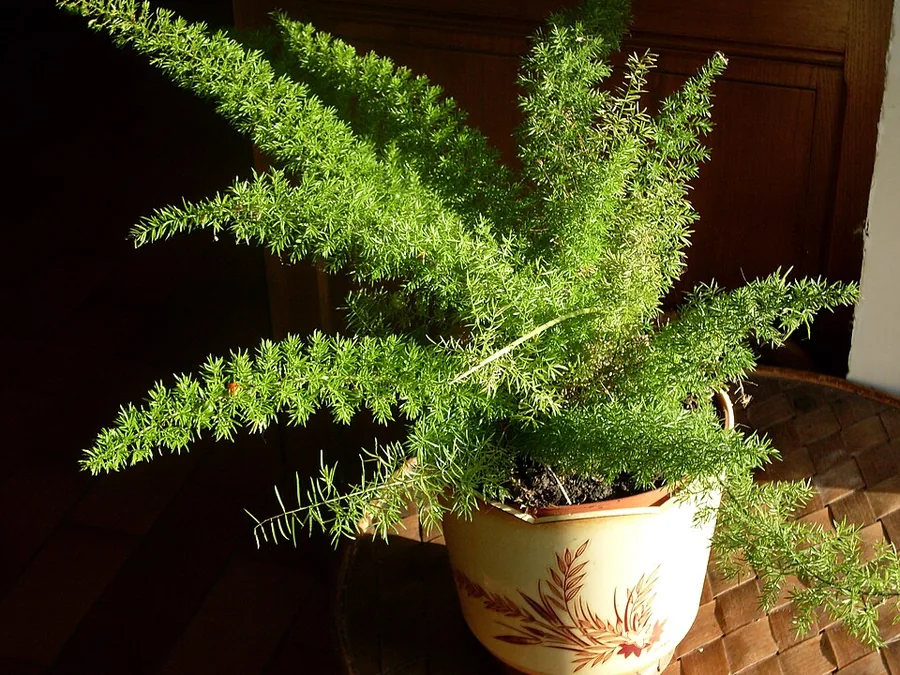
Give it bright indirect light and a pot that drains, and the foxtail fern throws up plumes like green bottle brushes.
Bright indirect
Every 7–10 days
50–77°F · 10–25°C
USDA 9–11
Overview
Few houseplants play with expectations the way the foxtail fern does. The look is soft and plumed, yet there is no fern in it anywhere. It sits within the asparagus family, and rather than spreading by spores it flowers, sets small red berries, and grows from seed. In its 'Myers' form it lifts stiff upright plumes to a fine point, each reading like a green bottle brush poised on a shelf.
The reason it earns its easygoing reputation lies underground. A cache of fleshy tuberous roots holds water in reserve, so a forgotten watering rarely troubles it the way it would a fussier plant. It asks for bright indirect light, a freely draining pot, and little else. As the clump fills out wide and dense, it settles beautifully onto a plant stand or into a hanging basket, where the plumes can arch into the room and soften a corner.
A couple of caveats come with the poise. Every part of it runs mildly toxic to cats and dogs, the bright berries most of all, and the sap can leave bare skin itchy. In frost-free places it slips out of gardens and naturalizes, so it belongs in a container and up out of reach rather than loose in a warm-climate bed.
Care
The short version: bright indirect light, a free-draining pot, and water only once the top few centimeters of soil have dried. Feed monthly through spring and summer, keep it warm, and divide it when the tuberous roots begin to lift it out of the pot.
Light
Set it in bright indirect light, the sort found beside a window that catches sun without the fierce midday beam. It tolerates partial sun and a little shade, though a dim spot thins and pales the plumes and stalls fresh growth.
Water
Reach for the watering can only once the top few centimeters of soil have dried, roughly every 7 to 10 days. Because the tuberous roots keep their own reserve, a spell of drying between drinks suits it well, while soil left constantly wet rots the roots. Pull back through winter as growth quiets.
Soil
Pot it in a well-draining loamy potting mix that carries water through rather than holding it. A pH between 6.0 and 7.0, close to neutral, keeps it content. Free drainage counts above all, since sodden roots are the quickest way to lose the plant.
Temperature
Everyday room warmth of 50°F to 77°F (10°C to 25°C) suits it best. It is not frost-hardy, so keep it clear of cold windowsills and winter drafts.
Humidity
It prefers moderate humidity, around 40% to 60%, yet it takes average indoor air in stride. Where the plume tips brown in a dry, heated room, lift the moisture nearby.
Feeding
Feed monthly from spring through summer with a balanced water-soluble fertilizer while it is in active growth. Hold off through the cooler months as growth idles, and rinse the pot occasionally so feeding salts do not accumulate.
Pruning
Take spent or yellowed plumes off at the base to keep the clump trim and draw out fresh upright growth. Worn or damaged stems can be cut back hard in spring to renew the plant. Wear gloves, as the sap can irritate skin.
Repotting
Repot every 2 to 3 years, or sooner once the swollen tuberous roots begin heaving the plant up out of its pot. Other signals are roots circling the container and water sliding straight through without soaking in. Spring is the moment to do it, often paired with dividing the clump.
Size & spacing
Indoors it climbs to 24 to 35 inches (60 to 90 cm) tall and reaches wider still, 3 to 4 feet (90 to 120 cm) across. Leave the clump space for the plumes to arch outward, which is why it belongs on a stand or in a hanging basket.
Troubleshooting
A foxtail fern signals trouble through its plumes well before the rest of it declines. Yellowing, shedding, and brown tips each lead to a separate remedy. Find the one that matches and correct course before it takes hold.
Plumes fading to yellow across the whole plant
When the plumes lose their color everywhere at once, overwatering is the likeliest reason, with waterlogged soil straining the tuberous roots. A dim corner or a plant that has run out of food produces the same look. Wait for the top few centimeters of soil to dry before the next drink, shift it into a brighter spot, and pick monthly feeding back up through the growing season.
Fix:
- Allow the top few centimeters of soil to dry before watering
- Move to a brighter spot with bright indirect light
- Resume monthly feeding during the growing season
Fine needle-like foliage scattering across the floor
Let a foxtail fern get too thirsty and it drops its fine cladodes to protect itself, while an abrupt relocation or a cold draft prompts the very same fall. Give it a proper soak and hold to a reliable schedule. Set it clear of drafts and heat vents, keep it in bright indirect light, and the mess settles down.
Fix:
- Water thoroughly and maintain a consistent moisture cycle
- Keep the plant away from cold drafts and heat sources
- Provide steady bright indirect light
Dry, brittle tips forming along the plumes
Parched air usually sits behind browning tips, but soil that dries out completely or a layer of fertilizer salts will singe them just as readily. Lift the moisture in the air around it and hold the soil evenly damp while it grows. From time to time, run plain water through the pot to rinse out the salts that gather from feeding.
Fix:
- Raise humidity around the plant
- Keep soil evenly moist during active growth
- Flush the soil periodically to leach excess salts
Toxicity
This is not a plant to keep within a pet's reach. The sap and those showy red berries are the concern, recorded by the ASPCA under Asparagus Fern as toxic to cats and dogs, and the same sapogenins mean it belongs away from horses, rabbits, and grazing stock. People should not eat any of it either, the berries being mildly poisonous and the sap capable of raising a rash, so reach for gloves before you prune.
Toxic to
Cats · Dogs · Horses · Rabbits · Livestock · Birds · People
Cats Moderate
The ASPCA flags the sapogenins here as toxic to cats. Should a cat sample the red berries, it tends to end up with vomiting, a tender belly, and loose stools, and repeated rubbing against the foliage can leave its skin reddened and sore.
Dogs Moderate
A dog fares no better than a cat. Berries taken by mouth trigger vomiting, diarrhea, and abdominal pain, and handling the cut stems over and over can stir up an itchy dermatitis.
Horses Caution
No horse-specific report exists, yet the sapogenins that upset a pet's stomach make this one to keep clear of horses. A horse should not be allowed to graze the foliage or the berries that drop.
Rabbits Caution
Consider it forbidden for rabbits. Both the berries and the sapogenin-rich tissue can turn a rabbit's gut, so set the pot and any dropped fruit somewhere it cannot reach.
Livestock Caution
The same toxin threatens goats, sheep, and cattle if they reach the foliage or the ripe red berries. Fence it off or place it where stock have no way to browse.
Birds Caution
Wild birds take the berries and carry the seeds off unharmed, which is exactly how it slips into the wild, though a curious pet bird has no business pecking at the fruit. Keep it away from cage birds as a precaution.
People Caution
None of this plant belongs on a plate, and the red berries are mildly poisonous when swallowed, so keep children away from them. Working the stems and sap with bare hands can bring on a rash, so slip on gloves before you prune or repot.
Wear gloves when pruning or repotting, as repeated skin contact with the sap can cause allergic dermatitis.
Helpline numbers

United States
ASPCA Animal Poison Control: (888) 426-4435 (fee applies)
Poison Control: (800) 222-1222



Canada
Poison Centres: 1-844-764-7669
Varieties
Two forms of Asparagus densiflorus travel under the asparagus fern name, and they carry themselves in wholly different ways. Recognizing which one you own tells you whether it will stand tall or spill down.
Asparagus densiflorus 'Myers'
This is the genuine foxtail, sending up dense upright plumes that narrow to a point and read exactly like a bottle brush.
Asparagus densiflorus 'Sprengeri'
The common asparagus fern, this one tumbles out in loose arching trailing stems rather than the firm upright plumes of 'Myers'.
How to propagate
You can raise more foxtail ferns the quick way by dividing a clump, or the patient way by sowing the seed drawn from its berries.
DivisionEasy
Spring or early summer at repotting · 4 to 8 weeks
Splitting a clump is the simplest route to more plants, and it slots neatly into repotting come spring or early summer. Ease the plant from its pot, then cut the fat tuberous mass into pieces, checking that each one holds both stems and roots. Set the divisions into their own pots and they take hold across the following 4 to 8 weeks.
SeedModerate
Spring · Several weeks to germinate, months to reach size
Starting from seed calls for a longer wait. Come spring, work the seed free of the ripe red berries with gloves on, as the fruit can leave skin irritated, and settle it into a warm, damp mix. Germination stretches across several weeks and comes up patchy, and it takes months beyond that before the seedlings amount to anything.
Myths
The foxtail fern is a true fern.
The name leads you astray. It isn't a fern at all, but sits within the asparagus family, Asparagaceae. True ferns reproduce by spores, whereas this one flowers, sets red berries, and grows from seed.
Because it's a fern, it must be safe around pets.
It is neither. Under Asparagus Fern, the ASPCA records it as toxic to cats and dogs, the berries bringing on stomach upset and the sap leaving an itchy rash. Keep it well out of reach of animals inclined to chew.