Houseplant · Asparagaceae
Ponytail Palm
Beaucarnea recurvata
A sculptural silhouette that thrives on being left alone, the ponytail palm brings quiet ease to a sunlit room.
Full sun
50–86°F · 10–30°C
USDA 10–11
6–8 ft · 1.8–2.4 m
Overview
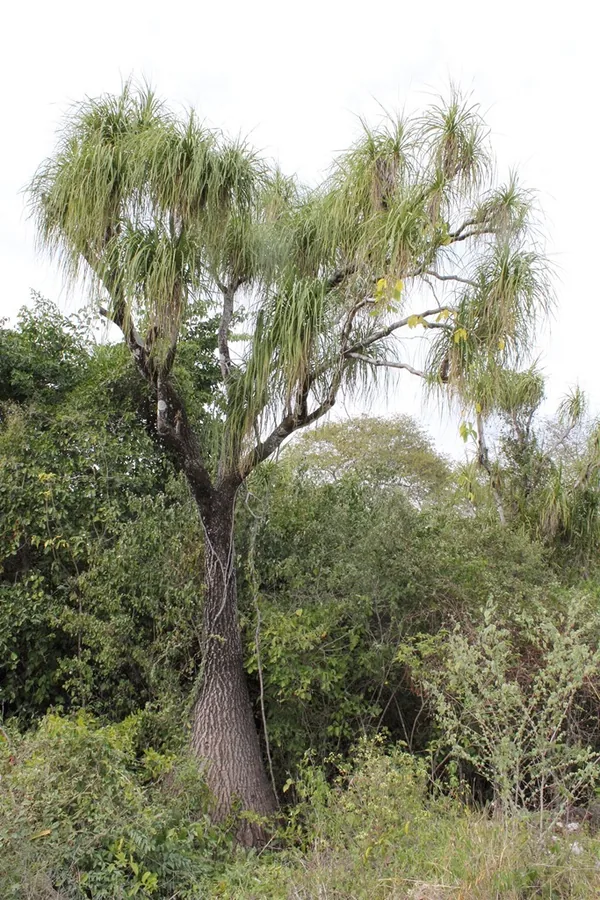
Few houseplants earn their keep in a room the way the ponytail palm does, and it isn't a palm at all. A slow-growing succulent from the arid stretches of eastern Mexico, it sets a plump, flask-shaped base beneath a loose fountain of long, curling leaves, giving any corner a note of sculptural calm. The swollen base, known as a caudex, is the same feature that earned it the names elephant foot and bottle palm. Set on a console or a wide windowsill, it reads as living sculpture rather than fuss.
Its appeal for a busy household is how little it asks of the daily routine. The water-holding base means a forgotten watering goes unnoticed, so it suits the traveler, the minimalist, and anyone who would rather not fuss. Because it grows slowly and keeps a composed, manageable size, it holds its place in a room for years without crowding it. Give it a bright, sunny window and the occasional deep drink, and it settles in for decades as a fixture of the space.
The single caveat is a matter of restraint rather than effort: this is a plant that resents an overgenerous hand with the watering can. Left in damp soil, the base softens and fails, the usual end for a ponytail palm that struggles. Treat it as the desert native it is, water it sparingly, and it rewards the light touch with an effortless, enduring presence.
Care
The short version: set it in the brightest light in the room, pot it in a gritty fast-draining mix, and water deeply only after the soil has gone fully dry, easing right off through the winter months.
Light
Place it where the light is strongest, ideally a full-sun window, and let that spot anchor the room around it. It will hold in bright indirect light, though a sunnier position keeps the crown of leaves full and the whole silhouette at its best.
Water
Watering is the one discipline the plant asks for, so soak it well and then leave it until the soil has dried out completely. The base carries its own reserve, which is why a spare hand suits it far better than a generous one. Through winter, pare the watering back to almost nothing.
Soil
Pot it in a gritty, fast-draining cactus or succulent mix, or lift a sandy blend with extra grit. The aim is drainage sharp enough that the base is never left sitting damp, which keeps the plant as carefree as it looks.
Temperature
Ordinary room warmth is exactly its comfort zone, somewhere between 50°F to 86°F (10°C to 30°C). Keep it clear of cold drafts and away from frost, and an everyday living space suits it perfectly.
Humidity
Dry indoor air, the kind most rooms have, is entirely to its liking. There is no humidity to manage and no misting to fold into the routine, which is part of its low-maintenance charm.
Feeding
Feeding is a light, seasonal gesture reserved for spring and summer, when the plant is in growth. A diluted balanced or cactus feed, offered once or twice across the season, is plenty, and a heavier hand only marks the leaf tips brown.
Pruning
Upkeep is close to nothing, which suits a plant meant to look effortless. Trim away the odd dried or browned tip and lift off any spent lower leaves to keep it tidy, then leave the shape to its own devices.
Repotting
It is happiest kept close in its pot, going many years before a change is due. A relatively small container with sharp drainage keeps its proportions in check, so move it up only once the roots and base have plainly claimed the space.
Size & spacing
Indoors it rises to roughly 6 to 8 feet (183 to 244 cm) over many years, opening to about 3 to 5 feet (91 to 152 cm) across the crown. Its slow pace means it stays in comfortable scale with a room for a very long time, a floor plant that never overwhelms.
Troubleshooting
A settled ponytail palm asks so little that any trouble almost always leads back to the watering routine. Keep an eye on two cues as it sits in the room: the firmness of the base and the color at the leaf tips. A base caught softening early can still be brought back.
A firm base that has turned soft to the touch
When the base goes soft and spongy, the cause is root and stem rot, nearly always from a heavy watering habit. Ease off entirely, let the soil dry, then cut away the soft, rotted tissue and reset the plant in dry, gritty soil. Give it a warm, well-lit spot and only the lightest watering while it recovers its footing.
Fix:
- Stop watering and allow the soil to dry out completely
- Cut away soft, rotted tissue and repot into dry, gritty fast-draining mix
- Move to a warm spot with bright light and water only sparingly once recovered
Brown, dry tips at the ends of the leaves
Dry brown tips usually signal erratic watering, overfeeding, or salts gathering in the pot. Ease into deep but infrequent watering, lighten the feeding, and rinse the soil through now and then to carry the salts away. Since the browned tips will not recover, simply trim them so the plant looks its best.
Fix:
- Adjust to deep but infrequent watering, letting soil dry between waterings
- Flush the soil periodically to leach out accumulated salts
- Reduce fertilizer frequency and strength
- Trim browned tips for appearance
Toxicity
For a home shared with pets or children, this is a plant that asks for no compromise. The ASPCA lists it non-toxic to cats, dogs, and horses, and it holds nothing that would harm other animals or people. That leaves it free to style any room, from a busy kitchen shelf to a nursery corner, without a second thought.
Safe for
People · Cats · Dogs · Horses · Rabbits · Livestock · Birds
Cats None
A curious cat is in no danger here, as the ASPCA lists the ponytail palm non-toxic to cats, so a nibble at the trailing leaves does no harm.
Dogs None
Dogs share the same all-clear. The ASPCA rates the plant non-toxic to them, though a large mouthful of fibrous leaves could still unsettle any pet's stomach.
Horses None
Horses can share their surroundings with it safely, since the ASPCA places the plant on its non-toxic list for them as well.
Rabbits None
Rabbits are untroubled by it too, as the plant carries no toxin that would affect them. Its tough, stringy foliage is no natural rabbit fare, but a chewed leaf brings no poisoning risk.
Livestock None
Goats, sheep, and cattle face no toxic threat from the ponytail palm, which holds none of the compounds that make other ornamentals dangerous to grazing animals.
Birds None
A pet bird can pick at the leaves in safety, since the plant contains nothing that would do it harm.
People None
In a home with children it poses no toxic worry, having no harmful parts. It is not grown to be eaten, so there is no edible portion to seek out, and a stray touch or taste does no damage.
Varieties
The selection here is elegantly simple. A single species carries the look into the home, and it is the only one worth knowing.
Beaucarnea recurvata
This is the species that carries the houseplant look, recognizable by its single swollen, flask-shaped base topped with a fountain of strappy, curling leaves, and it counts as one of about seven species in the genus.
How to propagate
Bringing on a second plant is more an exercise in patience than a project, with two quiet routes: rooting the pups gathered at the base, or beginning again from seed.
Offsets & pupsModerate
Spring · Several months to a year or more to root and grow on
In spring, lift the offsets, or pups, that gather at the base and pot them up to root on their own. Patience is the price, since they need several months to a year or more to establish, and some growers note that these basal pups may never root.
SeedModerate
Spring · Germinates readily at about 18-21°C (64-70°F); seedlings grow slowly over years
Seed started in spring and kept warm at about 64°F to 70°F (18°C to 21°C) germinates on its own with no special treatment. The wait is the catch, as the seedlings advance slowly and take years to grow into a plant with real presence.
Myths
The ponytail palm is a true palm.
The name flatters it, but this is no palm. Beaucarnea recurvata is a caudex-forming succulent in the family Asparagaceae, a nearer cousin of Dracaena and Agave, and only from a distance does it pass for the palm it is named after.