Houseplant · Apocynaceae
Sweetheart Hoya
Hoya kerrii
Water it like a succulent, set it in bright light, and the sweetheart hoya settles into a room with almost no fuss.
Bright indirect
45–80°F · 7–27°C
USDA 10–12
Overview
The sweetheart hoya has become a quiet favorite for the way a single potted heart softens a shelf, a desk corner, or a sunny windowsill. It is a slow-growing climber from the forests of Indo-China and Malesia, where it makes its home up in the trees as an epiphyte. That easygoing habit translates beautifully indoors, where it stays compact and asks little of a busy household.
Most people first bring it home as a single rooted heart in a small pot, often as a Valentine's gift, and it holds that neat shape long enough to become a small fixture on a table. A plant meant to trail, on the other hand, starts from a cutting with a stem and a node, and given time it drapes into long strands that suit a hanging spot or a high ledge.
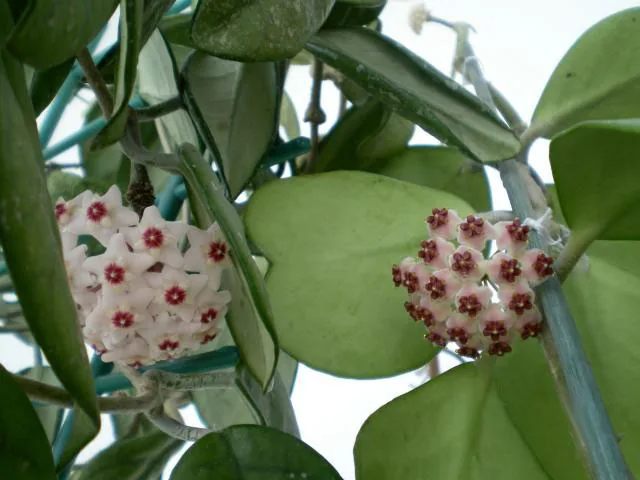
As a houseplant its appeal is how little it interrupts a daily routine. The leaves store their own water, so a missed watering matters far less than an overzealous one, and it settles happily into a bright corner. Keep it lit, let it dry, and leave it a touch snug in its pot, and it rewards a relaxed schedule with clusters of star-shaped flowers.
Care
The short version: bright indirect light, watering like a succulent only once the soil has dried, a fast-draining mix, and a pot it can stay a little snug in.
Light
Give it bright indirect light beside a south, east, or west window, and it holds its color and blooms far more willingly, which makes a lit corner its natural home. It gets by in medium light or light shade, though growth slows and flowers seldom come. Keep it clear of harsh direct sun, which scorches the waxy leaves.
Water
Water it like a succulent and the plant fits neatly into a relaxed routine. The thick leaves store plenty, so let the soil dry out completely between drinks, waiting until the top third to half is dry or the leaves begin to pucker. Ease right off through winter, since overwatering is the main cause of root rot and the surest way to stop it flowering.
Soil
Pot it in a fast-draining, loose mix that never sits soggy. A blend of one part potting soil, one part orchid bark, and one part perlite dries quickly and suits it well. It stays unbothered by pH anywhere from 6.0 to 8.0.
Temperature
Ordinary room warmth is all it wants, around 45°F to 80°F (7°C to 27°C). Keep it above 45°F (7°C) and away from cold drafts, since it has no patience for a chill.
Humidity
Everyday household humidity suits it fine, so there is no number to manage. The waxy leaves hold their own moisture, which makes it far more at ease in a dry room than most tropicals.
Feeding
Feed monthly with a dilute liquid houseplant fertilizer through the growing season, spring to fall. A formula with an NPK ratio around 2:1:2 or 3:1:2 keeps it content. Set feeding aside over winter while it rests.
Pruning
A slow grower asks for almost no pruning. The one rule to keep is simple: never cut off the bare flower spurs after the blooms fade, because the plant returns to those same spurs to flower again, and removing them costs next season's display.
Repotting
Repot only every few years, since hoyas flower better when kept a little potbound, which conveniently keeps the plant tidy on a shelf. Move up a size when roots push through the drainage holes, water runs straight through, or the plant dries out almost as soon as it is watered.
Troubleshooting
Nearly everything that goes sideways with this plant traces to water, light, or asking a single leaf to become more than a leaf. Match what you notice below, then make a small adjustment before a minor lapse hardens into rot.
A darkened, softened base and a plant giving way at its foot
When the base turns soft and dark at the soil line, the plant has slipped into root rot, usually after too much water or a decorative pot that traps it. The leaves already hold their own reserves, so a soggy mix quickly turns against the roots. Set watering aside, trim away the ruined tissue, and settle the plant into a fast-draining mix in a pot that drains freely. If the base is beyond saving, a healthy cutting with a node lets the plant begin again.
Fix:
- Stop watering and let the soil dry out
- Remove rotted tissue and repot into a fast-draining mix in a pot with drainage holes
- Take a healthy cutting (with a node) to start over if the base is lost
Once-plump hearts turned slack and finely lined
A little puckering tells two very different stories, so let the soil settle the question before you reach for the watering can. Dry mix over firm roots simply means the plant has gone too long between drinks, and a thorough watering restores its poise. Wet mix over soft roots points to overwatering, which has left the roots unable to take up water, and the remedy there is better drainage and a patient dry spell.
Fix:
- If too dry, water thoroughly and resume a regular let-it-dry cycle
- If overwatered, correct drainage and let the soil dry before watering again
A sticky sheen, distorted young growth, or uninvited insects
Even a well-placed hoya can attract sap-sucking visitors such as mealybugs, aphids, spider mites, and scale. Watch for white cottony smudges, small soft insects, fine webbing with a stippled look, or little bumps along the stems. Wipe the plant clean and treat with insecticidal soap or horticultural oil, then move it apart from its neighbors and repeat until it looks its best again.
Fix:
- Wipe off pests and treat with insecticidal soap or horticultural oil
- Isolate the plant and repeat treatment until clear
The solitary heart that remains forever a single leaf
That little potted heart on the shelf is charming exactly as it is, and it helps to know what it is: a single leaf with no node. Without a node it carries no growth point, so it holds its shape on a desk or bedside table for years without ever reaching for a trellis. Anyone hoping for a cascading display should choose a stem cutting with at least one node instead.
Fix:
- Accept that the leaf will likely remain a single leaf (it can stay green and alive for years but will not vine)
- If you want a vining plant, obtain a stem/tip cutting that includes at least one node
A picture of health with no blossoms to show
A plant that stays leafy but flowerless is almost always asking for more light, so give it pride of place beside a south, east, or west window where the light arrives bright but softened. Lighten the watering as well, since damp roots keep the blooms at bay. Single leaves and very young plants have not reached flowering age, so a little patience is part of the arrangement. Above all, leave the old flower spurs untouched, because the plant returns to those same spurs to bloom again.
Fix:
- Move to a brighter spot with bright indirect light near a south/east/west window
- Reduce watering and let the soil dry between waterings
- Be patient and do not cut off the flower spurs
Toxicity
For a home shared with animals, the sweetheart hoya brings peace of mind: it is non-toxic and pet-safe. The ASPCA and NC State Extension both list it as safe for cats, dogs, and horses, and the rest of the household need not worry either. A pet that overindulges on any plant might feel a passing stomach ache, but there are no real toxins in play.
Safe for
People · Cats · Dogs · Horses · Rabbits · Livestock · Birds
Cats None
A household cat can share a room with this hoya in complete comfort, since the ASPCA and NC State Extension both list it as non-toxic to cats. Should a cat sample any houseplant with enthusiasm, a little drool or a brief upset stomach is the likely extent of it, and it settles on its own.
Dogs None
Dogs enjoy the same clean bill of health from the ASPCA and NC State Extension. A curious chewer risks nothing worse than a spell of mild, short-lived stomach upset.
Horses None
Horses are equally in the clear, as both the ASPCA and NC State Extension record this one as non-toxic to them.
Rabbits Safe
A rabbit faces no toxins from this plant. As with any unfamiliar greenery, offer only a small amount so a sudden helping doesn't unsettle a sensitive gut.
Livestock Safe
Living indoors, this plant rarely finds its way to grazing animals, and it holds nothing that would harm them regardless.
Birds Safe
A pet bird can perch near and pick at the waxy leaves in safety, since the plant carries no compounds known to trouble them.
People Safe
Nothing in this hoya is poisonous to people, so a child's accidental taste is no cause for alarm. It is grown for looks rather than the table, though, so there is no reason to eat it.
Considered pet-safe; no special handling for toxicity is required, though pets eating any plant may have mild, transient GI upset
Varieties
The plain green form turns up most often, but one named variety is worth seeking out when styling a brighter corner.
'Variegata'
A green heart at the center of each leaf framed by a soft creamy-white edge gives this one a lighter, more luminous presence than the plain green form.
How to propagate
There is one dependable way to make more of this plant, and the whole of it rests on choosing a cutting that carries a node.
Stem cuttingsEasy
Spring to summer · Roots in a few weeks
Take a stem or tip cutting carrying at least one node in spring or summer, while the plant is in growth. Set into a fast-draining mix, it roots within a few weeks and grows on toward a graceful trailing shape. Pass over the bare single leaf, which roots and lives yet has no node and so never lengthens into a vine.
Myths
The single heart sold around Valentine's Day matures into a cascading plant for the shelf.
The romance of a heart that grows into a cascade is appealing, but a bare leaf, though it roots, has no node and so no growth point, and it holds as a single leaf. Penn State Extension states it plainly: the charming potted heart is simply a single leaf of H. kerrii that stays just as it is and never becomes a vine. For a trailing display, choose a cutting that includes a node and a bit of stem.