Ornamental · Equisetaceae
Horsetail
Equisetum hyemale
Poised, jointed evergreen stems that lend a wet corner quiet structure, kept always to a container so it never oversteps.
Full sun
Every 1–3 days
USDA 3–11
2–4 ft · 0.6–1.2 m
Overview
Horsetail, also known as scouring rush, brings an unusually old presence to a garden, a lineage that reaches back beyond the flowering plants. Its stiff, jointed, bamboo-like green stems hold their upright line through every season and never soften into leaf or bloom. That constancy is exactly what earns it a place in a considered planting, where a green vertical can anchor a scene year-round.
The plant belongs by water. Set along a pond edge or in a bog bed, its slender evergreen stems read as living architecture, a clean rhythm of verticals that pairs beautifully with the flat sheen of a water feature and the low mounding forms around it. Its old name, scouring rush, hints at a working past in the kitchen, when the gritty stems scrubbed pots clean. In a garden it asks for little beyond a reliable source of water.
For all its poise, it comes with two honest cautions. Its roots run deep and fast, which makes it one of the hardest plants to remove once it slips its bounds, so a sealed container suits it far better than open ground. It also carries thiaminase, a compound that poisons grazing horses and livestock, so a country garden should keep it well away from any pasture.
Care
The short version: give it full sun to part shade and soil that never dries out, ideally a pot standing in water, and grow it within a solid container or barrier so its rhizomes stay put.
Light
Horsetail keeps its best form in full sun, though it accepts partial sun and even partial shade. Give it ample light and the stems hold stiff and full, the effect you want; deep shade thins them and lets the line slump.
Water
This is a bog plant whose roots must stay constantly wet, so water every 1 to 3 days and never let the soil dry out. It sits happily at a pond edge, or in a pot standing in shallow water up to about 4 inches (10 cm) deep.
Soil
Give it wet to constantly moist, boggy soil. It takes no interest in texture, growing in clay, loam, or sand and tolerating standing water, a nod to its natural place at the margins of ponds and streams.
Temperature
Its range is remarkable. Horsetail withstands cold to -40°F (-40°C) and heat to around 100°F (38°C), which is why it settles comfortably into gardens across so many climates.
Humidity
It favors high humidity, a natural match for the damp, waterside settings where it looks most at home. Keep the soil saturated and the moist air around a pond or bog does the rest.
Feeding
This is an undemanding plant that wants little to no fertilizer. In a container, a light balanced feed in spring is ample; set in the ground, it thrives on nothing at all.
Pruning
Cut old or damaged stems to the base in late winter or early spring to keep the stand crisp. Trim off the spore cones before they ripen to curb any spread, and never compost the clippings or stray rhizome pieces.
Repotting
Repot every 1 to 2 years to refresh the soil and, just as vital to the look, keep the aggressive rhizomes in bounds. A dense mat of roots filling the pot or stems climbing the rim is your signal.
Size & spacing
Stems rise 2 to 4 feet (61 to 122 cm), and a stand will spread 1 to 6 feet (30 to 183 cm) wide if allowed. That reach is exactly why it belongs in a contained pot or barrier rather than loose in a bed.
When to plant
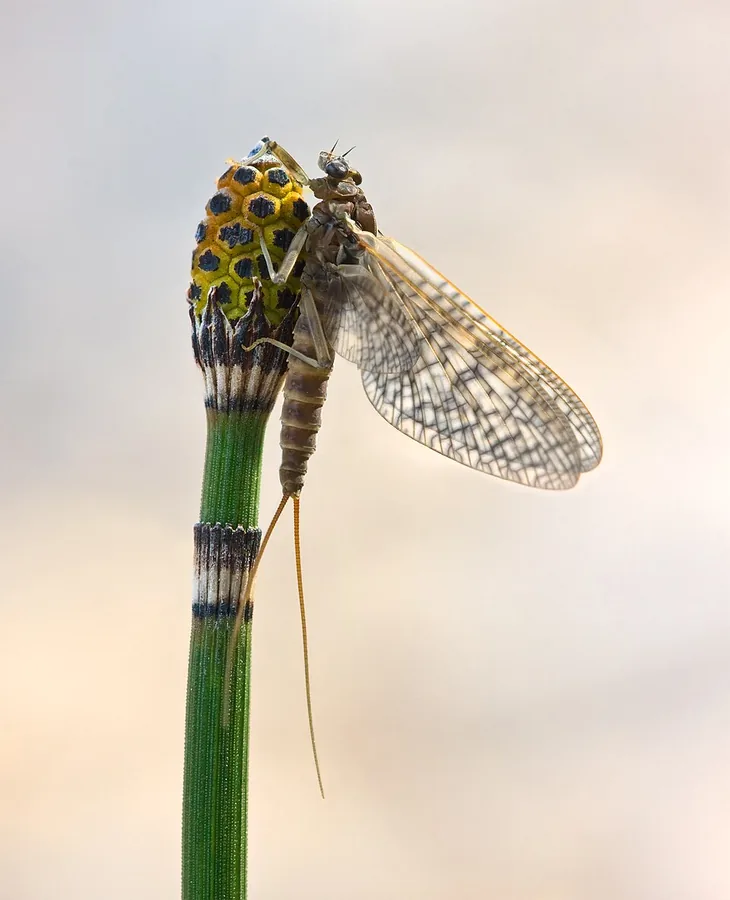
Horsetail is a hardy perennial from zone 3 to 11, so it holds its place in the garden outdoors year-round across most of the country. Set it out in spring once the soil has warmed, always into a fully contained pot or a bottomless barrier. It offers no flower and no harvest; it lifts spore cones from spring into summer.
Northern hemisphere
Southern hemisphere
Typical months for a temperate climate: start earlier in warm zones, later where spring frosts linger.
- Plant: Spring, once the soil has warmed; site only in a fully contained pot or bottomless barrier
- Harvest: Non-flowering; produces spores in a cone-like tip (strobilus) in spring to summer
Hardiness
USDA hardiness zones: 3–11
Temperature: down to -40°C
Troubleshooting
Horsetail asks little to thrive. The real art lies in keeping it where it belongs in the composition, so the notes below dwell far more on holding its spread in check than on reviving a struggling stand.
Stray stems rising well beyond their intended corner
Behind the plant's tidy poise sits its one design liability, an aggressive, deep-running rhizome network that drops several feet down and out, gathers into colonies, and strays from a water feature into the damp ground around it. Left to itself, any severed piece resprouts, so digging and herbicides seldom settle it. The graceful solution is discipline from the outset: a solid pot or a bottomless barrier, escaping stems trimmed the moment they appear, and every rhizome scrap removed for good.
Fix:
- Never plant loose in open ground; grow only in a solid pot with no drainage to the soil, or in a bottomless barrier sunk into the bed
- Repeatedly cut or pull emerging stems to starve the rhizomes over time
- Remove and destroy (do not compost) every rhizome fragment when digging out an established stand
A stand losing its upright poise or fading thin
When the crisp vertical line softens into floppy, pale, sparse growth, the cause is nearly always a stand that went dry, since horsetail wants steady moisture and loses its composure the moment its roots dry out. A too-shady setting drains its density as well. Restore the look by keeping the soil saturated or standing the pot in water, then reposition it somewhere brighter, anywhere from full sun to part shade.
Fix:
- Keep soil constantly wet or stand the pot in water
- Move to a site with more sun (full sun to part shade)
Toxicity
This is a plant to place with care. It is truly poisonous to horses and livestock, since the thiaminase it carries destroys vitamin B1 and brings on weakness, staggering, and worse, and it stays toxic even after drying in hay. It is no great danger to cats and dogs, yet it is edible for no one, so keep it clear of pastures, grazing animals, and inquisitive mouths.
Toxic to
Cats · Dogs · Horses · Rabbits · Livestock · Birds · People
Cats Caution
For a household cat, horsetail poses no known poisoning risk and never turns up on the ASPCA toxic list for them. It is still no part of a cat's diet, so it is worth steering a curious one away from the stiff stems.
Dogs Caution
Dogs are not counted among the genuinely at-risk, and the plant carries no toxic listing for them. A determined chewer might come away with a mild stomach upset from the gritty, silica-rich stems, so the elegant course is simply to place it out of reach.
Horses Toxic
Horses are the real concern. The thiaminase in horsetail draws down their vitamin B1, and a horse that takes in enough, whether fresh or dried into hay, loses weight and strength before it begins to stagger and tremble, with convulsions and death in the gravest cases.
Rabbits Caution
The thiaminase that troubles larger grazers is reason enough to leave horsetail out of a rabbit's fare. Offer it none, and clear away anything that wanders into a grazing run.
Livestock Toxic
Cattle, sheep, and their kind take on the same vitamin B1 deficiency, known as equisetosis. Look for weakness, staggering, and unsteady coordination, with death possible in severe cases, and bear in mind that contaminated hay holds its danger long after it has dried.
Birds Caution
The evidence for birds is too thin to lean on either way, so horsetail is better treated as off-limits than assumed safe. Keep poultry and pet birds clear of the foliage.
People Caution
This is no edible plant, and its thiaminase works against vitamin B1 in people as well. Set aside casual nibbling and home remedies, and keep children from chewing the stems.
Safe to handle and not a significant pet toxin, but keep this plant well away from pastures, grazing horses, and livestock, and never let it contaminate hay; even dried plants in hay retain the thiaminase toxin.
Helpline numbers

United States
ASPCA Animal Poison Control: (888) 426-4435 (fee applies)
Poison Control: (800) 222-1222



Canada
Poison Centres: 1-844-764-7669
Varieties
The genus runs to dozens of species, though only a few appear regularly in gardens and in the conversations that surround horsetail.
Equisetum giganteum (giant horsetail)
The lofty South American member of the genus, it rises far above the temperate scouring rushes most gardens know.
Equisetum arvense (field horsetail)
A smaller, branching weed of disturbed ground, it holds the same thiaminase that renders it toxic to horses and livestock.
Equisetum scirpoides (dwarf scouring rush)
The petite one of the family, it settles into low clumps of slender, wiry, often curly stems no more than about a foot tall.
How to propagate
Horsetail multiplies all too readily, a trait that cuts both ways. The same ease with which it roots from a scrap of rhizome is what carries it beyond its intended place, so any propagation should begin with containment already in mind.
DivisionEasy
Spring · A few weeks to a season
Divide the rhizome clumps in spring and the pieces settle within a few weeks to a season, with even the smallest fragments rooting unaided. That effortless rooting is the very thing that makes the plant so invasive. Return every division to a fully contained pot or barrier and dispose of any fragments you would rather not keep.
Myths
Horsetail is an easy, harmless little ornamental for the garden.
In reality it is among the most stubborn plants to remove, traveling on deep rhizomes that escape ponds and shrug off herbicides, while the thiaminase it holds poisons grazing horses and livestock. Keep it to a container and set it well away from pastures.