Ornamental · Asparagaceae
Hosta
Hosta
Give it shade, steady moisture, and rich soil, and the hosta lays a calm carpet of foliage across the quietest corner of the garden.
Partial shade
Every 3–7 days
USDA 3–9
0–3 ft · 0.1–0.9 m
Overview
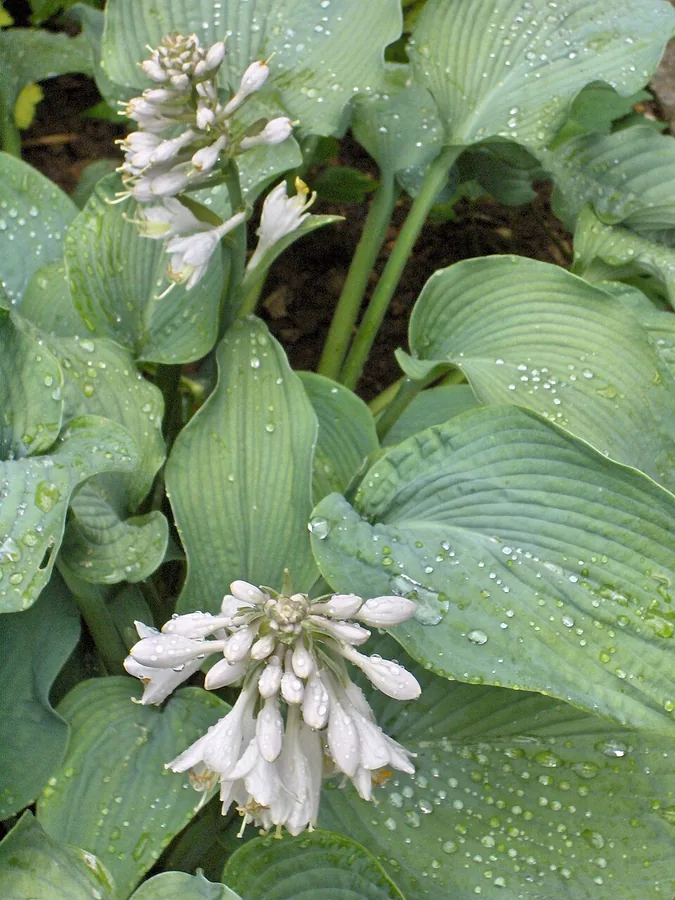
Hostas are the quiet foundation of a shaded garden, prized for foliage that reads as texture and calm rather than for their flowers. They rise each spring, then fill out into broad mounds that green up a dim corner where little else settles in, in tones of green, blue, gold, and white-edged patterning. As long-lived perennials, they hold a scheme together across a wide stretch of the country and ask for very little once at home in a bed.
Their scale is what makes them so useful in a design. A miniature holds at just 4 inches (10 cm) to tuck along a path, while a giant reaches 4 feet (122 cm) across to fill a shady bed on its own, so a single genus can shape both the edge and the heart of a border. Summer brings tall scapes of pale, sometimes fragrant flowers rising over the mounds, yet the lasting appeal lies in the layered foliage that carries a restful, composed look right through the season.
What they ask of a garden is simple: a shaded spot and steady moisture. Set into rich, damp ground away from harsh afternoon sun, they fold into a low-effort routine and hold their place for years. Two things test that ease, the slugs that fray the leaves and a crown that fails in ground left too wet, and both are easy to plan around when siting the bed.
Care
The short version: give it a shaded, filtered-light corner, rich soil kept evenly moist at about an inch of water a week, and a mulch to hold that moisture while staying clear of the crown.
Light
Hostas belong in filtered or dappled shade, the soft light of a corner screened by trees or a wall rather than open sun or deep dark. Gold and yellow types take a touch of morning sun to reach their color, while blue-leaved kinds want the deepest shade in a scheme to hold their tone.
Water
Plan on about an inch of water a week, given deep and even, with the ground kept moist but never waterlogged. A 2 to 4 inch (5 to 10 cm) mulch layer holds that moisture in and eases the watering routine through dry spells.
Soil
Set them into rich, well-drained soil worked full of organic matter, which suits their appetite for moisture and nourishment. A pH from 6.0 to 7.5 serves, so most garden ground works once compost is folded in.
Humidity
Ordinary outdoor air is plenty, so there is no figure to chase. What shapes a healthy planting more is airflow between clumps, which keeps the foliage drier and holds off the pests and rots that gather in stale, shaded pockets.
Feeding
A balanced garden fertilizer in spring as the leaves rise covers most hostas, and only where a soil test calls for it. Stop feeding by late July so the planting settles down and keeps its winter hardiness.
Pruning
Cut the spent flower scapes once the blooms fade to keep the mounds looking their best, and trim yellowed foliage in late fall or early spring. Clearing that dead growth also lifts the damp cover slugs shelter under.
Size & spacing
Grown plants run 4 to 36 inches (10 to 91 cm) tall and spread 6 to 48 inches (15 to 122 cm) wide by type, which shapes where each belongs in a bed. Space every plant to its eventual width so the mounds close into a seamless carpet without crowding.
When to plant
Hostas are hardy perennials that return each year without prompting, so the calendar is about settling them into a bed rather than working toward a harvest. Set new plants out in spring once the soil warms and the growing tips appear, or in early fall, and look for the flower scapes to rise above the foliage through summer.
Northern hemisphere
Southern hemisphere
Typical months for a temperate climate: start earlier in warm zones, later where spring frosts linger.
- Sow: Seed is not recommended as cultivars do not come true; not typically started indoors
- Plant: Spring after the soil warms and growing tips emerge, or early fall
- Harvest: Flowers in summer on tall scapes above the foliage
Hardiness
USDA hardiness zones: 3–9
Temperature: down to -40°C
Troubleshooting
Most of what unsettles a hosta shows on the leaves, whether something has been feeding on them or the light has run too strong, while a few troubles reach the crown. Read the setting against the notes below and step in early, before a small blemish undoes the calm of a planting.
A collapsing plant with a soft, failing base
A planting that wilts and yellows over a soft, discolored base has slipped into crown and root rot, the price of a corner that holds water or a mulch heaped against the stem. It settles into low, soggy ground where drainage lags and the mulch sits too close. Raking that mulch clear in spring and improving how the bed drains sets the conditions right, though a plant whose crown has already failed cannot be recovered and is best lifted out.
Fix:
- Remove excess mulch from around the crown in spring
- Improve drainage
- Remove and destroy badly affected plants
Angular brown streaking that disrupts the display
Angular brown streaks that stop short at each vein are the mark of foliar nematodes, microscopic worms that travel through wet foliage and mar an otherwise handsome planting. The banding grows more obvious as the season runs into its later half, when the display should be at its fullest. Clearing away and destroying affected leaves tidies the setting, watering at the base keeps the trouble from spreading across a grouping, and lifting out any badly marked plant restores the composition.
Fix:
- Remove and destroy infested leaves
- Avoid overhead watering that spreads nematodes
- Remove and discard severely infested plants
Ragged holes and silvery trails low in the border
When the tidy look of a shady border gives way to ragged holes and faint silver trails, slugs and snails are the culprits, working through the night. An evening walk with a torch lets you lift them off by hand and drop them into soapy water, while a trap or two, cleared each morning, keeps their numbers down. A copper ring set around a favorite planting turns them away, and easing the mulch back from the crown removes the cool, damp corner they retreat to by day.
Fix:
- Hand-pick at night and drown in soapy water
- Set traps and remove slugs each morning
- Use copper barriers to deter slugs
- Pull mulch back from the crown
Brown, scorched patches where light spills in
Brown, scorched patches are sunscald, the sign a planting is sitting in more light or less water than the setting really allows. The marks gather on whatever faces the sun through a hot, dry spell, which is the clue to a spot that runs too bright. Shifting the planting into a cooler, shadier part of the garden settles it, along with a little more water in the heat and a mulch to hold the ground moist. Blue-leaved selections belong in the shadiest corner of the scheme.
Fix:
- Move or transplant the hosta to a shadier location
- Increase watering during heat
- Mulch to retain soil moisture
Toxicity
Hostas are toxic to animals, which is worth weighing before they go near a household's pets. Every part holds a natural compound called saponins, and the ASPCA lists the plant as poisonous to cats, dogs, and horses. It poses no risk to the people who grow and handle it, so the sensible step is siting the leaves and trimmings well clear of pets and grazing animals.
Toxic to
Cats · Dogs · Horses · Rabbits · Livestock · Birds
Safe for
People
Cats Mild
A cat drawn to nibble a leaf tends to drool, then vomit, with loose stools and a flat, withdrawn mood settling over the day.
Dogs Mild
A dog that samples the foliage usually pays with an unsettled stomach, so vomiting and diarrhea follow, along with a clear dip in its usual spark.
Horses Mild
In a grazing horse the saponins bring stomach upset, loose droppings, and a dull, subdued bearing until it passes.
Rabbits Toxic
Those same saponins make the leaves an unwise browse for rabbits, unsettling their digestion and leaving them listless, so the planting is best set beyond their reach.
Livestock Toxic
Goats, sheep, and cattle that graze the foliage can suffer digestive distress from the saponins, which makes a fence between them and the border the wise choice.
Birds Caution
Little suggests birds are drawn to hosta, yet with saponins running through every part, a curious pet bird is best kept from picking at it.
People Low
No part of the plant belongs on a plate, and the saponins make chewing it a poor idea, though handling it around the home carries no risk. The care that matters is keeping pets and grazing animals clear of the leaves.
No special skin handling precautions are required for people, but keep plants and trimmings away from pets and grazing animals.
Helpline numbers

United States
ASPCA Animal Poison Control: (888) 426-4435 (fee applies)

United Kingdom
Animal PoisonLine: 01202 509000 (fee applies)

Australia
Animal Poisons Helpline: 1300 869 738
Varieties
The genus runs to thousands, yet a few names recur in well-planned gardens for the size, color, or margin they bring to a scheme. These are the selections worth knowing when planning a shaded corner.
Sum and Substance
Among the largest hostas grown, it anchors a shady scheme with sweeping chartreuse-gold leaves that take more sun than most.
Halcyon
Its heart-shaped blue-gray leaves hold their cool tone best in a deeper, shadier setting.
Blue Mouse Ears
A neat miniature whose thick, rounded blue-green leaves earn their name at the front of a border.
Patriot
Dark green leaves framed by wide, crisp white margins that lift a dim corner with clean contrast.
How to propagate
Hostas lend themselves to being multiplied, and one dependable method carries a scheme forward: lift a settled clump and split it into fresh plants.
DivisionEasy
Early spring as the eyes or growing tips emerge (can also divide in early fall) · One to two growing seasons to fill back in
A single clump becomes a whole scheme through division, best carried out in early spring as the eyes rise, with early fall a good second window. Lift the clump entire and cut it into sections, keeping growing tips and a share of roots on each, then set them back at the original depth and water them in. Give the new divisions one to two growing seasons to knit back into the full, settled mounds that give a shaded border its shape.
Myths
Hostas need full shade and will not grow where any sun reaches them.
Most hostas settle happily into filtered or dappled shade rather than deep gloom. Gold and yellow types want 2 to 3 hours of morning sun to reach their color, and only the blue-leaved kinds truly call for the shadiest part of the garden.
Hostas are completely harmless to pets.
Every part of a hosta carries saponins, and the ASPCA lists the plant as toxic to cats, dogs, and horses. A pet that eats a little can end up vomiting, with diarrhea and a low, listless mood, so a household with animals will want them sited with care.