Ornamental · Asparagaceae
Mondo Grass
Ophiopogon japonicus
Set in shade and steady moisture, mondo grass lays down a soft, dark green carpet that quietly pulls a garden together.
Partial shade
Every 5–10 days
USDA 7–10
6–12 in · 15–30 cm
Overview
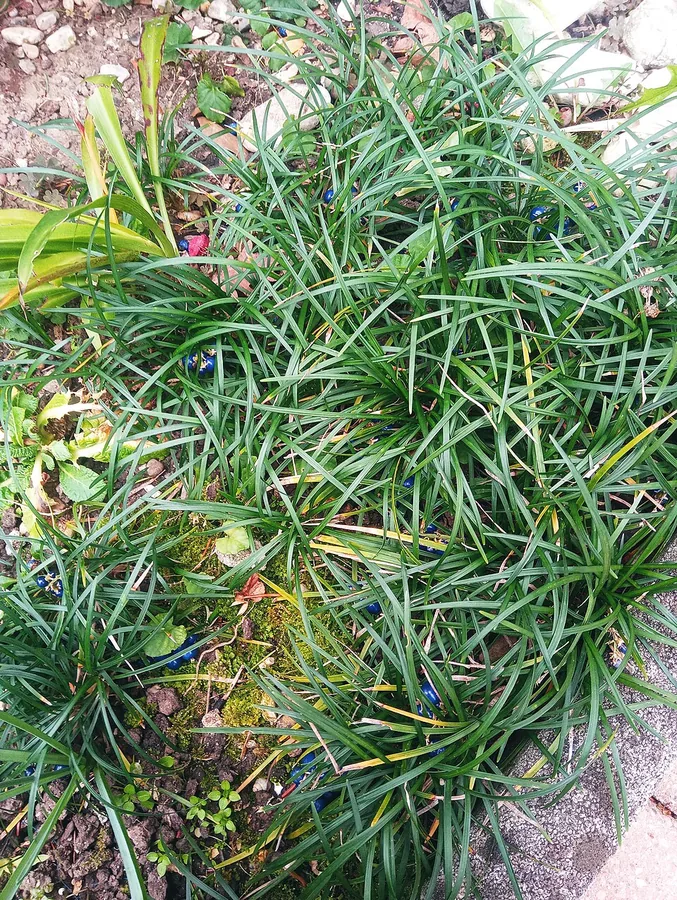
Mondo grass has the composure of a fine, dark green lawn, though it belongs to the asparagus family rather than the grasses, going by the name Ophiopogon japonicus. An East Asian evergreen grown as a groundcover, it gathers its narrow, arching blades into low tufts and travels on short underground stems into a dense, even mat that gives a garden a calm, tailored floor.
It earns its keep in the parts of a garden other plants avoid. Slipped into the shade beneath trees and along shaded paths, it holds its color through the year in mild climates and takes drought in stride once it has settled, which makes it an easy partner to a low-maintenance outdoor routine. Small white to lilac flowers hide among the leaves in summer, followed by little blue berries that read as a quiet seasonal grace note.
What it asks in return is patience. A slow spreader by nature, mondo grass takes its time drawing a fresh planting into one smooth expanse, but the finished carpet lends a shaded corner or a run of stepping stones a settled, unfussy elegance.
Care
The short version: give it part to full shade and moist but well-drained soil, keep the water steady while it settles into place, and feed it barely at all thereafter.
Light
Mondo grass looks its best in part to full shade, the setting where the blades hold their deepest dark green and read so richly against stone and paving. It will accept full sun with extra water, though hot direct sun tends to bleach or scorch the foliage. Dappled light beneath trees is where it truly belongs.
Water
Keep the soil consistently moist while the planting settles in, watering every 5 to 10 days as the weather asks. Once established, mondo grass takes a short dry spell in stride, while anything in sun wants more to drink. Moist but never waterlogged is the note to hold.
Soil
Ordinary well-drained soil is all it looks for, be it clay, loam, or sandy. Steer clear of soggy, poorly drained ground or a strongly alkaline site, either of which opens the door to root rot. A little organic matter worked in at planting sets the scene nicely.
Temperature
Mondo grass carries a wide range with ease, from about 0°F to 95°F (-18°C to 35°C). That hardiness is what keeps its color through the seasons in zones 7 to 10.
Humidity
Everyday outdoor humidity suits it, so there is no number to manage. It settles into humid and drier climates alike, provided its moisture and shade are looked after.
Feeding
This is a modest feeder that wants very little. A single light application of balanced fertilizer in spring is plenty, and only where the planting looks as though it could use the lift.
Pruning
Mondo grass is low maintenance and asks for one grooming a year. Shear or mow the tired old foliage in late winter or early spring before new growth appears, which conveniently sets back scale as well.
Repotting
Clumps rarely want lifting and are best left to knit into place. Divide and replant only when the center thins or the clump grows crowded and loses its poise.
Size & spacing
Plants reach 6 to 12 inches (15 to 30 cm) tall with a matching spread, so set divisions about 6 to 12 inches (15 to 30 cm) apart. Spacing them a touch closer draws the carpet together sooner, a welcome shortcut given its slow, unhurried creep.
When to plant
Mondo grass suits gardens in zones 7 through 10 and goes into the ground whenever the soil is workable. Set new plants out in spring once frost has passed, or in fall, and watch for the discreet summer flowers around June and July.
Northern hemisphere
Southern hemisphere
Typical months for a temperate climate: start earlier in warm zones, later where spring frosts linger.
- Plant: Spring after frost, or fall
- Harvest: Summer (about June to July)
Hardiness
USDA hardiness zones: 7–10
Temperature: down to -18°C
Troubleshooting
Mondo grass keeps a low profile and rarely disrupts a scheme, though a handful of issues surface when the setting doesn't quite suit it. Most come down to too much sun, too much water, or the wait while it fills in. Match what you see below and ease the conditions in its favor.
Thinning, yellow patches that spoil the sweep
A carpet that should read as effortless starts to look patchy when clumps yellow and thin, and the usual reason is root rot in ground that stays too wet, with strongly alkaline soil making it worse. A quick dig tells the story, since sound roots feel firm while rotted ones turn dark and soft. Better drainage, a lighter hand with the hose, and replanting the survivors in well-drained soil enriched with organic matter bring the planting back to its composed best.
Fix:
- Improve drainage and stop overwatering
- Replant in well-drained soil amended with organic matter
- Remove and discard severely rotted clumps
Open gaps that break the smooth carpet look
The seamless green sweep you have in mind arrives on its own schedule, because mondo grass is a slow grower that travels on short rhizomes and needs a few seasons to close into an unbroken mat. Setting the divisions closer brings that polished look forward. A tidy layer of mulch over the open ground keeps the scheme looking intentional while consistent moisture coaxes the clumps together.
Fix:
- Be patient; allow several seasons for clumps to knit together
- Space divisions more closely for faster coverage
- Mulch between plants and weed regularly until the mat closes in
- Keep soil evenly moist to encourage establishment
Washed-out color where the sun sits too hot
The deep, moody green that makes mondo grass such a quiet anchor fades where hot, direct sun falls, and the tips can scorch, a look that turns up most in the Deep South. Placed in filtered sun to full shade, the foliage keeps the rich color that reads so well against pale paving and stone. In a sunnier corner, a more generous watering routine holds the color together.
Fix:
- Provide afternoon shade or relocate to part to full shade
- Increase watering for plants grown in full sun
- Site in filtered sun to shade where foliage stays darkest
Ragged edges that undo the neat finish
The crisp, manicured finish falters when the blades turn ragged, and two visitors are usually behind it. Ragged holes and slime trails mean slugs and snails, while small fixed bumps clinging to the leaves mean scale insects such as false oleander or fern scale. Hand-picking or baiting handles the slugs, a late-winter shear resets the scale, and a 2 percent horticultural oil spray finishes off any that linger, restoring the tailored sweep.
Fix:
- Hand-pick or bait for slugs and snails
- Shear and dispose of infested foliage in late winter to reduce scale
- Apply a 2 percent horticultural oil spray for scale if needed
Toxicity
Reassuring news for a home with pets or children: mondo grass is safe. It stays off the ASPCA toxic-plant lists, and for all its lily-family kinship it bears no resemblance to the dangerous true lilies. A large mouthful of any leaf might unsettle a stomach, but nothing here amounts to real poison.
Safe for
People · Cats · Dogs · Horses · Rabbits · Livestock · Birds
Cats None
A household cat with the run of the garden is safe among mondo grass, which never appears on the ASPCA toxic list. A blade or two nibbled in passing does no harm, and only a big mouthful might bring on a little drool or a brief upset stomach.
Dogs None
A garden bordered in mondo grass welcomes the family dog without concern. Nothing in it is toxic, so an inquisitive chewer risks only mild, passing tummy trouble after eating a large amount.
Horses Safe
Horses stabled near a mondo grass border are in no danger, since the plant holds no poison. As with any lush mouthful of greenery, a very large helping might simply loosen the gut for a day or so.
Rabbits Safe
Rabbits may browse a mondo grass edging safely, as none of its parts carry a harmful compound. Portions are best kept modest even so, because too much of any fresh green can leave a rabbit with a soft stomach.
Livestock Safe
Cattle, goats, and sheep pastured beside mondo grass face no danger from this non-toxic plant. Mild digestive upset would follow only an unusually large helping.
Birds Safe
Birds, backyard hens included, may peck at mondo grass and its blue berries with no harm. The plant offers them no poisoning risk at all.
People Safe
Mondo grass earns its place for looks rather than the table, yet it will not poison anyone who tastes it. Children are in no genuine danger beyond the mild upset that follows eating a lot of any leaf.
No special handling required. It is an outdoor groundcover and is not among the truly toxic lilies; mild GI upset is possible only if large amounts are eaten.
Varieties
A few selections turn up far more often than the rest, from ankle-high dwarfs to a near-black relation. These are the ones worth telling apart.
'Nana' / 'Kyoto Dwarf' (Dwarf Mondo Grass)
A pint-sized dwarf that stays only about 2 to 4 inches tall and spreads at a leisurely pace, ideal as a soft lawn alternative and for lacing the seams between stepping stones.
'Gyoku Ryu'
A compact dwarf selection that settles into dense, low cushions of dark green, grass-like foliage.
Black Mondo Grass (Ophiopogon planiscapus 'Nigrescens')
A related species rather than true O. japonicus, kept for its dramatic near-black purple foliage that lends a striking note of contrast to a scheme.
Lilyturf (Liriope) - look-alike, not the same plant
A separate genus that deceives many a gardener, with Liriope showing wider leaves, flower spikes lifted above the foliage, and black berries, while mondo grass keeps narrower leaves, hidden flowers, and blue berries.
How to propagate
Mondo grass increases by dividing clumps you already have rather than from seed, an unhurried and satisfying task for any gardener.
DivisionEasy
Spring or early in the growing season · Slow; may take years to fill large areas
More of that elegant green sweep comes from dividing what you already have rather than sowing seed. Lift a generous clump in spring or early in the growing season and part it into sections, keeping plenty of root along with a few leaves on each piece. The new divisions settle in gracefully but travel slowly, so a broad expanse still asks for years to fill in.
Myths
Mondo grass is a true grass.
The lawn-like look is a fine bit of theater. Mondo grass is Ophiopogon japonicus in the asparagus family, so it is grass-like in appearance but not a grass at all. It is also its own plant, quite apart from the similar lilyturf (Liriope) that so often stands in for it in gardeners' minds.