Ornamental · Athyriaceae
Japanese Painted Fern
Athyrium niponicum var. pictum
Given soft shade and consistent moisture, the painted fern lends a quiet glow to the shadiest reaches of a garden.
Partial shade
Every 4–7 days
USDA 3–8
12–18 in · 30–46 cm
Overview
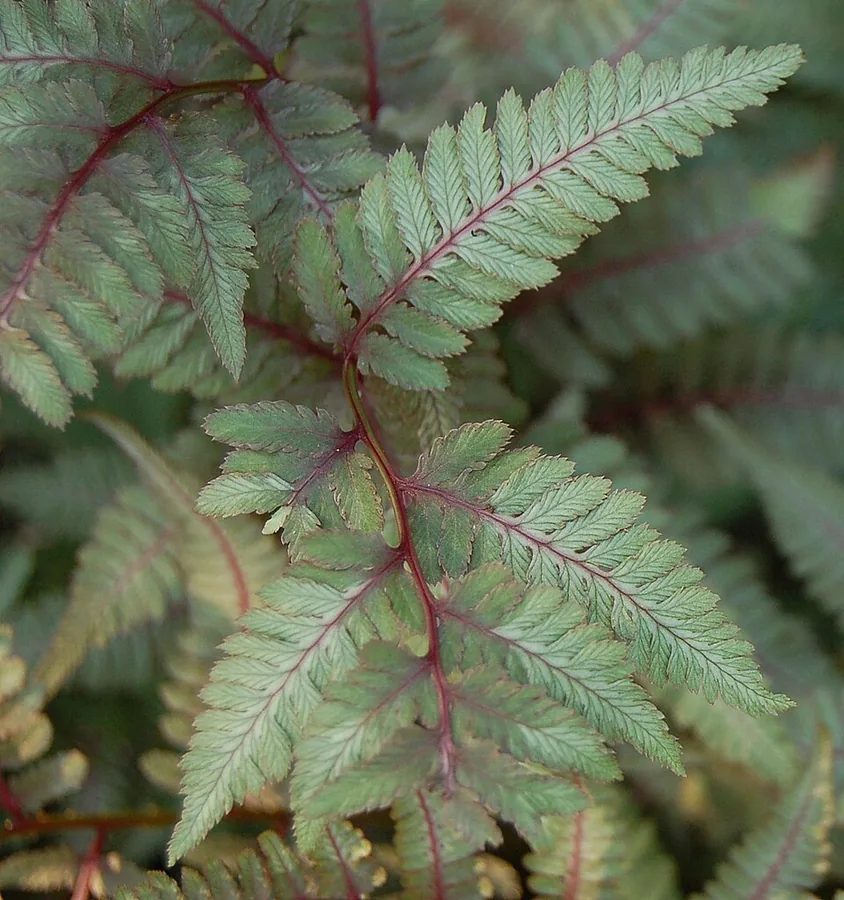
The Japanese painted fern brings a rare kind of color to the shade garden. Its fronds arrive in silvery-gray brushed with wine-burgundy over dark reddish stems, a cool, muted palette that lifts a dim corner where plain green would only recede. It is a hardy perennial for shade, at ease through winters from USDA zone 3 to 8, which makes it a dependable fixture in a border meant to last.
Slow and clumping, this fern keeps a graceful scale, rising 12 to 18 inches (30 to 46 cm) and settling a little wider. It slips below ground each fall and rises again in spring, when the new fronds show their most vivid color, so its yearly return becomes part of the garden's rhythm. Set it at the front of a shaded bed or along a path, where its painted detail can be met up close.
Its charm is matched by its ease. Give it light to dappled shade and soil that stays moist yet drains freely, and it holds its own with little attention. Two settings undo it, and both are easy to design around: too much sun, which drains the color, and heavy, waterlogged ground, which rots the crown.
Care
The short version: a spot in part to full shade, soil kept evenly moist but never heavy, and a humus-rich bed worked with compost. Mulch to hold moisture, divide the clump every few years, and leave room for it to spread into the planting.
Light
Give it part to full shade, the setting where this fern comes into its own. Light, dappled shade draws out the strongest silver and burgundy, while too much direct sun both drains the color and scorches the frond tips, so lean toward the shadier side of the garden.
Water
Keep the soil consistently moist and never let it run dry, since drought is what leaves the edges crisp. Water more often through heat or a dry spell, and a layer of mulch holds that moisture in place between waterings.
Soil
It favors humus-rich soil worked with organic matter, moist but free-draining. The one setting to avoid is boggy, waterlogged ground, which rots the crown and roots.
Temperature
This is a cold-hardy plant that weathers winters down to -31°F (-35°C) and takes summer warmth up to about 86°F (30°C). That broad range is what carries it comfortably across USDA zones 3 to 8.
Humidity
It prefers high humidity and settles into the moist, sheltered air of a shaded bed. In a dry, exposed spot the frond edges brown, so steady soil moisture and a little shelter keep it looking its best.
Feeding
Feed lightly in spring with a balanced fertilizer, or simply top-dress with compost or leaf mold. It is a light feeder, so there is no call for heavy doses.
Pruning
Clear the old, dead fronds in late winter or early spring before the new fiddleheads rise. Trim any tattered fronds through the season, though the plant otherwise dies back on its own each fall.
Repotting
This fern lives in the border rather than a pot, so there is no repotting to see to. Instead, divide the clump every 3 to 4 years in early spring to keep it fresh, easing it apart once the center thins or the fronds shrink.
Size & spacing
Plants reach 12 to 18 inches (30 to 46 cm) tall and spread 18 to 24 inches (46 to 61 cm) wide. Give each one that much room so the clump can fill its place without crowding the planting around it.
When to plant
This fern lives by the seasons rather than a sowing schedule, and it fits neatly into a garden's yearly routine. Settle new plants in spring once hard frost has passed, watch the painted fronds unfurl through the growing season, then let them fold away as cold returns and count on their rise again the following spring.
Northern hemisphere
Southern hemisphere
Typical months for a temperate climate: start earlier in warm zones, later where spring frosts linger.
- Plant: Spring, after danger of hard frost has passed
Hardiness
USDA hardiness zones: 3–8
Temperature: down to -40°C
Troubleshooting
The occasional flaw in this fern shows up on the fronds, and the cause is nearly always a matter of water or light rather than disease. Notice the early signs and a corner can be corrected before it loses its poise. Match what the planting shows below, then set it right while the fix still holds.
A softened crown and fronds falling flat
When a poised clump suddenly slumps and its base turns soft, the roots have been sitting in too much water. Crown rot takes hold in low, wet corners where soil stays saturated or water gathers around the base. Improving the ground with organic matter, resettling the plant on higher, drier footing, and easing back on water return the planting to health.
Fix:
- Improve drainage by amending with organic matter
- Replant in a raised or better-drained location
- Reduce overwatering
Browning, brittle tips along the fronds
Brown, brittle edges are the fern's quiet protest that its spot ran dry or turned too bright. Drought stress leads the list, trailed by hot afternoon light and drying wind. A deep watering to settle the soil, a few inches of mulch, and a move into a cooler, shadier corner of the bed set the planting right again.
Fix:
- Water deeply to keep soil evenly moist
- Apply 5-8 cm of organic mulch to retain moisture
- Relocate or shade plants exposed to hot afternoon sun
The painted sheen giving way to everyday green
That signature palette shifts with the light and the calendar, so a little fading tells its own seasonal story. Too much sun rinses the silver away, and the long warmth of summer softens the tones as the months settle. A midsummer turn toward green is part of the rhythm, and spring returns the fronds in full color, yet a corner that keeps washing them out is a cue to resettle the plant in gentler, dappled shade.
Fix:
- Provide light to dappled shade
- Accept natural midsummer greening, as fresh spring fronds return with color
Ragged holes chewed through the fronds
Torn holes and a faint silvery trail across the foliage give away slugs and snails, which are drawn to the same cool, damp shade that flatters the fern. An evening round to pick them off, a scattering of iron-phosphate bait, and a tidy sweep of the leaf litter where they shelter by day keep the planting looking its best.
Fix:
- Hand-pick slugs and snails at night
- Use iron-phosphate slug bait
- Remove debris and litter that shelter slugs
Toxicity
Reassuring for a home with pets: this is a true fern with no known toxins, and it stays off the ASPCA's list of harmful plants. It is safe around cats, dogs, horses, and other animals. It is grown for its looks rather than as food, so there is no reason to let a pet graze on it, though a stray nibble is nothing to worry over.
Safe for
People · Cats · Dogs · Horses · Rabbits · Livestock · Birds
Cats None
A household cat is in no danger from a curious nibble, since this is a true fern with no known toxins. Eat enough of any leafy plant, though, and a cat may drool or bring it back up, so it earns a place in the garden rather than on the menu.
Dogs None
The family dog can share the same shaded border without concern, as the fern holds no toxic compounds. Should one make a meal of a whole clump, expect only a brief upset stomach, the ordinary price of overeating any greenery.
Horses None
For a horse, this fern presents no known hazard. It plays no part in their feed, yet a chance mouthful gathered while grazing is nothing to trouble over.
Rabbits None
Rabbits may browse the fronds without harm, though they tend to leave this planting well alone. Best kept an occasional taste rather than a staple, since it offers them little.
Livestock None
Cattle, goats, and sheep face no known risk from this fern. It carries no toxins to unsettle a ruminant that strays into a stand of it.
Birds None
The fronds sit safely among backyard and pet birds alike. Nothing in the plant would trouble a bird that pauses to peck at the foliage.
People None
In a home with children, this fern is a safe and gentle presence, and it stays kind to the touch. It is grown for its looks rather than the table, so no part of it belongs on a plate.
No known toxicity, but the plant is not a food and large quantities of any plant material can cause mild stomach upset if eaten.
Varieties
The painted fern comes in several named selections, each turning the same silver-and-burgundy palette to a slightly different effect in the border. These are the ones worth choosing between.
Pictum
The original painted fern carries silvery-gray fronds flushed with wine-burgundy over dark reddish midribs and stems.
Silver Falls
A vigorous, mounding plant offers brightly silvered fronds threaded with deep burgundy veining.
Burgundy Lace
A silvery overlay drapes strong wine-burgundy across finely divided, lacy fronds.
Ursula's Red
Deep red-burgundy spreads from the midrib out into silvery frond margins.
Pewter Lace
Finely divided fronds settle into a soft pewter-silver finish.
How to propagate
The painted fern is easy to multiply, and dividing a single clump gives you fresh plants to carry its color into another corner.
DivisionEasy
Early spring · One growing season
Dividing an established clump in early spring is the household way to make more, and it ranks among the simplest tasks in the garden. Lift the clump, part it into sections, and set them back in, and each division finds its footing over a single growing season. Spores are an option too, though that route is slow and better suited to the specialist.
Myths
The painted fern has no place in a home with pets, because it poisons them.
It never appears in the ASPCA toxic plant database, and true ferns are counted as non-toxic. It is safe around cats, dogs, and other animals, though it belongs in the border as foliage to admire, not as feed.
A fern belongs in the deepest gloom a garden can offer.
This one wears its finest silver and burgundy in light to dappled shade. Too much direct sun washes the color out, while dense, sunless shade leaves it thin and weak, so a filtered light suits it best.
A fern's ideal home is a perpetually sodden bed.
The painted fern prefers ground that holds moisture yet drains freely, generous with humus. Waterlogged ground rots the crown and roots, so free drainage counts every bit as much as steady moisture.