Vegetable · Fabaceae
Lentil
Lens culinaris
Sown early into cool, well-drained ground, this quietly self-sufficient legume carries a plot from spring through a late-summer harvest.
Full sun
Every 7–14 days
39–81°F · 4–27°C
80–110 days
Overview
The lentil belongs to the unhurried end of the kitchen garden, a cool-season legume grown for small, protein-rich seeds that have sat at the center of Middle Eastern, Mediterranean, and South Asian tables for thousands of years. It keeps a modest presence in the plot, standing just 12 to 20 inches (30 to 50 cm) tall and completing its whole story in a single season as an annual. It suits a grower who prefers a crop that gets on with things.
What gives lentils their place in the wider rhythm of a garden is a quiet partnership below the surface. Like other legumes, the plant carries Rhizobium bacteria in root nodules that draw nitrogen from the air, so it feeds itself and hands the plot back in better heart than it found it. That makes lentils a graceful pivot in a rotation, easing the disease pressure and the fertilizer bill for whatever follows them into the ground.
This is a crop shaped by its calendar: an early sowing and a well-drained bed matter more than any flourish of care. It takes light frost, drought, and lean ground in stride, yet it has no appetite for wet feet or a crowded, weedy plot. Sow while the soil is still cool, give it open sun and space to breathe, and the season carries the harvest home almost on its own.
Care
The short version: lentils ask for full sun, lean well-drained soil, and a cool sowing in early spring. Keep the ground evenly moist through flowering and pod fill without ever letting the roots stand wet, and set the nitrogen aside, since the plant provides its own.
Light
Lentils belong in full sun and give their best under open, all-day light, though they accept a touch of partial sun. Short and slender, they compete poorly, so a place clear of taller plants and creeping weeds keeps them from being shaded out.
Water
Aim for even moisture through germination, flowering, and early pod fill, then step back, as the plant carries drought once it is settled. A watering roughly every 7 to 14 days suits most beds. The real hazard runs the other way, since waterlogged ground ushers in root rot and seedling disease.
Soil
Set lentils in well-drained sandy loam to loam, where drainage counts for more than richness. A pH held between 6.0 and 7.5 keeps both the plant and its nitrogen-fixing partners at ease. Heavy, sodden ground is the one place they will not settle.
Temperature
A cool-season crop, the lentil takes a broad range in stride, from about 39°F to 81°F (4°C to 27°C). Seedlings weather light frost gracefully, while a hot, dry spell at flowering trims the pod set, which is why an early sowing outpaces the summer heat.
Humidity
Lentils prefer the dry side, near 30% to 50% humidity, part of why they flourish in open, breezy plots. Damp, still air invites blight and white mold, so a little spacing and a canopy that dries quickly keep the crop clean.
Feeding
Set the nitrogen aside, since as a legume the lentil fixes its own through Rhizobium nodules. Inoculate the seed with the right Rhizobium in place of an N feed, and offer only a low-nitrogen starter or some phosphorus and sulfur when a soil test asks for it.
Pruning
Lentils call for no pruning at all. Simply stay ahead of the weeds early, since the short plants compete poorly, and clear the diseased debris at season's end to lower the inoculum that would overwinter.
Size & spacing
Each plant keeps a tidy form at 12 to 20 inches (30 to 50 cm) tall and 8 to 12 inches (20 to 30 cm) across. Leave the stand room to breathe, since crowding invites lodging and disease in the damp, still air near the ground.
When to plant
Lentils frame the season neatly, going into the ground early and coming off in late summer. Sow directly in early spring the moment the soil can be worked, around 4°C (40°F), since the seedlings meet light frost without complaint. The harvest arrives 80 to 110 days on, once the lower pods turn brown and dry and the plant begins to yellow.
Northern hemisphere
Southern hemisphere
Typical months for a temperate climate: start earlier in warm zones, later where spring frosts linger.
- Plant: Direct-sow in early spring as soon as the soil can be worked and soil temperatures reach about 4°C (40°F); seedlings tolerate light frost.
- Harvest: Harvest when the lower pods turn brown and dry and the plant begins to yellow.
Hardiness
USDA hardiness zones: 3–8
Temperature: down to -40°C
Troubleshooting
Most of what troubles a lentil plot begins in cool, wet weather or in ground that drains poorly. Walk the rows through the season with an eye on the leaves, stems, and roots, and set what you find against the notes below before one plant's problem travels across the stand.
Plants languishing and collapsing, their roots decayed or stems webbed in mold
Ground that stays wet invites a root rot complex of Fusarium, Aphanomyces, and Rhizoctonia, which undoes the roots and pulls the plant down from below. Where the canopy grows dense and humid, the trouble instead is white mold, the Sclerotinia fungus that veils the stems in fluffy growth and scatters hard black sclerotia. No treatment turns it back once it arrives, so lift and destroy the affected plants, improve the drainage, hold off on overwatering, and lean on long rotations well away from susceptible broadleaf and pulse crops.
Fix:
- Improve drainage and avoid overwatering
- Remove and destroy affected plants
- Rotate away from susceptible broadleaf and pulse crops
Pale tan blemishes edged in shadow along leaf and stem
Tan lesions edged in dark rings are the signature of ascochyta blight, a fungus that settles in through cool, wet weeks and often travels on infected seed or the debris left from last year's plot. A close look reveals the tiny dark fruiting bodies set within the spots. Keep the plot clean by sowing certified disease-free seed, resting the ground from pulses for 3 to 4 years, and clearing infected debris once the harvest is in.
Fix:
- Use certified disease-free, fungicide-treated seed
- Apply a registered foliar fungicide when conditions favor disease
- Remove and destroy infected residue after harvest
Tacky, curling shoot tips clustered with minute soft insects
Small clusters gathering on the fresh growth are pea aphids, soft-bodied insects that draw sap and leave a sticky sheen across the leaves. In a healthy plot, lady beetles and lacewings arrive to keep them in balance, so those visitors are worth welcoming first. Save a registered insecticide for the moment numbers rise past economic thresholds, and keep nitrogen in check, since the tender flush it encourages is precisely what draws the aphids in.
Fix:
- Encourage natural enemies such as lady beetles and lacewings
- Treat with a registered insecticide if populations exceed economic thresholds
A crop that sprawls and mats just as harvest arrives
A plot that slumps and mats before harvest is showing lodging, the surrender of weak stems under a heavy stand, soft growth, or a lashing of wind and rain. The tidy canopy folds in on itself, pods settle onto damp ground and rot, and the cutter labors to lift them. Bring the harvest in as soon as the crop is ready, and in the seasons to come sow more sparingly, temper the nitrogen, and favor cultivars that stand tall.
Fix:
- Harvest promptly once mature to limit losses
- Reduce seeding rate and avoid excess nitrogen in future plantings
Blossoms falling away and sparse pods as the season heats up
A hot, dry stretch arriving at bloom brings heat and moisture stress, and the flowers fall away before they can set pods. The remedy lies almost entirely in timing. Sow early so flowering runs its course before high summer, hold even moisture through flowering and early pod fill where the plot allows, and reach for heat-tolerant cultivars in warmer regions.
Fix:
- Provide even moisture through flowering and early pod fill where possible
- Plant early so flowering precedes peak summer heat
Toxicity
For a household with pets, the lentil plot is easy company: the plant is safe on every count. It sits nowhere on the ASPCA's toxic list, and cooked lentils make a wholesome food for people and animals alike. The single caveat belongs to the kitchen, where dry, raw lentils want cooking before people eat them, a matter of preparation rather than any poisoning risk.
Safe for
People · Cats · Dogs · Horses · Rabbits · Livestock · Birds
Cats Safe
A cat drawn to the plot has nothing to fear from the lentil plant, which the ASPCA does not list as toxic.
Dogs Safe
The foliage poses no threat to a dog that noses through it, and cooked lentils turn up as a familiar ingredient in many dog foods.
Horses Safe
The plant holds nothing toxic, so a horse grazing along the edge of the plot comes to no harm.
Rabbits Safe
Rabbits may graze the leaves in safety, best offered as one part of a varied diet rather than the whole of it.
Livestock Safe
Cattle, sheep, and goats take lentil forage and crop residue without harm, and the plant serves as a pulse across many feeding systems.
Birds Safe
Backyard hens and wild birds alike take lentil seed without harm, and the cooked grain is equally safe.
People Safe
Lentils grace kitchen tables the world over. The dry seeds want cooking first, since raw lentils carry lectins and other antinutrients.
Raw, dry lentils contain lectins and other antinutrients and are cooked before human consumption; this is a food-preparation matter, not a pet-poisoning hazard.
Varieties
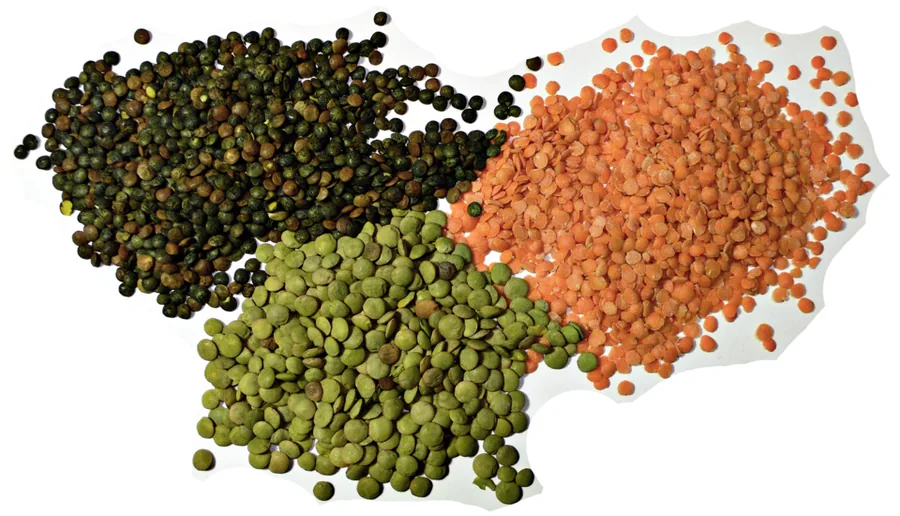
Lentils arrive in a quietly beautiful spread of seed colors and sizes, and a handful of types recur across gardens and kitchens. These are the names worth carrying with you.
Laird
Laird is a widely grown large green seeded type whose broad, flat seeds cook up plump and generous on the plate.
Eston
Eston is a small green seeded cultivar that earns its keep with dependable yields and an early finish.
Pardina
Pardina is a small Spanish brown lentil beloved in the kitchen for holding its shape once cooked.
Crimson / red cotyledon types
The crimson or red cotyledon types show a warm salmon interior, often sold split, and soften fast into soups and dals.
Beluga
Beluga is a tiny, glossy black lentil that recalls caviar on the plate and keeps a firm, elegant bite.
How to propagate
Lentils come from seed and seed alone, which keeps their beginning as simple as the crop itself. Sow straight into the garden and let the cool spring soil set the pace.
SeedEasy
Direct-sow in early spring once soil can be worked, about 4°C (40°F) soil temperature. · Seedlings emerge in roughly 7-14 days under cool moist conditions.
Lentils begin and end with seed, which keeps the whole affair refreshingly plain. Sow in early spring the moment the soil can be worked and has warmed to about 4°C (40°F), settling the seed 2 to 4 cm (about 1 inch) deep into a firm, well-drained bed. Dress the seed with the right Rhizobium first so it nodulates cleanly, and the seedlings rise in 7 to 14 days through cool, moist ground.
Myths
Lentils call for rich nitrogen feeding like the rest of the vegetable patch.
As a legume, the lentil produces its own nitrogen through Rhizobium nodules on its roots, so a nitrogen feed rarely earns its place. Overfeed and the plot runs to leaf at the cost of pods, the same misstep that overdoing nitrogen brings to any crop. Inoculating the seed with the right Rhizobium repays the grower far more than applied N.
Lentils require steady, frequent watering to produce well.
Settled lentils carry drought with ease and falter in waterlogged ground, where root rot takes hold. Measured, well-timed moisture serves the plot better than constant irrigation. Water through germination, flowering, and early pod fill, then let the ground dry back.