Vegetable · Fabaceae
Snap Pea
Pisum sativum var. macrocarpon
The green rite of early spring: sow snap peas into cold soil and gather sweet, crisp pods while the garden is still waking up.
Full sun
Every 5–7 days
39–75°F · 4–24°C
55–70 days
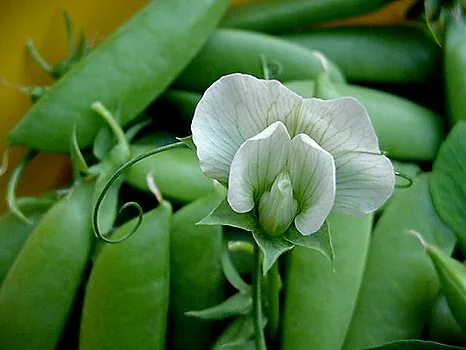
Overview
The snap pea belongs to the season of beginnings, a cool-season legume grown for round, well-filled pods eaten whole. Born from a match of the flat snow pea and the round-seeded shelling pea, it carries the best of both, sweet on the tongue and crisp between the teeth. It keeps company with the bean family and their quiet gift, roots that draw their own nitrogen from the air.
Peas set the tempo of the spring garden. They go into the ground the moment the soil loosens, climb through the mild weeks, and bow out just as summer arrives. On a trellis the vining kinds rise 5 to 6 feet into a living green screen, while bush types keep to a modest 2 feet, so the variety you choose shapes the look of the plot as much as the harvest.
Few crops fit a spring routine so gracefully. Give them a sunny corner, a little water, and a frame to climb, and they become part of the daily walk through the garden. Their one demand is punctuality, since a late sowing leaves pods to toughen in the heat and the plants to fade before the table is served.
Care
The short version: plant in full sun in early spring, work in well-drained soil and about an inch of water a week, keep the nitrogen light, and raise a trellis for the vines to climb.
Light
A full-sun corner brings the best of snap peas, though they accept a little partial shade, which can stretch the season where spring turns warm early. Give them much less and the vines grow thin and leggy, trading pods for foliage.
Water
About 1 inch of water a week keeps them content, soaked deep enough to reach several inches down, with even moisture once the flowers and pods appear. Directing water to the soil line rather than the leaves keeps the foliage dry and the garden healthier.
Soil
They settle happily into well-drained loam at a pH of 6.0 to 7.5, the range most garden beds already offer. Drainage is the detail that matters, since cold, waterlogged ground is where pea roots quietly rot.
Temperature
This is a crop of cool days, at its best between 39°F and 75°F (4°C to 24°C). As the season climbs into the mid-80s the flowering slows and the plants begin to wind down, the reason an early start pays such dividends.
Humidity
Ordinary outdoor humidity from 40% to 70% suits them without any attention. Airflow is the thing worth minding, because still, crowded air invites powdery mildew as the season lengthens.
Feeding
Peas keep their own pantry, fixing nitrogen through bacteria on the roots, so they call for little to no fertilizer. Poor soil may take a low-nitrogen blend such as 5-10-10, but an excess only grows leaf where you wanted pods.
Pruning
Pruning is beside the point here, though a pinch to the growing tips keeps a tall vine in proportion. When the last pods are gathered, the spent vines come out and go to the compost.
Size & spacing
Height runs from 2 to 6 feet (60 to 180 cm), bush to climber, on a slim footprint of just 6 to 12 inches (15 to 30 cm). The tall vines want a trellis to lean on, and a little space between plants keeps the row open and the air moving.
When to plant
The snap pea season is a short, well-kept window. Sow straight into the ground as soon as it can be worked in early spring, roughly 4 to 6 weeks before the last frost, and the reward arrives from late spring into early summer, a harvest that closes just as the warm months take over.
Northern hemisphere
Southern hemisphere
Typical months for a temperate climate: start earlier in warm zones, later where spring frosts linger.
- Sow: Not typically started indoors; direct sow
- Plant: Early spring, as soon as the soil is workable and at least 45°F (7°C); about 4-6 weeks before the last frost
- Harvest: Late spring to early summer, roughly 55-70 days after sowing
Hardiness
USDA hardiness zones: 2–11
Temperature: down to -46°C
Troubleshooting
Most of what troubles snap peas comes from the weather and the calendar rather than any lapse in care. Keep a watchful eye on the leaves and pods, read the early signs below, and step in while the crop can still be saved. Match what the plant shows you and respond before it spreads.
Lower leaves yellowing as the plants stall
When the lower leaves yellow and the plants refuse to grow, the cause is usually root rot or Fusarium wilt, taking hold in cold, sodden ground. Lift the affected plants and let them go, since browned roots never recover. The lasting answer is a well-drained bed, a yearly change of place, and resistant varieties that keep the trouble at bay.
Fix:
- Remove and discard affected plants
- Improve soil drainage
A pale powdery film settling over the leaves
That soft white film is powdery mildew, a fungus that arrives late in the season when warm dry days give way to cool, damp nights. Clear away the worst vines, open the planting so air can move freely, and turn to sulfur or a labeled fungicide if it presses on. The most elegant defense is an early sowing that brings the crop home before the heat invites it.
Fix:
- Remove severely affected vines
- Improve air circulation
- Apply a labeled fungicide or sulfur if needed
Curled, sticky leaves flecked with tiny green insects
The little green flecks gathered at the shoot tips are pea aphids, and beyond their feeding they can carry viruses from one plant to another. A firm jet of water unseats them, insecticidal soap follows up, and lady beetles finish the work. A light hand with nitrogen helps as well, since the soft growth of heavy feeding is just what draws them.
Fix:
- Spray plants with a strong stream of water
- Apply insecticidal soap
- Encourage natural predators such as lady beetles
Blossoms falling before the pods can form
Once early summer warms past about 85°F (29°C), snap peas simply cease flowering and setting pods. Nothing turns it back in the moment, so gather the last pods and give the space to a crop that loves the heat. The real remedy is the calendar: sow early enough that the flowers open while the air is still cool.
Fix:
- Harvest any remaining pods promptly
- Replace with a warm-season crop
Pods turning tough, stringy, and starchy
Pods left too long on the vine trade their sugar for starch and grow tough and fibrous. There is no reviving pods past their prime, so the answer is simply the next picking. Gather them every 1 to 3 days, while they are plump yet tender, and the quality holds through the season.
Fix:
- Harvest promptly when pods are plump but still tender
- Pick every 1-3 days
Toxicity
Snap peas ask for no caution at the table: every part is safe to eat, pods, seeds, shoots, and flowers alike, a welcome trait in a household garden. People and pets can share them freely. The single note of care is to keep them distinct from the ornamental sweet pea (Lathyrus), a handsome look-alike that is toxic and never food.
Safe for
People · Cats · Dogs · Horses · Rabbits · Livestock · Birds
Cats None
Snap peas hold no toxin for cats, so a chewed vine or a stray pod is nothing to worry over. A cat that swallows a large helping of greens may feel briefly unsettled, as with any leafy mouthful.
Dogs None
Dogs come to no harm from snap peas, and many take to a fresh pod as a favorite crunchy treat. The only thing to expect is the usual digestive murmur after a sudden serving of vegetables.
Horses Safe
Pods, leaves, and vines are all safe grazing for horses. Peas lend a touch of protein, though they suit an occasional treat rather than a daily ration.
Rabbits Safe
Rabbits flourish on snap pea leaves, pods, and shoots, a wholesome addition to their greens. Introduce any new forage slowly so their digestion has time to settle.
Livestock Safe
Cattle, goats, and sheep graze pea vines safely, and the foliage is a familiar forage. Nothing toxic here limits how much they take.
Birds Safe
Backyard hens and other birds peck contentedly at peas and tender shoots without risk. The seeds offer them a fine source of protein.
People Safe
Snap peas are grown for the table, eaten pod and all, raw or lightly cooked. They are a safe, sweet vegetable for the whole household, children included.
No special handling needed; this is a safe edible crop.
Varieties
A short cast of snap peas earns a place in the garden, sorted by height and by the character of the pod. These are the names worth knowing.
Sugar Snap
The original sugar snap, a climber of 5 to 6 feet hung with plump, rounded pods sweet enough to enjoy straight from the vine.
Sugar Ann
A neat bush type near 2 feet that comes early and needs little in the way of support.
Snow pea (var. saccharatum)
An edible-pod pea prized for flat, tender pods gathered before the seeds swell, which sets it apart from the rounder snap pea.
Companions
Peas grow well alongside cucumbers and other legumes that share their easygoing habits, and poorly next to onions and their allium kin, which stunt legume growth.
Plant near
cucumbers: Listed as a compatible companion for peas in extension companion-planting guidance.
beans: Other legumes pair well with peas and similarly help build soil nitrogen.
Keep apart
onions: Alliums such as onions can stunt the growth of legumes and should not be interplanted with peas.
How to propagate
Snap peas begin as seed sown exactly where they will grow, which makes starting them one of the simplest pleasures of the spring garden.
SeedEasy
Direct sow in early spring as soon as the soil is workable and at least 45°F (7°C) · Germinates in about 7-14 days; pods ready to harvest in roughly 55-70 days
Snap peas begin in the open ground rather than a seed tray. Sow them 1 to 1.5 inches deep and 1 to 2 inches apart as soon as the soil can be worked in early spring, and set a trellis or netting for the climbers to find. They emerge in about 7 to 14 days and come to the table in roughly 55 to 70 days, and a dusting of Rhizobium bacteria on the seed gives their nitrogen-fixing a head start.
Myths
Peas need generous nitrogen feeding to crop well.
The idea overlooks the plant's own resourcefulness, since peas draw nitrogen from the air through bacteria at the roots and rarely ask to be fed. An excess of nitrogen thins the harvest, leaving lush foliage and few pods to gather.
Every edible-pod pea amounts to the same thing.
They divide into clear kinds. Snap peas offer plump, rounded pods eaten whole, snow peas bring flat pods gathered before the seeds swell, and shelling peas are opened for the seeds while the pod is set aside.
Ornamental sweet peas and snap peas may be used alike.
They are separate plants with separate purposes. The ornamental sweet pea is Lathyrus, toxic and never a food crop, while only Pisum sativum peas such as the snap pea belong on the plate.