Ornamental · Nelumbonaceae
Sacred Lotus
Nelumbo nucifera
A pond composed around generous sun and unhurried, quiet water becomes the stage where lotus blooms rise well above the surface.
Full sun
USDA 4–10
3–6 ft · 0.9–1.8 m
Overview
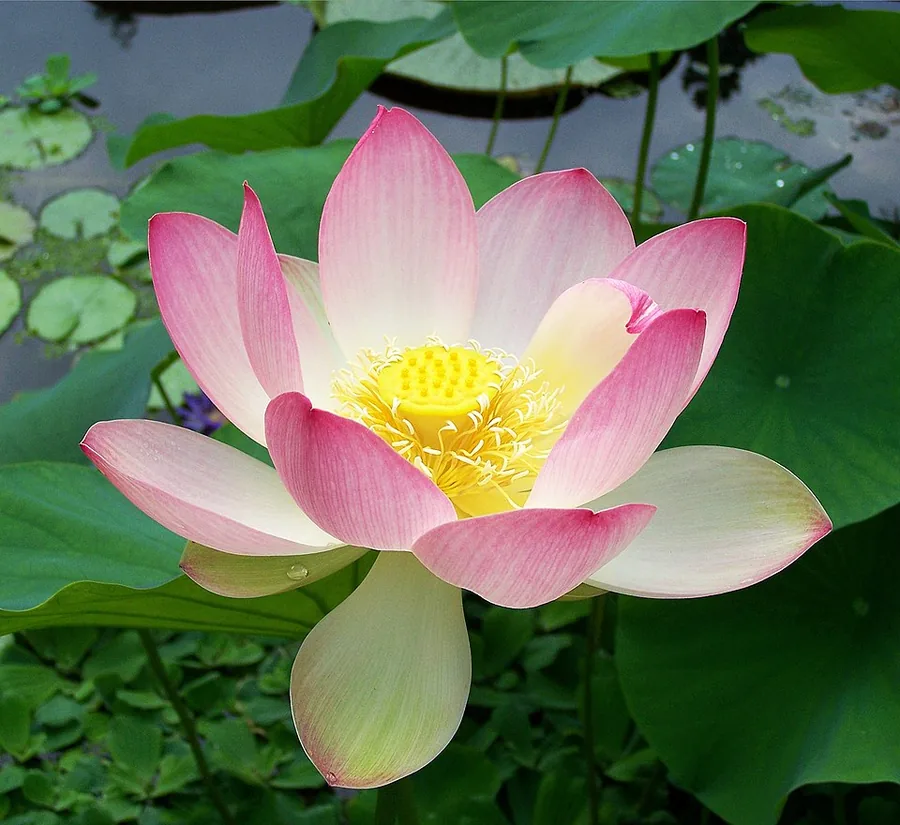
Sacred lotus is the plant that turns a still pond into a destination, holding its leaves and blooms high above the water where a water lily would float them flat. It rises from a creeping rhizome set in soft pond-bottom mud, sending up round, water-shedding leaves and fragrant flowers on tall stalks that read as a centerpiece from across a garden. Each bloom lasts only about three days, then gives way to the woody, showerhead-shaped seed pod that becomes a quiet sculptural note on the water.
This is an aquatic perennial, at home in USDA zones 4 to 10 as long as the rhizome winters below the freeze line. It arrives with a long cultural pedigree across Asia, valued as both an ornament and a food, its rhizomes, seeds, and young leaves carried into the kitchen. In a designed setting it lives in a wide, sturdy container sunk into a pond or a half-barrel, an arrangement that suits a courtyard, a terrace edge, or the still heart of a water garden.
Lotus rewards a slow, unhurried routine more than any daily fuss. A freshly divided plant may spend a first season simply settling in and skip flowering until the second year, an easy pace to live with. Give it heat, full sun, and quiet water, and it becomes the anchor a water feature is built around, a plant that shapes the mood of the whole space.
Care
The short version: set it in full sun over still, warm water in a wide container of heavy clay loam, winter the rhizome below the freeze line, and divide it every year or two so it keeps its shape within the pot.
Light
Lotus wants full sun, at least 6 hours a day and ideally more, so reserve the most open, light-filled corner of the water garden for it. Give it too little and you keep the leaves but lose the flowers, which is the whole reason to grow it.
Water
Site it in still, calm water over a wide container of heavy clay loam, the kind of quiet surface that makes a garden feel composed. Begin with the crown about 6 inches deep, then let the water settle to 18 to 24 inches over the rhizome as it grows. Keep the rhizome below the freeze line, moving shallow containers to deeper water or indoors before a hard freeze.
Soil
Root it in heavy, organically rich clay loam, the mucky pond-bottom kind of substrate that holds firm underwater. Light, airy potting mixes drift loose and lose the rhizome, so pack the container with dense, weighty soil and finish the top with sand or gravel for a clean line.
Temperature
This is a warmth-loving plant that comes into its own in the heat of summer, taking temperatures up to about 100°F (38°C) in stride. The resting rhizome is far hardier than the top growth and rides out cold to roughly -29°F (-34°C) as long as it stays below the freeze line.
Humidity
Set in open water, lotus lives in high humidity as a matter of course, so this is one thing the garden manages for you. The pond keeps the leaves supplied, and there is nothing to adjust.
Feeding
Feed through the summer growing season with aquatic fertilizer tablets pressed into the container substrate, about once a month, to keep the display full. Ease off as growth slows toward autumn and the plant settles into dormancy.
Pruning
There is no shaping to do here. Simply lift away yellowing or dead leaves and spent flower stalks to keep the water clear and the planting tidy, and thin or divide crowded rhizomes as the plant presses at its edges.
Repotting
Plan to divide and repot every 1 to 2 years in spring, since the rhizome fills its container quickly and can crack the walls. Rhizomes circling the pot, a warped container, or smaller, crowded leaves all signal the moment.
Size & spacing
A mature lotus stands 3 to 6 feet (91 to 183 cm) tall and spreads 3 to 4 feet (91 to 122 cm) across, so plan it as a feature rather than a filler. Give each one its own wide container, leaving room to read against open water and adjoining plantings.
When to plant
Lotus keeps time by warmth and stays quiet until the water heats through. Set rhizome divisions in place in spring to early summer once the chill has gone, then look for flowers standing tall above the water from June into July, the high note of a water garden's season.
Northern hemisphere
Southern hemisphere
Typical months for a temperate climate: start earlier in warm zones, later where spring frosts linger.
- Sow: Not typically started indoors; usually grown from rhizome divisions planted in spring
- Plant: Spring to early summer once water has warmed
- Harvest: Summer (June to July); flowers held high above the water, each bloom lasting about three days
Hardiness
USDA hardiness zones: 4–10
Temperature: down to -34°C
Troubleshooting
Nearly every lotus concern traces to one of three things: too little sun, a rhizome outgrowing its container, or the ordinary fade of old leaves. Reading the early signs below lets you settle a small matter before it disturbs the display. Match what you see, then act while it still does the most good.
Plenty of leaves but few or no flowers
A lotus that gives you handsome foliage and no flowers usually sits in the wrong corner of the garden, since blooms depend on full sun and lasting warmth. A shaded position or a short, cool season leaves the plant leafy but quiet, and a first-year division tends to stay that way while it finds its footing. Move the container into an open, sun-washed spot, settle it in a wide bowl of heavy loam, and let a full warm season pass, and the flowers arrive to earn their place above the water.
Fix:
- Site the container in full sun with 6 or more hours of direct light
- Allow a full warm season; do not expect bloom from a freshly divided or first-year plant
- Move to a larger, wider container of heavy loam so the rhizome can run
- Handle rhizomes gently when dividing or planting to avoid breakage
Creeping rhizomes overrunning the pot or breaking it apart
Left to its own devices, lotus is an ambitious guest, and its creeping rhizomes can lay claim to a whole shallow pond in a season or two once they reach open mud. Held in a container that has grown too tight for it, that same drive presses on the walls until they give way. A wide, sturdy pot sunk into the water keeps the display looking composed, so divide the rhizome every year or two and lift out any runner that strays before it takes root beyond its bounds.
Fix:
- Confine plants to wide, sturdy submerged containers rather than open pond mud
- Divide and thin rhizomes every 1-2 years
- Remove escaped rhizomes promptly to keep them from rooting into the pond bottom
Young leaves curling and gluey, dotted with massed small insects
New growth that turns sticky and misshapen has usually drawn aphids, small soft-bodied insects that gather on the freshest stems and leaves, and a hot, dry spell can invite spider mites with their fine webbing and pale speckling. The cure keeps the scene calm: a firm jet of water clears most of them, and a pond kept stocked with fish quietly manages the rest. Leave the chemical sprays out of it, since they undo the fish and the helpful insects along with the pests.
Fix:
- Spray pests off with a strong jet of water
- Encourage fish and natural predators in the pond to control populations
- Avoid chemical pesticides that harm pond life and beneficial insects
Aging leaves turning yellow while younger growth holds its green
When the oldest leaves fade to yellow while the newer ones stay fresh, the display is simply keeping its natural rhythm, a seasonal aging that shows most as the year turns toward dormancy. Lift the tired leaves out so the water stays clear and the planting stays tidy, and ease back on feeding as growth quiets. Keep the rhizome below the freeze line and the whole arrangement returns come spring.
Fix:
- Remove yellow or dead leaves to keep the water clean
- Allow normal seasonal dieback; reduce feeding as growth slows
Toxicity
Sacred lotus makes an easy, worry-free centerpiece. It never appears on the ASPCA toxic-plant list, and rather than posing a hazard, its rhizomes, seeds, and young leaves are eaten as food across Asia. Despite the name it is not a true lily, so it carries none of the danger that group poses to cats.
Safe for
People · Cats · Dogs · Horses · Rabbits · Livestock · Birds
Cats None
A household cat is in no danger near it. Lotus never appears on the ASPCA toxic list, so a curious nibble comes to nothing.
Dogs None
Safe company for dogs. A chewed leaf or a fallen seed pod might loosen a stool through sheer roughage, and no more.
Horses Safe
Horses may graze the leaves at the water's edge unharmed, as the plant holds no toxin at all.
Rabbits Safe
Rabbits come to no harm here. The tender young leaves suit them as an occasional green rather than an everyday staple.
Livestock Safe
Cattle, goats, and sheep can browse lotus along a pond margin with nothing to fear.
Birds Safe
Waterfowl and other birds feed on the nourishing seeds in the wild, and the plant poses them no risk.
People Safe
For people, lotus belongs on the table. The rhizomes, seeds, and young leaves are eaten across Asia and are wholly safe in the kitchen.
Edible and food-safe; the rhizomes, seeds, and leaves are used in cooking. No special handling precautions for pet households.
Varieties
A few named lotus stand out for a designed water garden, from color-shifting hybrids to dwarfs that suit a half-barrel on a terrace. These are the ones worth choosing by name.
Mrs. Perry D. Slocum
A celebrated cross of sacred and American lotus whose flowers drift from pink toward yellow as the days pass.
Momo Botan
A dwarf of just 1 to 2 feet tall, with double, sweetly scented rose-pink flowers near 5 inches across that make it a natural for half-barrels and small water gardens.
Chawan Basu
A dwarf cultivar scaled for small containers and tub gardens where space is at a premium.
American lotus (Nelumbo lutea)
The North American native, carrying pale-yellow flowers and hardy through winters down to USDA zone 4.
How to propagate
Lotus multiplies two ways, by dividing an established rhizome or by starting the hard seeds, and the route you choose sets how soon the display comes into flower.
DivisionModerate
Spring, as growth resumes · One full growing season; bloom often does not occur until the second year
Division is the sure route to more plants, taken in spring as the lotus stirs back to life. Cut a length of the creeping rhizome, lay it flat toward the edge of a wide bowl of heavy loam, dress it with sand or gravel, and lower it beneath the water. Treat the growing tips kindly as you work, then grant the plant a full season to establish, since the first flowers tend to hold back until the second year.
SeedModerate
Spring to summer in warm water · Slower to flowering than division; may take more than one season
Raising lotus from seed rewards a patient hand. The hard seed coat wants scarifying before the seed will sprout in warm water, and flowers may take more than a single season to appear. Named cultivars will not come true from seed, so divide them if the aim is to match the parent's character.
Myths
The lotus is simply a water lily by another name.
The two belong to separate families, and their bearing in a pond tells them apart at a glance. Lotus lifts its round leaves and flowers high above the surface on tall stalks and closes with a woody, showerhead-shaped seed pod, while a water lily settles its leaves and blooms flat on the water and forms no such pod. Beyond the look, the lotus leaves and seeds are edible, where the water lily's are not.