Ornamental · Paeoniaceae
Peony
Paeonia lactiflora
Set it shallow in full sun, leave it to its own devices, and a peony will grace the garden long after the gardener.
Full sun
Every 7–10 days
USDA 3–8
1–3 ft · 0.3–0.9 m
Overview
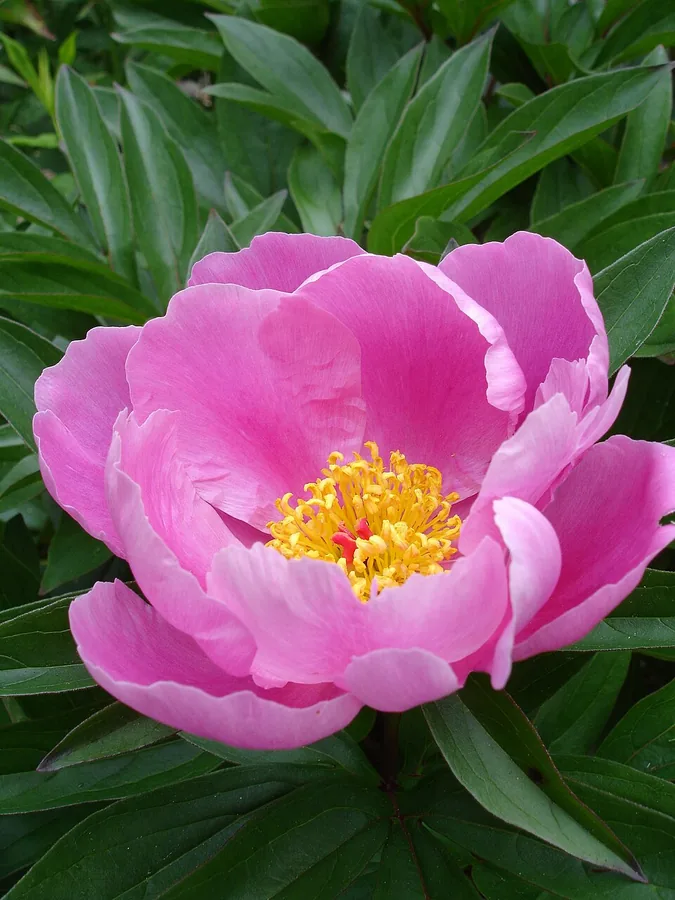
Few plants reward a garden with such staying power as the peony, a clump of which can preside over the same border longer than the person who planted it. Returning each spring as a herbaceous perennial, it carries its big, full flowers in late spring, then holds clean green foliage through the summer months before retiring for winter. The blooms move from soft pinks to clear whites, and many bring a real fragrance to a cutting table or an early-summer gathering.
A peony asks chiefly for patience and the right planting depth, and it repays both handsomely. Set the eyes too deep and the border stays quiet for years, but at the right depth, with full sun and soil that drains, the plant slips into a routine that asks almost nothing of a busy household. The one condition to honor is its dislike of being moved, so choose the spot as you would place a favorite piece of furniture, once and for good.
At heart these are cold-climate plants, which shapes where they belong in a garden. A genuine winter chill sets their buds, so they settle in beautifully across USDA zones 3 to 8 and disappoint where winters stay mild. The growth is slow and the reward deliberate, yet a peony gives a garden a fixed point that returns, on cue, for decades.
Care
The short version: give a peony full sun and rich, free-draining soil, tuck the buds just 1 to 2 inches deep, water about once a week through the growing season, and keep nitrogen low so the border fills with flowers rather than leaves.
Light
A peony given full sun, at least 6 hours of direct light each day, flowers generously and keeps its poise against disease. It will accept partial shade, but a shortfall of light is one of the surest reasons a fine-looking plant stays out of bloom and leaves a gap in the border.
Water
Water deeply about once a week through the growing season, letting the surface dry before the next drink so the roots never sit wet. Drainage matters as much as the watering itself, and keeping the spray off the leaves spares the foliage the blight that comes with lingering moisture.
Soil
Plant into rich, well-drained soil worked through with organic matter, the kind of ground that keeps a border thriving. A pH between 6.0 and 7.0 suits it, and the one setting it will not abide is a wet, poorly drained corner where the roots stand in water.
Humidity
Ordinary outdoor humidity is all a peony asks, so there is no figure to chase. Air movement is the thing to design for, since still, damp air among crowded plantings is what invites botrytis and powdery mildew into an otherwise handsome scheme.
Feeding
Feed in spring with a low-nitrogen balanced fertilizer, and keep the hand light. Too much nitrogen coaxes out lush leaves at the cost of flowers, which is precisely the trade a peony grower does not want to make.
Pruning
Cut the stems to the ground in fall and clear away every scrap of debris, the single most effective habit against botrytis blight. Deadheading spent flowers as the season goes keeps the planting looking cared for and composed.
Size & spacing
A mature peony stands 1 to 3 feet (30 to 91 cm) tall with a comparable spread, a comfortable scale for the front or middle of a border. Allow each plant 1 to 3 feet (30 to 91 cm) of room so the air moves freely and the planting stays healthy and open.
When to plant
A peony keeps an autumn calendar rather than a spring one, which suits a garden being put to bed for the year. Set or divide the roots in September or October so they settle before the ground freezes, then look forward to the border's headline moment from late spring into early summer, with each plant flowering for about 2 weeks.
Northern hemisphere
Southern hemisphere
Typical months for a temperate climate: start earlier in warm zones, later where spring frosts linger.
- Sow: Not typically started indoors; propagated by division of dormant roots.
- Plant: Plant or divide roots in September to October so plants establish before winter.
- Harvest: Blooms late spring to early summer (May to early June); individual plants flower for about 2 weeks.
Hardiness
USDA hardiness zones: 3–8
Temperature: down to -40°C
Troubleshooting
Most of what troubles a peony traces to two quiet causes, planting depth and damp, crowded air. A glance at the buds and lower leaves early in the season usually tells you enough to set the border right before a season of bloom slips away. Match what you notice below, then act.
Blackened shoots and buds lost to a gray fuzz
A cool, wet spring can bring botrytis blight, the gray mold that darkens young shoots and spoils buds before they ever grace the border. Cut away the withered buds and blighted stems as soon as they appear, and clear every stalk to the ground in fall so the fungus has no quarter for winter. A little space between plants and water directed at the base, never overhead, keeps the setting fresh and the display intact.
Fix:
- Remove and destroy withered buds, spent flowers, and blighted shoots
- Cut stalks to the ground in fall and remove all debris
- Improve air circulation and avoid overhead watering
Handsome foliage, but the flowers never arrive
A leafy peony that refuses to flower is nearly always a matter of depth, since an eye set more than 2 inches down almost never blooms. Deep shade, a recent division, and too generous a hand with nitrogen can each keep the border quiet as well. Come fall, lift the crown and settle the buds only 1 to 2 inches beneath the soil, choose a spot with at least 6 hours of sun, and let a young or freshly divided plant take a few seasons to find its stride before it earns its place in the display.
Fix:
- Replant in fall with buds only 1 to 2 inches below the soil surface
- Move to a site with at least 6 hours of direct sun
- Allow recently divided plants a few years to mature
- Avoid high-nitrogen fertilizers
A pale powdery film settles in late in the year
As the season winds down, powdery mildew can leave a chalky film across the foliage wherever shade and still air have gathered, mostly through late summer and fall. It rarely does a peony lasting harm, but it dulls the greenery just when a border wants to look its most composed. Clear the worst leaves in autumn, open the planting so the air can move, and keep peonies where the sun reaches them all day.
Fix:
- Remove and destroy affected leaves in fall
- Improve spacing and air circulation
- Site plants in full sun
Toxicity
A peony earns its place for the flowers it lends a room and a table, not for the plate, and it carries a compound called paeonol that gathers most in the roots and bark. It is only mildly toxic, but a pet or grazing animal that chews the roots or stems can be left with vomiting, diarrhea, and a dull mood. A little forethought keeps cats, dogs, horses, and small children from gnawing on it.
Toxic to
Cats · Dogs · Horses · Rabbits · Livestock · Birds · People
Cats Mild
A cat drawn to chew the roots or stems may drool, be sick, and lose interest in its food. The paeonol lies mostly below ground, so a genuine reaction usually asks for a fair mouthful rather than a passing nibble at a cut stem in a vase.
Dogs Mild
A dog that digs into the roots or worries the stems can be left with vomiting, loose stools, and a subdued, out-of-sorts mood. Modest tastes tend to pass quietly, which makes a border planting far less fraught than it first sounds.
Horses Mild
A horse that reaches the roots may develop an upset stomach and diarrhea, often with a flat, listless air about it. It takes a good quantity of the woody parts to bring this on, so the risk stays modest around a well-placed clump.
Rabbits Caution
The paeonol that unsettles other animals makes peony an unwise neighbor for rabbits, whose stomachs cannot simply empty what troubles them. Site the plant where the roots and stems stay well beyond a rabbit's reach.
Livestock Caution
Cattle, goats, and sheep seldom seek peony out, yet the roots hold enough paeonol to upset a grazing animal that does. A boundary between the planting and the pasture keeps the arrangement calm on both sides.
Birds Caution
Little is recorded about peony and birds, and the toxin offers no grounds to call it safe. The graceful course is to keep an inquisitive pet bird away from the plant altogether.
People Caution
A peony belongs in the vase and the border, never on the plate, and the roots in particular can bring on nausea and an unsettled stomach if eaten. Enjoy it for the flowers, and keep small children from chewing on it.
Keep pets from chewing roots and stems; gastrointestinal upset is most likely with large ingestions.
Helpline numbers

United States
ASPCA Animal Poison Control: (888) 426-4435 (fee applies)
Poison Control: (800) 222-1222



Canada
Poison Centres: 1-844-764-7669
Varieties
Peony cultivars number in the thousands, yet a handful of enduring names shape most borders. These are the ones worth knowing when you plan the display.
Sarah Bernhardt
A dinner-party classic, this late double brings its fragrant, soft pink flowers to the border just as most peonies have taken their bow.
Do Tell
A Japanese-form bloom that plays pale pink guard petals against a deep rose-pink center for an easy, layered look.
Festiva Maxima
An heirloom double white of real fragrance, touched now and then with a fleck of crimson at the center for a note of drama.
How to propagate
A peony is slow to share, but the method is gracefully simple: divide the dormant root in autumn and set the eyes shallow in their new place.
DivisionModerate
September to October while dormant · Several years to reach full bloom after dividing
To carry a favorite clump into a new corner of the garden, divide it in September or October while it rests dormant. Lift the whole clump and part it so each piece keeps 3 to 5 buds, the eyes, on a firm section of root, then settle those eyes only 1 to 2 inches deep. Give the new divisions a few unhurried years to establish before they reach full bloom, and simply let them settle into the scheme.
Myths
Peony buds rely on ants to open.
The ants are simply there for the sweet nectar the buds offer, not to coax them apart. The flowers unfurl on their own good schedule, and the ants do no harm as they feed. A peony keeps its own timetable, whether the ants attend or not.