Ornamental · Portulacaceae
Moss Rose
Portulaca grandiflora
A carefree carpet of color for the sunniest corner of the garden, moss rose turns hot, neglected ground into a display.
Full sun
Every 7–14 days
59–95°F · 15–35°C
USDA 2–11
Overview
Every garden has a hot, exposed spot that defeats more delicate plants, and moss rose was made for exactly that place. Low and spreading, it settles into rock gardens, along the edges of a sunny path, and into terrace containers that bake through the afternoon. Where a fussier annual would falter, this South American native turns heat and lean soil into an easy sweep of color.
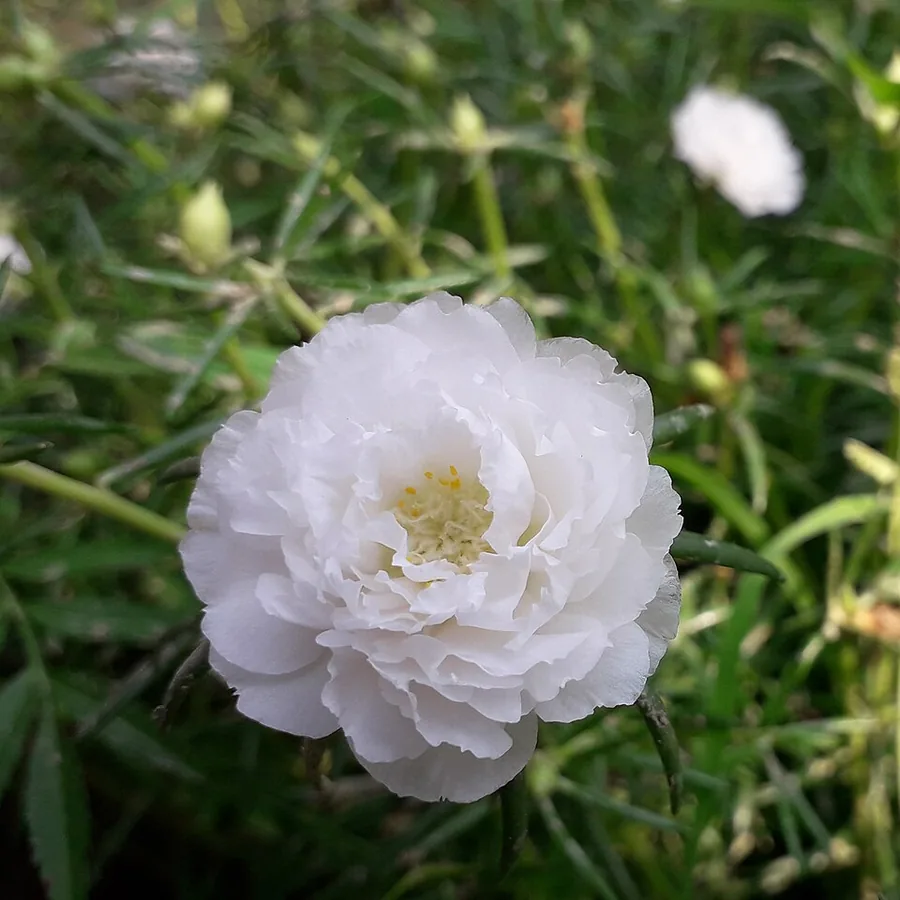
The appeal is its long, effortless bloom. Flowers arrive in warm pinks, oranges, reds, yellows, and clean whites, many of them fully double, and they lend a relaxed, sun-soaked mood to a patio or courtyard through high summer. There is a charming rhythm to the day with this plant: the blooms wait for strong sun to open and drift shut by afternoon, a habit that earned the affectionate name eleven o'clock plant.
Styling it is mostly a matter of placement. Give it the most sun-drenched, sharply drained ground you have, whether a gravel bed, a raised edge, or a shallow bowl on a hot step, and water only when the soil dries. The look suffers when the setting is too kind, since rich soil and frequent watering leave the planting soft, sparse, and short on flowers rather than full and bright.
Care
The short version: the hottest, brightest position you can offer, set into dry, sandy, fast-draining soil. Water only once the ground dries, keep feeding light, and let the sun carry the display.
Light
Moss rose asks for the brightest position in the garden, 6 or more hours of direct sun a day. The flowers open only in strong light, so a sun-baked terrace or an open, south-facing bed rewards you with the fullest color.
Water
Water it as you would a succulent and let the soil go fully dry before the next drink, roughly every 7 to 14 days. This is a plant for the forgetful and the frequently away, since standing moisture undoes it far faster than any heat or dry spell.
Soil
Sharp drainage is the whole secret. Plant into light, sandy soil, even the poor, gritty ground of a gravel garden, and the plant thrives where richer beds would only invite trouble. Any pH from 5.5 to 7.5 will do, so the texture of the soil matters more than its richness.
Temperature
Warmth suits it, and it holds up beautifully anywhere from 59°F to 95°F (15°C to 35°C). Frost, though, ends the season at a stroke, so it belongs outdoors only once the cold has truly passed.
Humidity
Dry air is part of the appeal, and there is no humidity target to meet. A breezy, open, sun-warmed spot keeps the planting healthy and heads off the rot that damp, sheltered corners invite.
Feeding
Restraint pays off here. Moss rose blooms best when kept lean, and heavy feeding trades flowers for foliage, so it needs nothing at all in poor ground. Where the soil is a little richer, one light feed across the summer is the most it will ever want.
Pruning
A quick pinch keeps it looking its best: shorten any leggy stems and the plant answers with fuller, more mounded growth. Deadheading is not part of the routine, since moss rose clears its own spent flowers and reseeds where it stands.
Repotting
As an annual, it rarely calls for repotting; the usual task is simply settling nursery starts into their places at planting time. In a container, roots winding the rim or soil that drains almost the moment you water are the cues that it would welcome more room.
Size & spacing
This is a low, ground-hugging plant, only 4 to 8 inches (10 to 20 cm) tall, that fans into a mat 6 to 12 inches (15 to 30 cm) wide. Set plants so the mats meet and merge without crowding, which keeps a display looking full while air moves freely through it.
When to plant
Moss rose keeps to the warm season and will not stand a frost, so its display is a summer affair. Sow indoors in late winter, move plants to their sunny positions once the soil has warmed and frost has gone, and the color runs from the height of summer into the first cool weeks of fall.
Northern hemisphere
Southern hemisphere
Typical months for a temperate climate: start earlier in warm zones, later where spring frosts linger.
- Sow: 6 to 8 weeks before the last spring frost
- Plant: After all danger of frost has passed and soil has warmed
- Harvest: Summer through early fall
Hardiness
USDA hardiness zones: 2–11
Temperature: down to -46°C
Troubleshooting
A planting this easy rarely disappoints, and when it does, the cause is nearly always excess water or a shortage of sun. Both show early, in the posture of the stems and the reluctance of the flowers, well before the display is spoiled. Read the signs below and adjust the setting in good time.
Stems turning soft, dark, and collapsing
Soft, darkened stems that fold at the base are a sign of root and stem rot, brought on almost always by overwatering or ground that holds moisture. The lower stem grows mushy and darkens while the soil around it stays saturated for days. Cut the watering right down, blend coarse sand or grit through the soil to sharpen its drainage, and lift out anything that has already rotted through.
Fix:
- Reduce watering and allow soil to dry
- Improve drainage with sandy or gritty soil
- Remove and discard severely rotted plants
Full foliage, but the flowers never arrive
A lush, leafy plant with few flowers is usually asking for more direct sun or less nitrogen. Moss rose wants a good 6 hours of hard sun before its blooms will open, and a rich feed drives leaf over flower. Move the planting into the open and hold back the fertilizer, and the color returns.
Fix:
- Move to a full-sun location
- Stop or reduce fertilizing
Toxicity
For all its easy charm, moss rose is mildly toxic, a point worth keeping in mind where pets and grazing animals share the space. Its leaves and stems hold soluble calcium oxalates, which usually amount to drooling and a queasy stomach, though a real mouthful can leave an animal weak and tax the kidneys. Place it out of reach of cats, dogs, horses, and the rest, and treat its edible cousin purslane as a green for moderation.
Toxic to
Cats · Dogs · Horses · Rabbits · Livestock · Birds · People
Cats Mild
A cat that samples a little tends to show only some drooling and an uneasy stomach. A fuller mouthful can bring heavier drooling and a spell of weakness, and a large amount places real strain on the kidneys.
Dogs Mild
For a dog, a chewed stem or two usually passes as some drooling and a mild stomach upset. Keep a closer watch for weakness or intermittent vomiting where a dog has grazed a good deal of it.
Horses Mild
In a horse, a small taste rarely amounts to more than slobbering and a dull appetite. Steady grazing is the real concern, since the accumulating oxalates bind its calcium and can leave the animal weak.
Rabbits Caution
Rabbits are better kept clear of moss rose altogether. Those soluble oxalates that trouble other animals also unsettle a rabbit's delicate gut, so it has no place around a hutch or exercise area.
Livestock Caution
Cattle, sheep, and goats seldom choose to eat it. Still, a hungry animal grazing bare ground may take in enough to bring on drooling and weakness, so it is wise to fence it off wherever stock graze.
Birds Caution
Birds, whether kept as pets or drawn to the garden, can be affected by the oxalates as well, so moss rose is best kept well away from cages and aviaries.
People Caution
For people, garden moss rose belongs in the border and not on the plate. Its relative purslane does appear as a leafy green, yet it carries the same oxalates, which makes even that a food for moderation.
Common purslane (Portulaca oleracea) is eaten by people but also contains oxalates and should be consumed in moderation.
Helpline numbers

United States
ASPCA Animal Poison Control: (888) 426-4435 (fee applies)
Poison Control: (800) 222-1222



Canada
Poison Centres: 1-844-764-7669
Varieties
A few breeding series supply most of the moss rose worth planting, each refined for a particular effect: heavier flowers, a broader palette, or blooms that hold open through less generous light. The three below are the ones to seek out for a container or bed.
Sundial Series
A compact, double-flowered series prized for its early daily opening and for holding its bloom longer than most as the light softens.
Margarita Series
A vigorous, heat-loving double chosen to keep beds and containers in flower right through the peak of summer.
Happy Hour Series
A neatly mounding series carrying large double blooms across a remarkably broad palette.
How to propagate
Filling more of the garden with moss rose costs almost nothing. It comes readily from fine seed or a handful of cuttings, so a single planting can furnish beds, borders, and pots for seasons to come.
SeedEasy
Start indoors 6 to 8 weeks before last frost or direct sow after frost; self-sows readily · 2 to 4 weeks to germinate and establish
Seed is the simplest way to spread it about. The seed is dust-fine and needs light to break dormancy, so it is scattered over the surface and left uncovered. Start it under glass 6 to 8 weeks before the last frost, or sow it straight into warm ground once the cold has gone; allow 2 to 4 weeks for germination, after which it self-sows freely year on year.
Stem cuttingsEasy
During the active summer growing season · 1 to 2 weeks to root
Cuttings are just as reliable, taken during the active push of summer. Remove a firm stem, leave the cut surface to harden for several hours so rot cannot take hold, then set it into gritty, free-draining soil, where it roots in about 1 to 2 weeks.
Myths
If purslane is a vegetable people eat, then portulaca must be safe for pets.
Kinship is not the same as safety. The ASPCA lists Portulaca species as toxic to cats, dogs, and horses on account of soluble calcium oxalates, and the edible purslane holds those very same oxalates. It should stay well out of any pet's reach.
The flowers of moss rose stay open all through the day.
In truth, each bloom opens only in bright, direct sun and closes again in shade, under cloud, and across the afternoon. That very rhythm is what gave it the name eleven o'clock plant.