Houseplant · Cactaceae
Prickly Pear
Opuntia ficus-indica
A sculptural desert cactus that turns a sunny corner into a quiet statement, asking only for light and restraint.
Full sun
USDA 8–11
3–16 ft · 1–5 m
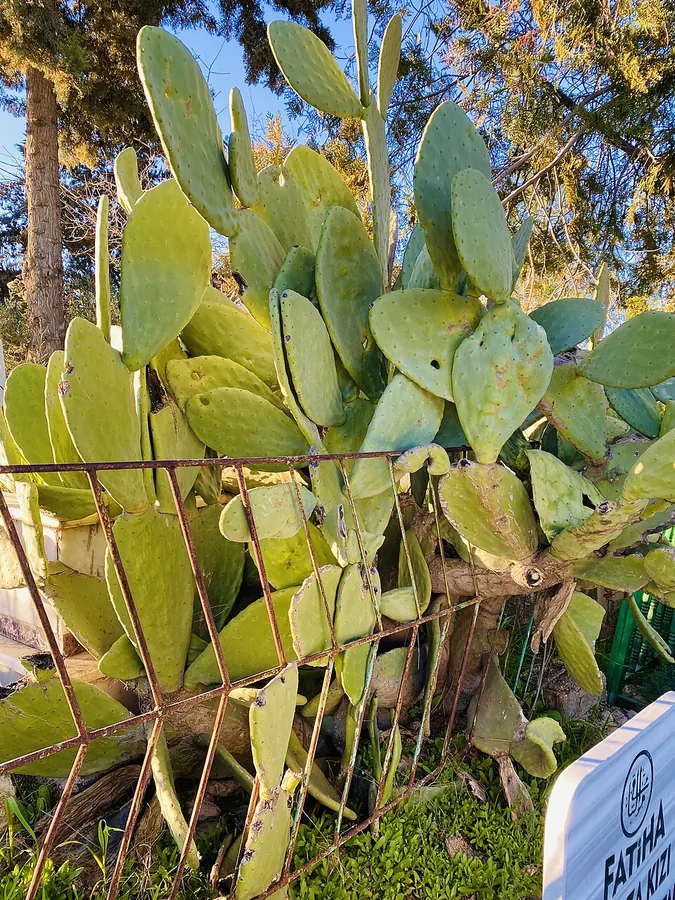
Overview
Prickly pear brings the architecture of the desert indoors, a paddle-shaped cactus from the Americas that now anchors warm gardens the world over. Its flat green pads are stems rather than leaves, holding their own water reserves so the plant reads as calm and self-sufficient in any room. Placed in a bright window or a hot, open corner of the patio, it settles into a space and asks almost nothing in return.
The plant carries a story worth telling at the table, too. Its young pads appear as nopales and its ripe red fruit as tunas, both at home in Mexican and southwestern kitchens. Through late spring and summer it lifts cup-shaped flowers in yellow, orange, or pink before the fruit follows, a slow seasonal rhythm that suits an unhurried household.
Its one demand shapes where it belongs in the home. Beyond the sculptural large spines, each pad wears glochids, fine barbed bristles that loosen at a touch and settle into skin, where they linger. Give it a considered spot away from walkways, pets, and passing sleeves, and reach for it only with thick gloves and tongs.
Care
The short version: a full-sun position, a gritty fast-draining mix, and water only once the soil runs completely dry. It thrives on restraint, since too generous a hand with the watering can undoes it long before drought ever would.
Light
Give prickly pear a full-sun position, the brightest spot the home offers, ideally a south-facing sill or a sun-struck corner. Denied that light, the pads grow thin and pale and the plant leans and loses its clean, upright line.
Water
Water it deeply, but only when the mix has gone bone dry, and pull back sharply through the cool months when growth rests. This is a plant that rewards a light touch, so on any uncertain day the elegant choice is to wait.
Soil
Set it in a gritty, sharp-draining sandy or cactus mix that never lingers wet, the desert underfoot brought to a pot. A pH between 6.0 to 7.5 keeps it content, though sharp drainage does more for its poise than any precise reading.
Temperature
It carries a wide comfort range, from 23°F to 104°F (-5°C to 40°C), and takes cold better than most cacti indoors or out. A hard frost still marks the pads, so a sheltered spot pays off when a deep freeze arrives.
Humidity
Dry rooms are its natural element, so the low humidity of a heated home suits it without fuss. The atmosphere to avoid is damp, stagnant air, which invites the rot and pests this composed plant otherwise sets aside.
Feeding
Feed only across the spring and summer growth, and keep the gesture light. A dilute, low-nitrogen cactus fertilizer now and then is plenty, since a richer diet swells the pads soft and out of character.
Pruning
Trim away damaged or crowded pads with a clean knife to keep the silhouette open and considered. Thick leather gloves and tongs are essential here, as the spines and loosening glochids make casual, bare-handed work a mistake.
Repotting
Move it on only every 2 to 4 years, or once it grows badly rootbound and unsteady in its pot. Settle it into dry mix and hold off watering for a few days, letting any disturbed roots recover before the routine resumes.
Size & spacing
In time it can rise from 3 to 16 feet (1 to 5 m) and spread 3 to 10 feet (1 to 3 m), a presence that wants room to breathe. Plan its place with that scale in mind, keeping the spined pads clear of the paths people take through the space.
Troubleshooting
Nearly every misstep with prickly pear traces back to water, with the occasional pest making up the difference. The pads tell the story plainly, turning soft, wrinkled, or fuzzy as the situation shifts. Match the look below to what stands in your room and respond before rot has the last word.
Soft, mushy pads darkening from the base
When the base softens and the pads turn mushy, yellow, or black, the trouble is root and stem rot, brought on by overwatering or a pot that holds moisture. Set the watering aside, lift the plant, and pare away every soft, discolored section with a clean blade. Let the cuts dry and callus, then return the firm pads to dry, gritty mix to begin again.
Fix:
- Stop watering immediately
- Unpot and cut away all soft, rotted tissue with a clean blade
- Let cuts callus, then repot healthy pads in dry gritty mix
Wrinkled, slackening pads that have lost their poise
Pads that grow thin, wrinkled, and shriveled point to underwatering, or to roots worn down by a long drought. A single deep soak usually restores their fullness within a day or two. From there, let the mix dry out completely before the next watering, and confirm the roots below remain firm rather than rotted.
Fix:
- Water deeply once
- Let the mix dry completely before watering again
- Check that roots are intact and not rotted
White cottony tufts that stain crimson
Those cottony white tufts are cochineal scale, an insect sheltered under a waxy coat that leaves a crimson mark when pressed. Sweep the colonies off with a strong jet of water, then treat the pads with insecticidal soap or horticultural oil. Repeat every week or so until the plant reads clean and settled again.
Fix:
- Blast off colonies with a strong jet of water
- Treat with insecticidal soap or horticultural oil
- Repeat treatments until clear
Toxicity
Prickly pear brings no poison into the home. Its pads and fruit are everyday foods, so a stray taste holds no chemical danger for a pet or a child. The real consideration is physical: the spines and barbed glochids can wound a mouth, paw, or eye, which is reason enough to place it thoughtfully and handle it with care.
Safe for
People · Cats · Dogs · Horses · Rabbits · Livestock · Birds
Cats Non-toxic
Nothing in prickly pear will poison a cat, so the flesh itself poses no chemical threat. The concern is physical: a curious cat that swats a pad may collect spines or fine glochids in a paw, lip, or tongue.
Dogs Non-toxic
A dog can mouth or swallow a piece with no chemical harm at all. The pain comes from the spines and barbed glochids, which lodge in the mouth and gums and are a trial to remove.
Horses Non-toxic
Horses graze prickly pear with no sign of poisoning, and singed pads are fed to stock in dry country. The catch is the raw spines and glochids, which settle in the lips and mouth.
Rabbits Non-toxic
The pads are safe for a rabbit to nibble and carry no toxin. Trim off every spine and glochid first, since a rabbit's soft mouth holds no defense against the barbs.
Livestock Non-toxic
Cattle, goats, and sheep take to prickly pear readily, and ranchers burn the spines away to make it safe winter feed. Left as it is, the spines and glochids injure the mouth and gut.
Birds Non-toxic
Birds feast on the ripe fruit and carry the seeds off, with no poisoning at all. Only the spines and glochids pose a threat, so they keep to the soft, ripe pulp.
People Non-toxic
Both the pads, sold as nopales, and the fruit, the tunas, are common foods that are perfectly safe to eat. The lone caution is handling: scrub or singe off the spines and glochids before they meet skin or mouth.
The real danger is physical, not chemical: besides large spines, prickly pear bears glochids, tiny barbed bristles that detach easily and lodge painfully in skin, eyes, and mouth, where they are very hard to remove. Always handle with thick gloves and tongs.
Varieties
Opuntia is a sprawling group, yet only a few forms find their way into most homes and gardens. These are the ones worth knowing by sight.
Opuntia ficus-indica (spineless forms)
These near-spineless cultivars are the ones raised commercially for nopal pads and tuna fruit, though even the smooth forms keep glochids worth scrubbing away.
Opuntia microdasys (bunny ears)
A small, sought-after houseplant, its soft-looking pads carry dense tufts of white or yellow glochids that make it far pricklier than its gentle name suggests.
Opuntia stricta
An upright grower known above all as an aggressive invasive weed across parts of Australia and Africa.
How to propagate
Prickly pear multiplies with almost no effort, and a single pad is usually enough to furnish a second pot.
Stem cuttingsEasy
Spring to summer · 4 to 8 weeks to root
Rooting a pad is the graceful route, best begun from spring through summer. Twist a healthy pad free, let the cut end dry and callus for several days, then stand it upright in dry, gritty mix, where roots form in 4 to 8 weeks. Keep thick gloves on throughout, since the glochids remain ready to catch.
SeedModerate
Spring · Several months to a year
Starting from seed in spring is the patient alternative. The seeds rise unevenly and a young plant may take several months to a year to find its footing, which is why most growers simply root a pad.
Myths
A cactus this spiky is surely poisonous.
Not at all, as prickly pear is eaten across the world every day. Its pads reach the table as nopales and its fruit as tunas, both staples in many kitchens. The single real danger is the spines and glochids, not any poison within the plant.
A pad free of big spines is safe to lift bare-handed.
The large spines catch the eye, yet they are not the true hazard. Even a smooth pad is set with glochids, fine barbed bristles that release at a touch and settle into skin. Reach for prickly pear with thick gloves and tongs every time, spines or none.