Houseplant · Araceae
Satin Pothos
Scindapsus pictus
Set in bright, indirect light and quiet warmth, its silver-washed vines bring a soft, trailing elegance to a room for years.
Bright indirect
61–84°F · 16–29°C
USDA 11–12
3–10 ft · 0.9–3 m
Overview
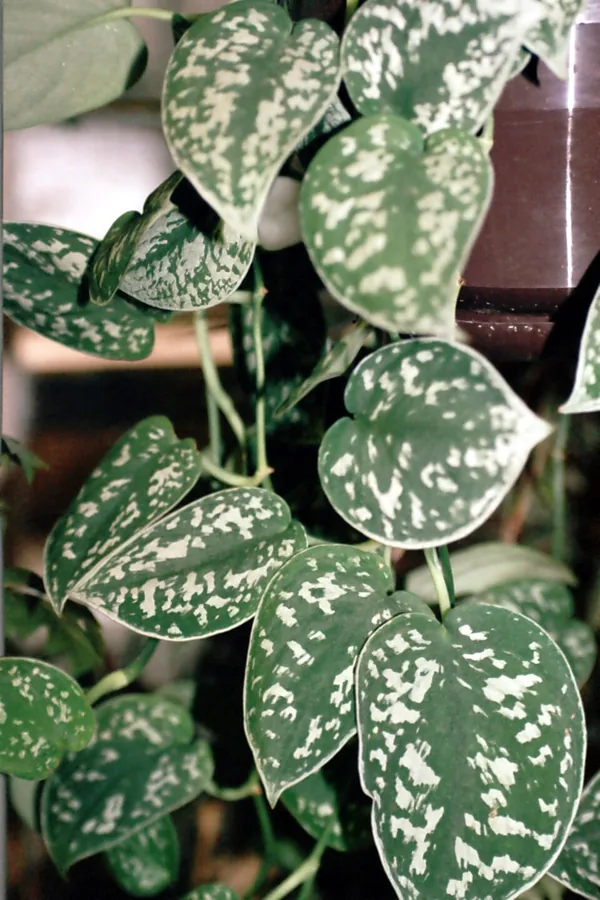
Few trailing plants soften a room as quietly as satin pothos, with its cool, silvered foliage set against deep green. A member of the arum family native to tropical Southeast Asia, it climbs tree trunks toward the canopy in the wild. At home it lends the same easy grace to a shelf edge, a mantel, or a hanging planter.
The name is a gentle misnomer, since this is not a true pothos but Scindapsus pictus, a close relative with the same relaxed, trailing character. It settles into the rhythm of a household, asking only for a bright corner out of direct sun to keep its silvery look at its best. Place it where the light is generous but filtered, and it holds its poise.
It suits a slower, low-maintenance routine, the kind of plant that fits around a life rather than demanding one. Give it warmth, shade from harsh sun, and a drink once the soil has dried a little, and it answers with long, graceful vines that drape and lengthen over the seasons. Overattend it, though, and the roots are the first to object.
Care
The short version: a bright, indirect spot and a warm room above 61°F (16°C) suit it best. Keep the soil evenly moist yet never soggy, pot it in a peaty, well-draining mix, and feed monthly through spring and summer.
Light
A spot with bright, indirect light keeps the silver markings luminous and shows the plant at its best in a room. It endures a shadier corner, though the patterns dull and growth quiets, while direct sun is too much and scorches the leaves. A bright window softened by a sheer is the ideal setting.
Water
Keep the soil evenly moist but never soggy, letting the surface dry a little between drinks, and the plant settles easily into a weekly routine. Ease back in winter, when growth slows. Standing water is the one thing to avoid, as it turns the roots against you.
Soil
A peaty, organic mix that drains freely gives it the light, open footing it likes, kept slightly acidic at a pH up to 6.0. Water passes cleanly through, so the roots are never left sitting damp beneath a handsome pot.
Temperature
This is a plant for warm, lived-in rooms, comfortable between 61°F and 84°F (16°C to 29°C). It has no taste for the cold, and the leaves suffer once the air falls below the low end of that range, so keep it away from drafty entryways and chilly glass.
Humidity
Ordinary room humidity carries it through, so there is no figure to manage. It welcomes a more humid setting, such as a bright bathroom, and the dry air of winter is often what draws spider mites near.
Feeding
A balanced houseplant fertilizer once a month through spring and summer keeps it in gentle, steady growth. Set the feeding aside through the darker months, when the plant is resting and takes little from it.
Pruning
An occasional pinch of the stems keeps the silhouette tidy and coaxes a fuller, more graceful shape. The trimmings from a long vine double as cuttings for another pot.
Repotting
A fresh pot every 1 to 2 years keeps it thriving, or sooner if roots reach through the drainage holes and water runs straight past. A little more room and new mix return it to easy, steady growth.
Size & spacing
Left to trail or climb, the vines reach 3 to 10 feet (90 cm to 3 m) and spread 2 to 4 feet (60 to 120 cm), enough to soften a high shelf or frame a doorway. Give the stems space to fall, or a support to rise, and let them shape the corner.
Troubleshooting
For all its composure, satin pothos does speak up when something is off, usually about watering or a pest carried in on another plant. A glance at the foliage now and then is enough to catch it early. The guide below pairs each sign with a simple, unhurried fix.
Dark, softened roots with a sour smell
Root rot takes hold when the soil stays waterlogged and the roots are left without air. Lift the plant, trim away every dark, soft root, and settle it into dry, well-draining mix. From there, water sparingly and let the soil dry between drinks, as this trouble advances quickly.
Fix:
- Remove rotted roots
- Repot in dry well-draining mix
- Reduce watering
Leaves yellowing and turning soft
Soft, yellowing leaves above wet soil are a sign of overwatering, and poor drainage only deepens it. Let the surface dry before the next drink and move the plant to a freely draining pot. If the roots have begun to fail, refresh the mix and lighten the watering to bring it back.
Fix:
- Reduce watering
- Improve drainage
- Repot in fresh mix
Fine webbing and a bronzed cast to the leaves
Spider mites arrive with hot, dry air, leaving fine webbing and a bronzed stippling across the leaf undersides. Rinse the foliage firmly to clear them, then treat with insecticidal soap or horticultural oil and repeat weekly until they are gone. A more humid setting makes the plant far less inviting.
Fix:
- Rinse forcefully with water
- Apply insecticidal soap or horticultural oil
- Repeat weekly
White cottony tufts and a sticky sheen
The white, cottony tufts gathered in the leaf joints are mealybugs, betrayed by the sticky honeydew they leave behind. Touch each with an alcohol-dipped swab, follow with insecticidal soap, and remove any badly covered growth. A careful look at new arrivals keeps them from spreading through a collection.
Fix:
- Dab with alcohol swab
- Apply insecticidal soap
- Prune infested parts
Waxy bumps fixed to stems and leaves
The small, waxy bumps clinging to the stems and leaves are scale insects, and they scarcely move. Lift them off by hand, wipe the spot with an alcohol swab, and finish with insecticidal soap or oil to catch the young crawlers. Inspecting anything new keeps them out of the room to begin with.
Fix:
- Scrape off by hand
- Wipe with alcohol swab
- Apply insecticidal soap or oil
Dark spotting or a gray bloom of mold
Brown-black spots or a gray bloom of mold point to fungal leaf spot or botrytis, both encouraged by wet leaves and still air. Remove the marked leaves, keep water off the foliage, and let air move freely around the plant. Watering at the soil and allowing it room to breathe keeps the problem from returning.
Fix:
- Remove affected leaves
- Avoid wetting foliage
- Improve airflow
Leaves curling and losing their poise
Curled, limp leaves over dry soil are simply the sign of a thirsty plant. Water it well until the excess runs from the base, then keep a more even hand from there. The foliage usually recovers its shape once the roots have caught up.
Fix:
- Water thoroughly
- Maintain even moisture
Silvery streaks flecked with dark specks
Silvery streaks scattered with tiny dark specks are the mark of thrips. Treat with insecticidal soap, set blue sticky cards to catch the adults, and rinse the leaves to clear what lingers. Keeping new plants apart for a while prevents them from moving through the room.
Fix:
- Apply insecticidal soap
- Use blue sticky cards
- Rinse foliage
Toxicity
As lovely as it looks on a shelf, this is not a plant to share with curious mouths. Every part carries insoluble calcium oxalate crystals that sting and swell the mouth at the first bite. Nothing here is edible, so give it a place well above the reach of pets and small children.
Toxic to
Cats · Dogs · Horses · Rabbits · Livestock · Birds · People
Cats Moderate
A cat that bites a leaf meets a sharp sting from the calcium oxalate crystals, followed by drooling, pawing at the mouth, vomiting, and a swollen muzzle. The plant belongs where a cat cannot reach it.
Dogs Moderate
A dog that chews a piece feels an immediate burning in the mouth, with drooling, retching, and visible swelling of the lips and tongue. A high shelf keeps the plant and the dog on good terms.
Horses Moderate
In horses the crystals irritate the mouth and throat, bringing heavy drooling and swelling, though horses rarely vomit. Any trailing stems are best kept beyond their reach.
Rabbits Toxic
The leaves are not safe for a rabbit to nibble, since the crystals inflame the mouth and gut. Keep trailing stems well up and away from a curious rabbit.
Livestock Toxic
Grazing animals that reach the foliage suffer the same oral burning and digestive upset, so the plant should be treated as off-limits around any stock.
Birds Toxic
A bird that pecks the leaves can hurt its mouth and crop on the crystals, so the plant is best kept clear of where birds settle.
People Caution
No part of this plant is meant for the table, and a bite brings burning lips, a swollen tongue, and drooling. Wash your hands after pruning and keep it out of reach of small children.
Chewing sap causes oral irritation; wash hands after handling
Helpline numbers

United States
ASPCA Animal Poison Control: (888) 426-4435 (fee applies)
Poison Control: (800) 222-1222



Canada
Poison Centres: 1-844-764-7669
Varieties
A few named selections offer their own take on the silvered look, each suited to a slightly different corner or container. These are the ones most often found.
'Argyraeus'
A compact choice, its small leaves edged in silver-white and dusted with soft gray.
'Exotica'
The showpiece of the group, with larger heart-shaped leaves splashed in bold silver.
'Silvery Ann'
An elegant, slender form whose narrow, lance-shaped leaves carry heavy silver splotches.
Shimmering Falls Silver Splash
The most silvered of the set, mottled densely across every leaf.
How to propagate
Part of its charm is how freely it shares itself, since a single cutting is enough to start another plant for a friend or a second room.
Stem cuttingsEasy
Spring or early summer · Roots in a few weeks
Take a 4-inch (10 cm) cutting in spring or early summer and set it in water or a pot of moist mix. Roots form within a few weeks, and the result is a new plant identical to the first, ready for another shelf or a gift.
Myths
Satin pothos is a true pothos.
The name suggests otherwise, but this is Scindapsus pictus, of the genus Scindapsus, while the true pothos belongs to Epipremnum. The two share a look and a temperament, yet they remain separate plants.
Satin pothos is safe to keep around pets.
It is not. The ASPCA lists it as toxic to cats, dogs, and horses, owing to the insoluble calcium oxalate crystals in its tissue that burn and swell the mouth on contact. Place it somewhere well away from animals.
It is content in deep shade or low light.
It tolerates low light but does not flourish in it. Bright, indirect light is what keeps the silver markings at their best, while direct sun goes too far and scorches the leaves.
It shrugs off cold temperatures.
It does not, being tropical at heart. The foliage suffers below about 61°F (16°C), so a warm room away from cold drafts keeps it looking its best.