Ornamental · Goodeniaceae
Fan Flower
Scaevola aemula
Give it a sunny perch and free-draining soil, and fan flower drapes cool blue color across the whole season.
Full sun
Every 3–7 days
64–95°F · 18–35°C
USDA 10–11
Overview
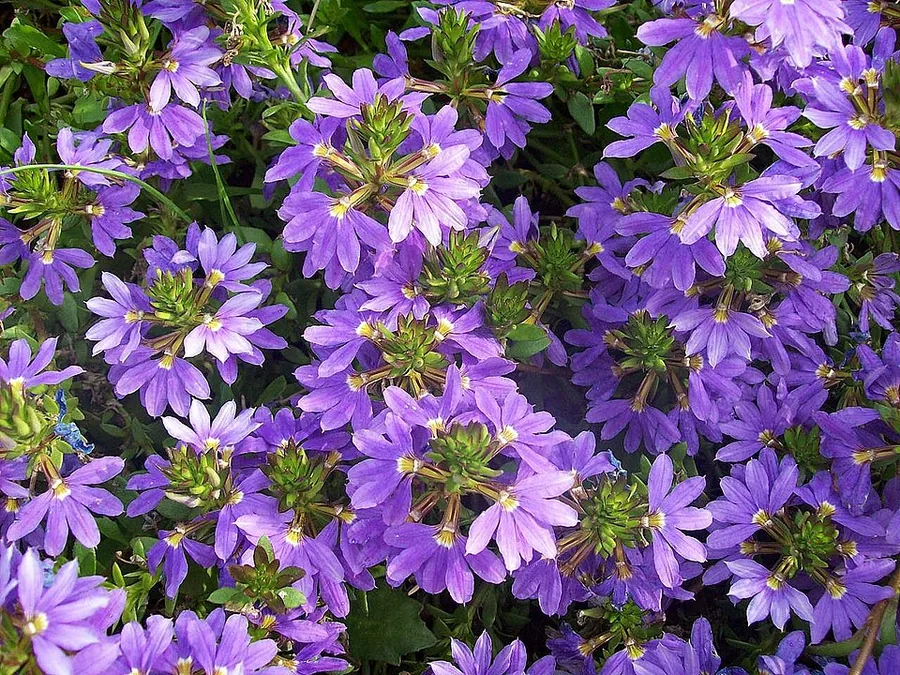
Few plants soften the edge of a container the way fan flower does. Its fan-shaped blooms run in a single line down long trailing stems, and its Australian roots make it an easy, heat-loving companion for a sunny terrace, a border, or a basket hung by the door. The palette of cool blue, violet, and the odd pink reads calm and composed, and it holds that mood right through the season.
In most gardens it plays the part of a warm-season annual. A tender perennial by nature, it is truly hardy only in zones 10 and 11, so elsewhere it arrives in spring and stays as a guest of the summer, bowing out at the first frost. That single, generous season is the whole appeal, a run of color timed to the months you spend outdoors.
What makes it such a graceful fit for a busy home is how little it asks. Full sun, soil that drains, and the occasional feed keep it going, and because the flowers are self-cleaning, it never demands the daily deadheading that ties you to the garden. The single rule to design around is drainage, since standing water is the one thing it will not abide.
Care
The short version: a sunny spot and well-drained soil, a drink once the surface dries, and a balanced feed every couple of weeks through the growing season.
Light
Give fan flower full sun and it rewards the setting with its fullest flush of bloom. It will accept a little afternoon shade, but a plant left in real shade grows loose and flowers thinly, losing the polish that makes it worth planting.
Water
Water it every 3 to 7 days through the season, letting the surface dry between drinks so the display stays fresh. It carries a dry spell with far more grace than wet feet, so lean toward restraint.
Soil
Set it in average, well-drained loam enriched with a little organic matter. It is easy about pH across 6.0 to 8.0, but drainage is the detail that keeps it looking its best.
Temperature
It is most at home in warmth, between 64°F and 95°F (18°C to 35°C), and takes summer heat in stride. Frost ends the show, which is why cooler regions enjoy it as a single-season annual.
Humidity
There is no humidity target to fuss over, since ordinary outdoor air suits it. It stays composed even through a humid, muggy summer.
Feeding
A balanced liquid fertilizer every couple of weeks through the growing season keeps the color coming. Leave the high-phosphorus blends on the shelf, as this plant does without them.
Pruning
Upkeep is close to nothing. Pinch back a leggy stem now and then to hold its shape, and with self-cleaning flowers, deadheading never enters the routine.
Size & spacing
Plants reach roughly 9 to 18 inches (23 to 46 cm) tall and spread 12 to 24 inches (30 to 61 cm) wide. That trailing spread is what lets it drape so elegantly over the rim of a basket or the edge of a raised bed.
When to plant
Because it lives for warmth and fades at frost, fan flower slots into the calendar as a summer annual. Start seed indoors 6 to 8 weeks before your last frost, then set plants out once the soil settles at 65°F (18°C), and let the color unfold from summer until frost draws the season to a close.
Northern hemisphere
Southern hemisphere
Typical months for a temperate climate: start earlier in warm zones, later where spring frosts linger.
- Sow: 6 to 8 weeks before the last frost date
- Plant: In spring after the last frost when soil temperatures reach 65°F (18°C)
- Harvest: Summer through first frost
Hardiness
USDA hardiness zones: 10–11
Temperature: down to -1°C
Troubleshooting
Fan flower is a relaxed, low-drama plant, and the little that goes wrong almost always comes down to too much water or too little sun. Watch the roots, stems, and flowers for the early cues and a quick adjustment usually sets things right. Find the picture that matches yours below and respond in kind.
Wilting, yellowing leaves above soft brown roots
When a plant wilts and yellows and its roots feel soft and brown, the trouble is root rot, and it traces back to soil that stays wet. Roots kept from drying lose their air and break down. Cut back on water, improve the drainage or move it to a faster-draining mix, and part with any plant already past saving.
Fix:
- Reduce watering frequency
- Improve drainage or replant into well-drained media
- Remove severely affected plants
Cottony white tufts and a sticky sheen on the stems
Cottony white tufts tucked into the leaf joints, along with a sticky sheen, are the calling card of mealybugs, sap-feeders that leave residue behind. Rinse them away with a strong jet of water, then spot-treat the stragglers with insecticidal soap or horticultural oil. Look over new plants before they join the group and leave room for air to move.
Fix:
- Wash off with a strong spray of water
- Spot-treat with insecticidal soap or horticultural oil
Thin bloom on long, lax stems
Thin flowering and long, lax stems tell of too little light or too little feeding. In shade or left unfed, the plant stretches and gives up its blooms. Move it into full sun, feed it through the season, and pinch the leggy stems to bring back a fuller, branching shape.
Fix:
- Move to a full-sun location
- Fertilize regularly during the growing season
- Pinch back leggy stems to encourage branching
Toxicity
There is a quiet ease to living with fan flower: it is not toxic. Nothing in the leaves or flowers will harm a cat, dog, rabbit, bird, grazing animal, or child, so it can take pride of place in a family courtyard or a basket by a well-used door without a worry.
Safe for
People · Cats · Dogs · Horses · Rabbits · Livestock · Birds
Cats None
Cats can share the room with it safely. A curious nibble will not poison one, though any plant eaten in quantity may unsettle a cat's stomach.
Dogs None
Dogs are in no danger near it. At worst a chewed stem brings on mild, passing stomach upset.
Horses Safe
Horses can graze alongside it without concern, since fan flower holds nothing poisonous to them.
Rabbits Safe
Rabbits are safe among the foliage, and a stray bite poses no real risk.
Livestock Safe
Cattle, goats, and sheep can share the pasture with it in safety, as it carries no compounds known to harm grazing stock.
Birds Safe
Garden and pet birds face no threat from it, with nothing toxic in either the leaves or the flowers.
People Safe
It is not poisonous to people. Grown for its flowers rather than the table, it has no place on the plate.
Varieties
A short list of named selections rounds out the choice, set apart mostly by color and the length of their trail. These are the ones worth knowing as you plan a planting.
Blue Wonder
Blue Wonder trails cool blue to violet fan flowers without pause down long stems, made for a basket that spills.
New Wonder
New Wonder is the vigorous trailer to reach for when you want a lavish sweep of blue-lavender fan flowers.
Pink Charm
Pink Charm keeps to a tidy dwarf frame near 4 inches tall and 5 inches wide, dressed in soft pink.
How to propagate
Fan flower is generous when it comes to making more, whether from a simple cutting or a packet of seed.
Stem cuttingsEasy
During the growing season · A few weeks to root
The simplest route is a stem cutting taken in the growing season, rooting in a few weeks to give you a true copy of the parent. Seed is the other option, started indoors 6 to 8 weeks before your last frost.
Myths
Fan flower keeps blooming only if you deadhead it.
The faded flowers slip away on their own, leaving no spent-bloom ritual to keep. Fan flower looks after itself, and the only touch it asks for is the occasional pinch of a stem that has run long.
Fan flower wants rich soil kept moist at all times.
The reverse is true. It shows best in well-drained soil and takes heat and a dry spell in stride once settled. Keep it wet and the roots rot, the surest way to lose the plant.