Ornamental · Cyperaceae
Sedge
Carex
Set the right sedge in the right corner and it lends a garden easy, year-round texture, as at home in bright sun as in deep shade.
Partial shade
Every 3–10 days
USDA 3–9
6–35 in · 15–90 cm
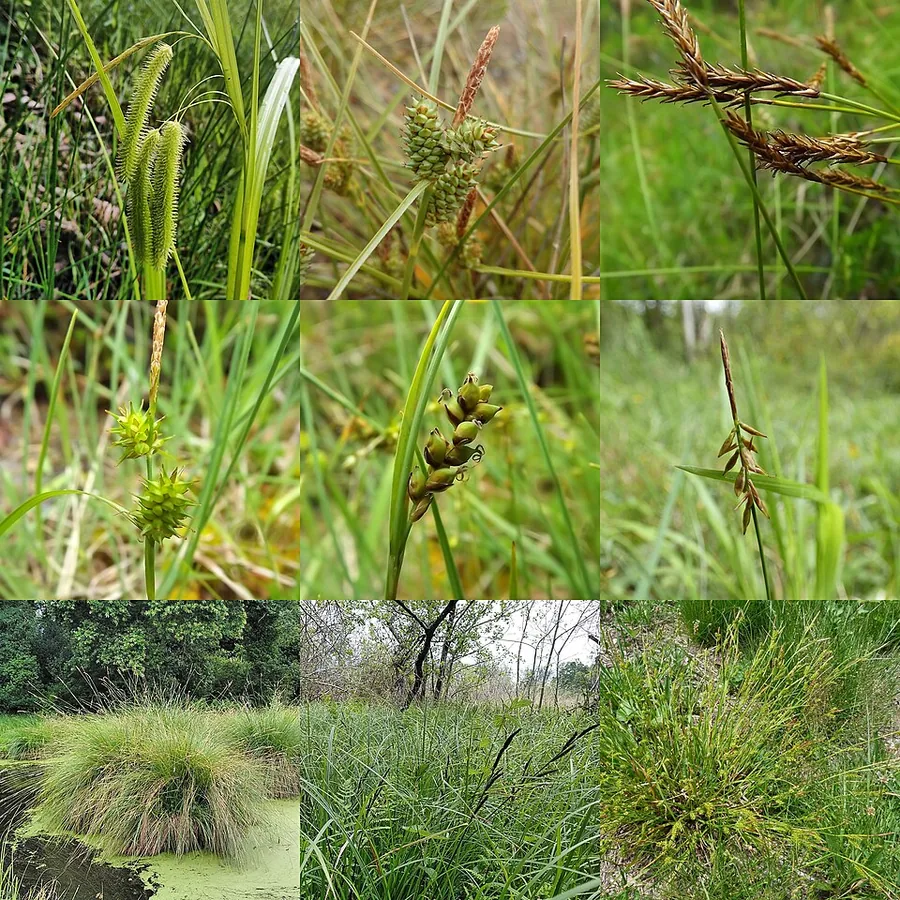
Overview
Few plants earn their place in a garden as quietly as sedge. The genus Carex numbers around 2,100 species, from low, cushioning groundcovers to arching clumps that rise to a couple of feet, and the appeal lies entirely in the foliage. It comes in green, gold, crisp white-edged forms, and even bronze and copper, a palette that slips into almost any planting scheme.
The one thing that shapes how you use it is variety. Some sedges want moisture or wet ground and settle beautifully along a pond or a stream, giving that damp corner a reason to exist, while others thrive in the dry shade beneath trees where a garden usually goes bare. Choose to suit the spot and the planting looks intentional and stays effortless.
Once established, sedge asks for next to nothing, which is part of its charm for a low-maintenance garden. It grows slowly, keeps a tidy shape through the seasons, reads well in sun or full shade, and stays untroubled by pests. A single grooming in late winter is the whole of its demand on your time.
Care
The short version: let the setting choose the sedge, since some belong at the water's edge and others in the dry shade beneath trees. Give it the moisture that suits, a place anywhere from full sun to deep shade, and a single yearly grooming, and it holds the scene with almost no upkeep.
Light
Sedge suits almost any corner of a garden, taking light from full sun to full shade, though it settles most gracefully in partial shade, that dappled zone beneath high branches. The brighter the setting you give it, the more attentive you have to be with water, so sunlit placements ask for a steadier hand.
Water
The setting really turns on the species you choose. Moisture-loving kinds such as Carex elata, oshimensis, and morrowii belong where the ground stays moist to wet, a pond margin or a low, damp bed, especially in sun, while dry-shade types like Carex pensylvanica sit happily in dry to medium soil under trees. Water every 3 to 10 days to match the plant, and resist the urge to overdo it, since sedges register stress quickly when kept too wet.
Soil
Most ornamental sedges look their best in rich, organic soil that holds moisture, while the dry-shade sorts make an elegant solution for those leaner, drier corners other plants refuse. Aim for a pH of 5.5 to 7.0, slightly acidic to neutral, a range that suits nearly every garden.
Temperature
Sedge is remarkably tough, weathering 19°F to 84°F (-7°C to 29°C) across the genus. That cold hardiness is part of why it anchors so many gardens, holding its green or evergreen foliage through months when softer plants have retreated.
Humidity
There is no humidity figure to fret over, since ordinary outdoor air suits sedge perfectly. What happens at the roots shapes how it looks far more than the air around the leaves.
Feeding
Sedge wants very little feeding, which keeps it firmly in the low-effort camp. A light feed in spring with a balanced or slow-release fertilizer is ample, and it is often unnecessary in good soil. Overdo it and the plant sulks rather than fills out, so a restrained hand serves the look best.
Pruning
Grooming comes down to a single seasonal ritual. In late winter or early spring, comb or shear away the old, brown, tattered foliage to restore the clump's clean line. Never cut the evergreen or semi-evergreen types to the ground, as they are slow to regain their form after a hard trim.
Repotting
Container plantings or crowded clumps want dividing every 2 to 3 years to keep them looking their best. The cues are a hollow, dead center in the crown, roots pressing at the pot, and foliage that thins or loses its polish.
Size & spacing
Sedges range from low, mounding cushions to arching clumps, standing 6 to 35 inches (15 to 90 cm) tall with a spread to match. Set them at their mature width, close for an unbroken carpet across a bed, or spaced apart to let each clump read as a specimen.
When to plant
Sedge is a hardy perennial that holds through winters as cold as USDA zone 3, so it becomes a permanent part of the scene rather than a seasonal guest. Plant it in spring or early fall once the soil turns workable, and let the foliage carry the garden's texture from spring into summer. There is no harvest to wait on, since the leaves are the point from the first day.
Northern hemisphere
Southern hemisphere
Typical months for a temperate climate: start earlier in warm zones, later where spring frosts linger.
- Sow: Late winter to early spring (8-10 weeks before last frost); seed of many species germinates slowly and erratically
- Plant: Spring or early fall once soil is workable
- Harvest: Spring to early summer (foliage is the main ornamental feature)
Hardiness
USDA hardiness zones: 3–9
Temperature: down to -40°C
Troubleshooting
Sedge is a forgiving presence in the garden, and the few problems it does raise almost always trace to a species set in the wrong setting. Keep a casual eye on the foliage and crown for the early signs below, and address anything small before it works through the clump.
A new sedge fades soon after it goes in
An early disappointment almost always signals a species and site mismatch rather than bad fortune. A moisture-lover placed in dry ground, or a dry-shade type kept sodden, will thin and lose its presence in the border. Identify the species, move it to a setting that matches its moisture and light, and give it an unhurried first season to find its place.
Fix:
- Identify the species and its preferred moisture/light range
- Move or replant to a matching site, or amend soil and adjust irrigation
- Provide consistent moisture for sun-grown, moisture-loving species
- Be patient through slow establishment
Rust, spotted leaves, or a softening crown
Orange pustules or dark flecks on the blades point to rust or leaf spot fungi, while a soft, blackened crown betrays rot from ground kept too wet. Ease the clump open for air, direct water to the base rather than over the leaves, and remove anything marked to restore its look. If the crown is rotting, improve the drainage and cut back the water, unless the sedge in question is a true wetland type content in saturated ground.
Fix:
- Improve air circulation and avoid overhead watering
- Remove and discard affected foliage
- Correct drainage and reduce watering if crown rot is present
- Hose off or treat aphids if present
Tired brown leaves dulling the clump
This is simply the plant aging, not any disease at work. The older outer leaves brown and dry over winter while the crown stays alive and renews itself in spring, so the clump is sound beneath the shabbiness. In late winter, comb the dead foliage out by hand or rake, cut the deciduous types back, and give the evergreen ones only a light grooming rather than a hard cut.
Fix:
- In late winter or early spring, comb out dead foliage with gloved hands or a rake
- Shear deciduous types back; only tidy (do not scalp) evergreen types
- Remove debris to let new growth emerge
Toxicity
For a household that shares its garden with pets or children, sedge is an easy choice: it is not poisonous. Carex never appears on the ASPCA's roster of toxic plants, so it can edge a path or fill a border wherever animals wander. The only notes of caution are practical rather than serious, the leaf edges that can nick a passing hand and the pollen that may bother allergy-prone visitors.
Safe for
People · Cats · Dogs · Horses · Rabbits · Livestock · Birds
Cats Safe
Sedge presents no poison to a cat. One that chews a blade may bring it up again later, since the coarse foliage can unsettle the stomach, but the plant carries nothing harmful.
Dogs Safe
Dogs are equally safe in its company. A determined chewer risks little beyond mild stomach upset from the tough leaves, never genuine poisoning.
Horses Safe
Horses come to no harm from Carex, which grows untended through the pastures and wet meadows where they graze.
Rabbits Safe
Rabbits may graze on sedge with nothing to fear, since the blades are simply harmless greenery.
Livestock Safe
Cattle, goats, and sheep browse sedge without consequence. Native kinds grow across rangeland and wetland, with no history of poisoning to their name.
Birds Safe
Birds are in no danger from it. Many wild species feed on sedge seed, and a backyard flock may forage on it at leisure.
People Safe
People face no poisoning risk from sedge either. A leaf edge can turn sharp enough to nick a hand, and the pollen may stir allergies, but neither reflects any toxicity.
Leaf edges and stems can be slightly rough or sharp, and pollen may bother allergy-prone people. Pets that nibble foliage may vomit from the roughage even though the plant is not poisonous.
Varieties
Out of thousands of species, a handful have become garden favorites for good reason. These are the ones to know by name, chosen for the look they bring and the settings that show them off best.
Carex morrowii 'Ice Dance'
An energetic groundcover for shade, its dark green blades finished with a clean white edge, spreading outward on running rhizomes to knit a low carpet.
Carex morrowii 'Variegata'
A refined variegated Japanese sedge whose white-edged green leaves keep to a tidy, well-mannered clump instead of running through a bed.
Carex oshimensis 'Evergold'
A compact evergreen carrying a bright gold central stripe with green margins on arching leaves, the most eye-catching of the group in any planting.
Carex pensylvanica
The native Pennsylvania sedge, a modest 8 inches or so tall, thrives in dry to medium shade, which makes it a graceful dry-shade groundcover and a soft alternative to lawn.
Carex elata 'Aurea'
Bowles' golden sedge lends wet ground and pond edges a wash of golden-yellow, the uncommon sedge that thrives with its feet in water.
Carex flagellifera / Carex buchananii
These New Zealand sedges trade the expected green for leathery, reddish-brown foliage in bronze and copper, a warm counterpoint in mixed plantings.
How to propagate
Adding more sedge to a scheme is straightforward, and one method is far more dependable than the other. A look at both follows, along with the season each one suits.
DivisionEasy
Spring or early fall · One growing season
Division is the surest way to increase a planting, and it looks established fast. Come spring or early fall, ease a settled clump from the ground and separate it into pieces, each keeping roots and a portion of crown, then replant; the divisions knit in over a single growing season.
SeedModerate
Late winter to spring · One to two seasons; slow and erratic
Seed is possible but a patient project. Sown across late winter and spring, it germinates slowly and unevenly over one to two seasons, and many named cultivars will not come true from seed. To fill a border or carpet quickly, division or nursery-grown plants are the more graceful route.
Myths
Sedge is really just an ornamental grass by another name.
The resemblance is easy to fall for, yet sedges belong to a family all their own, the Cyperaceae, and are not true grasses. Roll a stem between finger and thumb and the difference is plain: a sedge is solid and triangular with distinct edges, where a grass is round, hollow, and jointed. That distinction is worth carrying into the garden, since it explains why sedges settle so well into shaded, damp corners that leave true grasses struggling.