Ornamental · Onocleaceae
Sensitive Fern
Onoclea sensibilis
Give it shade and soil that never dries out, and the sensitive fern turns a damp, forgotten corner into a quiet green retreat.
Partial shade
Every 2–4 days
USDA 2–10
12–35 in · 30–90 cm
Overview
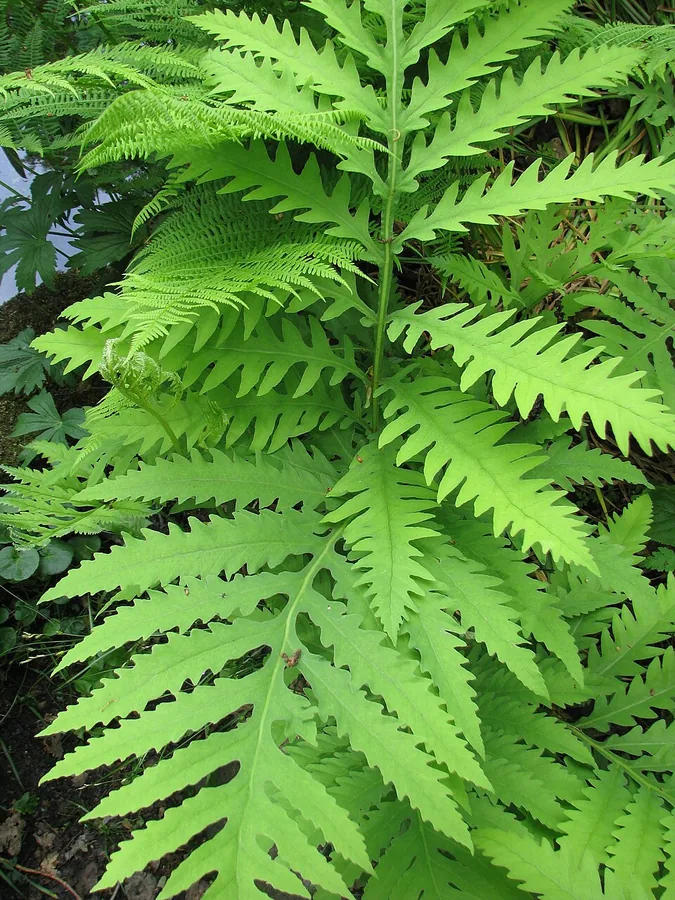
The sensitive fern belongs to the shaded, water-touched corners of a garden, the damp margins where a pond meets a border and the light stays soft. It is a native of North American wetlands, and it carries that easy, natural mood wherever it settles. As autumn arrives, the green fronds fade with the first frost, leaving behind slim, bead-like fertile fronds that hold their form through winter and lend the plant its second name, bead fern.
What makes it such a graceful choice is how little it asks of the spaces it fills. Offer it shade and steady moisture, and it settles into the parts of a garden most plants refuse, unfazed by cold across a remarkable stretch from zone 2 to zone 10. Its broad, coarsely cut fronds read fuller and leafier than the lacy ferns of the classic shade garden, giving a planting real presence rather than delicate filler.
There is one habit worth designing around. Left to itself in moist ground, it spreads into a soft, drifting colony, which is a gift along a rain garden or pond edge and a complication in a composed, formal bed. Give it a setting where it can drift, or frame it with a discreet barrier, and it becomes a low-effort anchor for a shaded scheme.
Care
The short version: place it in shade or part shade in rich, moist soil that never dries out, water enough to keep the root zone damp, and either give it room to drift or a barrier to hold its shape within a planting.
Light
Set it in partial to full shade, the soft, low light of a woodland edge where it looks entirely at ease. It will accept full sun, but only with its roots in constantly wet ground, since without that the fronds scorch quickly under hot afternoon light and lose their fresh look.
Water
Think of this as a plant of wet places that must never dry out. Keep the root zone evenly moist to wet, watering every 2 to 4 days in ordinary garden soil. Sited along a pond edge or in a bog, it draws what it needs from the setting, which makes it a natural fit for a water feature.
Soil
It thrives in rich, moist, organic ground and takes gladly to heavy clay or a spot that floods now and then, the sort of low, damp ground many gardens struggle to plant. A slightly acidic pH of 5.0 to 6.5 suits it, though soil that simply holds its moisture counts for far more than the exact reading.
Temperature
Few plants suit so many gardens. It carries from -49°F to 86°F (-45°C to 30°C) and holds across zone 2 to zone 10, so it belongs in cold northern plots and mild ones alike. The green fronds bow out at the first hard frost while the rhizome waits out winter to return.
Humidity
It favors the damp air, roughly 50% to 80%, that gathers in the shaded, moist corners it calls home, which is exactly the mood it helps create. In dry, exposed positions the fronds lose their freshness and crisp at the edges, so a sheltered, humid spot keeps a planting looking its best.
Feeding
It asks for very little at the table. A light spring topdressing of compost or leaf mold is all it wants, and in rich ground even that is optional, since heavy feeding only pushes the kind of growth you will later be reshaping.
Pruning
There is next to nothing to do to keep it looking well. Cut back the dead fronds once they collapse at the first hard frost, or leave them and tidy in early spring before new growth, and lift out any tattered or scorched fronds through the season to keep the planting clean.
Repotting
This is a plant for open ground, not a container. Refresh it instead by lifting and dividing crowded clumps in spring every few years, once the rhizomes press together or drift well past the shape you had in mind.
Size & spacing
Expect a plant of 12 to 35 inches (30 to 90 cm) tall that spreads about as wide, a generous, grounding presence in a shaded scheme. Set divisions 24 to 35 inches (60 to 90 cm) apart, and plan for them to drift outward from there as the planting matures.
When to plant
This is a hardy perennial, so the calendar is about placement rather than beating the frost. Set new plants in spring once the ground can be worked, and when an established clump grows crowded, lift and divide it in spring or early fall to refresh the planting and open up new corners to fill.
Northern hemisphere
Southern hemisphere
Typical months for a temperate climate: start earlier in warm zones, later where spring frosts linger.
- Plant: spring
Hardiness
USDA hardiness zones: 2–10
Temperature: down to -46°C
Troubleshooting
Nearly every difficulty this fern presents comes back to dry soil, the one condition it cannot abide. Watch the fronds and the way it drifts, and you can adjust the setting before a lush corner thins to a bare patch. Match what you see below, then make the small change that keeps the picture intact.
Fronds yellowing and crisping through summer
Behind a tired, browning planting is almost always drought stress, the one lapse this fern will not forgive. Rooted in the memory of wet ground, it curls and browns at the frond margins when the soil dries, most visibly under hot afternoon sun. Water deeply to hold the moisture, lay down organic mulch, and move it to a shadier corner where summers run warm.
Fix:
- Water deeply to keep soil consistently moist
- Apply organic mulch to conserve moisture
- Move to part or full shade in hot climates
- Remove withered fronds
New fronds drifting out across the bed
A planting that keeps reaching into new ground is simply spreading by creeping rhizomes, the fern's natural way of colonizing damp soil, and it can crowd more delicate companions. Set a deep root barrier to frame it, lift and divide the runners in spring, or place it where drift is welcome, along a rain garden or pond edge, and let it fill the scene.
Fix:
- Install a deep root barrier
- Dig and divide or remove spreading rhizomes in spring
- Confine to contained or naturalized areas
Fronds blackening and folding after the first frost
A planting that collapses overnight in autumn is showing normal seasonal dieback, the very trait behind the fern's name. The green sterile fronds give way the moment frost arrives while the rhizome rests untouched below the surface. Cut back the spent fronds and leave the rest to the season, since a fresh flush returns in spring to remake the picture.
Fix:
- No action needed; cut back the dead fronds
- Rhizome regrows new fronds the following spring
Toxicity
For a home shared with pets and children, the sensitive fern is an easy conscience: a true fern with no toxin in it, safe to plant, handle, and live alongside. The only real thing to manage is its enthusiasm for spreading, a matter of design rather than danger.
Safe for
People · Cats · Dogs · Horses · Rabbits · Livestock · Birds
Cats None
A true fern the ASPCA counts as non-toxic, so a curious cat among the fronds is no cause for concern. A large mouthful might bring a passing touch of stomach upset, as any coarse greenery can, but nothing beyond that.
Dogs None
Safe in a home with dogs, with no toxin in the fronds to give a second thought. The most a determined chewer is likely to come away with is a brief bout of loose stool from the fiber.
Horses None
Nothing in the plant itself does a grazing horse any harm. The fronds are coarse and unappealing, and horses pass them by in any ordinary pasture.
Rabbits None
Rabbits can browse the fronds without trouble. Offer only small amounts at a time, since a sudden abundance of any fresh green can unsettle a delicate gut.
Livestock None
No toxic compounds put cattle, goats, or sheep at any risk. The tough, fibrous fronds hold little appeal, and grazing animals rarely seek it out.
Birds None
Safe for poultry and other birds to peck at freely. The bead-like fertile fronds even keep spores that some wild birds pick through across the winter garden.
People None
Handling the fronds and spores carries no known hazard, so you can plant and divide it bare-handed with ease. It is not a food plant, though, so there is no reason to bring it to the table.
Handling the fronds and spores poses no known contact hazard to people; the risk is from ingestion by grazing animals, especially fern mixed into horse hay.
Helpline numbers

United States
ASPCA Animal Poison Control: (888) 426-4435 (fee applies)

United Kingdom
Animal PoisonLine: 01202 509000 (fee applies)

Australia
Animal Poisons Helpline: 1300 869 738
Varieties
There is little to weigh up here, and the simplicity is part of the appeal. The plain wild species is the one nearly every gardener plants, and it needs no dressing up.
Onoclea sensibilis (species)
This is almost always the fern you will plant, the plain wild species, valued for its broad, coarsely cut green fronds and the curious bead-like fertile fronds that named cultivars rarely better.
How to propagate
Filling more of the garden with this fern asks almost nothing of you, since the same drifting rhizomes that let it wander also make it effortless to divide into new plants for other shaded corners.
DivisionEasy
Early spring or fall · 1 to 2 seasons
Division is the graceful way to multiply it, and early spring or fall is the moment to do so. Lift a crowded clump, part the creeping rhizomes into pieces that each hold a growing point, and settle them straight into their new corner. Keep the soil moist while they establish, and the divisions take hold over the next one to two seasons. Raising it from spores on a moist sterile mix is possible, though it is a slow, exacting route beside a simple division of the rhizomes.
Myths
The sensitive fern folds up when you touch it, the way a Mimosa does.
The fronds stay perfectly still under a hand. The name speaks to their sensitivity to frost, since the green sterile fronds fade the moment the first autumn cold arrives, and it has nothing to do with any response to touch.
A fern in the garden will take over and smother everything around it.
It does spread, but at a pace you can design around. Its creeping rhizomes drift through moist soil and can crowd companions over time, so a root barrier or a contained, naturalized setting keeps it composed without much attention.