Bulb · Asparagaceae
Siberian Squill
Scilla siberica
Plant the bulbs once and a blue haze of early spring settles over the garden, year after year.
Full sun
Every 7–14 days
USDA 2–8
3–6 in · 8–15 cm
Overview
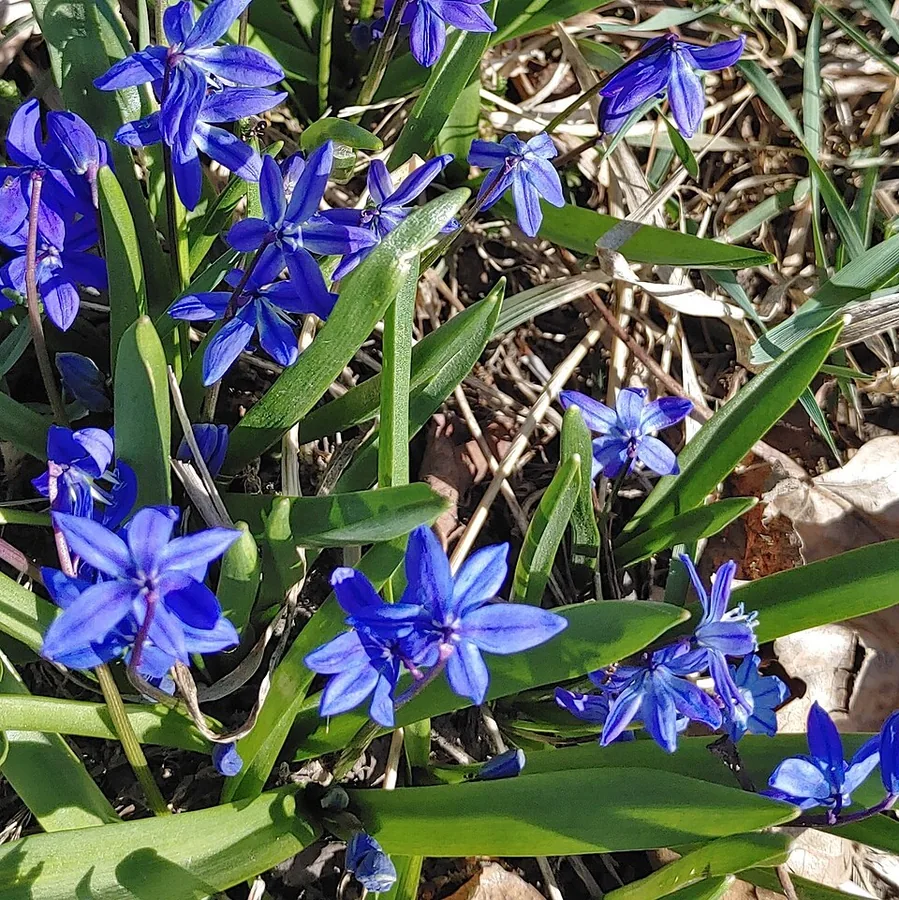
Few plantings set the tone of early spring quite like Siberian squill. It arrives just after the snowdrops, laying a low blue haze across the ground while the rest of the garden is still waking. At only 3 to 6 inches (8 to 15 cm) tall, it belongs in generous drifts beneath a favorite tree, tracing the line of a path, or loosening across a lawn you leave unmown a while longer.
Its charm is that it fits the way a garden is actually lived in. The bulbs are remarkably cold hardy, holding through winters as low as -40°F (-40°C), and they slot into the season without asking for attention. That same ease has a restless side, since squill drifts by seed and offset bulbs beyond its bed into lawn and woodland, and in parts of the US it is treated as invasive, so it suits a considered setting rather than a wild edge.
There is a line to draw before it goes in the ground. Every part of the plant is poisonous, the bulb most of all, which makes it a poor match for a garden shared with grazing pets or digging children. Given a spot chosen with that in mind, squill rewards the setting with years of quiet, dependable spring color.
Care
The short version: place the bulbs 2 to 3 inches deep in fall, choose a spot with sun to part shade and free-draining soil, water through the spring show and let them rest dry in summer, and deadhead when you want to keep the drift in bounds.
Light
Squill flowers best in full sun, yet takes partial sun or partial shade with ease, which opens up more of the garden to it. Since it blooms before the trees leaf out, even a place beneath deciduous branches catches full light at the moment that counts.
Water
Offer medium moisture while it grows and blooms in spring, then step back as the foliage fades. Through summer the bulbs rest and want little to no water, and the one misstep to avoid is leaving them in ground that stays wet.
Soil
An average, well-drained soil is all the setting needs, with no fuss over pH. Sharp drainage matters far more than rich ground, above all across the dry months of the summer rest.
Temperature
This is an unshakably hardy bulb, at home through zones 2 to 8 and untroubled by lows of -40°F (-40°C). It grows through the cool of early spring and slips into rest once the weather climbs past about 75°F (24°C).
Humidity
Humidity never enters the picture, since ordinary outdoor air suits it perfectly. What the planting really needs is soil that dries out for the bulb's summer rest.
Feeding
Feeding barely figures in average soil. A yearly topdressing of compost or a balanced bulb fertilizer in fall or early spring is more than enough, and anything heavier is simply wasted on it.
Pruning
There is nothing to prune in any real sense. Let the foliage fade on its own after the flowers so the bulb can gather its strength, and clip the spent heads only when you want to temper its free self-seeding.
Repotting
Settled bulbs are content to stay where they are for years. The moment to lift and divide comes when bloom thins in a crowded clump or the bulbs begin heaving to the surface.
Size & spacing
The plants stay low and modest, 3 to 6 inches (8 to 15 cm) tall and about as wide, which is exactly what suits them to sweeping drifts. Set the bulbs 2 to 3 inches deep in fall and give them room to knit into an unbroken sheet of blue.
When to plant
Squill keeps an unhurried seasonal rhythm that is easy to plan around. Set the bulbs in fall while the ground still works, let winter pass, and the blue arrives around April, just as the snowdrops take their leave.
Northern hemisphere
Southern hemisphere
Typical months for a temperate climate: start earlier in warm zones, later where spring frosts linger.
- Plant: Plant bulbs in fall, 2-3 inches deep
- Harvest: Blooms in early spring (around April), shortly after snowdrops
Hardiness
USDA hardiness zones: 2–8
Temperature: down to -46°C
Troubleshooting
This is an uncomplicated plant, and the few things that go wrong trace back to wet ground, a single bulb pest, and its own tendency to wander. Find the match below and settle it early, before a modest drift becomes a takeover.
Soft, collapsing bulbs and a fallen crown
The trouble here is crown and bulb rot, and it traces to ground that holds water rather than to anything you could spray. Squill has no tolerance for a wet seat, least of all during its summer rest. Lift a bulb or two to check for soft, brown, foul-smelling tissue, part with anything spongy, and resettle the planting where drainage runs sharp.
Fix:
- Remove and discard affected bulbs
- Improve drainage or move planting to a better-drained site
- Reduce watering, especially during dormancy
Hollowed bulbs and growth that never quite arrives
A bulb that emerges distorted or not at all usually means the narcissus bulb fly has been at work. Its larva bores in and empties the center, leaving a hollow shell packed with frass. Open a suspect bulb to find one plump cream-colored maggot, then lift and destroy anything infested and turn the soil to bring the pupae into the light.
Fix:
- Dig and destroy infested bulbs
- Cultivate soil to expose pupae
Squill drifting well past its intended bed
Siberian squill is a determined self-seeder that also increases by offset bulbs, so its colonies edge into lawns, borders, and neighboring woods. Parts of the US regard it as invasive. Mow or deadhead the flowers before seed forms, lift and thin the crowded clumps, and keep it clear of natural areas.
Fix:
- Mow or deadhead while in bloom to remove seed heads before seed sets
- Dig and thin clumps before seeds mature
- Compost removed material at temperatures above 130 degrees F
Toxicity
For all its grace, this is a plant to respect. Every part carries cardiac glycosides, the bulb most of all, and swallowing any of it can bring drooling, vomiting, and cramping, with a dangerously slow or uneven heartbeat in quantity. Keep it away from pets, livestock, and children, and reach a vet or poison control at once if any is eaten.
Toxic to
Cats · Dogs · Horses · Rabbits · Livestock · Birds · People
Cats Severe
A cat that chews any part may begin drooling and vomiting before long. The bulb holds the most cardiac glycoside, and a genuine mouthful can unsettle the heart rhythm, so it calls for emergency care.
Dogs Severe
Dogs tend to unearth and bite the bulb, the most dangerous part of the plant. The first signs are drooling, vomiting, and diarrhea, followed by a slowed or uneven heartbeat when a lot is swallowed.
Horses Severe
The same cardiac glycosides affect horses, bringing colic and leaving the animal dull and unsteady. A heavy dose can disturb the heartbeat, a serious matter in a grazer of that size.
Rabbits Toxic
Squill is not safe browse for rabbits. Bulb and foliage alike upset the gut and, in quantity, reach the heart, so the plant belongs well out of their reach.
Livestock Toxic
Cattle, sheep, and goats can be poisoned by grazing the foliage or turning up bulbs. Watch for drooling, gut upset, and an irregular heartbeat, and fence the stand off from pasture.
Birds Toxic
The cardiac glycosides make every part unsafe for birds, backyard poultry that scratch up bulbs included. Keep hens and pet birds clear of the plantings.
People Caution
No part of this plant is meant to be eaten. Swallowing it can cause mouth pain, nausea, vomiting, and cramping, and the bulb in quantity may slow or unsettle the heart, so keep curious children away and call poison control if any is eaten.
Keep bulbs and plants away from pets and children; wear gloves when handling, as sap can cause minor skin irritation in susceptible individuals.
Helpline numbers

United States
ASPCA Animal Poison Control: (888) 426-4435 (fee applies)
Poison Control: (800) 222-1222



Canada
Poison Centres: 1-844-764-7669
Varieties
The choice here is refreshingly simple. Beyond the wild species, one named selection turns up most in the trade, and the two are easy to tell apart.
Spring Beauty
It carries the look of the wild species while running a little larger, flowering longer, and settling into a deeper blue.
Scilla siberica (species)
The wild species raises 3 to 4 slender scapes, each holding 1 to 3 nodding, bell-shaped, deep blue flowers lifted by blue anthers.
Companions
Squill pairs best with the other earliest bulbs that bloom alongside it and naturalize the same way, building a layered carpet of late-winter and early-spring color.
Plant near
Galanthus (snowdrops): Both are very early spring bulbs that bloom in sequence and naturalize well together in drifts.
Crocus: Similar early-spring bulb that can be naturalized in lawns and beds alongside squill for layered bloom.
How to propagate
Building a larger planting is nearly effortless, since squill does most of the increasing on its own. Hurry it along by dividing clumps or setting fresh bulbs, or simply let it seed itself into a wider sweep.
Offsets & pupsEasy
Lift and separate dormant bulbs after foliage dies back · One growing season
The most graceful way to expand a planting is to let squill build up offsets and then divide the increase. Once the foliage has faded and the bulbs have gone dormant, lift a crowded clump and ease the offset bulbs apart by hand. Returned to the ground, they settle in within one growing season.
Bulbs & cormsEasy
Plant bulbs 2-3 inches deep in fall · Blooms the following spring
Starting from bought bulbs could hardly be more straightforward. Set them 2 to 3 inches deep in fall, leave them be, and they flower the following spring. The bulbs are tough and extremely cold hardy, so even a severe winter leaves them unharmed.
SeedEasy
Self-sows in spring as seed matures · Several years to flowering size
Squill scatters its own seed with no help at all, dropping it in spring as the pods ripen. That easy dispersal is exactly what fuels its aggressive naturalizing. Seedlings need several years to reach flowering size, making this the patient route for anyone who wants it.
Myths
Siberian squill is a charming little spring bulb that is perfectly safe around pets.
The truth is less genteel, since every part carries cardiac glycosides and rates as a high-severity poison. Eating it can bring vomiting, diarrhea, and a lowered heart rate, and a real dose may be fatal. Keep the bulbs and plants away from pets and children.
A small ornamental bulb such as this is bound to stay where it is placed.
In practice it naturalizes quickly through self-seeding and offset bulbs, slipping out of the borders and into lawns and woodlands. It is considered invasive in parts of the US, so deadhead it and keep it well away from wild ground.