Vegetable · Amaranthaceae
Swiss Chard
Beta vulgaris subsp. vulgaris
Plant it once, gather the outer stalks at leisure, and let Swiss chard bring leaves all season to the table.
Full sun
Every 3–7 days
41–86°F · 5–30°C
50–60 days
Overview
Swiss chard earns a place in the kitchen garden for its broad, glossy leaves and thick, edible stalks, a crop as handsome in the bed as it is on the plate. It is the same species as the beet, raised for its leafy tops rather than its root, and it keeps company with spinach in the same family. Grown as a biennial treated like an annual, it gives its first season entirely to leaves, a generous return for very little fuss.
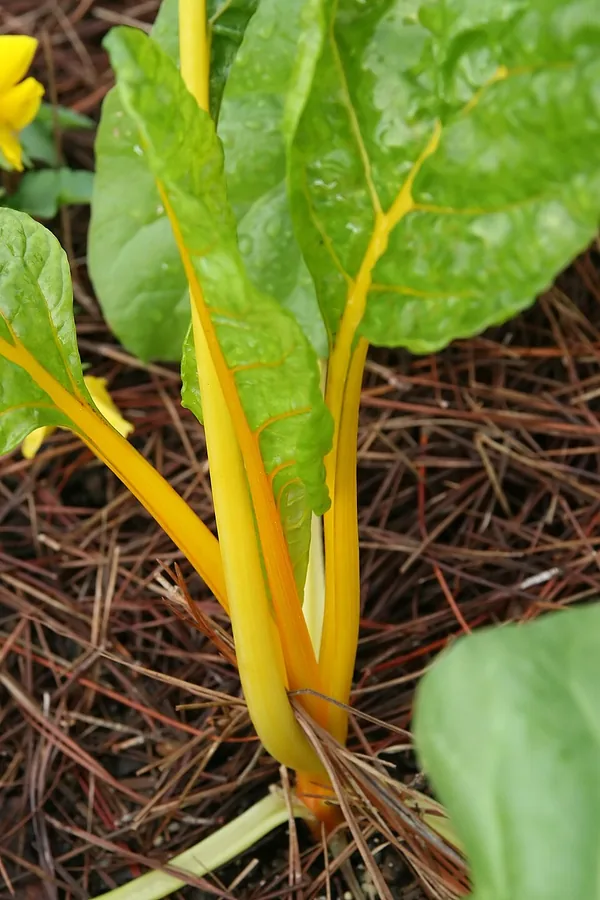
What makes chard a designer's ally is its ease across the seasons. It carries through summer heat and light frost with more poise than most greens, so a single spring planting holds the plot together from the first warm weeks well into fall. The colorful selections turn a working vegetable row into something worth pausing over, with stalks in red, pink, yellow, and white lit against dark leaves like a well-set table.
It suits a relaxed, self-sufficient rhythm as much as a beginner's plot. Sow the seed, keep the soil evenly moist, and step out to cut the outer leaves whenever the kitchen calls, while the center quietly replenishes. Given steady water and good soil, chard folds into the daily routine and asks almost nothing in return.
Care
The short version: full sun with a little afternoon shade, soil kept rich and evenly moist, and an easy habit of cutting the outer leaves so tender new growth keeps arriving for the kitchen.
Light
Chard shows best in full sun, though it welcomes partial shade, which earns its keep in high summer by holding off an early rush to bolt. Set it in deep shade and the leaves thin out while the plant loses its momentum.
Water
Keep the soil evenly moist, about 1 to 1.5 inches of water a week, and the reward is tender, kitchen-ready leaves. That steady moisture also settles the plant against the bolting that heat and dry spells invite.
Soil
Give chard rich, well-drained loam generous with organic matter for a bed that performs all season. A pH of 6.0 to 7.0 suits it well, and a measure of compost worked in before sowing pays quiet dividends later.
Temperature
Chard is at ease across a wide range, from about 41°F to 86°F (5°C to 30°C). It takes a light frost in stride and holds its poise through summer heat that sends other greens into decline.
Humidity
Ordinary outdoor air is all chard wants, with 40% to 70% humidity comfortably within reach. Good airflow counts for more than any figure, since crowded, damp leaves open the door to leaf spot.
Feeding
Side-dress a balanced, nitrogen-containing vegetable fertilizer through the season of active leaf growth, beginning in spring. Because the harvest is continuous, a steady supply of nitrogen keeps the bed generous with fresh leaves.
Pruning
Here the harvest doubles as the pruning, a tidy arrangement. Cut the outer leaves at 4 to 12 inches near the base and leave the central crown untouched, and the plant renews itself cut-and-come-again.
Repotting
Grown as an annual, chard never needs repotting. Reseed containers each season rather than carrying a plant over, and choose a roomy planter so the roots have space to settle.
Size & spacing
Plants stand 12 to 24 inches (30 to 60 cm) tall with an 8 to 18 inch (20 to 45 cm) spread, an easy scale for a border or a raised bed. Thin the seedlings to 4 to 6 inches apart to give each room and keep the planting airy.
When to plant
Chard keeps a gracious, cool-season schedule that spans spring's chill and summer's warmth. Begin seed indoors in late winter for an early start, or sow directly a couple of weeks before the last frost. A second sowing in late summer carries the harvest, and the look of the bed, through fall.
Northern hemisphere
Southern hemisphere
Typical months for a temperate climate: start earlier in warm zones, later where spring frosts linger.
- Sow: 4 to 6 weeks before the last spring frost
- Plant: 2 to 3 weeks before the last spring frost, and again in late summer for a fall crop
- Harvest: Harvest leaves from early summer through fall (and over winter in mild climates)
Hardiness
USDA hardiness zones: 3–10
Temperature: down to -40°C
Troubleshooting
Chard asks little and gives back much, and the occasional trouble it does meet stays on the leaves, where a passing glance catches it. Notice the first signs on your morning walk through the bed and a single tidy cut sets things right. Match what you see below and act while the fix is still simple.
Small tan spots framed in a darker ring
The culprit is Cercospora leaf spot, a fungus that arrives as round spots rimmed in purple, running together as it advances. Remove and discard the spotted leaves, then carry on gathering the clean outer ones. Thinning the planting to let air move through is what truly turns the tide.
Fix:
- Remove and destroy infected leaves
- Harvest healthy outer leaves
- Improve air circulation by thinning
A tall stalk rising as the leaves lose their sweetness
This is bolting, the plant's turn from leaf to seed, brought on by a long hot spell or, on occasion, an early chill. As the central stalk climbs, leaf growth stalls and the flavor slips toward bitter. Gather what remains while it is still good, then clear the bolted plant and sow again for a fresh chapter.
Fix:
- Harvest remaining leaves before they turn bitter
- Pull bolted plants and resow for a fresh crop
Pale, winding trails threading the leaves
Those wandering trails are the signature of leafminer larvae at work between the upper and lower surfaces of the leaf. Hold a leaf to the light and the grub or its dark frass shows plainly inside the mine. Cut away the marked leaves and dispose of them at once, and a healthy plant carries on as though nothing happened.
Fix:
- Pick off and destroy mined leaves promptly
- Remove larvae by hand
- Keep plants vigorous so outer leaves can be sacrificed
Toxicity
At the table, Swiss chard is a wholesome green to serve cooked or raw, with nothing to guard against. It does carry a good deal of soluble oxalates, a mild caution for cats, dogs, horses, and grazing animals that make a habit of it. A passing taste means nothing, so long as chard stays an occasional pleasure rather than a fixture in any animal's diet.
Toxic to
Cats · Dogs · Horses · Rabbits · Livestock · Birds
Safe for
People
Cats Caution
Chard is no poison to a cat, yet its leaves are rich in soluble oxalates. A stray nibble comes to nothing, while a generous helping taken often can unsettle the gut and, in time, weigh on the kidneys.
Dogs Caution
A few leaves leave a dog untroubled. Keep the servings modest all the same, since a heavy oxalate load can upset the stomach and, in quantity, work against the kidneys.
Horses Caution
A small taste suits a horse well enough, though chard holds more oxalate than is ideal. Steady, heavy grazing can unsettle the body's handling of calcium and press on the kidneys.
Rabbits Caution
Chard has a place in a rabbit's mixed greens, though never as the daily staple. The oxalates mount up, so rotate it with lower-oxalate greens rather than serving it on its own.
Livestock Caution
Goats, sheep, and cattle take a little chard in stride. It is the large, repeated helpings of these oxalate-rich leaves that, over time, unsettle calcium and burden the kidneys.
Birds Caution
Backyard hens and pet birds may enjoy a little chard from time to time. The oxalates keep it an occasional treat rather than a daily ration.
People Edible
For people, Swiss chard is a nourishing green for the table, at home cooked or raw. Its one note is a high oxalate content, of real interest mainly to anyone prone to kidney stones.
No special handling precautions are required; rinse leaves before eating.
Helpline numbers

United States
ASPCA Animal Poison Control: (888) 426-4435 (fee applies)

United Kingdom
Animal PoisonLine: 01202 509000 (fee applies)

Australia
Animal Poisons Helpline: 1300 869 738
Varieties
Chard varieties set themselves apart mainly through the color of their stalks and the character of their leaves, which makes choosing one a matter of taste. These are the names worth knowing as you plan the bed.
Bright Lights
An All-America Selections winner, prized for stalks and midribs that gather red, pink, yellow, orange, and white into one planting.
Northern Lights
It offers the same lively palette in its stalks and midribs, moving through red, pink, yellow, and white.
Ruby (Rhubarb) Chard
A confident choice, with deep red stalks and veins standing against dark green, heavily savoyed leaves.
Fordhook Giant
A vigorous heirloom of quiet stature, offering broad white stalks and large, dark green, crumpled leaves.
Companions
Chard does well alongside other cool-season leafy crops and a few common garden neighbors, and poorly next to beans, which don't share well with it or its beet relatives.
Plant near
Cabbage family (brassicas): Listed as compatible neighbors that share cool-season conditions in extension companion guidance.
Lettuce: Compatible low-competition leafy crop grown in the same cool-season beds.
Tomatoes: Listed as a beneficial companion for chard in extension companion planting guidance.
Keep apart
Beans: Beans are listed as an incompatible companion for chard and beets in extension companion planting guidance.
How to propagate
Chard begins and ends with seed, which keeps the whole affair refreshingly simple. One small detail about that seed rewards a moment's attention before sowing.
SeedEasy
Spring and again in late summer for a fall crop · 50 to 60 days from sowing to first full harvest
Chard comes easily from seed, sown in spring and again in late summer for a crop that carries into fall. One detail to know: each 'seed' is really a multigerm ball, a dried fruit cluster that raises several seedlings together, so thin them to 4 to 6 inches apart once they appear. From sowing to the first full harvest runs about 50 to 60 days, an unhurried and reliable timeline.
Myths
Swiss chard has to be resown every few weeks, as spinach is, or it will run to seed.
Not at all. Chard meets both heat and cold with composure and holds off bolting far longer than spinach. A single planting keeps the kitchen supplied cut-and-come-again through a long season, making the repeat sowings spinach demands quite unnecessary.