Houseplant · Cactaceae
Thanksgiving Cactus
Schlumbergera truncata
Set in bright indirect light with cool fall nights, this forest cactus turns a windowsill into a seasonal centerpiece.
Bright indirect
50–86°F · 10–30°C
USDA 10–12
4–20 in · 10–50 cm
Overview
The Thanksgiving cactus brings a quiet touch of the tropics indoors. It is a forest cactus from the coastal mountains of Brazil, a plant that grew among tree branches rather than across open desert, and that heritage makes it an easy, low-drama companion for a lived-in room. Give it the conditions it likes and it repays you with a wave of bright flowers in late fall, arriving like clockwork around Thanksgiving.
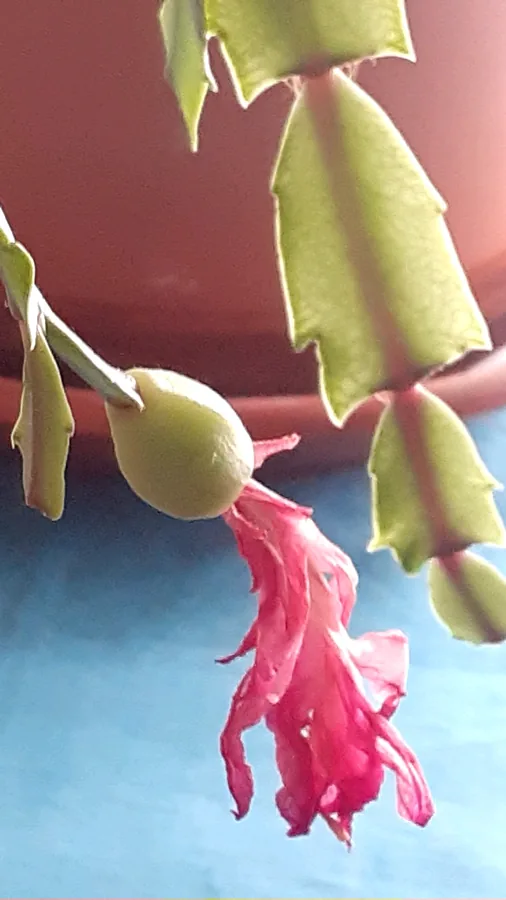
It is worth knowing which holiday cactus you are styling with. This one shows pointed, claw-like teeth along the edge of every flat segment, the detail behind its crab cactus and claw cactus names, while the true Christmas cactus keeps softer, rounded, scalloped edges and blooms about a month later. Most plants sold under the Christmas cactus name are really this earlier bloomer.
Part of its appeal is longevity: this is an easy plant that settles into a home for decades and flowers more generously as the years pass. It asks for only two considerations, a steady setting while it is in bud and the cool nights and short days of autumn that set the display in motion. Honor those and it becomes a fixture you barely have to think about.
Care
The short version: a spot with bright indirect light, water when the surface of the mix has dried, and a run of cool autumn nights to call up the bloom. Leave it slightly potbound, and once buds form, let it hold its place.
Light
This plant looks and lives its best in bright, indirect light, well back from direct sun. It will accept partial shade or a little gentle sun, though fierce midday rays leave the segments pale or red. A window facing east or north gives it the flattering, even light it prefers.
Water
Let the top half of the mix dry between drinks, then water fully. It wants more moisture than a desert cactus but never a waterlogged pot, which spells rot. Once buds appear, keep the mix evenly moist so the coming display stays intact.
Soil
Pot it in a well-drained, organic-rich potting mix meant for epiphytes, one that clears water quickly yet holds a little moisture. A slightly acidic pH of 5.5 to 6.5 keeps it content.
Temperature
Ordinary room warmth suits it, anywhere from 50°F to 86°F (10°C to 30°C). The seasonal cue matters most: cool autumn nights alongside shorter days are what prompt it to set the buds that become its holiday show.
Humidity
Average household air is all it asks, so humidity is nothing to manage. A little extra moisture eases a new cutting along, while an established plant sits happily in the room as it is.
Feeding
Offer a dilute balanced houseplant fertilizer each month through spring and summer, then stop in late summer to turn its energy toward the fall flowers. A taste for magnesium above the average means an occasional Epsom-salt solution is welcome.
Pruning
When the blooms have gone, pinch or twist off a few stem segments. That simple gesture encourages branching and shapes the plant into the fuller, rounder silhouette that reads so well on a shelf.
Repotting
Repotting is a rare event, just every 3 to 4 years, since a snug pot brings the best flowering. Step up a size only when roots reach through the drainage holes, water runs straight past, or growth stalls.
Size & spacing
Compact by nature at about 4 to 20 inches (10 to 50 cm) in height and spread, it fits almost anywhere. A single plant is enough to dress a hanging basket, or hold a windowsill on its own, without crowding the pieces around it.
Troubleshooting
Trouble with this plant is uncommon and usually cosmetic, showing up as dropped buds or soft, discolored stems. Both come back to watering and where the pot sits in the room. Find the symptom below and adjust the setting before it goes further.
Stems softening and blackening at the base
Soft, blackened stems are the mark of root rot, caused by a mix that stays too wet. Cut away the spoiled segments and any brown, mushy roots, settle the plant into a fast-draining epiphytic mix, and lighten the watering. Prevention is the real answer: let the surface dry out before the next watering.
Fix:
- Reduce watering frequency
- Repot into a fast-draining epiphytic mix
- Remove rotted segments and affected roots
Buds drop away before the flowers open
Bud drop nearly always follows a change the plant did not welcome. Once buds have formed, it wants a single settled position, even moisture, and no drafts or shifts in temperature. Carry it across the room to show it off and the buds fall within days, so the graceful choice is to leave it where it stands until it comes into bloom.
Fix:
- Keep the plant in one stable spot once buds form
- Keep the mix evenly moist (not soggy) while in bud
- Avoid drafts and temperature swings
Segments turning pale, yellow, or red
Segments that pale to yellow or red usually mean too much direct sun, most obvious in a hot, bright window across summer. Move the plant into bright indirect light and keep the fierce midday sun off it. The color settles back once the light suits it again.
Fix:
- Move to bright indirect light
- Shade from hot midday summer sun
Toxicity
For a home with pets, this is a reassuring choice. The Thanksgiving cactus is non-toxic to cats, dogs, horses, and the people who share the space, and the ASPCA confirms it. The only footnote is a mild, passing stomach upset if an animal makes a meal of the fibrous stems, which is true of most houseplants.
Safe for
People · Cats · Dogs · Horses · Rabbits · Livestock · Birds
Cats None
Cats share the room safely, with nothing toxic in the stems or flowers. Should one work through a good deal of the fibrous segments, it may drool or bring a little back up before recovering on its own.
Dogs None
Dogs are in no danger here. A large, chewy mouthful of the stems tends to lead to nothing worse than a short spell of mild stomach upset.
Horses Safe
Horses are covered by the ASPCA as well, and a passing taste poses no genuine risk.
Rabbits Safe
Rabbits can live alongside it comfortably. As with any fibrous green, a generous helping might unsettle the stomach for a day.
Livestock Safe
Grazing animals meet no toxin in the stems or blooms. A heavy serving of the fibrous segments could bring a short, mild bout of indigestion and nothing beyond that.
Birds Safe
Pet birds keep company with it safely, since no part of the plant is poisonous.
People Safe
People are safe around it, children included. It is not grown for the table, and the fibrous stems would only taste unpleasant rather than cause harm.
Varieties
Schlumbergera offers a wardrobe of flower colors and a few close relations to choose from. The forms below are the ones most likely to find their way home with you.
'White Christmas'
A truncata cultivar that opens in clean, gallery-white blooms rather than the familiar pinks and reds.
'Cambridge'
A truncata cultivar prized for warm flowers that move from pink toward orange.
Schlumbergera × buckleyi
The true Christmas cactus, a hybrid set apart by rounded, scalloped segments and a bloom that arrives about a month after the Thanksgiving type.
How to propagate
Growing more of it could hardly be simpler, and a single cutting matures into a full plant to gift or to place in another corner of the home.
Stem cuttingsEasy
Late spring to early summer (May-June) · Roots in about 3-8 weeks
The ideal moment for cuttings is late spring to early summer, around May or June, while growth is strong. Twist away a piece of 3 to 5 jointed segments, let the cut end callus for a day or two, then set it into a moist, well-drained mix kept lightly humid. Roots arrive in 3 to 8 weeks, and a fresh plant follows to place wherever a little life is wanted.
Myths
The Christmas cactus on the shop shelf is the true one.
In reality, most holiday cactus for sale is Schlumbergera truncata, the Thanksgiving or crab cactus. Look for the pointed, claw-like teeth along each segment and the late-fall timing, which runs about a month ahead of the true Christmas cactus.
A holiday cactus is a hazard to pets.
Not so. The ASPCA lists Schlumbergera as non-toxic to cats, dogs, and horses. The most a curious pet risks from the stems is a brief, mild stomach upset, and only after eating a good amount.