Ornamental · Melanthiaceae
Large-flowered Trillium
Trillium grandiflorum
Set against cool, dappled shade, trillium brings a spring garden its quietest and most refined note.
Partial shade
Every 3–7 days
USDA 4–8
8–18 in · 20–46 cm
Overview
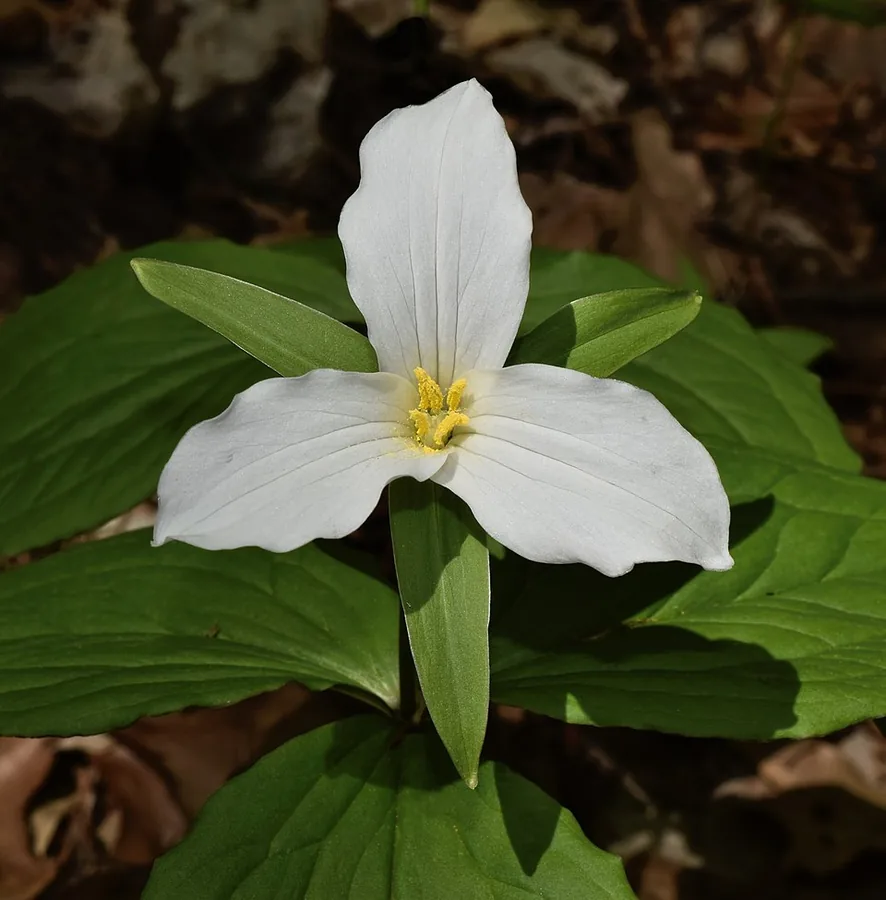
Trillium is the note of restraint every spring garden wants: one pure white flower poised above a whorl of three broad leaves, glowing against the dim floor of the woodland. A relative of the lilies, it belongs to the rich, shaded forests of eastern North America, and it reads as native, unforced, and utterly at ease. As the bloom matures it drifts from white to a soft blush of pink, an unhurried shift that rewards anyone who lingers.
This is a plant for the patient gardener and the settled garden. It rises from a rhizome, spreads at an unhurried pace, and a seed may need the better part of a decade to flower, so it belongs where nothing is rushed. Given a quiet, established corner it holds its place for years, easing into a serene woodland colony that feels as though it was always there.
The style it offers is one of calm, and calm is what it asks in return. Give it cool shade, reliably damp ground, and a bed rich with leaf mold, then let it settle into the rhythm of the garden and mostly leave it be. One principle underlies the whole effect: this is a plant to buy, never to lift from the wild.
Care
The short version: place it in shade, from dappled to full, in a deep, humus-rich bed, keep it evenly damp through the spring, then step back and let the settled clump hold the scene.
Light
Trillium is made for the shaded corner, thriving in partial to full shade where brighter plants would falter. Sited beneath deciduous trees, it catches the soft dappled light of early spring, opening its flowers before the branches leaf out, then settling comfortably into the deeper shade of summer.
Water
The look depends on steady moisture, so keep the soil evenly damp but freely draining, watering through any dry spell while the plant is in spring growth. By late summer the foliage bows out on its own, and the resting rhizome then asks for very little attention.
Soil
Give it the ground it would choose in the wild: deep, humus-rich soil full of organic matter and quick to drain. A pH between 5.0 and 7.0 suits it, which matches the soft, leaf-mold beds most shade gardens can offer.
Temperature
This is a hardy native at home in a true four-season garden, unfazed across -29°F to 84°F (-34°C to 29°C). It leans on a genuine winter chill to break dormancy and flower, so it belongs in cool-climate gardens rather than warm, frost-free ones.
Humidity
There is no humidity to manage here; ordinary garden air suits it, and the record simply calls its needs average. What matters to the look is a cool, shaded, moist setting dressed with leaf mulch, which does far more than any gauge.
Feeding
A bed rich in leaf mold feeds the plant almost entirely on its own. Each fall, lay a light dressing of leaf mulch or leaf mold across the surface, kept no more than 2 inches deep, so it mirrors the woodland floor and keeps the soil in good heart.
Pruning
Nothing here needs the shears. After the flowers pass, let the foliage fade on its own schedule, since those leaves are storing next spring's display in the rhizome, and cutting them back early only dims the following season.
Repotting
Trillium prefers to be left where it is planted, resenting any disturbance to its roots. Lift a clump only when crowding has thinned its vigor or its bloom, and even then be prepared for a slow, unhurried return to form.
Size & spacing
In time each plant reaches 8 to 18 inches (20 to 46 cm) tall and 9 to 12 inches (23 to 30 cm) across, a modest, well-proportioned presence. Allow a little space around each so its slow clump can compose itself without crowding its neighbors.
When to plant
Trillium keeps to the garden's spring calendar, and half its charm is the anticipation. Settle the dormant rhizomes into their bed in fall, then wait through winter for the reward, flowers that arrive between April and June and light up the shade just before the canopy fills in above.
Northern hemisphere
Southern hemisphere
Typical months for a temperate climate: start earlier in warm zones, later where spring frosts linger.
- Plant: Plant dormant rhizomes in fall; sow fresh seed outdoors in fall
- Harvest: Blooms April to June
Hardiness
USDA hardiness zones: 4–8
Temperature: down to -34°C
Troubleshooting
A settled trillium asks little and gives few problems, and the occasional flaw tends to appear on the leaves rather than to spoil the whole picture. Read the notes below, match what you notice, and tend to it early so the planting keeps its poise. The one real disruption to the scene comes from moving the plant.
A planting that falters or fades once it has been moved
Trillium will not forgive a disturbed root, so transplant shock shadows almost any attempt to dig or divide it. The most elegant solution is restraint: leave it in place. Where dividing cannot be avoided, wait until the foliage has died back, return the rhizome to the same depth without delay, and keep it evenly damp as it recovers. Beginning with nursery-grown plants spares the garden the gamble of unsettling a wild clump that rarely comes back.
Fix:
- Leave established plants undisturbed where possible
- If dividing, do so after foliage dies back and replant rhizomes promptly at the same depth
- Keep newly set plants evenly moist while they re-establish
Ragged holes across the leaves and petals, trailed by silvery slime
The damage is the calling card of slugs and snails, which feed under cover of dark in the damp shade and leave silvery trails across the planting. Gather them by hand in the evening or at first light, clear the litter and boards that shelter them by day, and hold back a little on watering. When they press hard, a scatter of iron-phosphate bait restores order.
Fix:
- Hand-pick slugs and snails in the evening
- Reduce excess moisture and remove debris that shelters them
- Apply iron-phosphate slug bait if pressure is heavy
Spots, blotches, or a powdery bloom marking the leaves
Such blemishes signal a fungal leaf spot, rust, or smut, which set in where the leaves stay wet and the air hangs heavy and still. Lift away the marked leaves and dispose of them, open the clump so air can pass, and direct water to the soil rather than the foliage. A thorough clearing of spent debris in fall stops the spores from carrying into the next year.
Fix:
- Remove and destroy affected leaves
- Improve air circulation and avoid wetting foliage
- Clean up fallen plant debris at season end
Toxicity
Trillium sits gently on the safe side, a mild concern rather than a genuine poison. The saponins in its berries and rhizome can unsettle a stomach, whether a pet's, a grazing animal's, or a person's, if any is eaten, yet it is no systemic toxin and the ASPCA leaves it off its list. In a garden shared with pets or children, keep the fruit and the roots out of reach, and, as with everything about this plant, buy it rather than lift it from the wild.
Toxic to
Cats · Dogs · Horses · Rabbits · Livestock · Birds · People
Cats Mild
Should a cat swallow a piece of the berry or rhizome, the saponins may leave it drooling or briefly sick to its stomach. Most cats pass the plant by without interest, and a small nibble comes to very little.
Dogs Mild
A dog inclined to chew the fruit or unearth the rhizome may drool, be sick, or pass a loose stool for a time. The episode stays mild and generally resolves on its own, though a determined digger is best kept clear of the roots.
Horses Mild
In a grazing horse, the saponins turn the rhizome and berries into little more than a mild irritant of the gut. The risk stays remote, since this is a plant of shaded woodland and seldom finds its way into open pasture.
Rabbits Mild
A rabbit that makes a meal of the fruit or roots may be left with a queasy gut, courtesy of the saponins. The leaves are the gentler part, while the berries and rhizome are best kept beyond its reach.
Livestock Mild
Grazing cattle, goats, and sheep that sample the rhizome or fruit can develop only a mild digestive upset from the saponins. Nothing graver than that is expected of this plant.
Birds Caution
The ripe berries are an invitation to birds, which carry the seed away and sow it, yet the saponins keep the fruit a mild irritant even so. For a pet bird it counts as a caution rather than a treat to be offered freely.
People Caution
This is not a plant for the table: its saponin-rich berries and rhizome can bring on a stomach upset if swallowed. Keep children from nibbling the fruit, and never gather it as something to eat.
Keep fruits and rhizomes away from pets and children. This is a slow-growing native protected or restricted in some areas; source only nursery-propagated plants rather than digging from the wild.
Helpline numbers

United States
ASPCA Animal Poison Control: (888) 426-4435 (fee applies)
Poison Control: (800) 222-1222



Canada
Poison Centres: 1-844-764-7669
Varieties
Trillium grandiflorum is usually grown as the wild species, though a single quiet variation in color appears from time to time for those who seek it.
f. roseum
A wild color form of quiet appeal, its flowers opening a soft pink where the species shows white.
How to propagate
Building a larger drift takes two possible routes, dividing the rhizome or raising it from seed, and each one rewards a gardener content to wait a season or several.
DivisionModerate
After foliage dies back in late summer to fall · 1 to 2 years
Divide only while the plant sleeps. Once the foliage has died back in late summer to fall, ease the clump up and part the rhizomes, then return the divisions to the ground straightaway. Patience is the final ingredient, as trillium resents any disturbance and takes 1 to 2 years to find its feet and grow on.
SeedDemanding
Sow fresh seed in fall outdoors · Several years to flowering
Raising it from seed is the long game, a project for the unhurried. Sow the fresh seed out in fall and expect double dormancy, which draws germination out across two or more years, with several more still to come before the plant reaches flowering size. A charming touch closes the story: each seed wears a fatty appendage that tempts ants, and they carry it off to sow on the gardener's behalf.
Myths
Taking a trillium from the woods, or lifting one for the garden, does the plant no lasting harm.
Break away the flower and the plant loses its only leaves with it, cutting off the rhizome's food and leaving it diminished for years, if it survives at all. It transplants poorly besides, and it carries legal protection across much of its range. Choose nursery-propagated plants over anything taken from the wild.