Shrub · Caprifoliaceae
Glossy Abelia
Abelia × grandiflora
Offer it sun and free-draining soil, and glossy abelia keeps flowering from late spring to frost with hardly a thought.
Full sun
Every 5–10 days
USDA 6–9
2–8 ft · 0.8–2.4 m
Overview
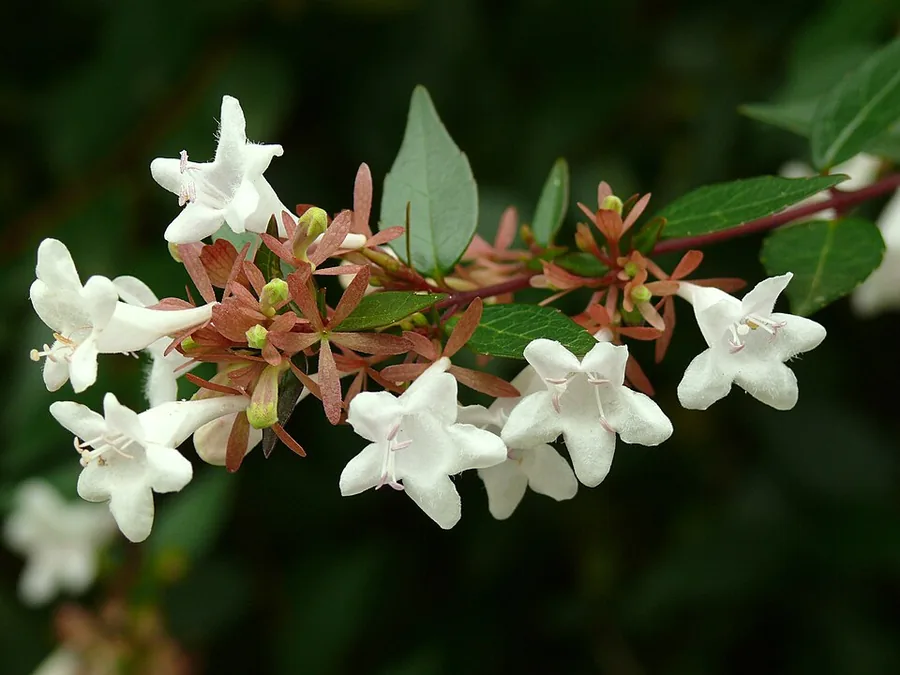
Glossy abelia is the kind of shrub that quietly anchors a planting and looks composed doing it. Small, fragrant flowers open from late spring and stay the course until first frost, while the arching stems lend a border that easy, unforced sway. The name nods to its leaves, which keep a clean, lacquered sheen through much of the year.
Suited to USDA zones 6 to 9, the shrub settles happily into full sun and forgives a stretch of part shade. It climbs at a measured, moderate clip to somewhere between 2.5 to 8 feet (76 to 244 cm) tall, throwing a spread that can stretch to 6 feet. Once rooted in, it rides out dry spells and asks almost nothing of you.
For a first-time gardener, abelia gives far more than it takes. The flowers come on new wood, so a single spring tidy keeps the form trim and the bloom coming. Many of the named selections sign off the season in fall color, the foliage turning toward warm orange and red as the cold draws near.
Care
The short version: set it in full sun to part shade, in soil that drains freely yet holds a little organic matter, water it while it roots and through dry spells, and give it one clean cut in late winter or early spring.
Light
Abelia is at its finest in full sun, where it flowers most freely and holds a full, well-knit shape. Partial sun and even partial shade suit it too, though the bloom and the fall color grow muted as the light thins. Choose it a bright, open corner.
Water
While the roots are taking hold, keep the soil evenly moist, then loosen your routine as the plant finds its feet. Established, abelia is drought tolerant, calling for water only every 5 to 10 days and a touch more through a dry spell. A long, deep soak in dry weather brings out the finest bloom.
Soil
Give it moist, well-drained loam, clay, or sand with a little organic matter folded through. A pH spanning 5.5 to 7.5 suits most garden ground, so you will rarely need to adjust it. The one line it will not cross: abelia has no patience for salty soils.
Temperature
This shrub weathers a broad sweep of conditions, from roughly -9°F to 95°F (-23°C to 35°C). That breadth maps onto USDA zones 6 to 9 and lets it carry through searing summers and biting winters alike. Where the cold runs deepest, a sheltered placement eases its passage.
Humidity
Everyday outdoor air suits abelia, so there is no humidity figure to fret over. Air movement counts for more than moisture itself, since stagnant, damp air pressing around close-set plants is what summons gray mold. Leave each shrub the space to breathe.
Feeding
Once a year is plenty: work in a balanced slow-release fertilizer or a layer of compost in early spring. That lone seasonal meal sustains the plant through its long run of bloom. Resist heaping on extra nitrogen, which only forces the soft growth that pests come looking for.
Pruning
Because abelia flowers on new wood, take the shears to it in late winter or early spring before growth wakes. An overgrown plant accepts hard rejuvenation pruning back to about 12 inches (30 cm) above the soil once spring growth stirs. Steer clear of cutting from late fall through mid-winter, which lays the stems open to cold harm.
Repotting
Set in the garden, abelia is rarely repotted and would rather hold its ground. Should you keep one in a container, lift it into a larger pot when roots wind around the inside or push out the drainage holes. Water rushing straight through with little taken up is another cue it has outgrown its quarters.
Size & spacing
Expect plants to reach 2.5 to 8 feet (76 to 244 cm) tall over a spread of 3 to 6 feet (91 to 183 cm). Allow each shrub the room to fill in so air drifts freely around it, which keeps gray mold from settling in when the weather turns damp.
When to plant
Abelia prefers to be planted while the weather sits gentle. Set it out in spring or fall once hard frost is behind you, and the roots have time to establish before summer heat or deep winter bear down. From that point the flowers run from late spring to frost, a remarkably long performance for so light a hand.
Northern hemisphere
Southern hemisphere
Typical months for a temperate climate: start earlier in warm zones, later where spring frosts linger.
- Plant: Spring or fall after danger of hard frost has passed.
- Harvest: Late spring through fall (roughly May until frost).
Hardiness
USDA hardiness zones: 6–9
Temperature: down to -23°C
Troubleshooting
Glossy abelia keeps its health with very little fuss, and the handful of problems that do appear are simple to read. They tend to trace back to harsh winters, still and crowded air, or a rush of tender new growth. Find the picture that matches yours below, then act early while the trouble is small.
Bare stems and a thin flush of bloom after a hard winter
What you are looking at is winter dieback, the toll a cold season takes on a shrub planted near the chilly edge of where it likes to live. Pruning carried out from late fall into mid-winter only deepens that injury. Come spring, scratch a little bark away: where the wood beneath reads brown and dry, take those spent stems down to living tissue or to the soil line once the plant stirs. Because abelia carries its flowers on new wood, the season's display still arrives on schedule.
Fix:
- Prune dead stems back to live wood or to the ground when spring growth begins
- Since it blooms on new wood, plants flower the same season after spring cutback
Furry gray blotches settling over the blooms and tender shoots
The trouble here is Botrytis, a gray mold that moves in wherever the air stays damp, close, and unmoving. Its signature is a fuzzy gray-brown bloom spreading across faded flowers and the softest new growth. Strip away the marked flowers and stems, then thin the shrub and open it to the air so light and breeze can pass through.
Fix:
- Remove and discard affected blooms and stems
- Improve air circulation by thinning and spacing plants
Twisted young shoots wearing a tacky sheen
Behind this is a passing visit from aphids, which occasionally settle on the freshest shoots. Turn over a leaf or study the tips and you will find clusters of tiny soft-bodied insects, plus the sticky honeydew that gives the leaves their gloss. A firm jet of water sends most of them packing, and insecticidal soap clears any holdouts. Abelia tends to brush off pests, so the matter seldom grows serious.
Fix:
- Dislodge aphids with a strong spray of water
- Treat persistent infestations with insecticidal soap
Toxicity
A note of relief for homes with pets or young children: glossy abelia is non-toxic. It appears on no ASPCA toxic-plant reference and counts as safe in the company of cats and dogs. As with any greenery, a generous mouthful of leaves might bring on mild stomach upset, yet nothing about this shrub calls for special precautions.
Safe for
People · Cats · Dogs · Horses · Rabbits · Livestock · Birds
Cats Safe
A cat may weave through the foliage or taste a leaf with nothing to fear, as glossy abelia carries no toxicity for them.
Dogs Safe
The shrub poses no danger to dogs, and an idle mouthful of leaf is nothing to lose sleep over.
Horses Safe
Whether grazed in the paddock or grown along a rail, abelia offers horses no risk of poisoning.
Rabbits Safe
The plant sits safely beside rabbits, though leafy greens of every sort belong only in small measures of their diet.
Livestock Safe
Cattle, goats, and sheep may browse the surrounding ground with no chance of harm from the shrub.
Birds Safe
Caged companions and backyard flocks alike can keep a garden alongside abelia in perfect ease.
People Safe
It makes a sound choice for any plot where small children wander and play in the open air.
No special handling required; large quantities of any plant material may cause mild stomach upset.
Varieties
A handful of named abelias each put their own spin on flower color, leaf, and form. These are the ones worth knowing before you settle on a choice.
Rose Creek
Tidy and rounded in habit, it lifts pink-blushed flowers over stems washed in red.
Kaleidoscope
Foliage marbled in gold and green that catches fire in orange-red as autumn comes on.
Edward Goucher
A kindred hybrid whose lavender-pink blooms ride along elegant, arching branches.
Prostrata
A low sprawler that settles over the soil in the manner of an easy groundcover.
How to propagate
Abelia ranks among the most obliging shrubs to multiply at home, where one established plant can yield several more from cuttings gathered across the warm months.
Stem cuttingsEasy
Take softwood or semi-hardwood cuttings in late spring through summer. · Roughly 35 to 70 days to root depending on temperature.
Few shrubs reward a propagator as readily as abelia. Snip softwood or semi-hardwood cuttings across the warm stretch from late spring through summer, and a snug setting around 80°F to 86°F (27°C to 30°C) coaxes roots in about 35 to 50 days. Where the air sits cooler the wait stretches nearer 70 days, so keep the cuttings warm and give them time to take hold.
Myths
Glossy abelia poses a poisoning risk to dogs and cats.
No ASPCA toxic-plant reference names abelia, and the shrub is counted non-toxic to cats and dogs alike. The usual caveat holds: a hearty mouthful could leave a pet with a passing bout of stomach upset. Plant it freely wherever pets wander.
Keeping abelia in bounds means cutting it back every fall.
Since the flowers form on new wood, the moment to reach for the shears is late winter or early spring. A trim taken from late fall through mid-winter only leaves the stems exposed to cold harm. Hold off until spring growth stirs, and the shape and the bloom both stay intact.