Ornamental · Caprifoliaceae
Pincushion Flower
Scabiosa columbaria
Set it in full sun on free-draining ground, and the pincushion flower carries a garden from spring to frost.
Full sun
Every 5–10 days
90–120 days
USDA 5–9
Overview
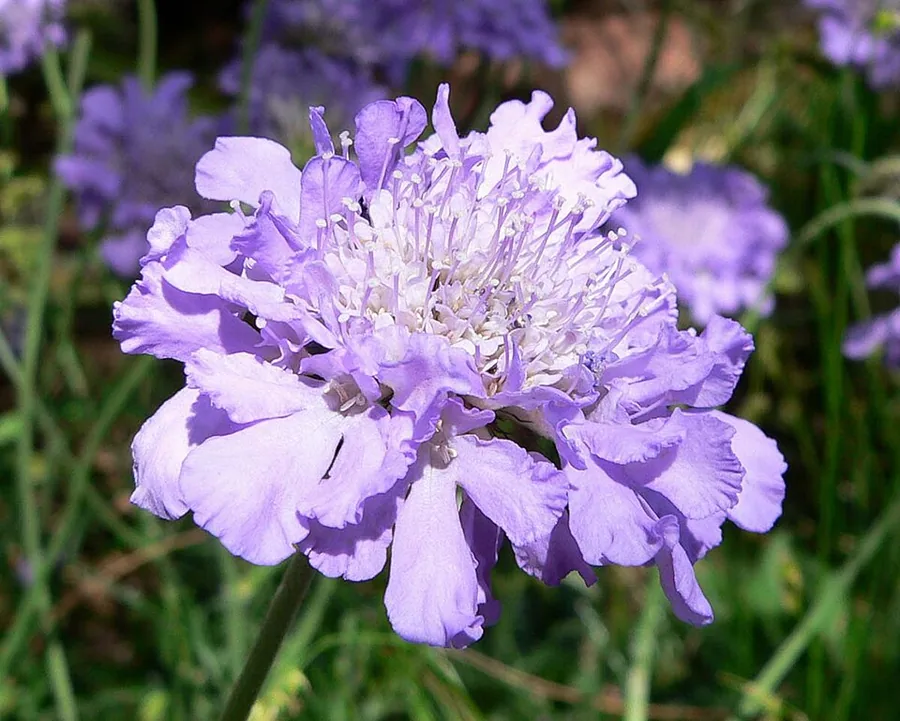
The pincushion flower brings a soft, quietly refined presence to a summer garden. It sits low at the front of a bed, its slim stems lifting rounded blooms just high enough to catch the light as you walk by. As a long-blooming perennial in the honeysuckle family, it holds that spot for months rather than weeks, which makes it a dependable anchor for a planting you live alongside every day.
This is a plant that sets a mood. Bees and butterflies drift over the lavender-blue and soft pink flowers from late spring on, giving a border a relaxed, lived-in movement that suits a cottage-style garden or a casual outdoor gathering space. It also earns its keep indoors as a cut flower, and because picking only encourages more blooms, a few stems in a jar on the kitchen table become part of the daily rhythm rather than a splurge.
Part of its appeal is how easily it fits an unfussy life. It shrugs off dry spells, deer tend to pass it by, and it holds no toxin, so it belongs in a relaxed, pet-friendly home where borders sit close to where children and animals play. The one thing to plan around is drainage, since it will not tolerate ground that stays wet, especially through a damp winter.
Care
The short version: give it full sun and quick-draining ground, and water only once the top half of the soil has dried. Keep it deadheaded for a long season of bloom, and divide the clump every few years to keep it looking its best.
Light
Give it full sun and the flowering stays generous, the look that carries a sunny border through the season. A little afternoon shade is fine where summers run hot, but in deeper shade the stems stretch and flop and the polished effect is lost.
Water
Let the top half of the soil dry between waterings, which tends to mean every 5 to 10 days. Once settled it is genuinely drought tolerant, an easy fit for a low-fuss garden, and it prefers a dry spell to soggy ground, above all through winter.
Soil
Fast drainage is the foundation of a good display here. Plant it in well-drained loam or sandy loam rich in organic matter, comfortable across a pH from a mildly acidic 6.0 to an alkaline 8.5. Heavy ground that holds water undoes the plant, so it is the one condition worth designing around.
Temperature
Its range is wide, from -20°F to 90°F (-29°C to 32°C), so it holds a garden together across seasons. It comes through hard winters in zones 5 to 9 and keeps flowering through ordinary summer heat, dependable enough to plan a border around.
Humidity
Ordinary outdoor humidity suits it, so there is no figure to manage. What shapes the look is air moving freely through the planting, since still, damp air invites powdery mildew and dulls the effect.
Feeding
This is a restrained feeder, which suits a low-maintenance bed. A balanced all-purpose feed or a light spring topdressing of compost is plenty, and overfeeding only brings soft, floppy stems that spoil the tidy shape.
Pruning
Deadheading spent blooms keeps the flowers coming for months and the border looking cared-for rather than gone-over. Cutting tired stems back to the base now and then refreshes the clump and holds its neat form.
Repotting
As a garden perennial it stays put, though the clump keeps its looks best with division every 3 to 4 years. Fading flowers, a woody crowded center, and a clump losing its shape are the cues to lift and split before the display slips.
Size & spacing
Compact at 12 to 18 inches (30 to 46 cm) tall and much the same across at 9 to 18 inches (23 to 46 cm), it slots into the front of a border or a container grouping. Giving each plant that room keeps the planting airy and the whole arrangement looking intentional.
When to plant
Think of the pincushion flower as a cool-season perennial that settles in for the long term, holding through winters down to zone 5. Start seed indoors a month or two before the last frost, move plants out once the cold has lifted, and the display carries from late spring until the first hard frost draws the season to a close.
Northern hemisphere
Southern hemisphere
Typical months for a temperate climate: start earlier in warm zones, later where spring frosts linger.
- Sow: 4 to 8 weeks before the last spring frost
- Plant: After danger of frost has passed in spring
- Harvest: Blooms from late spring (April to May) until first frost
Hardiness
USDA hardiness zones: 5–9
Temperature: down to -29°C
Troubleshooting
For all its easy charm, the pincushion flower has a couple of predictable weak points, and nearly all of them trace to wet soil or plants set too close together. Keep a casual eye on the crown and the new growth, since that is where things first show. Matching the sign below and stepping in early keeps a border looking composed all season.
Sudden collapse with blackened stems and soft brown roots
A plant that suddenly caves in, with stems blackening at the base, has root rot, and it nearly always follows ground that stays too wet, most of all through winter. A dig around the crown reveals dark, soft roots where firm pale ones should be. The remedy is to lift the plant, work grit or compost through the bed to sharpen drainage, and replant only the healthy divisions on higher, better-drained ground.
Fix:
- Improve drainage by amending soil with grit or organic matter
- Avoid overwatering and remove affected plants
- Replant healthy divisions in a well-drained site
Curled new shoots with a sticky sheen on leaves and buds
Curling shoots and a sticky sheen usually mean aphids are working the tender new growth, sometimes with mites or whiteflies alongside. A quick look under the leaves and at the growing tips turns up the small clustered insects. A firm jet of water clears most of them, and insecticidal soap settles anything that lingers.
Fix:
- Spray off pests with a strong stream of water
- Apply insecticidal soap if needed
A soft white bloom clouding the foliage
A chalky white film across the leaves is powdery mildew, which arrives when plants sit crowded in stale, unmoving air. Opening the clump with thinning and spacing restores the airflow, and the worst-coated leaves are best removed. Full sun and watering at the base rather than over the top keep the planting clear and composed.
Fix:
- Improve air circulation by spacing and thinning
- Remove affected foliage
Toxicity
For a home where borders sit close to family life, the pincushion flower is an easy yes. It carries no listing as toxic to cats, dogs, horses, or any other animal, and nothing in it will trouble a person who handles it while gardening. It can hold a spot anywhere the household naturally gathers, with no compromise on style or safety.
Safe for
People · Cats · Dogs · Horses · Rabbits · Livestock · Birds
Cats Safe
A curious cat is in no danger near this plant, and a small taste will do no harm. Eat enough of any greenery and a cat may be sick, but that is the volume at work, not a poison.
Dogs Safe
There is nothing here to trouble a dog. The plant sits off the ASPCA toxic list, so a chewed leaf now and then is no cause for concern.
Horses Safe
Horses can pass along these borders without any risk, since it carries nothing that would poison them.
Rabbits Safe
A rabbit takes no harm from a nibble. Introduce any unfamiliar leaf gradually, though, so a sensitive gut can adjust.
Livestock Safe
Cattle, goats, and sheep are safe around the planting, since it holds no toxin that would affect grazing animals.
Birds Safe
The flowers and seed heads are no danger to birds, which often visit for a feed of nectar and seed as the border matures.
People Safe
The plant is safe to handle and poses nothing toxic to a person. It is grown for its flowers rather than the table, so there is no part meant for eating.
No special handling precautions required; generally safe around pets and children.
Varieties
A couple of named forms have earned their place in gardens, and either makes an elegant starting point. These are the two worth knowing.
Butterfly Blue
Butterfly Blue, with its lavender-blue flowers, took the 2000 Perennial Plant of the Year honor and holds a place among the Missouri Botanical Garden's Plants of Merit.
Pink Mist
Pink Mist is a compact form in frilly, soft pink, and it looks its most polished planted beside Butterfly Blue.
Companions
Pincushion flower pairs naturally with other sun-loving perennials that share its taste for well-drained ground and keep the pollinators coming all season.
Plant near
Scabiosa Pink Mist: Complementary pincushion blooms recommended for grouping in border fronts and rock gardens.
Other sun-loving border perennials: Shares full-sun, well-drained conditions and supports a continuous pollinator display.
How to propagate
Filling a border with more pincushion flowers takes little effort: raise a fresh batch from seed, or divide a plant already settled in. Either way, a single plant can become a soft, repeating thread through a whole bed.
SeedEasy
Start indoors 4 to 8 weeks before last spring frost · Germinates in about 2 to 3 weeks; flowers in roughly 12 to 16 weeks from seed
Sow seed indoors 4 to 8 weeks before the last spring frost. Since the seed needs light to sprout, rest it on the surface under the barest cover and keep the tray at 65°F to 70°F (18°C to 21°C), and seedlings appear in two to three weeks. Count on roughly 12 to 16 weeks from sowing to the first flowers, in good time for a summer border.
DivisionEasy
Early spring or fall when not in bloom · One growing season
Lift and split an established clump in early spring or fall, whenever it is out of bloom. Repeating this every few years keeps the center from turning woody and the flowering full. Each division settles in over one growing season, ready to carry its share of the display the following year.
Myths
Pincushion flower is unsafe for cats and dogs.
There is no record of Scabiosa columbaria harming pets. It is grown as a pollinator border perennial, and the whole genus is absent from the ASPCA toxic plant list. It suits a stylish, pet-friendly garden with no reservations.