Ornamental · Caprifoliaceae
Macedonian Scabious
Knautia macedonica
Give it full sun and lean, well-drained soil, and crimson pincushions drift over the border all summer.
Full sun
Every 5–10 days
USDA 5–9
18–24 in · 45–60 cm
Overview
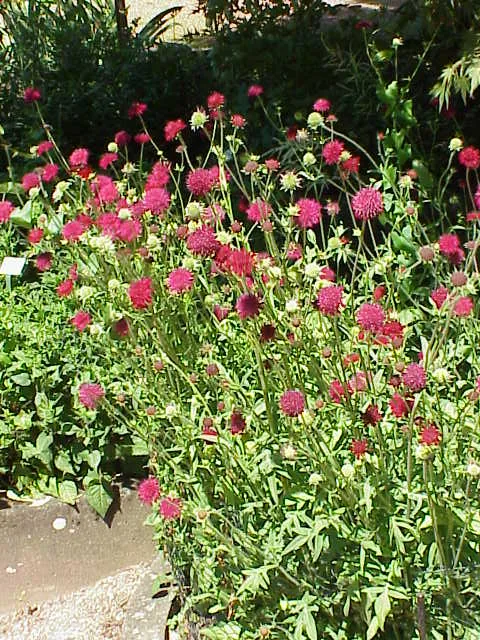
Knautia macedonica is the border perennial that lends a garden a quiet, unforced sense of movement. Its small crimson pincushion flowers ride wiry stems from early summer into fall, and the effect is more meadow than manicure. A relative of the scabious it recalls, it comes from southeastern Europe, and it settles as easily into a romantic cottage border as it does among the loose, prairie-style plantings that have shaped so much of today's garden style.
Part of its appeal is how little it asks of a busy life. A full-sun position and lean, well-drained soil are the whole arrangement, and once it has settled it carries on through dry weeks without fuss. Overly rich ground and heavy feeding actually undo the look, coaxing out soft growth that sags by midsummer, all the more so where the nights stay warm.
Live with it as a short-lived perennial that renews itself, and the planting takes on a rhythm of its own. Older clumps step back after a few years while self-sown seedlings rise to fill the gaps. Let a few of those volunteers remain and the border keeps its easy, self-sustaining character season after season.
Care
The short version: a full-sun spot and average, well-drained soil kept on the lean side, a little water while it settles and less once it is at home, and steady deadheading through the season to keep the display going.
Light
A full-sun position gives Knautia its firmest stems and its fullest show of flowers, which is where the plant truly earns its place in a border. It will accept a touch of light shade, but a dim corner leaves it soft and inclined to sag.
Water
Water it through settling in, then let the top half of the soil dry between drinks, about every 5 to 10 days. Established, it is content to run on the dry side and far happier there than in ground that stays wet, which suits a low-maintenance planting.
Soil
Average, well-drained soil is all the border needs to offer, ideally neutral to alkaline at a pH of 6.5 to 7.5. Drainage counts for far more than richness here, and lean ground rewards you with a plant that holds itself well.
Temperature
It weathers a wide range, hardy to about -20°F (-29°C) and standing summer heat near 95°F (35°C). The planting looks its best where nights stay cool, and warm, muggy evenings are what leave the stems lax.
Humidity
Outdoor humidity asks nothing specific of you, so there is no figure to meet. Air moving through the border is what matters, since still, humid air in hot regions is what brings on the midsummer sag.
Feeding
A light feeder at home in moderately fertile ground, it wants no more than a single spring feed of balanced fertilizer or a little compost. Do more and you trade the composed look for weak, floppy growth.
Pruning
Deadheading the spent flowers as they fade keeps the display running from early summer into fall. In hot climates, cut declining stems back in late summer to keep the planting neat, then clear the old foliage in late fall or early spring.
Repotting
This is a plant for the open border rather than a container, so repotting never enters the picture. When a clump grows crowded or begins to fade, divide it to keep the planting fresh.
Size & spacing
Expect a plant of about 18 to 24 inches (45 to 60 cm) with a spread to match, an easy scale for the middle or front of a border. Give each clump roughly that much room so the airy stems have space and air can move around them.
When to plant
Hardy from zones 5 to 9, Knautia stays in the garden year-round. Sow seed indoors in late winter, set the young plants out after the last frost, and the crimson flowers carry the border from July into September before it steps back for winter.
Northern hemisphere
Southern hemisphere
Typical months for a temperate climate: start earlier in warm zones, later where spring frosts linger.
- Sow: Late winter to early spring, about 6-8 weeks before last frost
- Plant: After last spring frost
- Harvest: July to September (early summer into fall)
Hardiness
USDA hardiness zones: 5–9
Temperature: down to -29°C
Troubleshooting
An obliging border plant with no serious pests, Knautia offers only a couple of things to watch, and both trace to summer heat and its own habit of self-seeding. Notice the early signs below and a light touch keeps the planting looking composed.
A border planting that loosens and sags in high summer
The culprit is heat and humidity stress, and it reads most clearly in southern gardens where the nights refuse to cool. This is a plant that keeps its poise where evenings turn cool, so give it a full-sun spot with air moving through the border, and resist the urge to feed. Rich soil and generous watering only soften the display, so cut the leggy stems back and let a tidier planting return.
Fix:
- Provide full sun and well-drained, only moderately fertile soil
- Avoid overfeeding and overwatering
- Cut back leggy stems to encourage tidier regrowth
- Site in a location with good air movement
A scattering of new plants filling in around the original
This is Knautia in its element as a self-seeder, quietly furnishing the ground around a contented plant with offspring the following spring. In a loose, informal scheme that generosity is part of the charm, though a more composed border may want it reined in. Deadhead before seed forms, lay mulch to discourage stray germination, and lift the volunteers that stray beyond the look you want.
Fix:
- Deadhead spent flowers before seed sets to limit self-sowing
- Remove unwanted seedlings by hand
- Maintain a layer of mulch to suppress germination
Toxicity
For a home shared with animals, the verdict is welcome: Knautia macedonica is not toxic. It does not appear on the ASPCA list of poisonous plants, and it belongs in the garden as a pollinator favorite rather than a plant to keep at arm's length. Cats, dogs, grazing animals, and children are all safe alongside it.
Safe for
People · Cats · Dogs · Horses · Rabbits · Livestock · Birds
Cats None
A welcome plant in a garden shared with cats. An enthusiastic nibble might unsettle a cat's stomach for a moment, as any greenery can in quantity, yet nothing in the leaves or flowers is toxic.
Dogs None
Easy company for dogs. With no poisonous compounds to speak of, a dog that mouths a stem or flowerhead risks little more than a brief, passing tummy grumble.
Horses Safe
Safe in a setting shared with horses, as no part of the plant carries any reported toxins.
Rabbits Safe
Rabbits may browse the foliage without harm, since none of it is poisonous to them.
Livestock Safe
A garden grazed by cattle, goats, or sheep has nothing to fear from it, as it holds no toxins that affect them.
Birds Safe
Safe for birds, which tend to work the seedheads rather than come to any harm. The planting invites pollinators rather than posing any threat.
People Safe
Harmless to handle and a fine choice for a garden used by children. Washing the hands after time in the border is all it asks.
No special handling precautions reported; routine garden hygiene such as washing hands after handling is sufficient.
Varieties
The species is the version most gardens showcase in the border, but a pair of named selections open up a different scale and a broader sweep of color.
Melton Pastels
A taller selection rising to 3 to 4 feet that softens the species' deep purple-red into a gentler wash of mauve, pink, rose, salmon, and crimson, flowering in its first year from seed.
Mars Midget
A compact dwarf carrying deep crimson-red pincushion flowers, tailor-made for the front edge of a smaller border.
Companions
Knautia's open, see-through habit lets it thread between firmer plants, so it pairs well with upright perennials and grasses that give it something to lean through.
Plant near
Iris pallida: Wisconsin Horticulture Extension recommends interplanting Iris pallida with taller ramblers such as Knautia macedonica.
Ornamental grasses: Airy crimson pincushion flowers weave attractively through grasses and other open perennials in borders and meadow plantings.
How to propagate
Three easy methods keep Knautia in the planting, whether you let it seed itself, divide a clump, or root a cutting from a named form.
SeedEasy
Sow indoors late winter to early spring, or allow self-sowing in the garden · One growing season; some selections flower the first year from seed
Seed is the natural route to keeping this short-lived perennial in the picture. Start it under cover in late winter to early spring, or simply allow the plant to sow itself where it stands, and a flowering display arrives within a single growing season. A few selections reward the wait with bloom in their first year from seed.
DivisionModerate
Spring or early summer · One season
Lift and divide an established clump in spring or early summer to multiply the planting and refresh a tiring one. The divisions find their feet over a single season and resume the display where the parent left it.
Stem cuttingsModerate
Spring to summer · Several weeks to root
To hold a named selection true to type, take basal cuttings from new growth in spring or summer rather than trusting seed. Over several weeks they root into faithful copies of the plant that gave them, keeping the look consistent.
Myths
Knautia macedonica is a true long-lived perennial that comes back reliably for many years.
In truth it is a short-lived perennial, so any single plant tends to bow out after a few seasons. Its self-seeding is what keeps the planting alive, as fresh volunteers rise to take the place of the parents that fade.
Knautia macedonica is poisonous to pets.
No toxicity is on record, and the plant is nowhere to be found on the ASPCA toxic plant list. It earns its place purely as a pollinator-friendly ornamental and stays safe around cats, dogs, and other animals.