Shrub · Caprifoliaceae
Old Fashioned Weigela
Weigela florida
Set in full sun and pruned on cue, weigela drapes the late-spring border in soft tubular color.
Full sun
Every 7–14 days
USDA 4–8
6–10 ft · 1.8–3 m
Overview
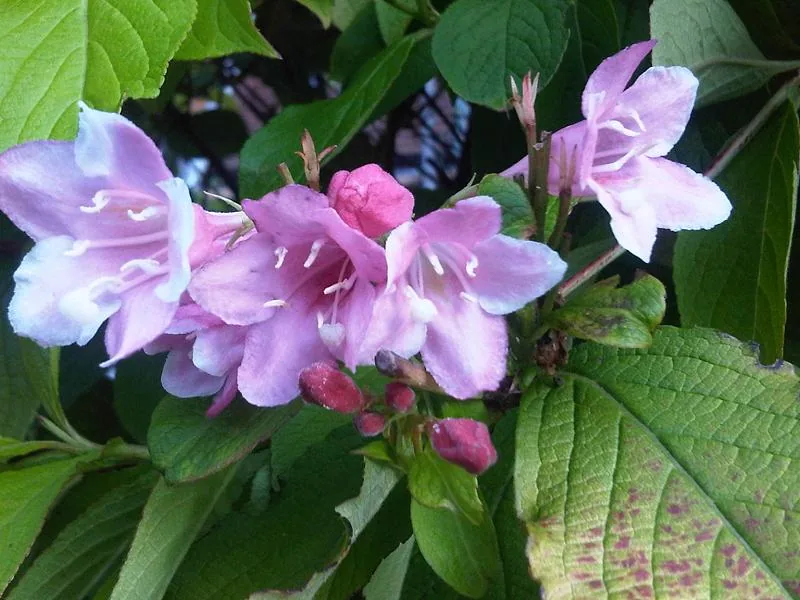
Weigela earns its place in a garden the way a good sofa anchors a room. This deciduous shrub, a relative of honeysuckle, arrives in late spring with a generous wash of tubular, rose-pink to red flowers that sets the tone for the whole border. The blooms invite hummingbirds and butterflies into view from a patio or kitchen window, and left unclipped the plant relaxes into a broad, arching mound that softens a fence line or bed edge.
As a design piece it is refreshingly low-effort. It settles happily in full sun to light shade, takes to almost any soil, and holds its form through winters down to zone 4. The one habit to plan around is that it flowers on old wood, so a well-timed prune keeps the seasonal display dependable rather than hit or miss.
Scale is where the plant really flexes to a space. Alongside the full-size species sit dwarf and reblooming cultivars suited to a courtyard, a doorway pot, or the front of a mixed bed, several with purple or variegated foliage that keeps a corner looking considered long after the flowers pass.
Care
The short version: give weigela a sunny spot in average, well-drained soil, keep it watered through dry spells while it establishes, and reserve any shaping for the moment just after it blooms.
Light
Weigela looks its best in full sun, though it keeps its shape in partial sun or light shade. Aim for a spot with 6 or more hours of direct sun a day. A shadier corner quietly thins the flowers, which dulls the very display the plant is chosen for.
Water
Give a young shrub steady water through its first season while it finds its footing, then ease off and water only during a drought. Let the top inch or so of soil dry between waterings, roughly every 7 to 14 days when rain is short. Once settled, it carries dry spells with little fuss, which suits a low-maintenance planting.
Soil
Weigela is unfussy about ground, taking clay, loam, or sandy soil as long as it drains and holds average, medium moisture. It sits comfortably across a broad pH from 5.5 to 7.5, so a border rarely needs reworking to keep it happy.
Temperature
This is a resilient shrub, at ease from -29°F to 90°F (-34°C to 32°C) across zones 4 through 8. In the coldest gardens the branch tips may die back over winter, yet the plant returns with fresh growth from below in spring, so the border fills back in on its own.
Humidity
Ordinary outdoor humidity suits weigela, so it asks for no special attention there. Good airflow matters more, keeping the foliage dry and the few pests that visit at bay, which keeps a planting looking clean.
Feeding
Weigela is a light feeder that never demands much. A single dose of slow-release shrub fertilizer in spring carries it through the season, with no further feeding unless growth looks weak.
Pruning
Timing is the whole of it. Shape the shrub right after the late-spring bloom, since the buds form on old wood and a later cut sacrifices next year's flowers along with the look you planted for. In late winter, thin a few of the oldest stems and any dead or winter-damaged wood to keep the form fresh.
Repotting
Weigela is seldom grown in a pot, and in the ground it never needs repotting. Where a dwarf cultivar dresses a container, move it up a size once roots circle the pot or slip through the drainage holes, so the display stays full.
Size & spacing
The species matures into a substantial shrub, 6 to 10 feet (1.8 to 3 m) tall and wider still at 9 to 12 feet (2.7 to 3.7 m) across. Give it room to arch and anchor a bed, or choose a dwarf cultivar to suit a tight corner or a container by the door.
When to plant
Weigela is a woody shrub, so it slots into the garden calendar rather than a seed tray. Plant it out in spring or fall, look forward to flowers from April into June, and keep any shaping to the short window just after the bloom fades, when it least disrupts the season's look.
Northern hemisphere
Southern hemisphere
Typical months for a temperate climate: start earlier in warm zones, later where spring frosts linger.
- Plant: Spring or fall
- Harvest: April to June, with sparse repeat bloom in mid to late summer on modern cultivars
Hardiness
USDA hardiness zones: 4–8
Temperature: down to -34°C
Troubleshooting
Most weigela setbacks come down to pruning timing, a hard winter, or soil that sits too wet or too dry, and each shows in the plant's appearance before it costs the display. Read the early signs and a single well-placed cut or a change in watering usually restores the look. Match the symptom below and act before a bare season interrupts the border.
A spring border short on flowers
The likely reason is pruning at the wrong time, since weigela holds its flower buds on old wood and a cut made in late summer, fall, or winter takes the coming display with it. Too little sun or winter loss of the flowering wood can leave the same gap in the border. Keep pruning to just after the late-spring bloom, place it where it gets 6 or more hours of direct sun, and leave the healthy old stems undisturbed.
Fix:
- Prune only immediately after the late-spring bloom since flowers form on old wood
- Relocate or limb up surrounding plants so the shrub gets 6 or more hours of direct sun
- Remove only dead, winter-damaged wood and leave healthy old stems intact
Brown, spent branch tips in spring
This is winter dieback, most common in colder gardens or on a cultivar planted near the edge of its hardiness. A quick scratch of the bark tells the story: dead wood shows brown and dry with no green beneath. Cut the dead stems back to live growth in late winter and let the shrub refill from the healthy lower wood, and the form recovers by summer.
Fix:
- Prune out dead wood back to live, green growth in late winter or early spring
- Let the shrub regrow from healthy lower stems
Dull, wilting foliage and lagging growth
When the whole shrub loses its polish, water is usually the reason, whether a drought or roots left in soggy, poorly drained ground. A nutrient shortfall or salty soil can wear the same faded look. Read the soil by feel, water through dry spells, improve the drainage where it stays wet, and add a slow-release shrub fertilizer if growth still lags.
Fix:
- Provide regular water during dry spells and improve drainage in soggy sites
- Apply a slow-release shrub fertilizer if a deficiency is suspected
Sticky, mottled, or misshapen leaves
The usual cause is mealybugs, small white cottony clusters gathered at the stem junctions, though flea beetles may chew the foliage as well. A look under the leaves and at the stem joints confirms it. A firm jet of water clears light cases, and insecticidal soap or horticultural oil settles the stubborn ones before the planting looks tired.
Fix:
- Wash off light infestations with a strong stream of water
- Treat persistent mealybug infestations with insecticidal soap or horticultural oil per label
- Remove and dispose of heavily infested shoots
Toxicity
Weigela is an easy plant to live alongside. It is absent from the ASPCA toxic-plant lists and rates as non-toxic to pets, livestock, and people, with no irritant in the sap. A pet that eats a lot of leaves may feel a brief stomach upset, and nothing beyond that.
Safe for
People · Cats · Dogs · Horses · Rabbits · Livestock · Birds
Cats None
Weigela is safe for cats and sits nowhere on the ASPCA toxic list, so it can share a home with a curious one. A passing nibble does no harm, though a big mouthful of any leaf may bring a brief stomach upset.
Dogs None
Dogs can share the garden with weigela and come to no harm from the foliage. The most a determined chewer earns is some passing tummy trouble, as with most garden greenery.
Horses Safe
Nothing in weigela troubles horses, so it can dress a fence line near a paddock or pasture with ease.
Rabbits Safe
Rabbits can browse the leaves safely. No part of the plant holds a toxin, so a stray bite is no cause for concern in a mixed garden.
Livestock Safe
Cattle, goats, and sheep take no harm from weigela, and the shrub poses no risk planted near grazing stock.
Birds Safe
Weigela is harmless to birds, and its tubular spring flowers draw hummingbirds into the scene for the nectar.
People Safe
The plant is non-toxic to people, with no known irritant in the sap. It is grown for looks rather than the table, so there is no edible part to seek.
No special handling precautions; sap is not a known irritant.
Varieties
The species is handsome on its own, but the named cultivars are what most gardeners choose when styling a space. These are the selections worth knowing.
'Alexandra' WINE AND ROSES
A refined, compact choice at 4 to 5 foot, valued for dark purple foliage and a rich flush of reddish-pink flowers in spring.
'Verweig' MY MONET
A dwarf of just 12 to 18 inches, prized for variegated pink, cream, and green foliage set beneath soft pink blooms.
'Tango'
One of the smallest weigelas, a neat 2 to 2.5 foot mound of purplish foliage that flowers freely through spring.
SONIC BLOOM
An upright rebloomer that opens lipstick-red flowers in May and keeps sending fresh waves right up to frost.
How to propagate
Weigela is easy to increase from cuttings, with a quick summer route and a slower dormant-season one, a tidy way to repeat a favorite through a border or fill a run of matching pots.
Stem cuttingsEasy
Late spring to early summer (late May through early July) · Several weeks to root; a full season to establish
The simplest way to repeat a favorite is a softwood cutting, taken from late May into early July off the current season's growth. Choose a shoot supple enough to bend but firm enough to snap under a sharp bend. It roots within a few weeks and asks for a full growing season to establish before it earns its place.
Stem cuttingsModerate
Dormant season (late fall to winter) · One growing season
For a slower approach, take hardwood cuttings from the dormant stems through late fall and winter. The method takes a little longer and wants a full growing season before the young plant is established.
Myths
Weigela is unsafe to keep where pets roam.
Weigela never appeared on the ASPCA toxic-plant lists and rates as non-toxic to both dogs and cats. A pet that eats a lot of leaves might feel a mild, passing stomach upset, and nothing more, so it fits comfortably into a home with animals.
Weigela can be shaped whenever suits the schedule.
Because weigela sets its buds on old wood, a cut in late summer, fall, or winter carries off next spring's flowers. Shape it just after it finishes blooming and the seasonal display stays reliable year to year.